
If you're renting a car in Jeju for business, the single most practical step before you book is to confirm the rental company's fuel policy and mileage allowance and make sure the policy aligns with your expense rules. Fuel policies vary from full-to-full, pre-purchase, or refuel-at-return charges; mileage allowances can be unlimited, capped per day, or charged per extra kilometer. These details affect how you plan meeting locations, client visits, and whether you'll return the car with a full tank or buy a package in advance. Ask for written terms on fuel and mileage, note what the invoice will include for expense claims, and decide which policy saves you time and reduces administrative friction on reimbursement.
Understand the common fuel policies and what they mean
Rental companies commonly offer three fuel approaches: full-to-full, full-to-empty (pre-purchase), and pay-for-return arrangements. Full-to-full means you pick up with a full tank and must return it full; the company inspects the tank and match with pickup level. Pre-purchase lets you buy a full tank at pickup price and return empty, which can be convenient when you want to avoid refueling before a late drop-off, but it often prevents refunds for unused fuel unless explicitly stated in the contract. Pay-for-return arrangements allow you to return with any level, and the company refuels and charges you, usually at higher per-liter rates plus a service fee.
For a business traveler, the tradeoffs involve time, predictability, and documentation. Full-to-full takes an extra stop but gives a clear metric to document with a fuel receipt if requested. Pre-purchase saves time at return but can be wasteful when trips are short or fuel prices at pickup are above local station rates. Pay-for-return is convenient but can lead to higher charges and an invoice that must clearly list fuel costs for your expense submission. Always ask how the provider records fuel level at pickup and return and whether they provide a meter reading or tamper-evident report on the final invoice.
Mileage allowances: flat, daily caps, and extra-km charges
Mileage rules differ among providers: some advertise unlimited kilometers, others impose a daily or total cap, and many charge a fixed rate per extra kilometer if you exceed the allowance. For business trips with multiple client visits across Jeju—or if you plan scenic drives around the island—unlimited mileage avoids unexpected per-kilometer fees. Where caps exist, they might be generous for standard business rentals but restrictive for long day trips. Verify whether the cap is applied per rental day or as a total for the entire booking period, and ask whether the odometer reading is logged at pickup and return.
When comparing options, calculate your expected kilometers using your planned schedule plus buffer for detours, parking searches, and transfers. Multiply your expected total by any extra-kilometer rate to estimate potential overage charges and weigh that against the price difference for an unlimited option. Also check whether the vehicle class affects mileage caps—small cars sometimes have stricter limits—and whether the rental agreement applies different rules for cross-island travel, overnight returns, or one-way drop-offs.
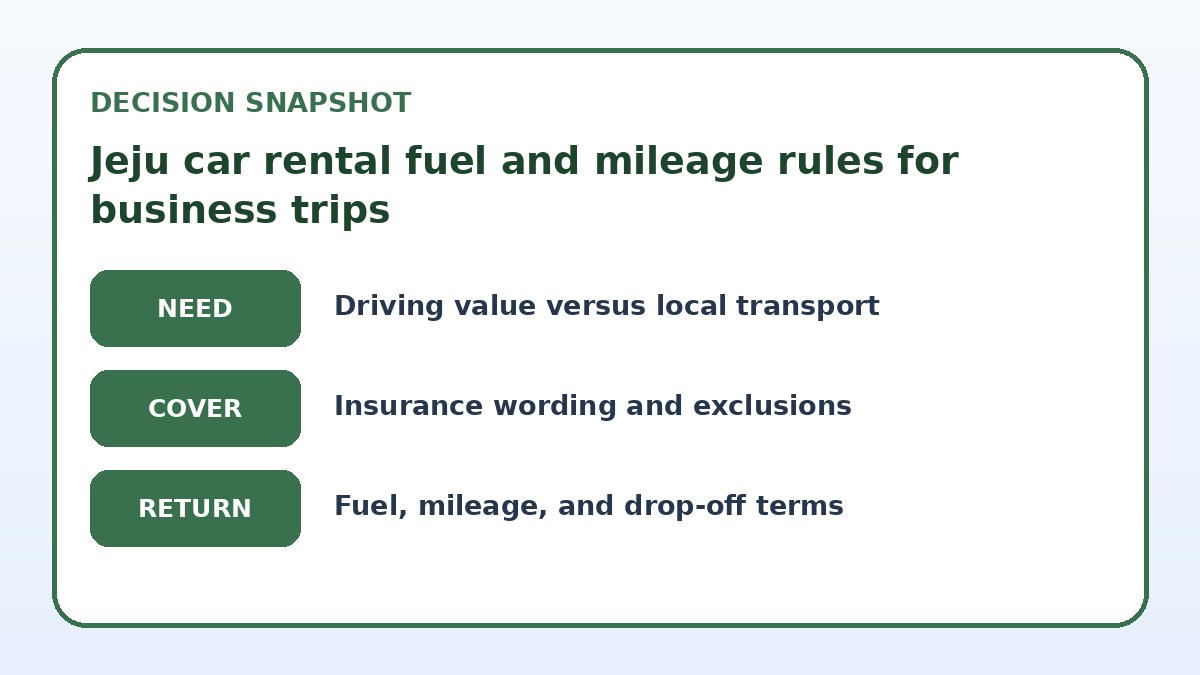
| Approach | Best for | Tradeoff to check |
|---|---|---|
| Full-to-full fuel policy | Short business trips where you can refuel before return and need transparent charges | Requires a refueling stop near drop-off and proof of purchase for reimbursement |
| Pre-paid full tank | Tight departure or return schedules when skipping refueling is important | May leave unused fuel you cannot refund and sometimes costs more than local pump rates |
| Pay-for-return refueling | Last-minute returns or when you cannot access fuel stations near drop-off | Convenient but often includes higher per-liter rates and service fees on the invoice |
| Unlimited mileage option | Business itineraries with many stops or island-wide travel where odometer charges are uncertain | Usually costs more upfront than capped options but reduces risk of per-km overage fees |

Documentation and expense reporting for corporate travel
For corporate reimbursement, the rental invoice must clearly separate fuel charges, mileage penalties, and service fees. Ask the provider in advance what their invoice will include and whether they can itemize fuel purchases versus administrative service fees. Many finance teams require original receipts for any third-party refueling; if you refuel at a gas station, keep the printed receipt showing liters and price per liter. If the company refuels on your behalf, request a line-item charge and supporting documentation showing liters or a meter differential so your expenses reconcile cleanly.
Also confirm which fuel notations the contract will show—some providers log tank percentages rather than liters, which your finance department may not accept without a correlating odometer reading. If your company has prepaid corporate accounts or preferred suppliers, check whether those agreements include specific fuel or mileage terms. For cross-checking availability and terms during booking, you can compare suppliers on Trip.com, but always verify final invoice formatting and policy language on the provider’s official booking confirmation before you finalize.
Before you book
- Request the exact fuel policy wording and an example invoice before booking so your finance team can confirm acceptability.
- Photograph the vehicle’s fuel gauge and odometer at pickup and return, and keep timestamps or staff initials when possible.
- Calculate expected kilometers with buffers and compare the cost of unlimited mileage versus capped rates and extra-km fees.
- If pre-purchasing fuel, ask whether unused fuel is refundable and how refunds are processed and documented.
- Keep all printed fuel receipts from gas stations and ensure invoices itemize any fuel-related charges separately from administrative fees.
- Confirm how the provider documents tank level (liters versus percentages) and whether that format meets your company’s reimbursement rules.
Practical booking tips and on-the-ground behaviors
Before you pick a rental, request screenshots or PDFs of the exact fuel and mileage clauses from the provider’s booking page or contract. Read the small print about what constitutes 'full' at return and who bears the cost if the vehicle is returned with less than the pickup level. At pickup, photograph the fuel gauge and odometer (with timestamps if possible) and confirm that staff initial or stamp the condition report; do the same at return. These photos make disputes easier if there’s a discrepancy between your record and the rental company’s claim.
On the island, plan fuelling stops at well-stocked stations near major towns or the airport—you’ll avoid remote stations that may have different fuel grades or limited receipts. If you’re constrained by time, weigh the convenience of a pre-purchase option against the corporate policy on refunds for unused fuel. For mileage, allocate buffer kilometers for traffic and detours when you submit your trip plan to finance. Finally, keep a concise log of kilometers and fuel receipts during the trip so you can hand the finance team a single, reconciled expense packet after return.
Frequently asked questions
What should I do if the rental company’s invoice doesn’t itemize fuel charges clearly?
If the invoice lacks clear fuel itemization, request a corrected invoice or supplementary document before you leave the counter. Explain that your corporate finance policy requires separate line items for fuel, service fees, and mileage penalties. If they cannot provide it immediately, take photographs of the contract, condition report, and any staff initials at pickup and return. Keep original gas station receipts when you refuel yourself. Raise the issue via the company’s official customer service channels and capture response emails—these records help your finance team process exceptions and can support dispute resolution if charges appear later.
Is pre-paying for fuel a good idea for short business trips around Jeju?
Pre-paying for fuel is convenient if you need a fast drop-off or have limited time, but it’s not always cost-efficient for short trips. If you expect to use most of the tank, pre-pay might save time at return; however, many pre-paid arrangements do not refund unused fuel. For short business itineraries where you’ll likely return with most of the tank full, full-to-full plus a quick local refuel before drop-off often yields better value and clearer documentation for reimbursement. Calculate the likely unused fuel and check refund policies before choosing pre-payment.
How can I avoid mileage overage charges on a busy day with many client visits?
To avoid overage charges, plan your day with a route estimate and add a buffer for detours, parking searches, and traffic. If possible, choose a rental with unlimited mileage for days with heavy driving. If capped mileage is unavoidable, monitor the odometer during the day and adjust plans if you’re approaching the limit—consider remote meetings or consolidating visits geographically. Keep your employer informed of the itinerary so they can approve a higher mileage allowance in advance if needed. Finally, save mapped distances and timestamps as evidence in case of a billing discrepancy.
Final planning note
For business travelers in Jeju, confirming fuel and mileage rules before you book prevents last-minute surprises and streamlines expense reporting. Decide whether you prefer the transparency of full-to-full, the convenience of pre-paid fuel, or the simplicity of unlimited mileage by comparing how each option affects your schedule, costs, and the documentation your finance team requires. Take photos at pickup and return, keep receipts, and request itemized invoices when possible. These steps minimize disputes, save time, and let you focus on meetings instead of administrative follow-up. Always verify final terms on the provider’s booking confirmation page before you finalize a reservation.
Continue planning
Check current options and final conditions
Use the provider page to confirm live availability, the final total, cancellation terms, and every condition that matters to your trip.
This evergreen planning guide was created with AI-assisted drafting and a structured quality review. It does not display live prices, schedules, availability, visa guidance, or provider rankings. Verify current details before booking. Some links are affiliate links; we may earn a commission at no additional cost to you.