
If you’re flying solo from Los Angeles to Las Vegas, the practical decisions that most affect your stress level are what to pack in your bag and when to arrive at the airport. Travel time between the two cities is short enough that the right baggage choice can save you time and money; arriving too late before departure can turn a quick hop into a frantic chase. This guide gives a clear, actionable recommendation up front, then steps through the tradeoffs—carry-on vs checked, how early to get to LAX or another LA-area airport, when to plan for LAS arrival, and how to handle security and transfers. Read this to leave the packing and timing to a plan that matches your priorities: speed, flexibility, or saving a little on fees.
Deciding carry-on versus checked baggage
For a short flight between Los Angeles and Las Vegas, many solo travelers benefit from a single carry-on. A carry-on keeps you in control: no wait at baggage claim, no risk of delayed or lost luggage, and often faster exit from the airport on arrival. Measure your bag and check the airline’s permitted dimensions and weight on the final booking page—carriers and fare classes vary. Prioritize a lightweight, well-organized bag with essentials in external pockets so you can move through security and the gate area without rummaging.
If you must check a bag, limit it to one medium-sized checked suitcase to keep fees and handling time manageable. Checked baggage requires you to arrive earlier for drop-off and potentially wait at baggage claim in Las Vegas, which adds to door-to-door travel time. Consider what you truly need—bulky items like shoes or liquids are common reasons to check, but some items can be shipped ahead or rented at the destination. Note: always verify checked-bag size and weight limits and any deadline for baggage check on the airline’s booking page.
When to arrive at LAX and other LA airports
Los Angeles has several airports that serve Las Vegas flights—LAX, Hollywood Burbank (BUR), Long Beach (LGB), and John Wayne/Orange County (SNA). Each has different terminal layouts and typical security lines. For the busiest, LAX, aim to arrive 75–90 minutes before your scheduled domestic departure if you have only a carry-on and have checked in online. If you are checking a bag at LAX, push that to 90–120 minutes to allow for queueing at ticket counters and baggage drop. If you use smaller airports like Burbank or Long Beach, the same principles apply but you may find shorter lines; still check airline guidance and local traffic to the airport.
Factor in time for Los Angeles traffic to reach the airport by rideshare, taxi, or private car. Peak morning and evening windows can add unpredictable delays—allow an extra 30–60 minutes during rush hours. Also plan for parking: economy lots and shuttle transfers at LAX and SNA add time; if you prefer to avoid that, choose a drop-off or curbside rideshare option. Before you leave, confirm the terminal and check-in or curbside drop-off hours for your airline on the provider’s booking page, because some airlines and counters close earlier than the published boarding time.
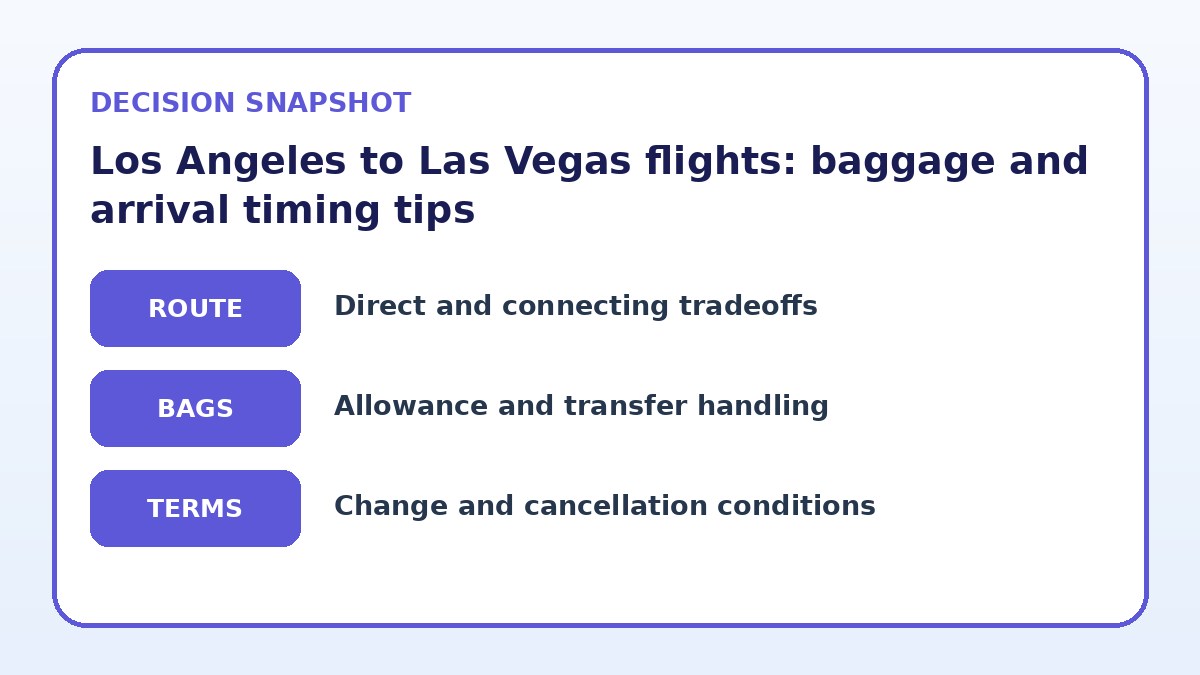
| Approach | Best for | Tradeoff to check |
|---|---|---|
| Travel carry-on only and check in online | Solo travelers prioritizing speed and minimal airport time | Limited wardrobe and less flexibility for oversize or liquid items |
| Check one suitcase and arrive earlier | Travelers needing more belongings or formal wear | Longer total door-to-door time and baggage claim wait on arrival |
| Use TSA PreCheck or similar programs | Frequent fliers who want faster security processing | Requires enrollment and sometimes additional upfront time to obtain approval |
| Fly from a smaller LA airport instead of LAX | Those seeking shorter lines and easier curbside access | Fewer flight times and possibly higher fares or fewer carrier choices |
Security, boarding, and getting through LAS on arrival
Security at departure can be the biggest time sink. Use mobile boarding passes and have liquids and electronics accessible to speed the process. If you’re TSA PreCheck or equivalent, include that in your booking to reduce security time; confirm the status and requirements on the airline or government site. Boarding typically begins well before departure on short flights—arrive at the gate at least 20–30 minutes before scheduled departure if you have a carry-on, and earlier if you prefer to sit near the front or need overhead space.
On arrival at Harry Reid International (LAS), think about your next step—rental car, rideshare pickup, public transit, or hotel shuttle. LAS has dedicated rideshare pickup zones that may require a short walk or shuttle; check current pickup locations on the airport’s page. If you checked a bag, expect to wait at baggage claim; for quick exits, travel with carry-on only. For connections or early/late flights, verify terminal maps, pickup points, and any shuttle schedules on the airport’s official pages or the airline’s final booking confirmation.
Before you book
- Measure your carry-on to meet your airline’s size and weight limits; confirm those limits on the airline’s final booking page.
- Check-in online and download your mobile boarding pass to avoid ticket-counter queues at the airport.
- If checking baggage, arrive at least 90 minutes before departure and verify the baggage drop deadline on the airline’s booking confirmation.
- Research terminal and curbside pickup or rideshare locations for both your departure and arrival airports before you leave.
- Pack liquids and electronics in easy-to-reach compartments to speed through security screening.
- Reserve parking, rental car pickup, or rideshare timing in advance when traveling during peak traffic windows.
Packing smart as a solo traveler: essentials and timing tips
Pack layers and streamlining tools that suit quick Las Vegas trips—versatile clothing, a small toiletry kit in a compliant clear bag, chargers, a power bank, and any medications in your carry-on. Put important documents—ID, boarding pass, proof of health or reservation info—where you can reach them fast. If you expect to collect rewards or need checked luggage for business attire or equipment, weigh the time tradeoff: checked luggage eases packing but adds time at both ends of the trip.
Timing your day around the flight matters as much as what’s in your bag. If you have an early morning flight, prepare the night before: confirm check-in, set alarms, and have your route to the airport planned. For late-evening returns, be mindful that transport options and parking lots may have reduced services. Confirm the exact terminal, baggage-drop deadlines, and whether your airline allows curbside check-in on the carrier’s final booking page, because those operational details change more frequently than route schedules.
Frequently asked questions
How early should a solo traveler arrive at LAX for a flight to Las Vegas?
For a short domestic flight to Las Vegas, aim to arrive at LAX 60–75 minutes before departure if you travel carry-on only and have checked in online. If you plan to check a bag, increase that window to 90–120 minutes to allow time for baggage drop and potentially longer security lines. Add 15–30 minutes during weekday rush hours for traffic or curbside congestion. Always confirm your airline’s recommended arrival time and baggage drop deadlines on the final booking page; different carriers and terminals may advise different check-in cutoffs.
Is it worth paying to check a bag for a weekend Las Vegas trip?
It depends on what you need to bring and what you value more—speed or convenience. For a short weekend, most solos can manage with a single carry-on: it saves the baggage claim wait and reduces the risk of baggage delays. If you have bulky items, formalwear, or liquids that exceed carry-on limits, checking a bag may be more practical. Factor in the extra 20–60 minutes at both ends of the trip for drop-off and claim time, and verify checked-baggage fees and size limits on the airline’s booking page before deciding.
Should I fly from a smaller LA airport to Las Vegas to save time?
Smaller airports like Burbank, Long Beach, or John Wayne can offer shorter walks, less crowded security lines, and easier curbside access compared with LAX. That can reduce the time you need to arrive before departure. However, smaller airports may have fewer daily flights, less flexibility for changes, and different ground-transport options. Compare total door-to-door time, flight frequency, and terminal convenience for your schedule. Check the specific airline’s terminal and flight details on the provider’s booking page to weigh your options accurately.
Final planning note
Solo travel between Los Angeles and Las Vegas is straightforward when you align baggage choices with how much time you want to spend at airports. For the fastest door-to-door experience, pack a single compliant carry-on, check in online, and aim to arrive 60–75 minutes before departure at your chosen LA airport; increase that to 90–120 minutes if you must check luggage. Factor in local traffic, parking or drop-off logistics, and whether you have TSA PreCheck. Before you leave, confirm baggage size and weight limits, baggage-drop deadlines, terminal details, and rideshare pickup points on the airline’s and the airports’ booking pages. If you want live availability or to compare current options, consider checking Trip.com as one place to view schedules and conditions, but always rely on the airline and airport pages for final operational details.
Continue planning
Check current options and final conditions
Use the provider page to confirm live availability, the final total, cancellation terms, and every condition that matters to your trip.
This evergreen planning guide was created with AI-assisted drafting and a structured quality review. It does not display live prices, schedules, availability, visa guidance, or provider rankings. Verify current details before booking. Some links are affiliate links; we may earn a commission at no additional cost to you.