Practical answer first: for most families the easiest approach is a pre-booked private transfer or family taxi that guarantees a rear-facing child seat or booster and space for multiple suitcases and a stroller. If your budget is tighter and you have manageable luggage, rail plus a short taxi or shuttle can be quicker and often simpler than navigating busy roads. For larger families or lots of gear, renting a people-mover with a driver or splitting into two vehicles avoids cramped car seats and repeated loading. Each option trades cost, convenience and door-to-door control. Read the next sections to compare time, comfort and luggage capacity so you can pick the transfer style that matches your family’s tolerance for hassle versus saving money.
Choosing a vehicle: space, seats and stroller storage
When you compare vehicles, think first about how many pieces of luggage and what type of child seats you need. Small sedans may fit two suitcases and a stroller but will be tight if you also have multiple car seats or a pram. Larger SUVs, people-movers and minivans provide extra trunk space and more flexible seating, which matters if you’re carrying bulky items like travel cots or sports equipment. Ask providers whether strollers fold to fit in the boot or whether they must be collapsed and gate-checked at the terminal.
Second, verify child seat compatibility and installation methods: some vehicles have ISOFIX anchor points, others use lap/shoulder belts with top tethering. If you require a rear-facing infant seat, confirm that the vehicle has enough room for proper installation and that the driver or company will set the seat up if you need help. For peace of mind, list the exact ages and weights of children when you contact a transfer service so they can allocate the correct seats and allocate sufficient luggage space.
Balancing cost and convenience: private transfer vs public transport
Private transfers and taxis give predictable door-to-door service and reduce the physical burden of carrying luggage and managing children across platforms. They are usually the fastest way to reach central Auckland or your suburb without multiple changes, and they let you load and unload at the terminal curb. The tradeoff is that private options can be pricier than public transport; to decide whether the cost is worth it, estimate the value of your time, the stress saved, and whether traveling during peak traffic could lengthen the journey.
Public transport—trains or buses—can be economical and surprisingly family-friendly, but you must plan for last-mile logistics. Stations and stops might require a short walk or a connecting taxi; luggage trolleys and ramps exist but can be cumbersome with a stroller and a toddler. If you opt for public options, choose off-peak travel when trains are less crowded and confirm accessible access points at stations. Always check the latest timetables and accessibility notes on official transport websites before committing.
| Approach | Best for | Tradeoff to check |
|---|---|---|
| Pre-booked private transfer | Families wanting stress-free door-to-door service and guaranteed child seats | Higher cost and potential wait time if flights are significantly delayed unless stated otherwise |
| Taxi or rideshare on arrival | Smaller families with modest luggage who value flexibility | May lack the right child seat or sufficient trunk space at busy times |
| Public transport plus short taxi | Budget-conscious families with foldable strollers and lighter luggage | Requires managing luggage and children across transfers and station access |
| Self-drive rental of a larger vehicle | Families who want to control luggage and schedule during an extended stay | You must install child seats correctly and drive in unfamiliar traffic conditions |
Timing and terminal logistics with children
Plan arrival and departure windows with children in mind: fewer layovers, longer connection buffers and extra time for bathroom and snack breaks reduce stress. At Auckland, curbside pickup points can be busy; allow extra time to reach meeting points and communicate a precise contact method with any driver or shuttle. For departures, try to arrive at the airport with enough margin for family check-in, security screening with pushchairs, and settling a child before boarding. Tight schedules multiply stress when luggage or seat installation is involved.
Consider flight times relative to your children’s routines: early-morning or late-evening flights may conflict with sleep schedules, influencing whether you need nap-friendly transfers or in-vehicle entertainment. If your family includes infants who need frequent feeds or nap changes, choose transfers that allow a calm pause—private transfers give that flexibility. Whatever you choose, lay out clothes, documents and a compact essentials bag so you can access nappies, snacks and a change of clothes without unpacking the main luggage at the curb.
Before you book
- List each child’s age and weight and confirm the exact child-seat type required before booking a vehicle.
- Measure your largest checked bag and folded stroller to ensure the chosen vehicle or trunk can accommodate them.
- Ask the provider whether curbside pickup is allowed at your flight’s terminal and where the driver will meet you.
- Pack a small essentials day bag with nappies, medicines, snacks and a change of clothes for quick access.
- Confirm whether the driver helps with loading luggage or if you’ll be responsible for handling suitcases.
- Save the provider’s local contact number and the booking confirmation screenshot in your phone for quick reference.
Booking and what to verify before you pay
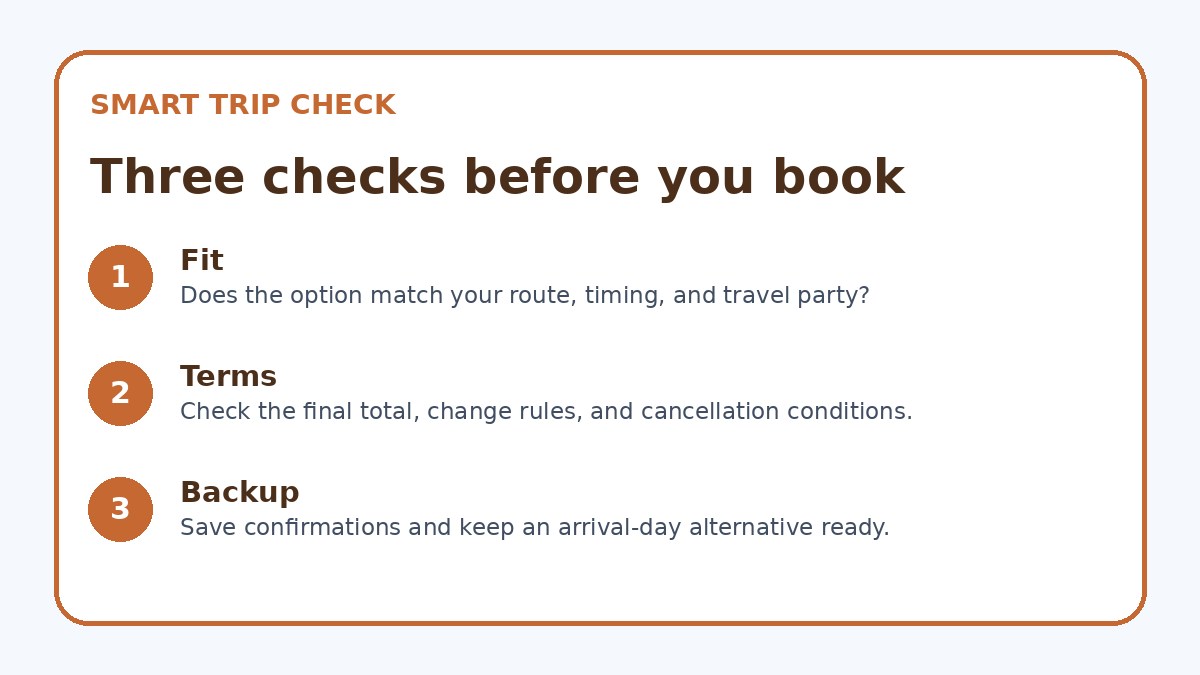
Before finalizing a booking, verify the provider’s child seat policy, exact luggage allowance, and whether curbside or terminal pickup is included. When provider-specific facts could change—like fleet type, child-seat availability, or pickup locations—check the final booking confirmation page and any pre-trip emails. Ask about how much help the driver will provide with loading and unloading if that matters to you; if it’s not stated, request this explicitly so you avoid surprises on arrival.
Also confirm cancellation and amendment policies that affect families, for example the flexibility to change pickup times if flights are delayed. If you are comparing options, consider using a reputable aggregator or Trip.com to view current availability and conditions, but always treat the individual supplier’s booking page as the definitive source for seat type, vehicle details and pickup instructions.
Frequently asked questions
Can I rely on taxis at Auckland to have child seats?
Taxis and rideshare cars are not guaranteed to carry the specific child seats your family needs. Some taxi companies offer child seats if requested in advance, while rideshare availability of seats varies by driver. For infants and rear-facing requirements, pre-booking a transfer that explicitly lists seat types or bringing your own travel car seat is safer. Always verify seat details on the booking page or call the company to confirm installation procedures before you travel to avoid last-minute stress at the curb.
Is public transport practical with strollers and lots of luggage?
Public transport can be practical if your stroller folds compactly and you travel outside peak hours, but it often means carrying luggage up ramps or between platforms. Trains and buses usually have priority seating and space for pushchairs, but the final leg to your accommodation may require a taxi or walk. If you have bulky suitcases, check station accessibility maps and plan a short taxi for the last stretch; weigh the tradeoff between lower cost and the physical effort of transferring luggage while managing children.
Should I bring my own car seat or rent one at arrival?
Bringing your own car seat guarantees compatibility and hygiene, and is a good choice if your child is accustomed to a particular seat. However, it adds to luggage bulk and can be awkward to carry through the airport. Renting or requesting a supplied seat avoids extra baggage but requires confirming the exact seat model and installation method on the supplier’s page before booking. If you choose to rent, verify the supplier’s cleaning standards and reserve the seat type your child needs well ahead of travel.
Final planning note
Choosing the right Auckland airport transfer for a family depends on balancing convenience, luggage capacity and child safety. For the simplest, least hands-on experience, pre-book a private transfer that confirms child seats and trunk space; for lower cost, consider public transport combined with a short taxi, provided your luggage and stroller are manageable. Always verify child-seat types, pickup points and luggage allowances on the provider’s final booking page, and carry a compact essentials bag for quick access during transfers. With a little pre-planning and clear communication, you’ll reduce stress and make the journey between Auckland Airport and your accommodation far easier for everyone.
Continue planning
Check current options and final conditions
Use the provider page to confirm live availability, the final total, cancellation terms, and every condition that matters to your trip.
This evergreen planning guide was created with AI-assisted drafting and a structured quality review. It does not display live prices, schedules, availability, visa guidance, or provider rankings. Verify current details before booking. Some links are affiliate links; we may earn a commission at no additional cost to you.