
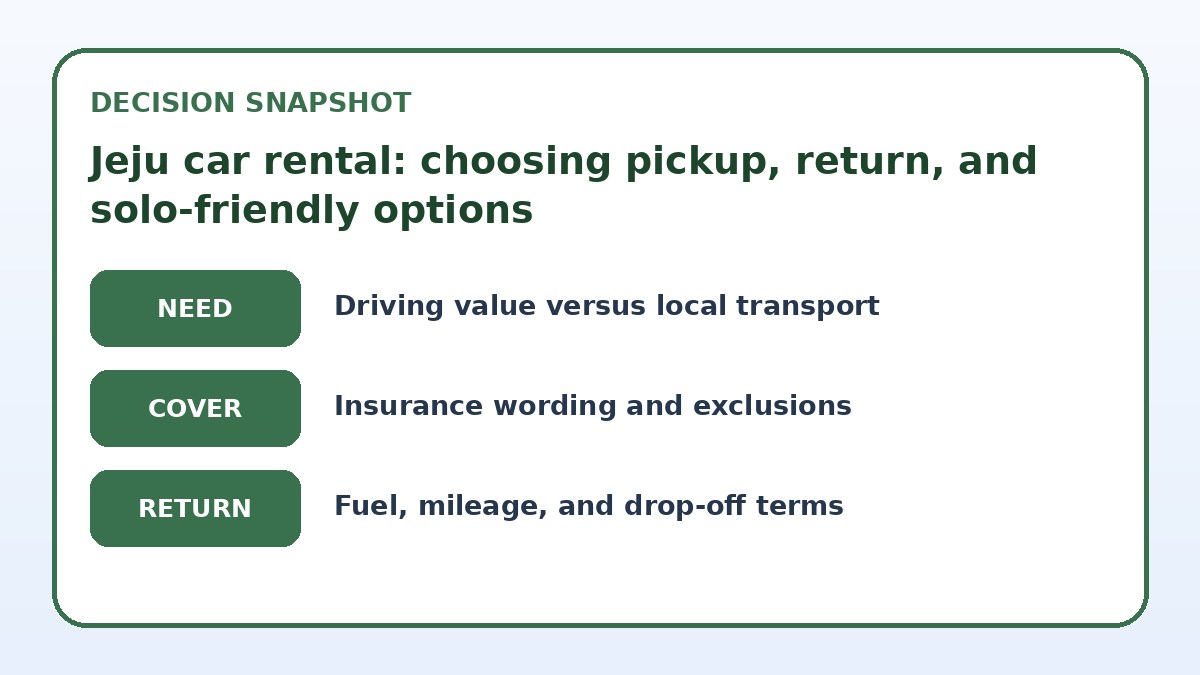
If you’re traveling solo on Jeju, the most practical decision you’ll make after choosing dates is where and how to pick up and return your rental car. Pickup and return terms determine how flexible your day can be, whether you’ll need airport transfers, and how much extra time and hassle you should plan for at the start and end of the trip. This article gives the quick answer up front — what matters most at booking, what to inspect at handover, and the return choices that reduce stress — then explains tradeoffs and decision criteria that solo travelers use to prioritize convenience, safety, and cost. Use this to prepare questions for the rental company and to check the final booking page for any provider-specific rules or fees before you commit.
Where to pick up: airport, downtown, or hotel delivery?
Picking up at Jeju Airport is often the most straightforward for solo travelers because it eliminates an extra transfer after arrival. Airport desks typically have direct signage and on-site staff, which reduces the stress of finding an off-site office with luggage. That convenience can matter when you’re carrying a backpack or arriving late. However, airport pickups may use shuttle buses to off-airport lots, require wait times, or have limited night staffing. If you arrive after hours, verify how after-hours pickups are handled and whether a night surcharge applies on the provider’s booking page.
City counters or hotel delivery can be attractive if your flight lands earlier than your hotel check-in or if you prefer a drop-off near a chosen neighborhood. Hotel delivery — when offered — saves time but may include extra fees and varying handover locations (lobby versus valet). Off-airport offices sometimes have lower base rates but expect added complexity: you might need to call for a shuttle or follow signs to a lot. Always compare total travel time and any transfer steps, not just the headline rental rate, when choosing pickup location.
Key documents, driver rules, and identity checks
Before booking, confirm which documents the rental company requires at pickup: a valid driver’s license, passport, local ID, and sometimes an International Driving Permit (IDP). Requirements can differ for visitors depending on their home country, license language, or residency status. The contract will also state allowed drivers — many companies permit only named drivers. Solo travelers should verify whether adding an additional authorized driver is allowed and whether adding a second driver changes the total cost or requires both people to be present at pickup.
Security deposits and card holds are routine. Companies typically pre-authorize an amount on a credit card; some accept debit cards but with stricter conditions or extra paperwork. If you plan to use a credit card benefit (damage coverage, for example), confirm that the card issuer’s requirements are satisfied by the rental contract and inspect exactly what the rental insurer excludes. Check the provider’s final booking page to find the exact deposit amount, acceptable card types, and whether cash or prepaid cards are permitted for hold release or final payment.
| Approach | Best for | Tradeoff to check |
|---|---|---|
| Airport pickup, airport return | Minimal transfers and fast transitions between plane and car | May have higher convenience fees or limited night staffing at some counters |
| City or hotel delivery pickup, airport return | Flexible start location close to where you’ll explore first | Possible extra delivery fee and coordination with hotel staff |
| Off-airport lower-rate pickup, on-site return | Lower base rental rate when you don’t mind a short shuttle | Adds a transfer step and potential waiting time at shuttle pickup |
| One-way drop-off between locations | Route planning that ends near a different transport hub | Often incurs drop-off fees and requires checking availability in advance |
Handover checklist: what to inspect and record
At collection, do a thorough, documented inspection of the vehicle. Solo travelers should photograph or video the exterior and interior, capturing existing scratches, dents, windshield condition, and tire state with timestamps if possible. Have the agent note any damage on the contract and verify that the mileage and fuel level match what’s written. Ask to test basics — lights, indicators, air conditioning, and Bluetooth navigation if you’ll rely on it — and ensure the spare tire and jack are present. Keep copies of the signed checklist and the rental agreement on your phone.
Confirm exactly which insurance and roadside assistance services are included and which require extra payment. If you plan to drive to remote parts of Jeju or on longer routes, ask whether roadside assistance is available 24/7 and how to contact them in English if needed. Record the company’s emergency phone number and the local office address. If the agent tries to upsell waivers or supplements, ask for written terms and an explanation of what the waiver removes from your liability; this detail is crucial if you later need to file a claim.
Before you book
- Confirm pickup location hours and after-hours pickup procedures on the final booking page.
- Verify required driver documents (license, passport, IDP) match your nationality and bring originals to pickup.
- Ask the agent to document existing damage and take time-stamped photos or video before driving away.
- Record the security deposit amount and acceptable card types; carry a backup card if needed.
- Note the exact fuel policy and keep the final fuel receipt if you refuel before return.
- Confirm return window, late fees, and whether a final inspection will be performed in your presence.
Return options and timing decisions for solo travelers
Decide in advance whether you want to return the car at the same location or a different one. One-way returns can save time but frequently involve a different rate structure and may include a drop-off fee. If your trip ends near Jeju Airport and you have a flight, schedule the return with plenty of buffer time for fuel stops, a final inspection, and any shuttle from an off-airport lot to the terminal. If you’ll be returning after dark, verify the provider’s late return policy and whether after-hours drop boxes are available for keys and paperwork.
Plan for the final inspection: some companies conduct it in front of you, while others complete it later and contact you about discrepancies. Solo travelers benefit from being present for the check to avoid disputes. Keep the final fuel receipt if you refuel before returning, and request written confirmation of the vehicle’s condition and the end odometer reading. Before booking, review the rental page for the specific return cut-off time, penalties for late return, and any required cleaning or smoking policies that might affect the final charge.
Frequently asked questions
Do I need an International Driving Permit (IDP) to rent a car in Jeju?
Whether you need an IDP depends on your home country’s driving license language and the rental company’s rules. Some companies accept certain foreign licenses alone; others require an IDP in addition to your national license. Check the rental provider’s final booking page for their exact document requirements and confirm with your embassy if you’re unsure. If the booking page lists IDP as required, obtain one before you travel to avoid being turned away at pickup.
What if I arrive late at night — can I still pick up or return my rental?
Many rental companies offer after-hours pickup or drop-off but processes vary. Some provide a key drop box and request you complete paperwork online; others require pre-arranged after-hours service or charge a night fee. Before you book, ask the provider how they handle arrivals and returns outside normal hours and confirm any extra costs on the provider’s final booking page. For solo travelers arriving late, ensure you have clear instructions and contact numbers to avoid waiting or missed reservations.
How can I reduce the risk of disputes over damage or charges when returning the car?
Be proactive: document the vehicle thoroughly at pickup, keep copies of the signed condition report, and request that the final inspection be done in your presence. Take clear photos or video of the car on return, including the odometer and fuel level. Keep receipts for any fuel purchases or paid tolls. If you’re offered waivers or extra coverage, ask for written terms. If a dispute arises after return, the signed handover paperwork and timestamped media are the strongest evidence to support your case.
Final planning note
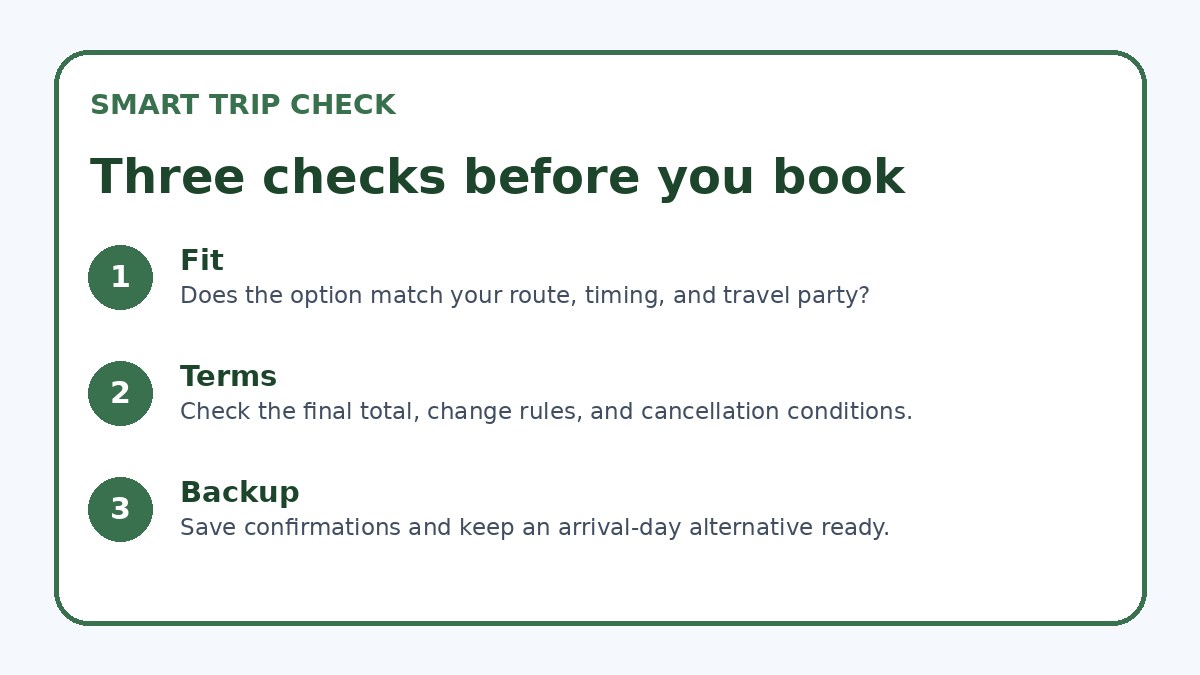
For solo travelers on Jeju, pickup and return choices shape the practical flow of your trip more than the vehicle model. Prioritize locations and times that match your arrival and departure logistics, confirm document and card requirements, and handle the vehicle inspection methodically. There are tradeoffs between convenience, cost, and flexibility: airport desks reduce transfers but can include different staffing or fees; off-airport offices may save money but require shuttles and extra time. Always read the rental provider’s final booking page and verify deposit, insurance, and return rules before you commit. If you want to compare current options and provider pages quickly, you can check services like Trip.com, but use each rental’s official terms to make the final decision.
Continue planning
Check current options and final conditions
Use the provider page to confirm live availability, the final total, cancellation terms, and every condition that matters to your trip.
This evergreen planning guide was created with AI-assisted drafting and a structured quality review. It does not display live prices, schedules, availability, visa guidance, or provider rankings. Verify current details before booking. Some links are affiliate links; we may earn a commission at no additional cost to you.