Practical answer first: most first-time visitors to Washington, DC do not need a rental car if they plan to stay near the National Mall, are comfortable using transit, rideshares, and walking, and will spend most time inside the city. A car becomes useful if you plan day trips outside the District, are staying in a suburban neighborhood with limited transit, travel with a lot of luggage, or need flexible mobility for family members. This article helps you decide by spelling out the tradeoffs—time saved versus parking hassle and cost—plus the key checks to run before you click Reserve. If you do compare rental options, verify pickup/return locations, airport shuttle details, insurance choices, mileage rules, and where local parking is available. You can compare current availability on Trip.com or the provider’s booking page, but always confirm final terms directly with the rental company.
How central lodging and trip shape the need for a car
Where you stay in Washington, DC is the single biggest determinant of whether a rental car will be helpful. If you’re booked in central neighborhoods—Downtown, Penn Quarter, Capitol Hill, Foggy Bottom, or Dupont Circle—most major attractions are walkable or a short Metro or bus ride away. Many museums on the National Mall are clustered close together, which makes on-foot touring efficient and avoids the hassle of finding parking near each stop. Staying inside the District also gives you regular access to the Metrorail and extensive bus routes, which reduce the time and expense associated with driving in dense traffic and circling for curbside spaces.
By contrast, if your lodging is in a suburban Maryland or Virginia neighborhood, or in parts of the city with limited transit frequency, a rental car can be a practical choice. Suburban hotels often assume guests will drive and include on-site parking or easier curb access. Similarly, if your itinerary includes multiple destinations outside the District on the same day—historic sites, wineries, or parks—a car shortens transfers and removes the need to schedule guided day trips. Before committing, map your daily plans, estimate transfer times using public transit and rideshares, and compare that to a driving plan that accounts for traffic and parking pauses.
Parking, traffic, and neighborhood rules to verify
Parking in Washington, DC is constrained in many parts of the city, and rules vary block by block. Residential permit zones, time-limited metered spaces, and private garages are common, and enforcement is regular. If a hotel advertises parking, check whether it is on-site, off-site, or valet, and whether there are height or size restrictions. For street parking, look up residential parking permit zones and meter hours near your lodging and planned attractions. For multi-stop sightseeing, remember that museum and monument garages may be some distance from the sites, which can add walking time and make driving less convenient than it first appears.
Traffic patterns also influence whether driving saves time. Commuter peaks and event traffic around stadiums or conference centers can create delays. If you plan to drive during the morning or evening rush, expect slower trips and the need to budget extra time. Use a reliable navigation app to preview typical travel times for your dates, and check whether parking garages accept reservations. When booking, verify cancellation rules and any height or oversized vehicle limits on the rental provider’s final booking page so you don’t encounter unexpected restrictions at pickup or while parking downtown.
| Approach | Best for | Tradeoff to check |
|---|---|---|
| No rental — rely on Metro, buses, and walking | Visitors staying centrally who prioritize convenience, low hassle, and lower per-day transport cost. | Less flexibility for day trips or heavy luggage and potential waits or transfers on public transit. |
| Short-term rental for a day or two | Visitors who want one or two day trips outside the District without keeping a car for the whole stay. | You still need to handle pickup/return logistics and pay for parking on driving days. |
| Full-stay rental parked at hotel | Guests in suburbs or travelers with mobility needs, equipment, or a multi-destination road itinerary. | Higher parking and permit costs plus time spent navigating traffic and searching for spaces. |
| Guided excursions and point-to-point shuttles | Sightseers wanting day trips without driving or the parking hassle. | Less flexibility in timing and route compared with an independent rental. |
Costs and insurance: what to confirm before reserving
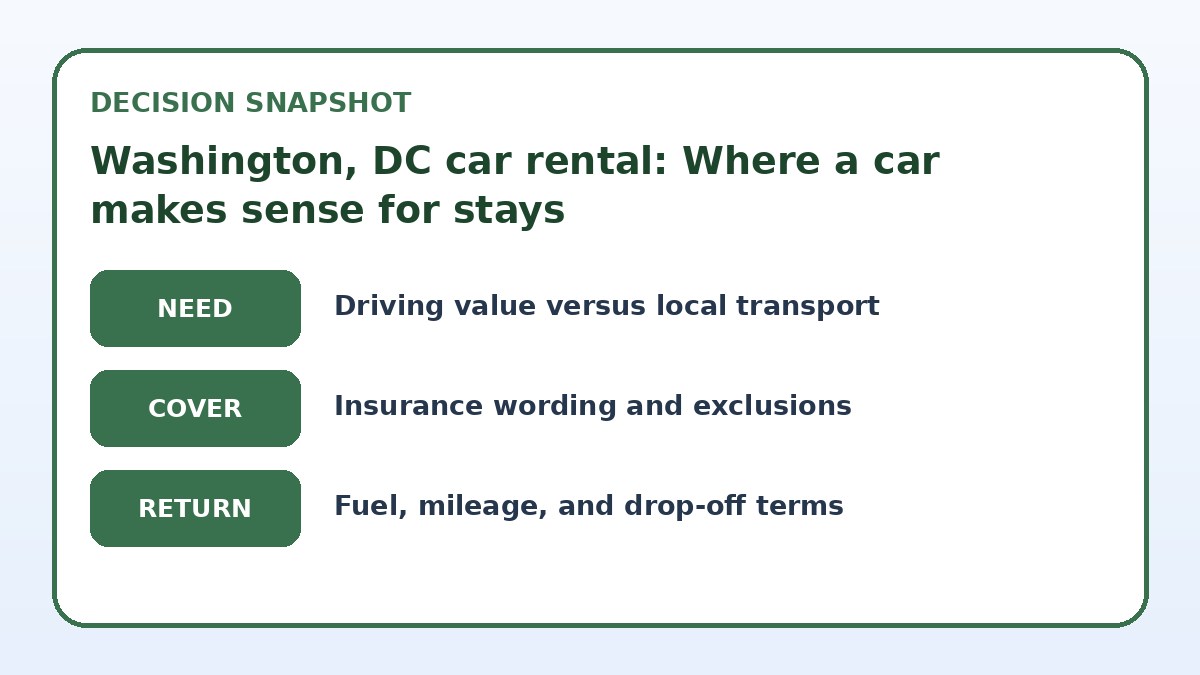
The headline rental rate is only part of the total cost. Before you reserve a Washington, DC car rental, confirm which fees apply at checkout: airport surcharges, additional driver fees, young-driver charges, taxes, and any location-specific fees. Also check the fuel policy, mileage limits, and whether tolls are handled by the company (prepaid transponder fees or pay-by-plate charges are common). If you plan to use toll roads such as the George Washington Memorial Parkway or the Dulles Toll Road, confirm whether the vehicle includes a transponder and how tolls will be billed to you.
Insurance is another area to verify carefully: determine what your personal auto policy or credit card covers for rental vehicles, and compare that to options offered by the rental company. If you prefer to decline the company's coverage, confirm acceptance criteria and documentation required at pickup. Also check damage reporting and roadside assistance procedures on the provider’s final booking page. These are all items that can materially change the total cost and risk exposure of renting, so get the precise language from the rental agreement before you confirm.
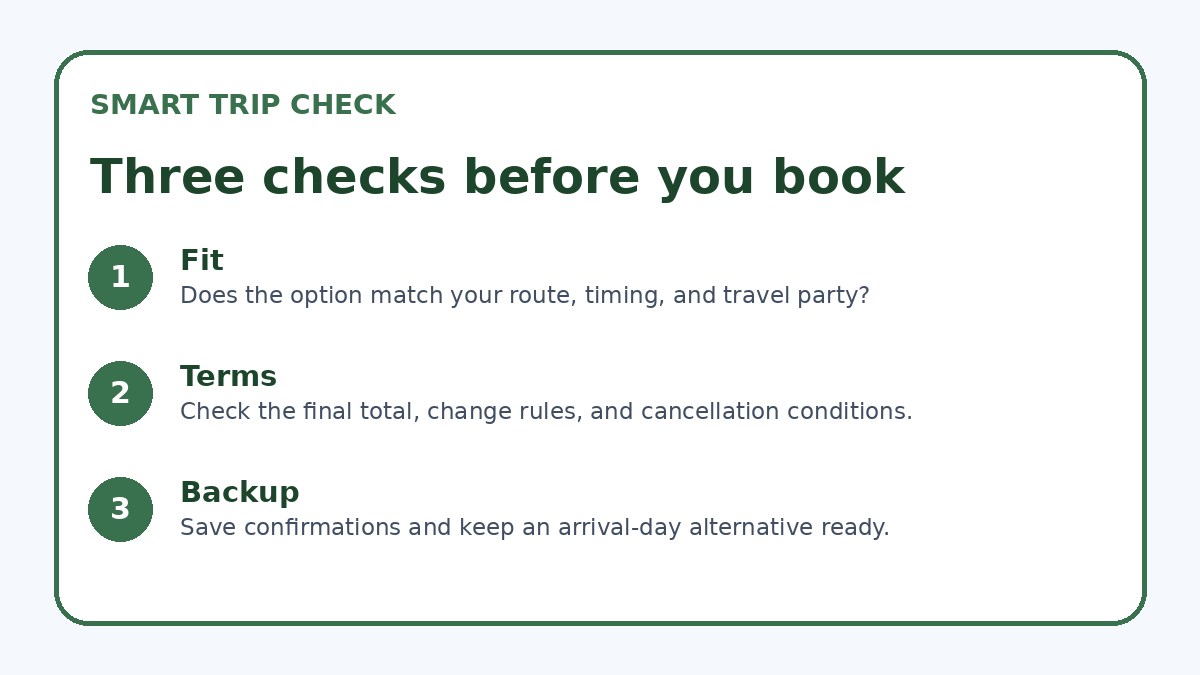
Before you book
- Map each day’s destinations to see whether they’re walkable or near a Metro stop before deciding on a rental.
- Contact your hotel to confirm on-site parking availability, pricing, and overnight storage rules.
- Compare rental pickup locations and verify airport shuttle or off-site counter logistics on the provider’s booking page.
- Check your personal auto insurance and credit card rental coverage; document what you’ll decline or accept from the company.
- Estimate parking and expected toll costs for your planned routes, and confirm whether the rental includes a toll transponder.
- Reserve a compact vehicle if you decide to drive, and note height limits or garage restrictions listed in the rental terms.
Alternatives to renting and when a rental is worth it
Public transit and rideshares cover most visitor needs inside Washington, DC. The Metro connects key neighborhoods and is supplemented by buses and the DC Circulator in tourist corridors. Rideshare services and local taxis provide flexible point-to-point trips for late-night returns or destinations not well served by transit. For guided day trips or visits to crowded downtown sites, consider booking organized excursions that handle pickup and drop-off; these eliminate the parking and navigation burden and can be cost-effective for parties that otherwise would split a rental and parking fees.
A rental makes sense when your itinerary includes multiple day trips outside the city on the same trip, when you have mobility or equipment needs (child seats, sport gear) that are harder to manage via transit, or when your lodging lacks regular transit service. If you decide to rent, plan for limited downtown parking and pick a compact vehicle for easier maneuvering. Verify pickup and drop-off logistics—airport vs. neighborhood counters, shuttle requirements, and after-hours return procedures—on the rental company’s booking page to avoid surprises at arrival or departure.
Frequently asked questions
Is Washington, DC car rental necessary for seeing the monuments and museums?
No, a car is not necessary to see the core monuments and Smithsonian museums on the National Mall. The Mall and many museum clusters are designed for walking, and the Metrorail and bus network provide efficient connections to neighborhoods with high visitor concentrations. For typical sightseeing days that stay within the central District, public transit or a mix of transit and occasional rideshares will often be faster and less stressful than driving, when you factor in parking searches and meter rules. Consider a car only if your plans include regular travel outside the District or specific mobility needs that transit can’t meet.
Where should I pick up a rental car if I decide to drive?
Picking up a rental at a major airport terminal or an off-airport rental center both have pros and cons. Airport counters can be convenient if you arrive by air, but they may include additional airport fees and require a shuttle transfer to the lot. Neighborhood pickup locations might be closer to your lodging but could have limited hours. Before booking, check the provider’s exact pickup and return address, shuttle details, and after-hours return procedures on their booking page so you can plan arrival times and avoid missed pickups or unexpected extra charges.
How do parking rules and enforcement affect first-time visitors?
Parking rules in Washington, DC vary by block and time of day, and parking enforcement is active. You’ll encounter metered spaces, residential permit zones, time-limited curbside spots, and private garage rules. Violations can result in fines or towing, so read posted signs carefully before leaving a car. If your hotel offers parking, confirm whether it’s on-site, valet-only, or in a nearby garage, and whether overnight rates apply. When planning drives to popular sites, factor in the time needed to find legal parking and whether reserving a paid garage is worthwhile for peace of mind.
Final planning note
Deciding whether a Washington, DC car rental fits your first trip comes down to where you’ll stay and what you intend to do. If the bulk of your time is inside the District’s central neighborhoods and museums, choose transit, walking, and occasional rideshares to avoid parking headaches and extra fees. Rent a car when your lodging lacks transit access, you have multiple same-day excursions outside the city, or you require special mobility or equipment that’s hard to manage otherwise. Before booking, map your days, confirm hotel parking and rental pickup logistics, and verify insurance and toll handling on the provider’s final booking page. Doing those checks will keep you flexible, informed, and ready to enjoy the city without surprises.
Continue planning
Check current options and final conditions
Use the provider page to confirm live availability, the final total, cancellation terms, and every condition that matters to your trip.
This evergreen planning guide was created with AI-assisted drafting and a structured quality review. It does not display live prices, schedules, availability, visa guidance, or provider rankings. Verify current details before booking. Some links are affiliate links; we may earn a commission at no additional cost to you.