
If you want a realistic booking window for New York City travel deals, aim to lock flights 6–8 weeks before travel and hotels 4–10 weeks out for flexible solo trips—then refine by your priorities. That simple starting point balances common demand patterns, solo flexibility, and the chance to spot good fares or room options without endless monitoring. From here, adjust earlier if you need specific neighbourhoods, exact dates, or low-cost carriers, or push later if you have high date flexibility and want last-minute savings risk. Below I explain the tradeoffs—what you sacrifice or gain by booking earlier or later—and give concrete decision criteria so you can choose a window that matches your budget, comfort with risk, and preferred New York experience.
Decide your priority: price, location, or flexibility
Start by naming the single most important factor for your New York trip. Price-driven solo travelers will tolerate longer transport times or simpler neighborhoods to shave costs; location-focused travelers prioritize being near specific subway lines, museums, or neighborhoods and may accept higher rates. Flexibility-first travelers want refundable or changeable bookings and will trade a higher base cost for the right to pivot plans without steep penalties. Choosing one dominant priority prevents paralysis: it clarifies whether you should be aggressive hunting deals or act quickly to secure a precise room or flight.
Translate that priority into a booking rule. If price is primary, set alerts and be ready to book when a fare or pulse-saving hotel room shows up within your target budget—this can mean booking closer to travel if you can risk limited choice. If location matters most, start searching earlier and reserve refundable options if possible; specific neighborhoods and boutique hotels fill earlier than large chains. If flexibility wins, focus on fares and rates that explicitly show change and cancellation terms; always read the provider's final booking page for applicable fees and deadlines.
Flight timing: how to compare direct and connecting options
When looking at flights to New York City, compare direct and connecting itineraries for total door-to-door time, cost, and risk of disruption. A direct flight reduces complexity and luggage risk but can be pricier; a connecting option may save money but adds potential delays and missed connections to manage alone. Evaluate whether the savings justify extra layovers by factoring in airport transfers, your tolerance for rushed connections, and the value of arriving earlier or later in the day. For independent verification, always check the airline's own booking page for baggage rules and connection minimums.
Use a consistent comparison method: line up total travel time, earliest arrival, latest departure, and all fees that might apply on the carrier's final page. If multiple carriers offer similar schedules, prioritize the itinerary with the most reliable transfer times and better recovery options in case of delays (longer minimum connection time, same-carrier segments). For solo travelers, consider the stress cost of managing connections alone—sometimes a modest premium for a single nonstop saves time and reduces anxiety.
| Approach | Best for | Tradeoff to check |
|---|---|---|
| Book early (3+ months) | Fixed dates, specific neighborhoods, major events | Higher upfront commitment and less chance to catch late discounts |
| Book medium (4–10 weeks) | Balanced solo trips seeking reasonable price and choice | Requires active monitoring; may miss last-minute spikes or bargains |
| Book late (0–3 weeks) | Flexible travelers chasing last-minute rates or weekend getaways | Limited room types and neighborhoods; higher stress managing options |
| Stagger bookings (flights early, hotels later) | Locking arrival logistics while retaining lodging flexibility | May lose best hotel inventory or face higher rates close-in |
Hotel timing: neighborhoods, cancellation, and inventory
Hotels in Manhattan and popular Brooklyn neighborhoods can show constrained inventory during cultural events, fashion weeks, and major conventions; if your trip overlaps such dates, book earlier to secure location and amenities. Otherwise, many mainstream hotels release rooms at the same season’s cadence: you’ll usually find a wider selection four to ten weeks out. Use the hotel’s final booking page to confirm whether the rate is prepaid, nonrefundable, refundable with a deadline, or changeable—those distinctions determine how confidently you can reserve earlier and still pivot if plans change.
Chain-brand properties often publish more flexible rates and clearer loyalty benefits; boutique hotels may offer distinctive stays but with stricter terms. Solo travelers should weigh the peace-of-mind value of refundable bookings against rate savings for nonrefundable rooms: a cheaper prepaid room can be worth it if your dates are locked, but refundable options ease uncertainty. Before booking, verify any included extras (breakfast, Wi-Fi, taxes) and cancellation windows on the provider’s final booking page so you’re not surprised by fees or restrictions.
Before you book
- Decide your top priority (price, location, or flexibility) and write it down before searching.
- Set flight alerts 12 weeks out, then be ready to book within a 6–8 week window or when your target fare appears.
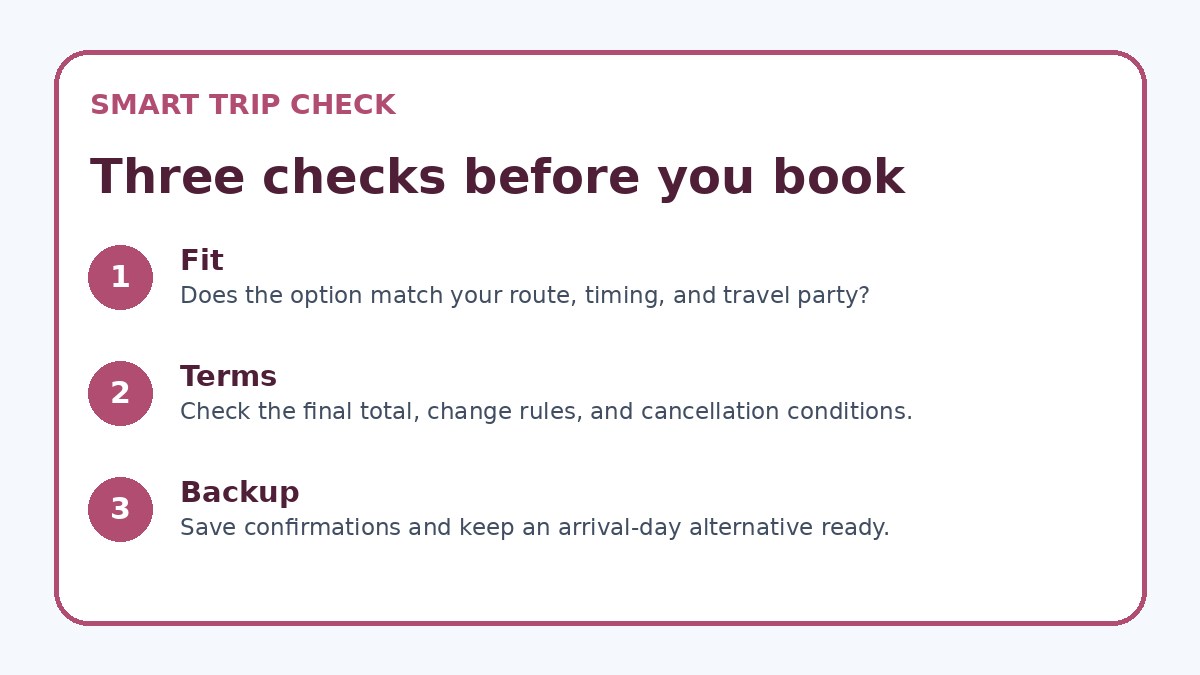
- Check hotel cancellation and change terms on the provider's final booking page before reserving any prepaid rate.
- Compare total door-to-door travel time for direct vs connecting flights, including airport transfer estimates.
- Monitor neighborhood inventory for your preferred dates and book earlier if you need a specific borough or amenity.
- If booking late, expand search radii, consider weekday stays, and reconfirm all booking terms immediately after purchase.
When to use alerts, blackout windows, and last-minute moves
Set fare and rate alerts but decide a practical monitoring horizon—don’t watch endlessly. For flights aim to monitor starting around 12 weeks out and be ready to act in the 6–8 week sweet spot; for hotels, start checking six to twelve weeks before, narrowing to a concrete booking window as you approach your target dates. Use alerts to catch dips but set a personal cap: if a fare or room doesn’t reach your ceiling price by your chosen deadline, move forward with the best option rather than waiting indefinitely. This prevents analysis paralysis and avoids missing decent deals that meet your needs.
If you prefer last-minute flexibility, accept tradeoffs: inventory and neighborhood choice narrow, and risk of price spikes around weekends or events rises. Last-minute can work well for solo travelers comfortable staying wherever is available and who can handle flexible itineraries; it’s less suitable if you need a specific neighborhood, accessible room, or particular amenities. Always reconfirm cancellation terms on the final booking page and consider short-term stay platforms or last-minute hotel apps if you decide to book within a week of arrival.
Frequently asked questions
How far in advance should a solo traveler buy flights to New York City?
For most solo travelers, a practical booking window for flights is about six to eight weeks before departure; this balances fare volatility and seat availability while avoiding months of active monitoring. If you have fixed dates around major events, book earlier to avoid sold-out flights. Conversely, if you’re highly flexible and willing to accept off-peak times or connecting itineraries, you can sometimes find lower fares closer to departure—but expect more limited schedules and potentially fewer direct options. Always verify baggage rules and change fees on the airline’s final booking page before purchase.
Should I book my New York hotel before or after I buy a flight?
If your dates and preferred neighborhood are essential, book the hotel soon after purchasing flights; hotels in high-demand areas can sell out even if flights remain available. If location is less important and you prioritize price or flexibility, you can wait and watch hotel rates within a conservative window—often four to ten weeks out—then book once a rate or room type meets your criteria. When choosing, confirm the rate type (refundable vs prepaid) and cancellation deadlines on the provider’s final booking page so you understand your change options.
Can last-minute booking work for a solo trip to New York City?
Yes, last-minute booking can work if you value flexibility and are willing to accept fewer lodging choices and potentially irregular schedules. Last-minute deals occasionally appear for hotels and flights, particularly midweek or outside peak seasons, but inventory for preferred neighborhoods or room types can be thin. Solo travelers should prepare to expand search areas, consider alternative airports, and verify all terms on the booking page. If your trip overlaps big events, last-minute strategies are riskier because demand often keeps prices high and inventory low.
Final planning note
Choosing a realistic booking window for New York City travel deals comes down to three honest questions: how fixed are your dates, how important is neighborhood and room type, and how much uncertainty can you tolerate? For most solo travelers, the practical compromise is to watch fares starting around 12 weeks out and commit to flights in a six to eight week window while reserving hotels four to ten weeks before travel—unless you need an earlier lock for events or a specific locale. Use alerts intelligently, read the provider’s final booking page for cancellation and fee details, and pick the approach that protects what matters most to your trip: price, place, or flexibility.
Continue planning
Check current options and final conditions
Use the provider page to confirm live availability, the final total, cancellation terms, and every condition that matters to your trip.
This evergreen planning guide was created with AI-assisted drafting and a structured quality review. It does not display live prices, schedules, availability, visa guidance, or provider rankings. Verify current details before booking. Some links are affiliate links; we may earn a commission at no additional cost to you.