
If you have one or two full days for monuments and museums or a longer trip to explore neighborhoods, the single most useful booking decision is where in Washington, DC you put down your bags. Choose near the National Mall for museum-heavy itineraries, Penn Quarter/Chinatown for restaurant and theatre options, Dupont Circle for walkable cafés and nightlife, or Capitol Hill for a quieter feel close to Union Station. Each area gives a different mix of walking access, transit convenience, evening options, and hotel styles—from larger chains and business hotels to smaller boutique properties. Below is practical guidance that compares those areas, explains the tradeoffs, and gives decision criteria so you can match your priorities—sightseeing, dining, nightlife, or quieter residential streets—to the best hotel location.
National Mall and Smithsonian area: sightseeing first
The National Mall area is the obvious pick if your main goal is museums and monuments. Staying along the Mall or within a few blocks puts the Smithsonian museums, the Washington Monument, and the reflecting pool within comfortable walking distance, letting you return to your room between exhibitions or breaks. Hotel options here tend toward larger, established properties that cater to tourists and conference guests. If early starts for popular museums or monument lighting are part of your plan, proximity on foot adds convenience and saves transit decisions and time.
Tradeoffs include a quieter evening scene directly on the Mall—many restaurants are a short walk into Penn Quarter, Chinatown, or along Pennsylvania Avenue, but nightlife immediately adjacent to the Mall is limited. For visitors who want long daytime sightseeing and an easy route back to rest before dinner, the Mall location is efficient. If you prefer more in-neighborhood dining and bars within two minutes of your hotel, look instead at Penn Quarter, Dupont Circle, or downtown neighborhoods that cluster restaurants and evening entertainment closer to accommodations.
Penn Quarter / Chinatown: central and lively
Penn Quarter and Chinatown sit between the Mall and downtown business districts, so they offer a strong balance for first-time visitors who want daytime museums and evening entertainment. This area places you within walking distance of the National Portrait Gallery, accessible restaurants ranging from casual to higher-end, and several theaters. Hotels here often include a mix of business-focused chains and boutique properties that cater to both tourists and professionals attending nearby events or shows. For visitors who value being in the middle of activity—dining, cocktails, and cultural venues—this neighborhood is a practical choice.
The tradeoff is that rooms facing busy streets can be noisier in the evenings and early mornings compared with more residential neighborhoods. Rates and availability also vary with conventions, performances, and regional events, so verify cancellation policies and final booking details on the hotel's reservation page. If your priority is striking a balance—daytime Mall access plus a lively evening—you’ll likely find Penn Quarter or Chinatown puts the most options within easy walking reach.
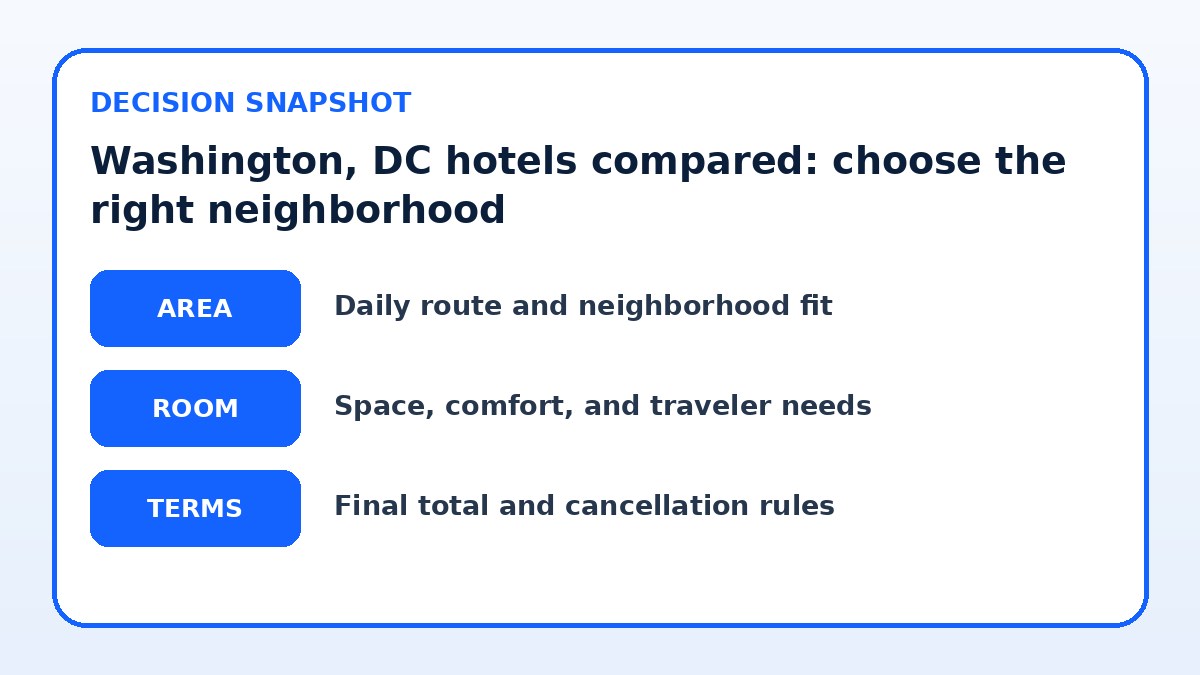
| Approach | Best for | Tradeoff to check |
|---|---|---|
| Stay on the National Mall | Maximizing museum and monument walking time | Less neighborhood dining and nightlife immediately nearby |
| Penn Quarter / Chinatown | Balanced daytime and evening activities within walking distance | Busier streets and potentially higher demand during events |
| Dupont / Logan Circle | Neighborhood atmosphere, cafés, and nightlife | Longer transit or taxi rides to the Mall and Capitol |
| Capitol Hill / Union Station | Rail connections and a quieter, residential stay | Fewer evening options within immediate walking distance |

Dupont Circle and Logan Circle: neighborhood charm and nightlife
If you prefer a neighborhood with cafés, independent shops, and a lively bar scene, Dupont Circle and Logan Circle offer a more residential, local feel. These areas are known for tree-lined streets, embassies, and a concentration of restaurants and late-night spots, which makes them great for visitors who want to eat and drink in the neighborhood before or after sightseeing. Expect smaller boutique hotels, guesthouses, and a handful of well-positioned chains that reinforce the local atmosphere. Public transit is good—Metro and bus connections are available—but plan slightly longer travel times to reach the Mall and Capitol.
The tradeoff is convenience for the Mall: compared with staying in the Mall or Penn Quarter, you will likely spend additional travel time getting to some major museums and memorials. For many travelers the tradeoff is worth it because the neighborhood experience extends their time enjoying the city’s food and nightlife without needing to return to a distant downtown. If quieter nights and a local vibe matter more than being steps from the museums, Dupont or Logan Circle is a strong match.
Before you book
- Decide whether walking distance to the National Mall or evening neighborhood options matter more for your trip.
- Check the hotel’s proximity to the nearest Metro station and verify which lines serve that station on the provider’s booking page.
- Confirm the hotel’s cancellation policy, taxes, and any mandatory fees on the final booking page before payment.
- Review recent guest photos and recent reviews for noise, cleanliness, and location-specific tips before booking.
- If you’ll use Union Station or area rail services, confirm luggage-handling options and transit links from the hotel to the station.
- Compare room types for quietness (courtyard or higher-floor rooms) and request quiet-facing rooms if you’re sensitive to street noise.
Capitol Hill and Union Station: transit hub and historic streets
Capitol Hill and the area around Union Station are appealing if you want a quieter base with excellent regional rail and Amtrak connections. Union Station doubles as a transit hub, so if you’re arriving by train or plan day trips to nearby destinations, this area can reduce transfers. Capitol Hill neighborhoods show off historic rowhouses and a calmer residential pace; staying here provides proximity to the Supreme Court, the Capitol building, and local markets. Hotels tend to be smaller and more businesslike; the setting is more residential than touristy.
Tradeoffs include less nightlife and fewer evening dining options within immediate walking distance compared with Penn Quarter or Dupont Circle. Transit access makes it straightforward to reach the Mall, but you will likely use Metro or ride services more often than walking. If you prioritize rail connections and a quieter place to sleep after long days of touring, this neighborhood is practical. Remember to check final booking pages for exact transit details, accessibility features, and any property-specific policies.
Frequently asked questions
Which Washington, DC neighborhood is best for seeing the National Mall and museums on foot?
Choose a hotel on or adjacent to the National Mall if you plan to spend most days inside Smithsonian museums and at memorials. Staying within a few blocks saves time and reduces dependence on transit for daytime touring. If you also want lively evening options, consider Penn Quarter—it's a short walk from the Mall and adds restaurants and theatres within easy reach. Always confirm exact walking distances and public transit options on the hotel’s booking details if proximity to a specific museum matters to your itinerary.
Is staying near Union Station a good idea for arriving or leaving by train?
Staying near Union Station is practical if you arrive or depart by Amtrak or regional rail, because it minimizes transfers and often reduces taxi or ride-share time. The station also connects to Metro lines and intercity buses, which can simplify day trips. The neighborhood tends to be quieter at night than downtown, so expect a more residential feel and fewer late-night dining options. For convenience, check the hotel’s transit directions and any luggage storage or late-check-in policies on its final booking page.
How should I weigh price versus location when choosing a DC hotel for a first visit?
Decide what you want to prioritize: time saved walking to major sights, proximity to evening activities, or quieter residential streets. A more central location like Penn Quarter reduces time spent on transit but can cost more during busy periods; a hotel in Dupont Circle may cost less for comparable comfort and provide better nightlife, though transit to the Mall will take longer. Use the hotel’s mapping and transit information on the booking page to estimate daily travel time, then weigh that against any savings to determine overall value for your specific plan.
Final planning note
For a first-time visitor, the most practical way to choose Washington, DC hotels is to match neighborhood strengths to your priorities. Pick the National Mall for walkable museum and monument access, Penn Quarter for a central mix of daytime and evening options, Dupont or Logan Circle for neighborhood charm and nightlife, or Capitol Hill/Union Station if rail connectivity and a quieter base matter most. Before booking, verify the hotel’s exact location, access to Metro lines or stations, cancellation terms, and room details on the provider’s final reservation page. If you want a quick snapshot of availability while you compare neighborhood fits, checking a comparison site such as Trip.com can help, but always confirm final charges and policies on the hotel’s own booking page.
Continue planning
Check current options and final conditions
Use the provider page to confirm live availability, the final total, cancellation terms, and every condition that matters to your trip.
This evergreen planning guide was created with AI-assisted drafting and a structured quality review. It does not display live prices, schedules, availability, visa guidance, or provider rankings. Verify current details before booking. Some links are affiliate links; we may earn a commission at no additional cost to you.