
Practical answer up front: families traveling from Dubai to Doha should prioritize convenience for very young children or tight schedules—choose the most direct flight option with comfortable connection times—while households wanting lower risk from disruptions should prioritize schedule flexibility, picking fares and itineraries that allow easy rebooking or reasonable transfer windows. Which choice is right depends on your children’s ages, tolerance for time in transit, luggage and stroller needs, and how much buffer you want against delays. This article breaks down the tradeoffs: why a shorter journey helps with comfort but can reduce flexibility, and how adding cushion or choosing different fare rules changes the family experience. Read the decision criteria, compare approaches, and use the checklist to verify provider-specific details before you book; you can scan live availability on Trip.com but confirm all meal, baggage, and rebooking rules on the airline’s final booking page.
Decide what matters most to your family
Start by naming the non-negotiables: the youngest child’s sleep schedule, whether a single parent will handle carry-on and an infant, and whether wheelchair or stroller assistance is required. These practical constraints shape whether convenience—minimal walking, fewer flights, shorter total journey—beats strict schedule flexibility. If keeping a nap routine or avoiding long layovers is essential, prioritize itineraries with minimal airport time and straightforward connections. If you can be flexible on travel time, prioritize fare rules and connection buffers that let you change plans with less penalty.
Also consider risk tolerance. Families comfortable accepting a longer total travel time for cheaper or more easily changed tickets should plan for extra time at each transfer and a clear backup plan if one leg is delayed. That could mean booking the same carrier across segments to simplify rebooking, or choosing slightly longer but guaranteed transfer windows. Balance these choices against the child-care logistics you’ll face during unexpected waits—adult restrooms with changing tables, quiet spaces, and easy family dining options can be decisive.
Comparing direct and connecting options
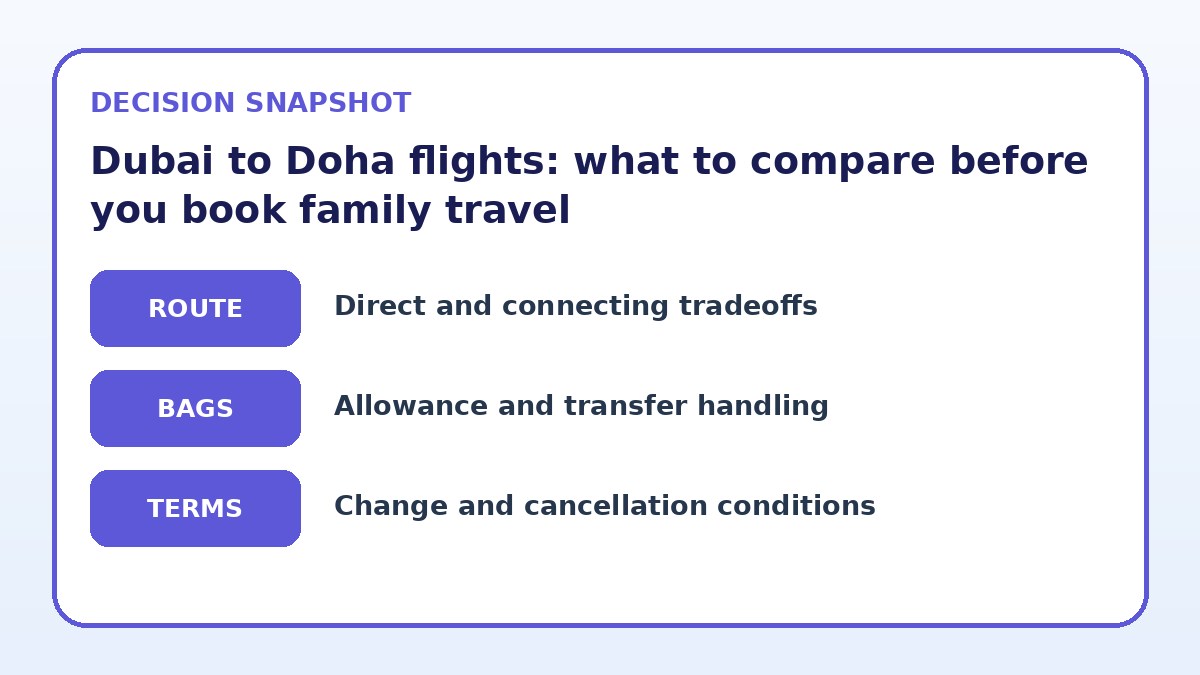
When direct flights are available, they usually offer the clearest convenience: one takeoff and one landing, less time managing children between terminals, and reduced risk of missing a connection. But direct options may come with more restrictive fare conditions or limited seat availability for families needing adjacent seats. Always verify the booking page for seat assignment rules, whether infant/child fares allow a bassinet, and how the fare handles changes. Don’t assume a booking site’s summary contains all the small print—confirm seat, baggage, and change policies on the airline’s final booking page.
Connecting options can expand scheduling choices and sometimes lower cost, but they introduce complexity: potential terminal changes, extra luggage handling, and the need to coordinate meals and naps across airports. To decide, compare total door-to-door time, number of transfers, and the minimum connection time shown by the carrier. Factor in whether you prefer a single-ticket connection (which may protect you on missed links) or separate tickets (which can be cheaper but riskier). Make a family-specific plan for transfers: who carries what, which child gets priority, and where you’ll rest if connections are longer than expected.
| Approach | Best for | Tradeoff to check |
|---|---|---|
| Prioritize shortest total travel time (convenience) | Families with infants, tight schedules, or low tolerance for airport time | Less flexibility to change plans and potentially stricter fare conditions |
| Prioritize flexible fares and longer connections (flexibility) | Families with variable plans or higher risk of needing to rebook | Longer travel day, more time in airports, and possibly higher indirect costs like meals |
| Mix: direct outbound, flexible return | Families wanting comfort outbound and flexibility for changes on the way home | Can complicate rebooking rules and requires careful fare comparison across legs |
| Split tickets with buffer times | Budget-conscious families seeking wider schedule choices | Higher risk on missed connections and more logistical work if a segment is delayed |
Practical booking checks and what to verify
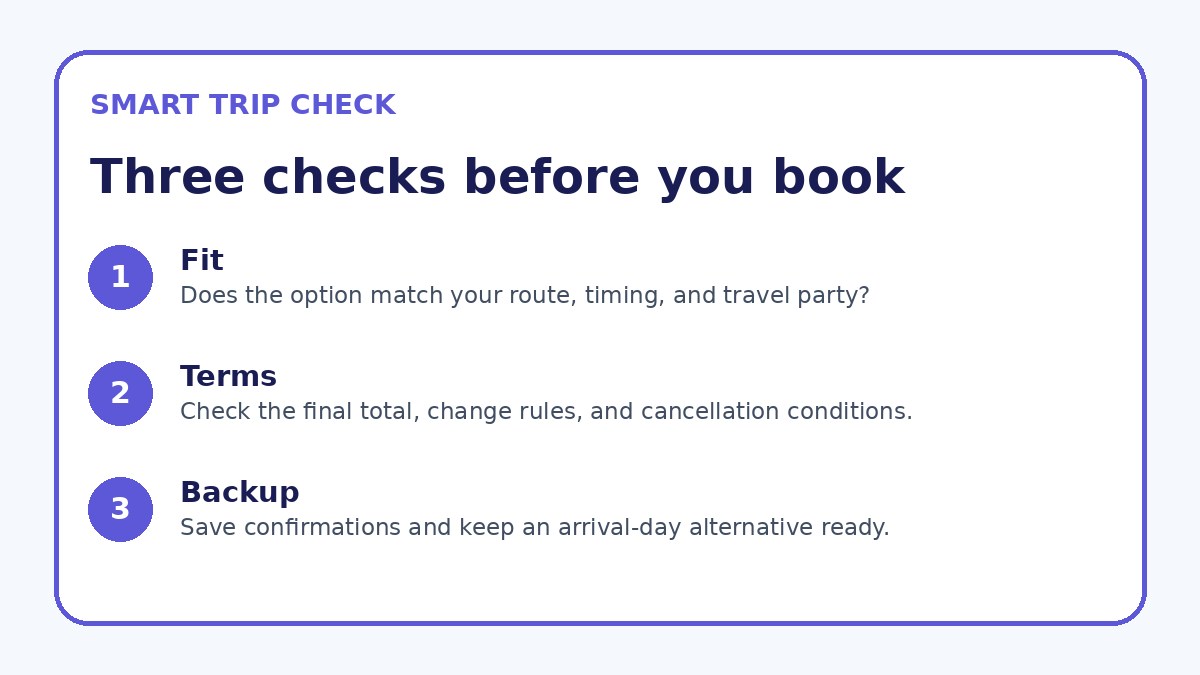
Before you hit buy, check the booking page for specifics that affect families: baggage allowances and the rules for strollers or car seats, infant seating and whether a bassinet can be reserved, seat selection (especially for families who want adjacent seats), and exact change or cancellation policies. When provider-specific facts could change, the critical instruction is to verify these items on the airline’s final booking page rather than relying solely on a meta-search summary. If you use Trip.com to compare schedules or availability, treat it as a comparison tool and then confirm fare conditions directly with the carrier.
Also inspect transfer logistics on any itinerary that includes a change: are terminal transfers indoors or require shuttle buses, is immigration needed, and how much minimum connection time does the airline recommend? For family travel, add at least 30–60 minutes beyond the airline’s minimum for comfort when planning tight connections. Finally, consider booking add-ons—priority boarding, extra legroom seats, or pre-ordered meals—to reduce in-flight stress. Verify their availability and refundability on the airline site before you finalize purchase.
Before you book
- Confirm seat assignment options and whether you can reserve adjacent seats for all family members on the airline’s final booking page.
- Verify baggage allowances and specifics for strollers, car seats, and gate-checked items before purchase.
- Check the carrier’s rebooking and refund rules for your fare class and note any fees or time limits for changes.
- Plan minimum connection times with an extra 30–60 minute buffer for family transfers and verify terminal transfer details.
- Locate family rooms, nursing areas, and child-friendly facilities at both departure and arrival airports using airport maps.
- Pack a travel kit with snacks, spare clothes, chargers, basic medications, and entertainment to cover delays and long waits.
Day-of travel and small comforts that matter
On travel day, preparation beats speed. Pack a slim, well-organized carry-on with familiar snacks, layered clothing, spare nappies or underwear, wipes, a compact blanket, calming toys, and a fully charged device with headphones and offline entertainment. Bring a small first-aid kit and any necessary medications in original packaging. Have printed and digital copies of reservation confirmations, and know where assistance desks are located at both departure and arrival airports in case you need help transferring or accessing family rooms.
Plan for contingencies: identify family restrooms, nursing rooms, and play areas in airport maps before you leave; if you’ll need a stroller to the gate, confirm whether gate-checking is allowed and how it’s handled. Allow extra time for security, passport control, and unexpected queues, and use airport services that reduce friction, like priority lanes or family screening areas if available. Keep a calm communication plan with caregivers and older children—decide who watches the luggage, who manages passports, and how you’ll regroup if separated.
Frequently asked questions
How should I choose between a direct flight and a connecting itinerary for young children?
Choose a direct flight when minimizing handling, transfers, and total travel time matters most—this reduces stress around naps and mealtimes and lowers the chance of missed connections. Choose a connecting itinerary if you need more schedule choices, better departure/arrival times, or cheaper fares, but allow extra time at each transfer and confirm whether both segments are on one ticket (which usually simplifies rebooking). Always verify seat maps and bassinet availability on the airline’s final booking page, and factor in how you’ll move strollers and luggage during any connection.
What extra time should we allow for airport transfers when traveling as a family?
Airlines publish minimum connection times, but families should add a safety buffer—typically at least 30–60 minutes beyond the airline’s minimum—to account for bathroom breaks, security queues, stroller gate-checks, or calming a distressed child. For international transfers that require immigration, customs, or terminal changes, build in more time. If you prefer fewer unknowns, choose an itinerary with longer layovers that still fit your overall tolerance for time in airports; double-check terminal transfer methods and whether you’ll need to re-clear security between gates.
How can I protect my family from disruption without paying for fully flexible fares?
You can reduce disruption risk by booking on a single ticket that covers multiple legs—airlines are likelier to rebook connecting passengers on delayed itineraries. Opt for mid-tier fare classes or add-ons that permit one free change or lower fees, and consider travel insurance that covers missed connections or illness; read what it actually covers on the insurer’s policy page. Build planning resilience: pick connections with moderate buffers, note alternate same-day flights, and keep emergency contact and documentation ready. Always confirm any protective benefits directly on the airline or insurer’s final booking pages.
Final planning note
Balancing schedule flexibility and convenience for a family crossing from Dubai to Doha is a practical exercise in priorities. Convenience—shorter travel time and fewer handoffs—minimizes stress with young children and is worth paying a bit more for many families. Flexibility reduces the cost of unexpected changes and gives peace of mind, but it often means longer days and more time in transit. The right approach blends both: identify your non-negotiables, verify key fare and facility details on the airline’s final booking page, and use moderate buffers so a delay doesn’t derail your plans. Compare live options on a travel site like Trip.com if helpful, then confirm rules and add-ons with carriers before you finalize the ticket.
Continue planning
Check current options and final conditions
Use the provider page to confirm live availability, the final total, cancellation terms, and every condition that matters to your trip.
This evergreen planning guide was created with AI-assisted drafting and a structured quality review. It does not display live prices, schedules, availability, visa guidance, or provider rankings. Verify current details before booking. Some links are affiliate links; we may earn a commission at no additional cost to you.