
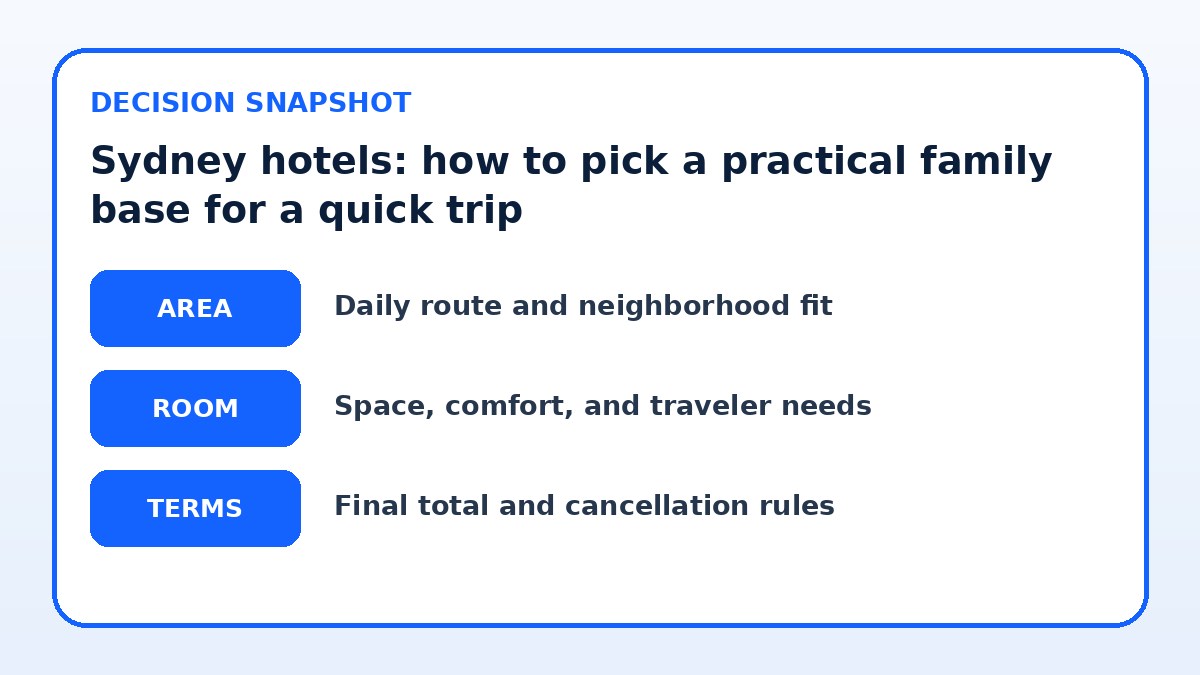
If you have only a few days in Sydney with children, pick a hotel that minimizes transfers and maximizes flexible space: central enough for quick access to key sights, close to frequent public transport, and offering family rooms or interconnecting options. For most families a base in the CBD, Circular Quay/ The Rocks, or close to Darling Harbour cuts travel time and gives easy access to ferries, trains and major attractions. Alternatively, choose an inner-suburb like Surry Hills or Pyrmont if you prefer quieter streets and apartment-style rooms that include kitchen facilities. Expect tradeoffs: quieter lodging often means extra transport time, and waterfront locations can cost more and be busier. Read room layouts and cancellation rules carefully on the hotel’s final booking page, and compare live availability on Trip.com or other booking sites before you commit.
Where to base your family: neighborhoods and practical tradeoffs
For a short stay, choose a neighborhood that minimizes time spent moving between hotel and attractions. The CBD and Circular Quay put you within walking distance of the Opera House, Royal Botanic Garden and many ferry connections; Darling Harbour is close to family attractions like the aquarium and has pedestrian-friendly areas. Staying near a major train station—Town Hall, Wynyard, or Circular Quay—also simplifies day trips to Bondi or the Blue Mountains. These locations are convenient but can be busier, and rooms can be compact; decide whether being central is worth waking earlier and navigating crowds.
If you prefer quieter streets and slightly larger rooms, inner-city suburbs such as Surry Hills, Pyrmont or Neutral Bay offer apartment-style hotels and more relaxed dining scenes. These options often provide kitchenettes or separate sleeping spaces, which are helpful for family routines, but expect a few extra minutes on public transport or a short taxi ride to the main waterfront attractions. Consider evening noise levels, the presence of parks or playgrounds nearby, and how easy it is to return for midday rest—especially important with younger children.
Room types and in-room features that make a short stay manageable
When choosing a specific hotel, focus on room layout and amenities that reduce friction. Family rooms, interconnecting rooms, or junior suites with sofa beds let older children keep a different schedule from adults. Kitchenettes or in-room fridges mean you can handle snacks, simple meals and milk without relying on restaurants for every meal. If you need a cot, check the hotel policy and confirm sizes and setup fees on the booking page before arrival.
Also check practical conveniences: in-room laundry or on-site laundry facilities let you pack lighter, while luggage storage helps with early arrivals or late departures. Air conditioning, blackout curtains and soundproofing matter when short sleep windows count. Policies that can change—cancellation terms, extra-bed charges and check-in times—should be verified on the hotel’s final booking page; I recommend saving screenshots of the confirmation that show what’s included for your family.
| Approach | Best for | Tradeoff to check |
|---|---|---|
| Central CBD or Circular Quay base | Families who want to walk to major sights and minimize transfers | Smaller rooms, louder streets and slightly higher nightly rates in peak areas |
| Darling Harbour or Pyrmont | Parents who want family attractions nearby and pedestrian-friendly public spaces | Busy daytime crowds and fewer apartment-style hotel choices |
| Inner suburbs with apartment hotels (Surry Hills, Neutral Bay) | Families who need more space, a kitchenette and quieter evenings | Longer daily commutes to major waterfront attractions |
| Airport-adjacent or transfer-friendly hotels | Families with very short stays who value quick arrival and departure | Further from central attractions, requiring extra travel time on most days |

Getting around with kids: transport and arrival considerations
Sydney’s transport network is a mix of trains, buses and ferries; for families, the ferry is often the most pleasant option because it doubles as a sightseeing ride. A hotel within a five to ten-minute walk of a ferry wharf or major train station keeps transfers short and predictable. If your hotel offers airport transfers, compare that convenience with taking public transport—sometimes a direct transfer is worth the cost with young children and lots of luggage. Remember to check stroller accessibility at stations and ferry terminals.
Plan arrival and departure logistics in advance: confirm whether the hotel holds luggage before check-in and whether rooms are typically available early in the day. For short trips, being able to drop bags and start exploring saves valuable daytime. If you’ll rely on taxis or rideshares for evening returns, check whether the neighborhood has reliable pickup spots and whether hotels allow drop-offs at their door, then verify any specific pickup arrangements on the hotel’s information page.
Before you book
- Confirm the room layout (sofa bed, interconnecting rooms, cot availability) and request photos or a floorplan on the booking page.
- Verify check-in/out times, luggage storage options and any early check-in or late checkout fees before booking.
- Check transport proximity: note walking time to the nearest train station, ferry wharf, or frequent bus stop.
- Ask the hotel about onsite laundry or nearby laundromats to avoid overpacking for a short stay.
- Review cancellation and extra-bed charges on the hotel’s final booking page and save the confirmation details.
- Look for family amenities—restaurant hours, kids’ menus, and available babysitting services—and confirm availability.
Budgeting time and expectations: what to compromise on for comfort
On a short family trip you’ll often trade space for location or vice versa. Waterfront and central hotels reduce transit time but can be noisier and have smaller rooms; suburban apartments usually offer more space and a kitchen but add travel minutes. Decide which is more valuable: extra sleeping room for napping kids, or being minutes from major attractions so you avoid peak-hour commutes. Factor in evenings too—shorter returns to the hotel can make for calmer family routines.
Also set realistic daily expectations: plan one or two major activities and leave gaps for rest and spontaneous playtime. If meals are important, staying in a place with easy breakfast options or a kitchenette helps you keep a routine without hunting for restaurants at odd hours. Before booking, compare the total door-to-door time from the hotel to your must-see spots rather than relying on distance alone—use official transport timetables and verify any seasonal changes on the provider’s pages.
Frequently asked questions
Which Sydney neighborhood is easiest for sightseeing with young children?
For first-time family visitors the CBD, Circular Quay and Darling Harbour are the easiest bases because many top sights are within walking distance or a short ferry ride. These areas also tend to have more frequent public transport options, which reduces walking time with small children and strollers. However, expect more pedestrian traffic and possibly smaller rooms; if quiet evenings and extra space matter, consider an inner suburb that trades a short transfer for larger accommodations.
Are apartment-style hotels worth it for a short stay in Sydney?
Apartment-style hotels are often worth it when travelling with children because kitchen facilities let you prepare simple meals and stick to routines, and separate sleeping areas improve flexibility. For a short stay, decide whether the time spent commuting from an apartment suburb to central attractions offsets the convenience of having more space. If you plan late evenings or midday rests, the convenience can outweigh the extra travel; if most of your time will be spent in the harbour precinct, a central hotel may be preferable.
How should I handle transfers from the airport with kids and bags?
With limited days, many families choose a direct airport transfer or taxi for simplicity, especially with young children and bulky luggage. Public transport offers cost savings and the chance to avoid traffic but may include stairs or crowded trains at peak times—check station accessibility for strollers. If you book a transfer or shuttle, verify pickup details and meeting points on the provider’s booking confirmation; if you plan to use public transport, consult official timetables and check for any planned service changes on the transit operator’s website.
Final planning note
Choosing a practical base for a short family stay in Sydney comes down to two clear decisions: prioritize location to shave minutes off travel, or prioritize space for comfort and routine. For most short trips, a central hotel near a ferry or train station reduces transit-related stress and keeps the days flexible. If your family values in-room cooking, space and quieter nights, choose an apartment-style property and accept slightly longer trips to major sights. Always check room layouts, transport walking distances and the hotel’s policies on the booking page—and compare live availability on a site like Trip.com before confirming so you know what’s included for your specific dates.
Continue planning
Check current options and final conditions
Use the provider page to confirm live availability, the final total, cancellation terms, and every condition that matters to your trip.
This evergreen planning guide was created with AI-assisted drafting and a structured quality review. It does not display live prices, schedules, availability, visa guidance, or provider rankings. Verify current details before booking. Some links are affiliate links; we may earn a commission at no additional cost to you.