Short answer: most first-time visitors to Boston don’t need a car if you base yourself in or near the downtown neighborhoods, Back Bay, Beacon Hill, or the Seaport, because subways, buses, rideshares, and walkable streets will cover the main museums, historic sites, and restaurants. You should consider a Boston car rental if your itinerary includes day trips outside the city (Cape Cod, Plymouth, north-shore towns, or western Massachusetts), if you’re traveling with a lot of luggage or mobility needs, or if you prefer the flexibility to explore beyond transit hours.
This guide focuses on how to decide for your trip: compare where you’ll stay, which neighborhoods you’ll visit, parking realities, and transit/goals. I’ll lay out tradeoffs so you can pick the approach that saves time, stress, or money based on your priorities and mobility needs.
Where to stay: neighborhoods that change the decision
Choosing your neighborhood is the single biggest factor in whether a Boston car rental makes sense. If you stay in downtown, Back Bay, Beacon Hill, or the Seaport, you’ll be within easy walking distance of the Freedom Trail, major museums, and many restaurants, and you can use the MBTA subway (the “T”) for longer hops. These neighborhoods are compact and well served by transit, which reduces the usefulness of a car for day-to-day sightseeing. Hotels in these areas often give directions for arriving guests by car and may steer you to nearby garages, but the convenience of being close to attractions often outweighs bringing a vehicle.
If your accommodation is outside the central core—Cambridge, Somerville, Jamaica Plain, or suburbs like Brookline and Newton—you’ll still have good transit but more reasons to weigh a rental. Cambridge and Somerville are bikeable and transit-rich, but if you plan to cross the river frequently or do early-morning trips to the outskirts, a car could be convenient. For stays far from the T lines or when you want easy access to regional drives, a car becomes more attractive. Always factor hotel parking rules, transfer time to transit, and how you prefer to move between points when deciding.
Getting around Boston without a car
Boston’s public transit network is dense for a U.S. city of its size. The MBTA subway and bus routes, plus commuter rail and ferries, get you to most central sights without a car. Ride-hailing services and abundant walkable neighborhoods fill in gaps for late-night returns or trips with luggage. For short distances, walking is often the fastest option because traffic, one-way streets, and parking search time make driving slower. If time-sensitive museum reservations or theatre shows are on your schedule, plan your transit legs and leave extra buffer for potential delays or service changes.
Using transit takes planning: check the MBTA maps, station entrances, and stop locations relative to where you’ll be staying. Consider getting a transit card or passes depending on trip length, and download official transit apps to check routes and alerts. For first-time visitors, guided walking tours and hop-on hop-off buses can simplify seeing highlights without needing to navigate driving and parking. Finally, remember that luggage and mobility needs may make public transit impractical for some travelers—those are valid reasons to choose a rental car.
| Approach | Best for | Tradeoff to check |
|---|---|---|
| No rental: walk, T, rideshare | Visitors staying in downtown neighborhoods who plan city-only sightseeing | Less flexibility for regional day trips; may require more walking and transit planning |
| Rent for entire stay | Travelers doing multiple day trips outside Boston or carrying lots of gear | Higher parking and stress in-city; you’ll pay for garage fees and navigate congestion |
| Park outside, use transit into city | Those who want a car for day trips but not for daily downtown movement | Requires careful planning of park-and-ride locations and adds transfer time |
| Short-term or flexible rental | Visitors who want a car only for one or two days (arrivals/departures or a single day trip) | You’ll still handle pick-up/drop-off logistics and any one-time rental fees |
Driving and parking realities in Boston
Boston’s streets are famously narrow, with many one-way stretches and irregular numbering—navigation can be stressful for unfamiliar drivers. Traffic congestion during peak hours and event-related closures are common. When you do drive, expect to budget time for slow travel and to use a navigation app that accounts for one-way streets and real-time traffic. Many central hotels do not include free on-site parking; instead they partner with nearby garages and charge per night. Street parking exists but is limited by time restrictions and resident permit zones, so verifying exact rules where you plan to park is essential.
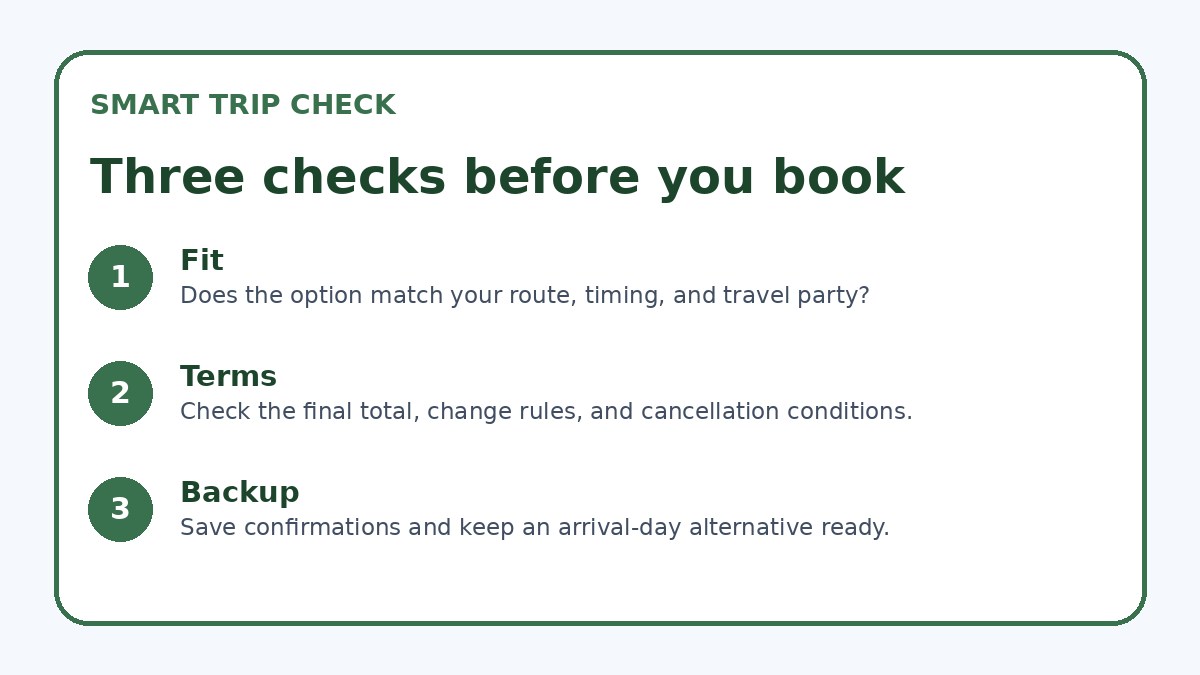
Parking costs and enforcement vary block by block; check your hotel’s parking instructions and garage rules before booking a car. If you intend to use park-and-ride options, look at commuter rail or MBTA stations with lots and compare travel time to downtown by train. For day trips, leaving a car outside the dense center and taking public transit into the core can save money and headaches. Always confirm any provider-specific rules—garage height limits, shuttle availability, or whether a hotel reserves spaces—on the provider’s final booking page before you commit.
Before you book
- List your daily itinerary with locations and mark which are inside the central neighborhoods served by the T.
- Call or email your hotel to confirm on-site parking availability, garage rates, height limits, and whether guests get discounted parking.
- Compare door-to-door travel times using transit apps versus driving for your planned main days and any day trips.
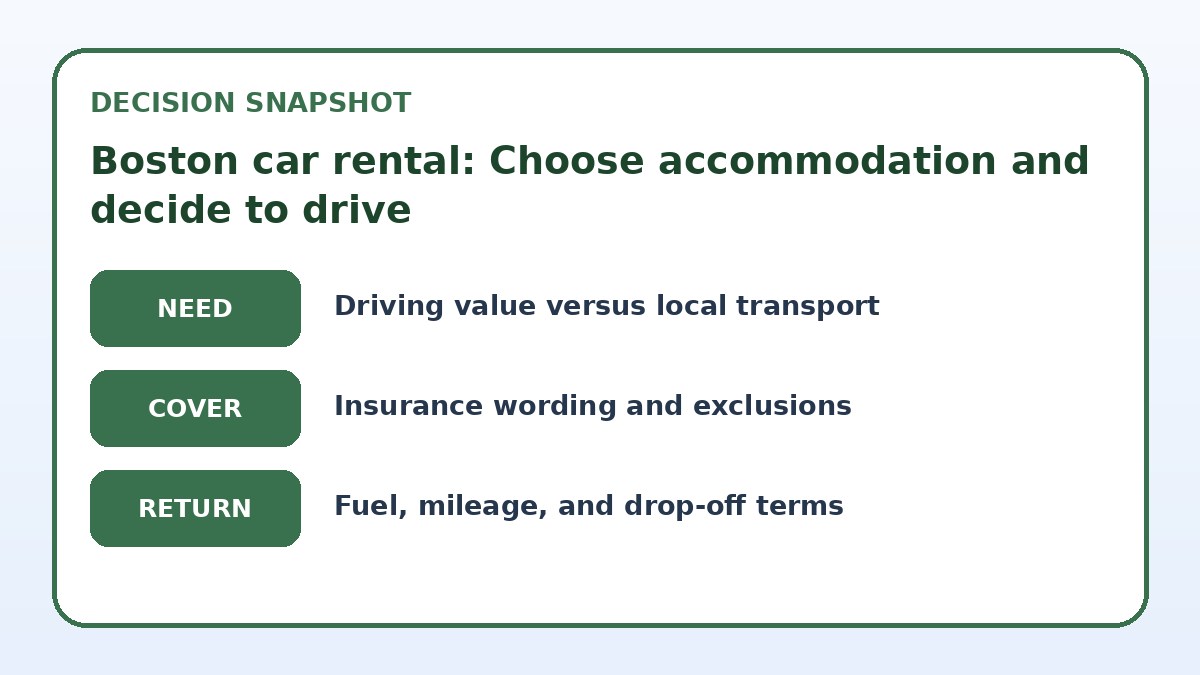
- If considering a rental, check the final booking page for fuel policy, mileage limits, pick-up/drop-off times, and insurance options.
- Estimate parking costs for each night and each day trip and add them to the rental rate before deciding.
- Plan fallback logistics: nearest T stations to where you’ll park, rideshare zones, and alternative routes in case of traffic or closures.
When a rental car is the right choice
Rent a car if your itinerary includes significant travel outside Boston’s core: Cape Cod, Plymouth, the Berkshires, or coastal north-shore towns are far easier with a vehicle and on your own schedule. Families with young children, travelers with limited mobility, or anyone carrying bulky sports equipment often find a car simplifies logistics—less coordination with transit, easier door-to-door movement, and flexible departure times. For multi-destination regional loops that don’t return each night to the city, a car is almost always the most practical option and can reduce total travel time compared with transit connections.
Also consider a car for arrivals or departures that happen outside transit hours, or if you plan to visit attractions that are poorly served by buses or ferries. If your accommodations include free parking or a reasonable hotel garage rate, that tilts the decision toward renting. Before booking, compare door-to-door time, parking costs, and how much walking you’ll do at each stop. Use Trip.com or other booking platforms to compare availability, but verify vehicle pick-up/drop-off times, fuel policies, and insurer rules on the rental company’s final booking page.
Frequently asked questions
Is parking available at most Boston hotels, and how should I plan for it?
Many Boston hotels partner with nearby garages rather than offering free on-site parking. Always contact your hotel to confirm whether they have their own lot, a contracted garage, or only street parking, and ask about nightly rates, in/out privileges, height restrictions, and shuttle service if offered. If a hotel quotes a garage, verify the exact address and instructions for drivers on the provider’s booking page. Factor those costs into your overall transportation budget before deciding whether to rent a car.
How reliable is the MBTA for first-time visitors compared with driving?
The MBTA provides frequent service on core subway lines and many bus routes in the daytime, making it a reliable choice for most central sightseeing. For first-time visitors, transit typically beats driving for speed to close-in attractions because you avoid traffic and the hunt for parking. However, service disruptions, schedule changes, and peak-hour crowding can occur, so check real-time alerts and allow extra buffer time for reservations. For early-morning or late-night trips, rideshares or a car may be more reliable than limited transit schedules.
What are good alternatives if I decide not to rent a car?
If you skip a Boston car rental, combine the T with local buses, ferries, and rideshare services. For day trips, look at commuter rail schedules and ferry options that serve nearby coastal destinations—these let you travel regionally without driving. Guided day tours can also handle transport and parking logistics for destinations like Cape Cod or Salem. If you need flexibility for a single excursion, consider a one-day rental or car-sharing service, but check pick-up/drop-off locations and operating hours on the provider’s booking page before finalizing.
Final planning note
For most first-time visitors who stay in downtown, Back Bay, Beacon Hill, or the Seaport, a Boston car rental is more hassle than help: transit, walking, and rideshares cover the essentials and save you the time and cost of parking. Rent a car if your trip includes substantial travel outside the city, you have mobility or luggage needs, or you prefer a self-drive regional loop. Whichever path you choose, plan around where you’ll sleep, estimate parking and transfer times, and verify any provider-specific rules on the booking page before committing. That planning will keep your trip smoother whether you drive or rely on Boston’s transit network.
Continue planning
Check current options and final conditions
Use the provider page to confirm live availability, the final total, cancellation terms, and every condition that matters to your trip.
This evergreen planning guide was created with AI-assisted drafting and a structured quality review. It does not display live prices, schedules, availability, visa guidance, or provider rankings. Verify current details before booking. Some links are affiliate links; we may earn a commission at no additional cost to you.