If this is your first trip to Boston, start by deciding how much effort you want to spend after landing. The practical answer: for most visitors, clear-headed public transit or an authorized airport shuttle balances price and reliability; taxis, rideshares, and private cars trade cost for door-to-door convenience. To choose, think about how much luggage you have, whether you’re traveling during peak rush hours, where you’re staying (Back Bay, downtown, or near a hospital or university), and if you need a step-free trip. This guide explains the main transfer types, how to compare them, and the key checks to make before you book or step off the plane. If you want to check current services and compare options in one place, you can look at Trip.com but verify provider pages for final terms.
Main airport transfer choices and what they feel like
Boston’s airports connect to the city in several familiar ways: public transit (light rail and commuter rail), airport shuttles, taxis and rideshares, and private car services. Public transit requires minimal planning beyond knowing the stop and any transfers; it’s usually the least complicated option for single travelers or budget-conscious visitors. Shuttles are useful for hotels or neighborhoods farther from the nearest station because they often provide shared rides with baggage handling. Taxis and rideshares are straightforward for door-to-door trips but vary in wait times and routing depending on traffic. Private cars add predictability and often a meet-and-greet at arrivals, which helps with early or late flights and large groups.
When picking a mode, picture the end-to-end journey rather than just cost: how far is your hotel from the nearest transit stop, are you comfortable navigating a subway with luggage, and do you require extra assistance for mobility or children? Consider timing too—Boston’s weekday morning and evening commutes can add notable delays for road-based transfers. If you travel during off-peak hours, roads can be quick; if you land at a busy time, rail-based options may beat driving for speed and stress. Decide whether you value speed, simplicity, or saving money, then read the provider’s booking page to confirm rules like luggage allowances, meeting points, and cancellation terms.
Comparing convenience: door-to-door vs. curb-to-platform
Door-to-door options such as taxis, rideshares, and private cars excel when you have heavy baggage, tight schedules, or a metro address without an easy transit link. They minimize walking and transfers and can drop you directly at hotel entrances or short-term unloading zones. That convenience normally comes with more variability: traffic congestion on the major approaches into the city can lengthen trips unpredictably. Also check whether your lodging allows curbside drop-off: some historic neighborhoods or private residences have limited access or time-restricted zones. For medical trips or those traveling with very young children, the door-to-door approach reduces strain and simplifies logistics.
Curb-to-platform choices—like light rail, commuter rail, and many shared shuttles—require a short walk or transfer but are often faster during commuting surges and much less affected by road incidents. They work best if your arrival terminal has a clear pedestrian routing to the transit stop and your hotel is a short walk or a single local transfer away. If you prefer lower cost and can manage luggage lifts or a small carry case, these methods are practical. Before you rely on a platform route, confirm station access points, any elevator availability for accessibility needs, and last-mile options from the station to your final address.
| Approach | Best for | Tradeoff to check |
|---|---|---|
| Public transit (light rail/commuter rail) | Solo or budget-conscious travelers comfortable with short walks and transfers | Lower cost but requires handling luggage and timing trains with your schedule |
| Shared airport shuttle | Hotel arrivals and travelers who want a middle ground of cost and assistance | More door-to-door help than transit, but longer stops and scheduled routes can add time |
| Taxi or rideshare | Small groups or travelers with heavy luggage seeking direct service | Direct routes with flexible timing, but subject to traffic delays and variable fares |
| Private car service | Groups, business travelers, or anyone needing a guaranteed meet-and-greet | High convenience and predictability, balanced against higher cost and cancellation conditions |
How to compare time, cost, and groups when booking
Start by listing non-negotiables: group size, number and size of bags, mobility needs, and preferred arrival time at your lodging. For solo travelers with light luggage and flexible timing, public transit or shared shuttle often wins on cost and reliability. For families or groups with multiple suitcases, a private car or taxi might reduce transfers and the hassle of managing multiple tickets. Consider also whether you value a predictable pick-up—private bookings and prepaid shuttles let you schedule a specific time, while rideshare arrival depends on demand at the moment you request service.
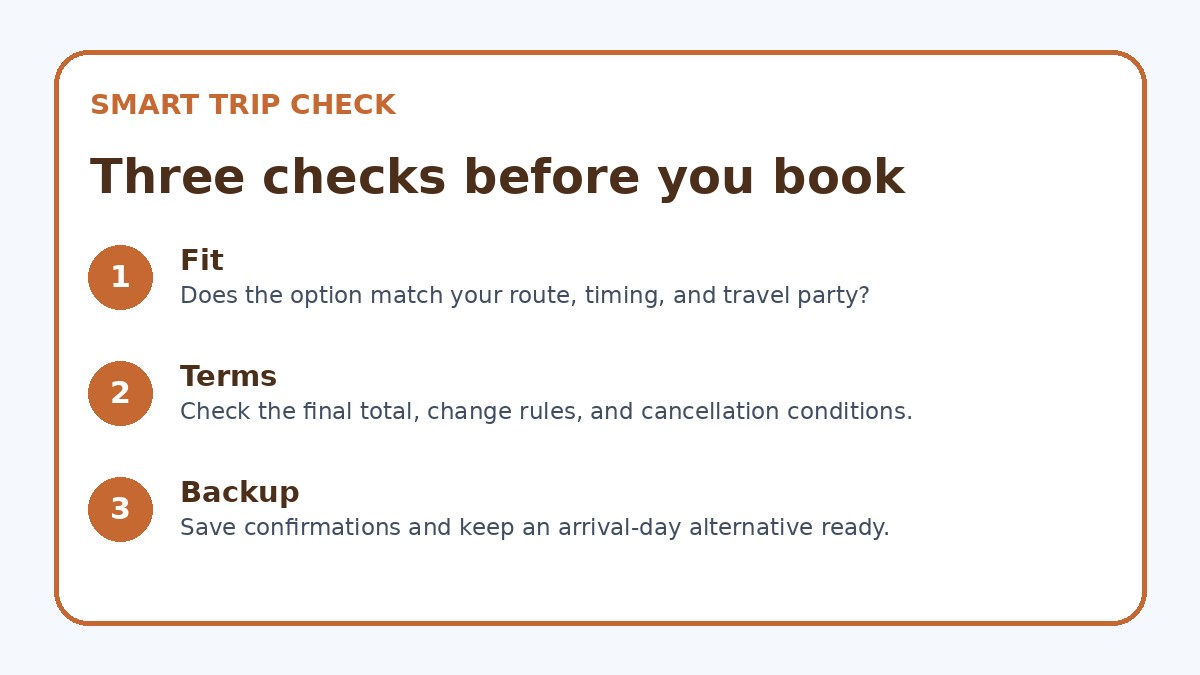
When comparing providers, check final booking pages for exact pickup and drop-off locations, vehicle size limits, whether child seats are offered, and cancellation or change terms. Avoid relying on summary pages for these practical details because policies change, and fees for extras like oversized baggage or long waits can add up. If you have a strict timeframe—for example, heading straight to a meeting or event—prioritize fixed pickups or arrive earlier and build buffer time into your schedule. Use provider reviews sparingly for general reliability but verify operational details on their official pages.
Before you book
- Confirm your arrival terminal and the airport’s official pickup zones or transit entrances before you leave home.
- Measure your luggage and count passengers to choose an appropriately sized vehicle or transit option.
- If prebooking, verify pickup instructions, driver contact details, and cancellation policy on the provider’s final booking page.
- Allow extra time for customs, immigration, and baggage claim when planning your first activity in Boston.
- Check elevator or ramp access at the airport and at any transit stations if you have mobility needs.
- Save a local backup option (taxi stand location or nearest transit stop) in case your prebooked transfer is delayed or canceled.
Practical checks to make right before you travel
In the days before departure, confirm terminal arrival, baggage claim procedures, and the exact meeting point for any pre-booked service. Airports sometimes change terminal operations or gate assignments; verify your flight’s terminal so you know which transit entrance or curbside area to aim for. If using a rideshare, pin the correct pickup zone in the app and check whether the app lists designated staging areas where drivers wait. For shuttles and private cars, reconfirm the driver’s contact details and any instructions for a meet-and-greet to avoid last-minute confusion at arrivals.
Also plan for contingencies: note a backup option if your first choice is delayed or cancels, such as the nearest taxi stand or the closest transit station. Bring payment options accepted by your chosen provider and any documents needed for hotel check-in so you can leave transit quickly. If you require accessibility accommodations, contact the provider directly before traveling to confirm availability and arrangements. Finally, factor in time for customs and baggage claim when comparing travel times to your first scheduled activity in Boston.
Frequently asked questions
Which Boston airport transfer option is fastest to downtown?
Speed depends on arrival time and exact destination. Rail-based options are often quickest during rush hours because they avoid road congestion; taxis and rideshares can be fastest during off-peak times. Compare total door-to-door time: add walking from the terminal to the rail stop, and from the rail station to your hotel. If timing is critical, plan a conservative arrival window and consider a door-to-door service you can prebook so you’re not dependent on train schedules or finding a rideshare at busy moments.
Is it better to prebook my transfer or wait until I land?
Prebooking gives certainty, especially for large groups, early-morning arrivals, or if you need special equipment like child seats or wheelchair assistance. Waiting can save money when you’re flexible and traveling light because you can compare live rideshare or taxi availability. If you prebook, always check the provider’s final booking page for pickup points, wait-time policies, and refund terms. For first-time visitors who prefer minimal stress, a booked shuttle or private car provides a clear plan from the terminal to the hotel.
How do I handle transfers with a lot of luggage or special items?
For abundant or oversized luggage, favor door-to-door services—taxi, rideshare, or a private car—with vehicles large enough to fit items without crowding passengers. When booking shuttles, confirm baggage policies and whether oversized items incur fees or require advance notice. If you must use public transit, look for services with accessible elevators and plan extra time for boarding. Always verify final baggage rules on the provider’s booking page and, if bringing fragile or valuable items, consider a private transfer for fewer handoffs and clearer accountability.
Final planning note
Choosing a Boston airport transfer comes down to balancing convenience, cost, and timing. For light travelers who can manage a short walk, public transit or shared shuttles often provide the best value; for groups, families, or those with lots of bags, a taxi, rideshare, or private car reduces hassle and offers direct drop-off. Before you commit, confirm terminal and pickup details, vehicle size, and any special requirements on the provider’s final booking page. Pack realistically for the last-mile from station or curb to your lodging and keep a backup option saved in your phone. With a little preplanning, you can move from arrivals to exploring Boston with minimal stress.
Continue planning
Check current options and final conditions
Use the provider page to confirm live availability, the final total, cancellation terms, and every condition that matters to your trip.
This evergreen planning guide was created with AI-assisted drafting and a structured quality review. It does not display live prices, schedules, availability, visa guidance, or provider rankings. Verify current details before booking. Some links are affiliate links; we may earn a commission at no additional cost to you.