Practical answer first: for most families the easiest approach is to choose the door-to-door option that matches your priorities — lowest hassle (dedicated transfer or private car), best value (scheduled coach with minimal transfers), or greatest flexibility (self-drive). From there, tune luggage plans, pick a pickup or station location that minimizes doorway walking, and schedule departures to avoid the busiest parts of the day for a calmer trip. This article explains how to weigh terminal fit, luggage and transfer friction, timing flexibility, and disruption backups so you can decide the right mix for your group. It assumes you are moving between Dubai and Abu Dhabi and focuses on practical, verifiable checks to make on booking pages, not live schedules or prices. Verify final pick-up/drop-off addresses, allowed luggage dimensions, child seat availability, and cancellation terms on the provider’s booking page before you commit.
Choose the right mode by practical fit
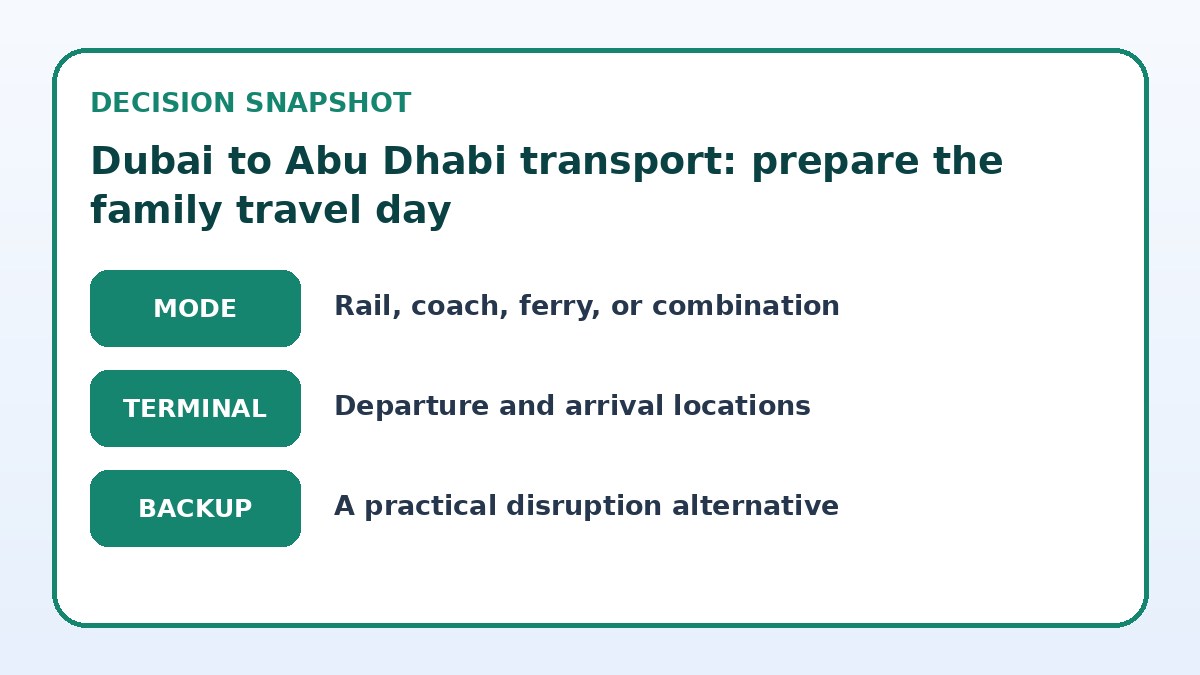
Begin by matching mode to what matters most to your family. If you want end-to-end simplicity with minimal carrying, a private transfer or taxi gives door-to-door pickup and drop-off — you load once, travel, and unload at your destination. Coaches or express buses can offer simpler cost structures but usually involve walking to a terminal or fixed stop, and sometimes multiple stops en route. Self-drive gives you total control over departure time and stops, but adds the responsibility of parking and navigating unfamiliar roads while supervising children.
When assessing options, compare where each service actually starts and finishes. A coach that departs from a peripheral bus terminal might be cheaper, but if it requires a long walk from your Dubai accommodation or a taxi to the station, the door-to-door advantage vanishes. For families with infants or reduced mobility, prioritize fewer handoffs: fewer door-to-door transfers, less stroller folding, and guaranteed child-seat availability if required. Always check the booking page to confirm pickup points and whether lifts, ramps, or step-free access are available at terminals.
Choose the end-to-end journey plan
| Journey approach | Best for | Friction to check |
|---|---|---|
| Private transfer or taxi | Families prioritizing door-to-door service and minimal handling of luggage | Higher per-trip expense and dependency on vehicle size for car seats and luggage |
| Scheduled coach or express bus | Families on a tighter budget who can manage short walks to terminals | Fixed departure times and potential terminal walking or transfers with luggage |
| Self-drive rental | Families wanting full timing control and flexibility to stop en route | Responsibility for navigation, parking and keeping kids entertained while driving |
| Mixed-mode (taxi + coach or park-and-ride) | Families balancing cost and convenience by minimizing long transfers | Requires coordination between services and may add handoffs if timings aren’t aligned |
Check live intercity options
Look beyond the ride itself and compare terminals, transfers, luggage, and arrival fit.
Luggage and transfer friction: what to pack and expect
Quantify how much you can reasonably manage without help. A single parent with a double stroller and two bags will feel very different about a coach terminal than a family of four with backpacks. Look for services that explicitly state luggage allowances and whether staff load and unload luggage or if you must handle it yourself. If you plan to bring road-trip accessories (car seats, bulky coolers, travel cots), confirm on the provider page whether these items are accepted, whether they count as additional luggage, and if there are secure storage options on board.
Minimize on-the-road friction by packing essential in a small carry bag: snacks, water, medication, spare clothes, wipes, and a small toy or tablet. For stroller users, practice a quick fold and pack routine before the travel day. If you choose to mix modes — for example, a short taxi to a coach station — rehearse transferring the group once so everyone knows who carries what. When booking, note whether the pickup point requires steps, long ramps, or elevator use; these details determine whether a service is genuinely convenient for stroller and wheelchair users.
Timing flexibility and family rhythm
Families benefit from departure windows that align with sleep and meal routines. If your children nap in the late morning, aim for a departure that overlaps with that nap to reduce active supervision time. Private transfers and self-drive give you the most control over departure times; scheduled coaches force you to fit your routine to their timetable. If you need arrival flexibility (for late check-in at a hotel or last-minute errands), verify whether the provider offers multiple daily departures or allows small changes to pickup times near your travel date.
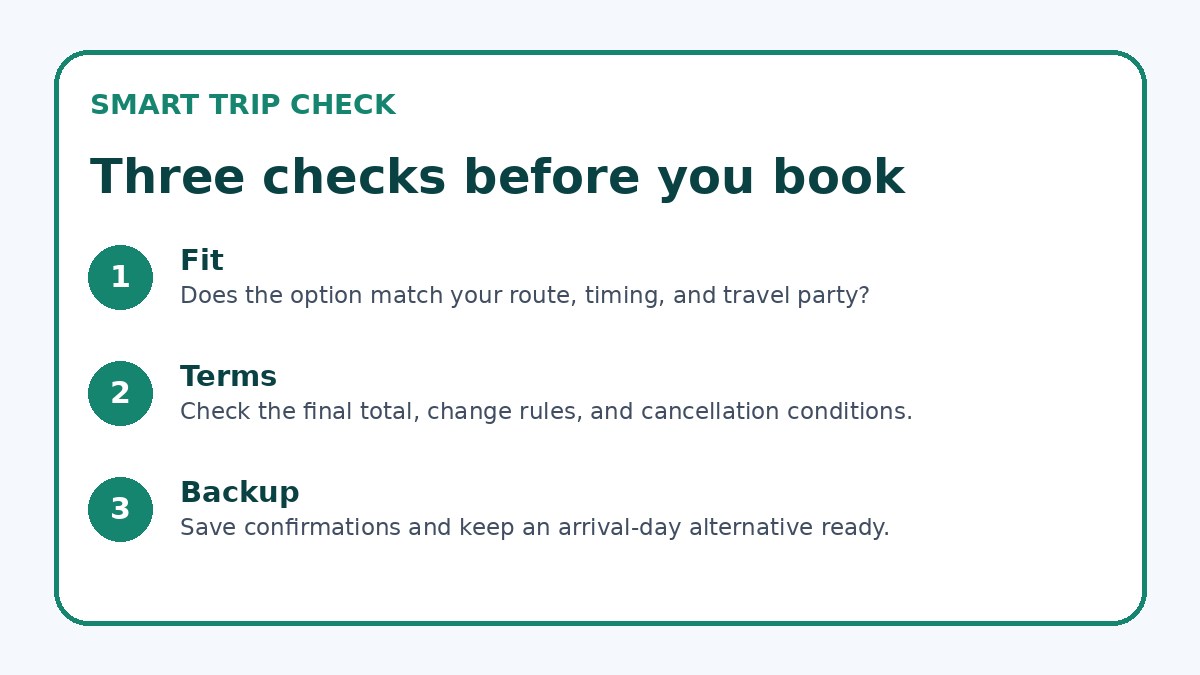
Allow generous buffer time before booked departures: traffic, last-minute diaper runs, or a forgotten backpack can derail a tight schedule. If you are catching a timed museum slot or event in Abu Dhabi, plan for a longer buffer than you would when travelling without children. Confirm cancellation and change conditions on the booking page so you know how late you can rebook or cancel if delays occur. For early-morning or late-night trips, double-check lighting and safety at pickup locations and whether staff are present to assist with luggage and boarding.
Compare the practical alternatives
Use the final page to confirm what is actually offered on your dates and save a workable fallback.
Intercity travel checklist
- Confirm the exact pickup and drop-off addresses (not just neighbourhood names) on the provider booking page and save them in your phone.
- Verify luggage allowance and whether staff load bags or you must carry them; note any extra fees for bulky items.
- Reserve or request appropriate child restraints in advance and bring documentation of your booking if required.
- Plan two realistic departure times—your ideal and a later buffer slot—and pick providers with flexible change policies.
- Download maps or take screenshots of pickup points for offline use and save emergency contact numbers locally.
- Pack a small accessible bag with snacks, medicines, spare clothes, wipes, and chargers to avoid opening main luggage mid-journey.
Disruption backup: practical alternatives on the travel day
Create a simple hierarchy of backups before travel: primary option (booked transfer or coach), secondary rapid option (rideshare or taxi), and tertiary plan (hotel front desk assistance or short-term rental car). If your booked coach or transfer cancels, being able to order a taxi or rideshare quickly avoids long waits at busy terminals. For families, confirm in advance whether local rideshare apps support multiple seats or boosters, and whether you can request a larger vehicle for luggage and prams directly in the app.
Keep a physical and digital copy of confirmations and pick-up addresses, plus a screenshot of the map location for offline use. If you must rebook, having the exact terminal name, nearby landmarks, and contacts speeds the process. Consider a local SIM, roaming data package, or portable hotspot so you can check availability and communicate with providers on the move. Trip.com can be used as one place to compare current availability, but always verify final pickup times, luggage rules, and cancellation policies on the provider’s official booking page before relying on that option.
Rail & Intercity Transport questions travelers ask
What’s the best way to travel with a stroller or pram from Dubai to Abu Dhabi?
For stroller users, pick an option with the fewest transfers and clear step-free access. Private transfers or taxis usually mean you fold the stroller once and place it in the boot, reducing repeated folding. Before booking a coach, check the provider’s boarding details to see if wheelchair ramps or level boarding exist and whether staff assist with strollers. If you expect to use elevators at terminals, verify their availability on the provider’s booking page or by contacting the operator directly to avoid surprises on the travel day.
How much extra time should families allow for traffic and breaks?
Always build a buffer beyond the operator’s suggested arrival time. A family with young children should add time for restroom stops, snack breaks, and unplanned delays; this can be significantly more than solo travellers need. If your schedule includes timed activities in Abu Dhabi, aim to arrive earlier than required to accommodate unpredictable delays. Check the provider’s change and cancellation terms so you know whether you can shift your booking at short notice if traffic or delays force a later departure.
How can I keep children comfortable and occupied during the journey?
Prepare a small travel kit with familiar snacks, reusable water bottles, wet wipes, a change of clothes, and a few compact toys or a tablet with pre-downloaded content. Rotate short activities every 20–30 minutes to prevent restlessness: puzzle cards, interactive games, or sing-alongs work well. For longer coach or transfer rides, plan quiet activities for nap times and brighter activities for awake periods. Also consider booking seats with more legroom where available and secure small items so they won’t be lost during stops or transfers.
Final decision note
Preparing the travel day for a family trip between Dubai and Abu Dhabi comes down to choosing the mode that lowers handling and stress, then confirming the on-the-ground details that affect door-to-door practicality. Decide whether you prefer minimal transfers, strict timing control, or a balance of cost and convenience, then check pickup locations, luggage rules, child-seat availability, and change policies on the provider’s booking page before you pay. Pack a compact essentials bag, allow generous buffers for breaks and traffic, and set a clear backup plan so you can adapt if the primary option becomes unavailable. These steps turn an uncertain travel day into a manageable, family-friendly transfer.
Continue planning
Check current options and final conditions
Use the provider page to confirm live availability, the final total, cancellation terms, and every condition that matters to your trip.
This evergreen planning guide was created with AI-assisted drafting and a structured quality review. It does not display live prices, schedules, availability, visa guidance, or provider rankings. Verify current details before booking. Some links are affiliate links; we may earn a commission at no additional cost to you.