Practical choice first: compare direct rail, long-distance coach, or a mixed ground plan that pairs trains and local transit — then pick the option that matches your luggage, schedule flexibility and door-to-door needs. For many first-time visitors between Vienna and Budapest, the train offers a simple central-station-to-central-station flow; coaches can be cheaper but add terminal and transfer friction; combining a train with a local transfer or private shuttle can help reach a hotel outside city centers. This article focuses on building a multi-city ground-transport plan: how to assess terminals, factor luggage and transfers, create time buffers, and prepare a disruption backup. You’ll get actionable checks for comparing options end to end, a compact comparison of four planning approaches, and a short checklist to finalize bookings and contingency steps before you leave.
Choose between rail, coach, or a mixed ground plan
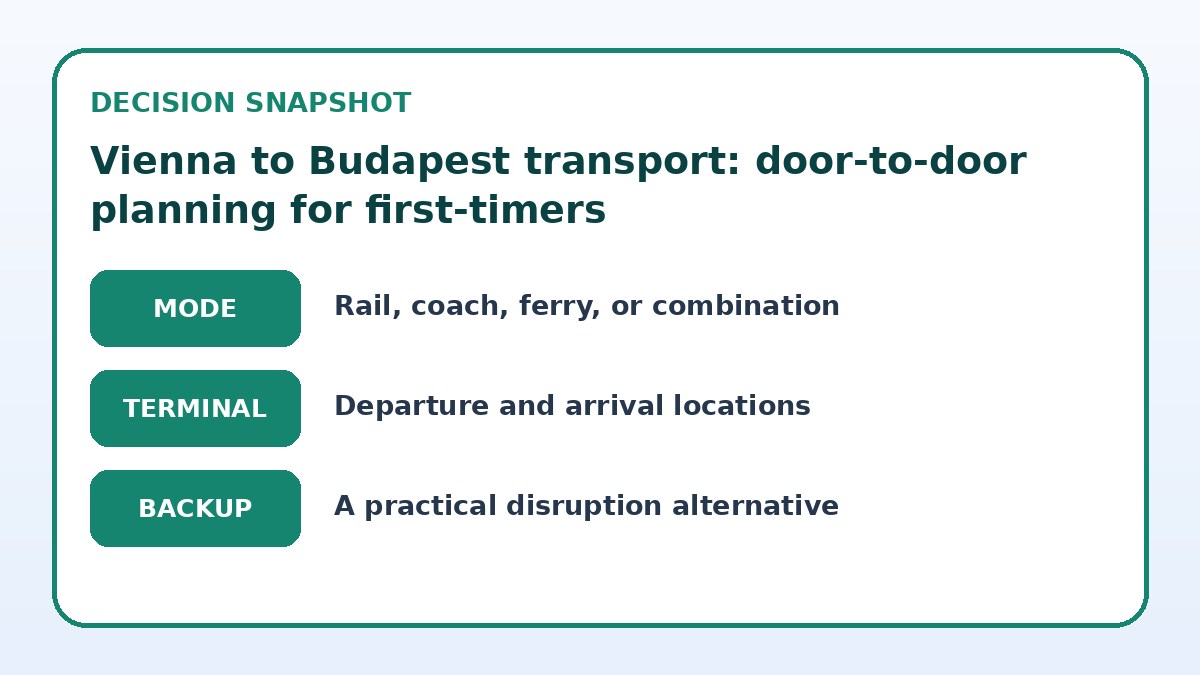
Begin with the practical differences: trains typically depart from major central stations with good onward connections and easier luggage handling, while coaches can drop you near secondary terminals but may require walking or transfers to reach your final address. A mixed plan — for example, rail between city centers plus a local bus or shuttle to suburbs or specific neighborhoods — often balances comfort and reach. For first-time visitors, consider how many transfers you want to manage. Each additional handoff increases the chance of missed connections and adds walking or lift usage, so weigh simplicity against any small savings.
Next, work out door-to-door convenience: where in Vienna you will start and where in Budapest you need to arrive. If either endpoint is outside a city center, a mixed plan using regional rail plus a last-mile taxi or ride-hail can save time. Also think about station facilities for luggage storage and accessibility; these matter when you have long waits or want to explore briefly between legs. When comparing options, list the exact addresses or locations and measure transit times between them rather than relying only on advertised in-vehicle durations.
Choose the end-to-end journey plan
| Journey approach | Best for | Friction to check |
|---|---|---|
| Single-mode rail plan: train all the way | Travelers valuing simplicity, central terminals, and easy luggage handling | May not reach suburbs directly and could be more expensive than mixing modes |
| Single-mode coach plan: long-distance bus only | Budget-conscious travelers willing to accept peripheral stops and longer rides | Higher transfer friction to central hotels and potentially less luggage convenience |
| Mixed plan: rail plus local transfer | Visitors needing reach to non-central accommodations or sightseeing en route | Adds one extra transfer and complexity but improves door-to-door reach |
| Flexible buffer plan: slower services, planned stopovers | Leisure travelers who want flexibility and time to explore intermediate towns | Longer total travel time and more moving parts to coordinate |
Check live intercity options
Look beyond the ride itself and compare terminals, transfers, luggage, and arrival fit.
Terminal fit, luggage and transfer friction
Terminal fit means how well the origin and destination terminals align with your needs: proximity to your hotel, the availability of luggage storage, elevator access, and simple onward connections. If either station is large and spread out, add walking time and look for moving walkways, lifts, or level access. Heavy luggage, strollers, or mobility equipment changes the calculus: fewer transfers and level boarding become priorities. When you plan a mixed route, check whether the transfer point requires a platform change, a different terminal, or a street-level walk that could complicate moving bags.
Practical prep reduces friction: choose through-ticketing when available so baggage and tickets are consolidated, and verify whether you must revalidate or collect bags between legs. If you expect to carry oversized luggage, verify carriage rules on each leg at the provider’s booking page. Prepare for short urban transfers by noting taxi ranks, ride-hail pickup points, and official shuttle services at both termini. If traveling in a group or late at night, pre-book the final mile to avoid long waits at unfamiliar stations.
Timing flexibility and building time buffers
Decide how rigid your schedule is before selecting a connection. If you have a fixed arrival or check-in time, choose services with frequent departures and allow generous buffers for delays. For flexible itineraries, you can combine slower regional services and fit in a stopover at an intermediate town. Look at service frequency across the day: higher-frequency corridors let you plan tighter transfers, while sparse schedules demand larger buffers. Also factor in peak travel periods and local holidays which can affect crowding and platform congestion.
When calculating buffers, include walking times between platforms, potential ticket validation, passport control if applicable, and time to collect checked luggage. Avoid planning back-to-back connections unless you have through-ticket protection or plenty of slack. A practical rule is to add at least 30–60 minutes to any connection that involves changing companies or terminals, and 15–25 minutes for same-station platform changes. Keep a plan B that lists the next two alternatives you could take with approximate departure times.
Compare the practical alternatives
Use the final page to confirm what is actually offered on your dates and save a workable fallback.
Intercity travel checklist
- Map door-to-door time for each option including walking, platform changes, and last-mile transfer.
- Confirm luggage rules and seat reservation requirements on each provider’s official booking page.
- Identify two later services and one coach alternative in case your primary connection is disrupted.
- Locate official taxi ranks or ride-hail pickup points for both the departure and arrival stations.
- Save tickets, timetables, and platform maps offline and note your accommodation’s latest check-in policy.
- If using multiple providers, check whether through-ticketing exists or plan to buy separate protected tickets.
Disruption backup and what to verify before booking
Create a straightforward disruption plan: identify the next two alternative services in either direction, a reliable coach route you could switch to, and local taxi or ride-hail options for short hops. Keep contact details for your accommodation and a copy of your booking references offline. If a missed connection forces you to book a private transfer, know typical pickup points at both stations to avoid waiting in restricted areas. Saving screenshots of timetables and platform layouts can be invaluable if mobile data is limited.
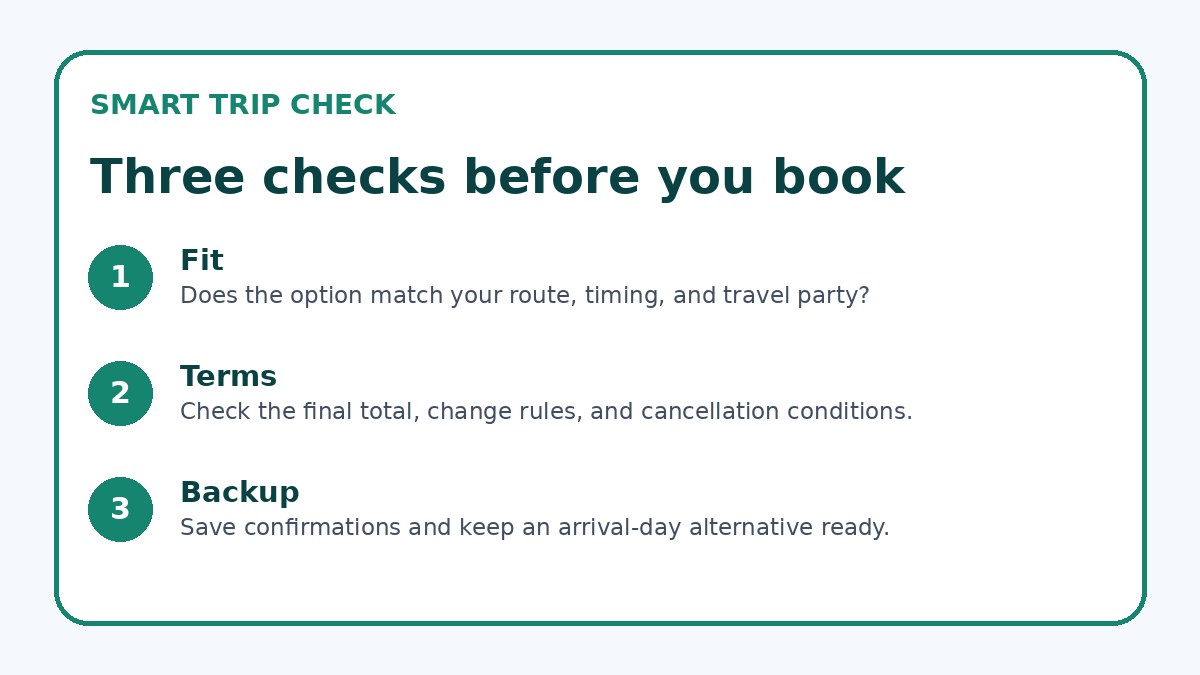
Before booking any ticket, verify those provider-specific facts on the official booking page: change and refund terms, baggage allowances, seat-reservation requirements, and whether tickets are mobile or paper-only. If your plan uses multiple providers, check whether through-ticketing or protective connections are offered; where not, be prepared to buy a new ticket if a delay breaks your itinerary. Trip.com may be useful as one place to compare current availability, but always cross-check final conditions and any mandatory steps required by the operator on their booking page.
Rail & Intercity Transport questions travelers ask
Is the train always the fastest and most practical way between Vienna and Budapest?
Not always. Trains often provide competitive city-center to city-center travel with comfortable luggage space and simpler transfers, but speed depends on the exact service chosen and where you need to start and finish. If your hotel is outside a central station or you have tight connections, a mixed plan combining train and local shuttle may be more practical. Compare door-to-door duration rather than in-vehicle time: include walking, platform changes, and any required local transfer to reach your exact addresses.
How should I choose between booking a through-ticket or separate legs?
Prefer a through-ticket when it’s available because it can simplify baggage, support protected connections, and reduce check-in steps. When through-ticketing isn’t offered, assess the risk of delays: add bigger buffers between legs and identify alternate services you could use if you miss one connection. Verify change and refund policies on the provider pages so you know your options if a delay forces a rebooking. In multi-provider itineraries, plan for the worst-case need to buy a new ticket for a missed second leg.
What’s a sensible disruption backup for a first-time traveler on this route?
Create a concise backup with three parts: the next two later scheduled services on your planned corridor, one viable coach route you can switch to, and a local taxi or ride-hail option for the final mile. Keep contact details of your accommodation and the station’s official information desk, plus screenshots of timetables and any booking references offline. If you’ll be traveling at night or with heavy luggage, consider pre-booking a reliable private transfer for peace of mind and to avoid uncertain taxi availability.
Final decision note
Planning Vienna to Budapest transport for the first time means thinking beyond the advertised journey time. Focus on door-to-door practicality: how terminals align with your start and end points, how many transfers you can comfortably manage, and what luggage and accessibility needs you have. Build time buffers based on service frequency, verify provider-specific rules on official booking pages, and prepare a simple disruption backup listing alternate trains, a coach option, and a taxi plan. Use the checklist to finalize details, and remember that a little extra planning for transfers and contingencies will make the trip smoother and less stressful.
Continue planning
Check current options and final conditions
Use the provider page to confirm live availability, the final total, cancellation terms, and every condition that matters to your trip.
This evergreen planning guide was created with AI-assisted drafting and a structured quality review. It does not display live prices, schedules, availability, visa guidance, or provider rankings. Verify current details before booking. Some links are affiliate links; we may earn a commission at no additional cost to you.