If you’re booking San Francisco to Vancouver flights for a business trip, the most useful thing to decide first is whether flexibility or lower fare matters more. Quick-turn meetings, uncertain attendee lists, and last-minute schedule changes make refundable or change-permitted fares worth the extra expense for many corporate travelers. On the other hand, fixed itineraries booked on restrictive fares can be substantially cheaper if your schedule is locked. This guide gives the practical answer up front: prioritize flexible tickets or add a waiver/refund option when your meeting date could shift, and pick nonrefundable lower fares only when dates and times are certain. Below you’ll find how to compare routing, baggage and connection risk, schedule fit, and specific fare-condition checks so you can prepare exact dates and traveler details before checking live options.
See live routes for your exact travel day
Compare direct and connecting choices with the same baggage and traveler details.
Routing: direct versus connecting and how it affects flexibility
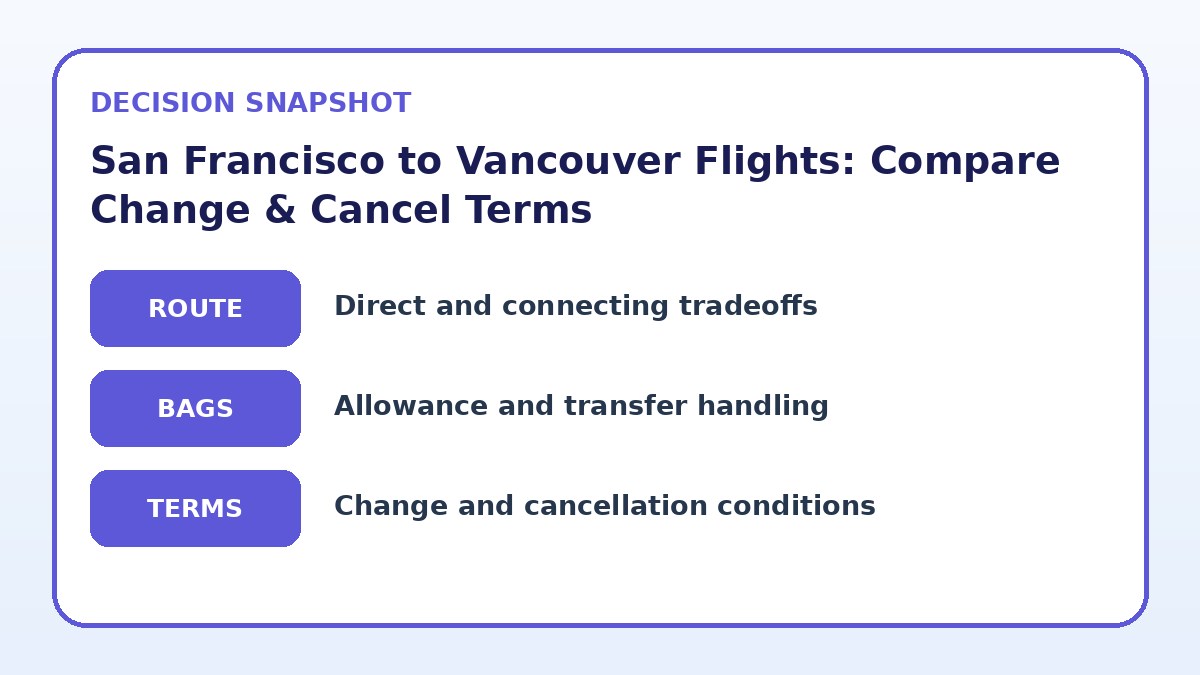
When comparing routing options between San Francisco and Vancouver, remember that a direct flight reduces connection risk and simplifies rebooking but may have fewer flexible-fare classes available at attractive prices. If direct service is offered on your chosen travel times, it minimizes the number of rules you'll need to verify at the carrier's final booking page: cancellation penalties, reissue fees, and the ticket’s refundability. For connecting itineraries, check whether both segments are on the same ticket. When segments are ticketed together, a single fare rule usually governs change and cancellation handling; when ticketed separately, you'll face separate rules and possibly separate fees when changes ripple across carriers or segments.
Also evaluate where connections occur and how they affect your capacity to change plans quickly. A single-carrier connecting itinerary often allows simpler rebooking and may permit same-day changes within a more lenient policy tier for corporate or elite travelers. Code-share or interline connections might limit options for same-day reroutes, and some discount fare classes on long-haul networks restrict reissue altogether. Before completing a reservation, verify whether the fare allows voluntary changes, how fees are assessed, and whether the ticket price difference applies to reissues — information that should be confirmed on the airline’s final booking page and your corporate travel policy.
Baggage, connection risk, and how fees influence choices
Baggage allowances and the risk of lost luggage are important when choosing between fare types and routing. Lower fare buckets, particularly basic economy-style tickets, may limit or exclude checked bags, prevent seat selection, and even restrict carry-on size or placement. For business travelers who rely on quick exits and reliability, paying for a fare class that includes at least one checked bag and preferred boarding can offset delays at the gate and reduce connection-related stress. If you must connect, allow ample layover time and consider the carrier’s minimum connection guidelines, but always verify the final baggage transfer policy on the booking page in case partner carriers require baggage recheck between terminals.
When assessing fees, remember change and cancellation penalties are separate from baggage fees — both affect total trip flexibility. Some fare types waive change fees but still charge the fare difference; others allow full refundability but assess a processing fee. Corporate accounts or corporate travel fares sometimes include more generous baggage and change privileges; check whether your company negotiates these terms. If you’re part of a loyalty program with status, confirm on the carrier’s site which perks (baggage, waived fees, priority handling) apply to the specific fare class you intend to buy.
Compare flight-selection strategies
| Flight strategy | Best for | Risk to check |
|---|---|---|
| Buy a flexible/refundable fare | Travelers with uncertain schedules who need easy rebooking or refunds | Higher upfront cost but simple changes and potential refunds without complex fee calculations |
| Purchase a basic/restricted fare | Fixed itineraries where cost is the priority and dates are firm | Lower fare but limited or no changes, possible baggage and carry-on restrictions |
| Book a connecting itinerary on one ticket | Balancing lower fares with single-ticket protection for missed connections | Longer travel time but unified reissue rules; still vulnerable to partner carrier restrictions |
| Assemble separate legs (different tickets) | Maximizing schedule choices or using loyalty benefits across carriers | Cheapest or most convenient times possible, but no through-protection — separate change rules and rebooking risk |
Recheck the complete itinerary
Confirm airports, connection handling, baggage, and change conditions before deciding.
Schedule fit: timing, same-day changes, and transfer windows
For business travel, schedule fit often matters more than saving a small amount on fares. Choose flights that give you buffer on either end — morning arrivals for afternoon meetings, or evening returns if the meeting runs late. Many carriers permit same-day standby or same-day confirmed changes for a reduced fee or no fee for elite passengers; these options can be crucial when meetings run long or flights are disrupted. If same-day flexibility is essential, confirm the carrier’s same-day change policy and whether your fare class is eligible before booking. These rules are frequently updated, so verify them on the airline’s official booking page for your exact itinerary.
Also plan for airport transfer times and potential traffic when traveling to or from each airport. If you book tight connections, a schedule change or delay on the outbound might cause missed meetings; conversely, longer layovers reduce connection risk but increase total travel time. Check the specific flight’s published minimum connection time only as a baseline — practical connection feasibility depends on terminals, customs/immigration processes (for cross-border travel), and whether baggage is checked through. Confirm these operational details and any same-day change options on the carrier’s final booking screen to avoid surprises.
Flight details to verify
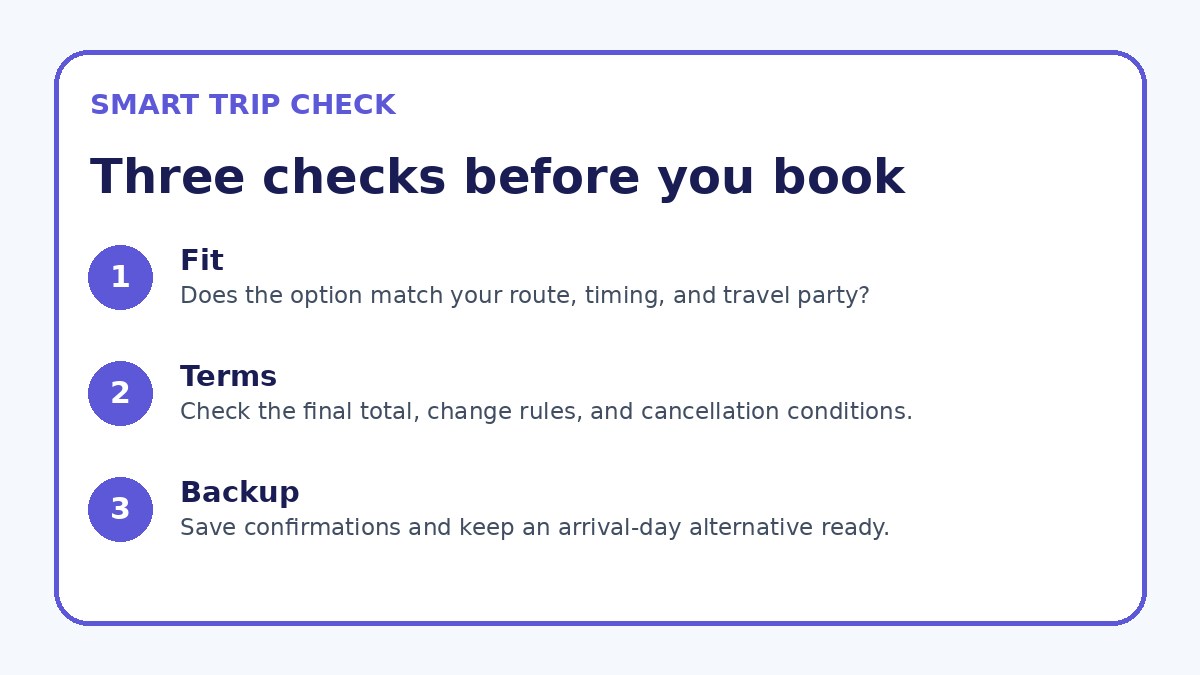
- Confirm exact traveler full name, frequent flyer number, and company billing details before searching fares.
- Decide whether you need refundable tickets, change waivers, or same-day change privileges and filter fares accordingly.
- Compare direct and connecting options for total travel time, number of transfers, and baggage transfer rules.
- Review the final booking page for explicit wording on refundability, change fees, fare differences, and voucher versus refund.
- Check corporate travel policy or negotiated rates to see if they alter change/cancellation terms for your booking.
- If using an aggregator like Trip.com, use it for comparison but always verify fare rules on the airline’s official booking page before purchase.
Fare conditions: what to verify on the booking page
When you reach the final booking page, verify four critical items in the fare rules: whether the ticket is refundable, whether change fees apply, how fare differences are handled on reissue, and whether any waiver or corporate policy applies. Look for explicit wording about refunds to the original form of payment versus credit vouchers, and whether cancellations within a certain time frame (e.g., 24 hours) are free. If your company has negotiated corporate terms, confirm the fare is ticketed under that corporate rate so the negotiated change and cancellation rules apply. If you see ambiguous language, contact the carrier or your travel manager before completing the purchase.
Also check eligible board/passenger name changes, rebooking options during irregular operations, and the carrier’s policy for involuntary changes. Some fares permit free changes during disruptions, while others only allow credit for future travel. For multi-segment or interline itineraries, read how partner carrier rules are applied; the most restrictive rule can govern the entire ticket. If you plan to compare on Trip.com or another aggregator, use it to compare availability and conditions, but always confirm the final fare rules on the airline’s official booking page before accepting any fare.
Flight Guide questions travelers ask
How do I quickly check if a San Francisco–Vancouver fare allows changes or refunds?
On the airline’s booking page, look for the fare rules or ‘fare conditions’ link before checkout. That section will state whether the fare is refundable, whether change fees apply, and whether fare differences are charged on reissue. If a corporate or waiver code applies, ensure it’s entered and shown on the fare rules. Aggregators often summarize policies, but they can be incomplete; treat the airline’s published fare conditions as authoritative and contact the carrier or your travel manager if wording is unclear.
Are same-day changes generally available for business travelers on this cross-border route?
Same-day change policies vary by carrier and fare class; some airlines allow same-day confirmed or standby changes for a fee or free for elite flyers. Corporate accounts sometimes include more generous same-day policies. Before booking, confirm eligibility for same-day changes in the fare rules and on your corporate travel profile. Because policies change and depend on availability, verify exact terms on the airline’s site for the specific flight you intend to buy to ensure the option will be there when you need it.
What should I do if my meeting date changes after I book a low-cost fare?
First, review your ticket’s fare rules to see if any change or cancellation options exist; some fares allow change for a fee plus any fare difference. If your company has a corporate waiver or travel policy, contact your travel manager or the airline immediately to ask about exceptions. If the fare is non-changeable and nonrefundable, you might receive a travel credit or voucher instead of a cash refund. Keep documentation of the meeting change and any employer approvals—these can help when negotiating with the airline or when seeking goodwill exceptions.
Final decision note
For business travel between San Francisco and Vancouver, your central decision is flexibility versus cost. If meeting dates can shift, choose a fare that explicitly allows changes or refunds, or ensure a corporate waiver applies — this saves time and administrative hassle when plans change. If dates are fixed and your company requires cost containment, a restrictive fare may be acceptable, but be mindful of baggage, same-day change eligibility, and the extra administrative steps needed if alterations arise. Always verify the four critical fare-rule elements on the carrier’s final booking page: refundability, change fees, fare-difference handling, and any corporate or status-based exceptions before you click purchase.
Continue planning
Check current options and final conditions
Use the provider page to confirm live availability, the final total, cancellation terms, and every condition that matters to your trip.
This evergreen planning guide was created with AI-assisted drafting and a structured quality review. It does not display live prices, schedules, availability, visa guidance, or provider rankings. Verify current details before booking. Some links are affiliate links; we may earn a commission at no additional cost to you.