Practical answer up front: choose high-speed rail (AVE/long-distance trains) when you want the least door-to-door complexity and fewer intermediate terminals; choose coach if you prioritize lower-cost station-to-station routing and are comfortable with longer on-road transfers; combine modes when your accommodation or schedule makes one terminal much easier to reach than another. For first-time visitors, the transfer question is less about the ride itself and more about how you get to and from stations or terminals, how many times you move your luggage, and how to buffer for delays. This article explains the terminal fit for each mode, how luggage and transfer friction affect your choice, how to set timing flexibility, and what simple disruption backups to prepare. Use these criteria to pick the option that minimizes stressful transfers and suits your arrival/departure points in each city.
Choosing the right terminal and mode for your door-to-door plan
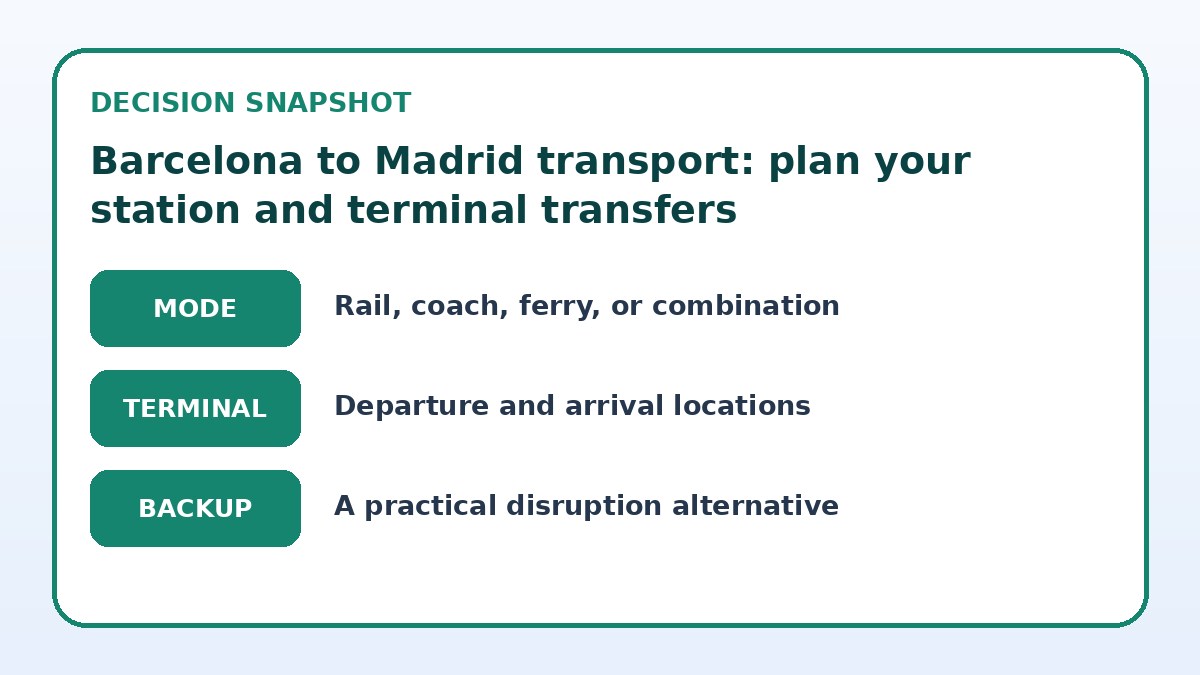
Start by mapping your door-to-door journey rather than focusing only on the in-transit leg. Identify the exact address of your accommodation and the stations or terminals served by each mode: long-distance trains typically use central stations, coaches use dedicated bus terminals that may sit outside central neighbourhoods, and flights use airports well away from city centres. Compare walking, metro, tram, taxi, and rideshare options from your stay to the nearest boarding point and from the arrival terminal in Madrid to your final destination. The right mode is the one that minimizes total travel time, complexity, and luggage moves for your specific start and end points.
For many first-time visitors, the decisive factors are the number of transfers, access to step-free routes if you have heavy luggage or mobility needs, and whether you prefer predictable city-centre access versus lower fares with longer local trips. If your accommodation is near a major train station, rail often wins on convenience; if you are staying near a coach hub or airport shuttle line, a coach or flight might be locally sensible. The final booking page for each operator will list the exact terminal name and nearby public transport connections; verify those details before committing.
Choose the end-to-end journey plan
| Journey approach | Best for | Friction to check |
|---|---|---|
| High-speed rail between central stations | Minimizing transfers and fast city-centre access | May be pricier and requires advance seat booking if you need guaranteed seats |
| Intercity coach to dedicated bus terminals | Lower fare options and straightforward long-distance boarding | Often adds local transfer time and more luggage handling at terminals |
| Combination (train + coach or taxi) | Optimising door-to-door convenience when one terminal is easier to reach | More moving parts and potential timing friction between providers |
| Flight plus ground transfer | When flights align with tight schedules or origin/destination are near airports | Airports increase door-to-door time and usually require longer local transfers |
Check live intercity options
Look beyond the ride itself and compare terminals, transfers, luggage, and arrival fit.
Luggage and transfer friction: how to keep moving with less stress
Evaluate luggage friction as a core part of your decision. Central train stations usually have level platforms, elevators, and easier short-distance transfers, which reduces the physical effort of moving suitcases. Coach terminals can require longer walks, stairs, or loading bays where staff handle luggage; this can be helpful but means you may not have personal access to your bag during the trip. If you’re juggling multiple bags, young children, or mobility devices, prioritise options with step-free access and room for you to keep essentials with you.
If hands-free travel matters, consider services such as door-to-door luggage forwarding or arranging a single taxi for the most complicated transfer. Pack a small day bag with essentials so you can leave the main suitcase in secure luggage holds if that suits your mode. Always check the operator’s policies about carry-on and checked items on their final booking page, and if the terminal-to-terminal transfer looks long or involves crowded metros, budget time and energy for that stretch.
Timing flexibility: when to book firm tickets versus flexible options
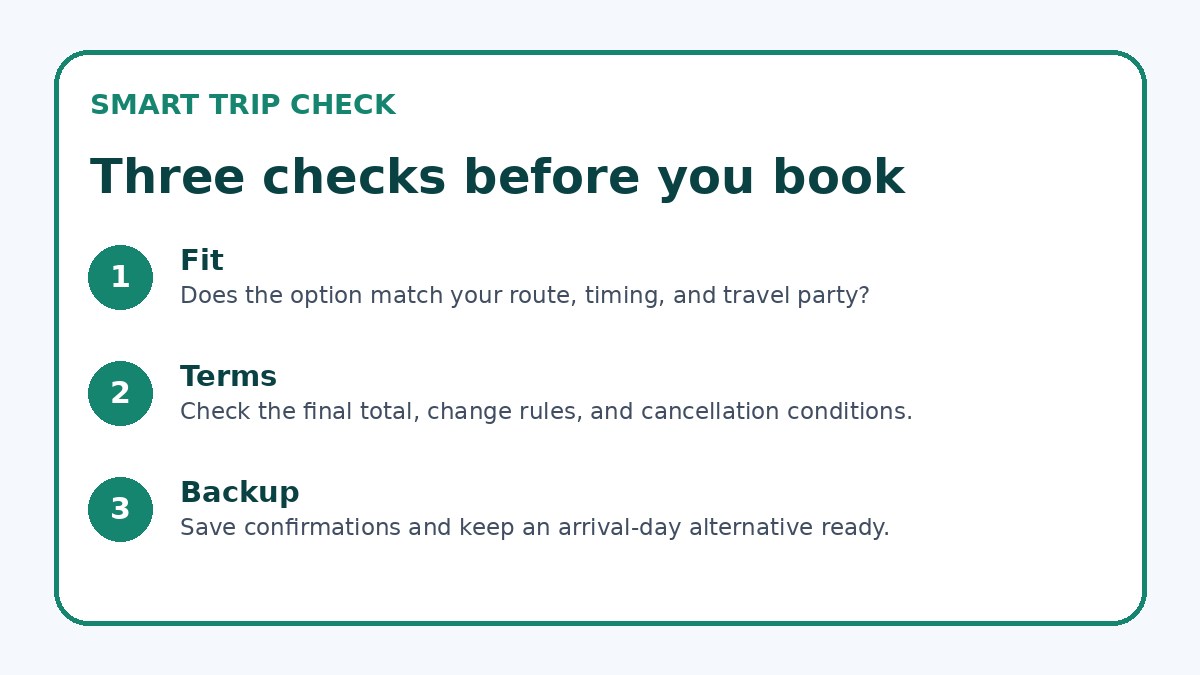
Decide how much schedule rigidity you’re comfortable with. Firm, advance tickets for trains and coaches often give the most predictable seat availability, but they can limit how you respond to local delays, late check-outs, or sudden schedule changes. If your onward plans depend on tight connections or a specific arrival window in Madrid (for example, a tour pickup or hotel check-in), choose flexible tickets or leave a time buffer to absorb minor delays without rushing through multiple transfers.
If you value flexibility, compare refundable or changeable fares and evaluate the realistic buffer you can build into your day. For first-time visitors, a safety margin of at least 60–90 minutes for local transfers in each city is often sensible, more if you’re travelling at peak hours or with lots of luggage. Always verify the exact terms for changes and refunds on the operator’s final booking page and plan local public-transport or taxi options as contingency.
Compare the practical alternatives
Use the final page to confirm what is actually offered on your dates and save a workable fallback.
Intercity travel checklist
- Map door-to-door: note your accommodation address and the exact station/terminal names for each option before booking.
- Verify luggage rules on the operator’s final booking page and decide if checked luggage or carry-on fits your transfer plan.
- Prebook first/last-mile transport (taxi, rideshare, or airport shuttle) when terminals are not within easy walking distance.
- Leave a time buffer of at least 60–90 minutes for in-city transfers; increase this if travelling with heavy luggage or at peak times.
- Identify a backup service (later train/coach or reliable taxi company) and store contact details in your phone and offline.
- Keep digital and printed copies of confirmations and terminal names so station staff can rebook or advise if a disruption occurs.
Simple disruption backups and day-of transfer tactics
Prepare two straightforward backups: a later scheduled service and an alternate transfer method. If your primary train or coach is delayed or cancelled, having a pre-researched later departure or knowing the nearest coach and rail terminals makes recovery faster. Note nearby taxi ranks, reliable rideshare coverage, and whether the airport or city hubs offer regular shuttle services. Keep digital and printed copies of confirmations and terminal names so staff at local information desks can help you reroute quickly.
On travel day, follow a few practical tactics: allow more time than maps suggest, check live terminal arrival boards when you can, and prebook the first/last-mile taxi or rideshare if you’re unfamiliar with the local network. When you change operators mid-route, confirm whether you can retrieve checked luggage immediately or if it’s held until final arrival. Use Trip.com or an operator’s official site to confirm terminal names and service status before you leave, but rely on the provider’s own booking pages for the authoritative terms and conditions.
Rail & Intercity Transport questions travelers ask
Which station or terminal should I choose in Barcelona to start my trip to Madrid?
Choose the terminal that gives you the simplest door-to-door route from where you are staying. If your accommodation is close to a central long-distance train station, that usually reduces transfers on both ends. If you are nearer a coach hub or an airport, calculate total door-to-door time including pre-departure checks and transfers. Always verify the precise station or terminal name on the operator’s final booking page and check local transport connections from your accommodation before you book.
How much time should I allow for transfers and luggage handling when moving between terminals?
Allow at least 60–90 minutes for typical in-city terminal transfers, and increase that margin for busy periods, heavy luggage, or unfamiliar public transport. If you must travel across town between different stations or an airport and a city terminal, plan significantly more time and consider prebooking a taxi. If your itinerary has tight onward connections, pick flexible tickets or earlier departures so delays in transfers don’t derail your plans. Check operator baggage policies on their booking page so you know if staff handle luggage or if you should keep it with you.
What should I do if my train or coach is delayed and I have a tight transfer in Madrid?
First, check the operator’s official channels for live updates and the booking-page policy on missed connections. If the delay threatens a crucial connection, contact the operator’s customer service for rebooking options and confirm alternate departures from the same terminal. Meanwhile, assess door-to-door alternatives—local trains, taxis, or rideshares may get you to your final destination faster than waiting for a rescheduled service. Have backup contact details and a pre-saved taxi or rideshare app to reduce decision time during disruption.
Final decision note
For first-time visitors, planning Barcelona to Madrid transport should start and end with the door-to-door picture. Pick the mode and terminal combination that reduces transfers and luggage handoffs based on where you’re staying and your comfort with tight schedules. High-speed rail usually simplifies city-centre transfers, coaches can be cheaper but may add local time, and combinations or flights make sense only when they cut total travel friction. Before booking, confirm terminal names, luggage rules, and change/cancellation terms on the operator’s final booking pages; keep a simple disruption backup and prebook first/last-mile transport when needed. With those checks, your transfer choices will be a predictable part of the trip rather than the trip’s weak link.
Continue planning
Check current options and final conditions
Use the provider page to confirm live availability, the final total, cancellation terms, and every condition that matters to your trip.
This evergreen planning guide was created with AI-assisted drafting and a structured quality review. It does not display live prices, schedules, availability, visa guidance, or provider rankings. Verify current details before booking. Some links are affiliate links; we may earn a commission at no additional cost to you.