If you’re carrying oversized luggage, multiple bags, or a bulky case, the practical choice for Tokyo to Kyoto transport comes down to minimizing transfers and street-level friction—not just ride time. For most travelers with extra baggage, a direct bullet-train option that allows easy platform access and simple station-to-station transfers will be easiest, while coach or highway-bus options sometimes win on price and door-to-door handling if they include baggage check. Consider where your trip starts and ends in door-to-door terms: will you walk, taxi, or take local transit from each terminal? Factor in how comfortable you are with stairs, elevators, luggage delivery services, and tight transfer windows. This guide walks you through terminal fit, luggage friction, timing flexibility, and what to do if plans change, so you can choose the most practical intercity option and make verifications before you book.
Terminal fit: start and end points matter
Assess the stations or terminals you’ll actually use in Tokyo and Kyoto—not just the city names. Tokyo has several large rail hubs and coach terminals spread across the metropolis; Kyoto’s main station is central but can be busy and spread out. Think about door-to-door distance: will a station be a short taxi ride from your hotel, or will you need to navigate local transit and stairs with heavy bags? If your departure point is far from a major rail hub, a coach that picks up closer to your accommodation might beat a longer taxi plus a short train.
Also consider terminal layouts and vertical accessibility. Large stations often have elevators, escalators, and staffed counters that help with luggage, while some smaller coach stops or suburban rail platforms may require stairs or long ramps. If you have mobility needs or unwieldy suitcases, prioritize terminals with clear elevator access and short transfer corridors. Before booking, check station maps and station staff availability; when in doubt, contact the provider’s customer service and confirm where luggage can be stored or checked.
Choose the end-to-end journey plan
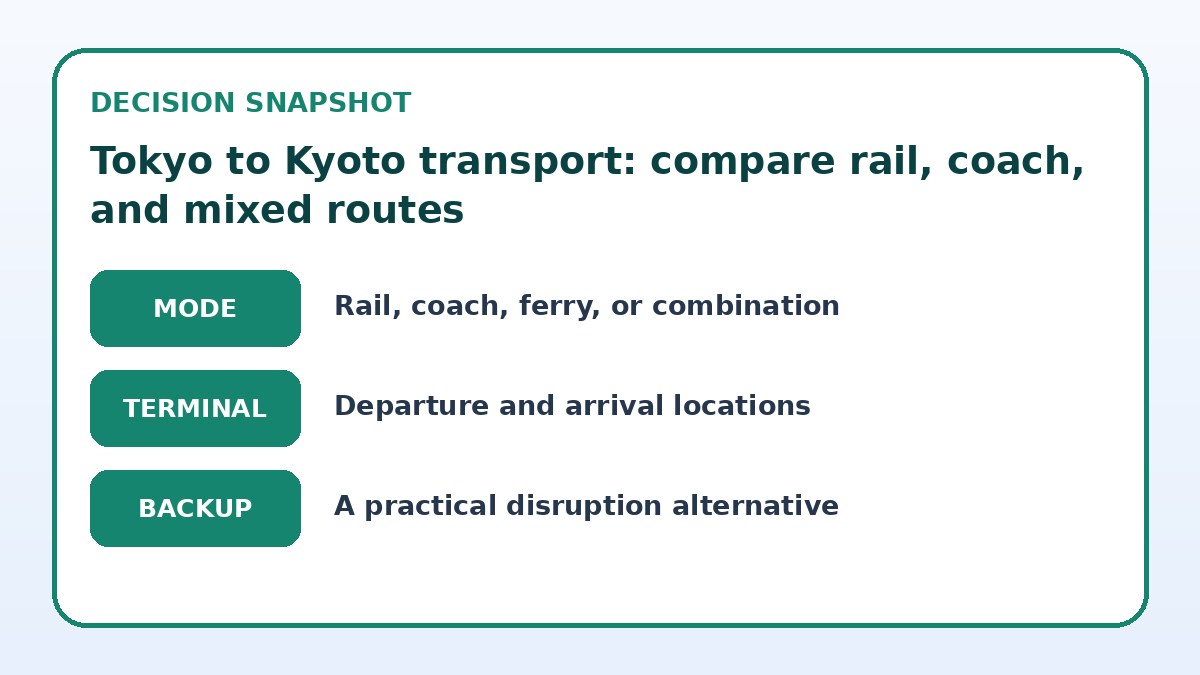
| Journey approach | Best for | Friction to check |
|---|---|---|
| Direct high-speed rail (minimal transfers) | Travelers prioritizing fewer handlings and faster door-to-door travel when stations are convenient. | May require longer initial travel to a major station and limited luggage space on board. |
| Intercity coach with checked luggage | Those who want to avoid carrying bags on and off vehicles and prefer underfloor storage. | Pickup/drop points and last-mile connections can add time and require taxi or local transit. |
| Mixed rail plus luggage delivery | Passengers who want the speed of rail without managing bulky bags during transfers. | Requires planning lead time for delivery and keeps essentials with you; verify delivery windows. |
| Local rail segments with short taxis | Travelers with many stops or remote start/end points who need flexible last-mile door-to-door service. | More handling occasions and potentially higher cumulative taxi costs than a single direct option. |
Check live intercity options
Look beyond the ride itself and compare terminals, transfers, luggage, and arrival fit.
Luggage and transfer friction: who handles your bags?
Decide how much physical handling you’re prepared to do. Carrying bags between platforms and across streets can add significant stress to a journey that looks straightforward on a timetable. Shinkansen trains have limited onboard storage; some seats allow luggage in overhead racks but large suitcases must be stowed at the carriage end or in designated areas. Coaches frequently advertise larger underfloor storage, reducing onboard clutter, though you’ll need to retrieve bags at stops. For mixed-mode journeys, each transfer multiplies handling tasks—every additional transfer is a chance for friction.
An important alternative is luggage-forward services (takkyubin) that deliver bags between accommodations or to stations. These services can eliminate the need to drag heavy suitcases through stations and make short local transfers easier. If you plan to use a delivery service, verify pickup and drop-off locations, lead times, item size limits, and whether delivery covers station drop-offs or hotel-to-hotel only. Always keep essentials and valuables with you, and confirm the provider’s final booking page for exact terms before relying on delivery for tight connections.
Timing flexibility: direct versus multiple legs
When luggage is heavy, fewer legs are better. Direct services reduce the number of times you must move bags and reduce tight connection stress. High-speed rail options that advertise direct runs between Tokyo and Kyoto can be the most time-efficient and have station staff accustomed to helping passengers with baggage. However, direct options may run on fixed schedules with less frequent departures during off-peak hours. If you need a late-night or very early departure, check whether direct services operate at those times or whether you’ll be forced into connections or coach travel.
If your schedule is flexible, a slightly slower but less crowded option might be more comfortable with luggage. Middle-of-the-day departures often mean quieter platforms and an easier time finding elevator access or station staff assistance. Build buffer time into your itinerary: allow extra minutes for ticketing, security, elevator waits, and hauling bags between platforms. Verify schedules on the provider’s booking pages and local station timetables so you can realistically plan these buffers before finalizing reservations.
Compare the practical alternatives
Use the final page to confirm what is actually offered on your dates and save a workable fallback.
Intercity travel checklist
- Map door-to-door routes from your accommodation to departure terminal and from arrival terminal to your final address to estimate transfers and taxi needs.
- Measure and weigh your luggage, then compare dimensions to carrier size limits and station coin-locker or left-luggage allowances.
- Check station maps for elevator locations and accessible transfer paths and contact station customer service if accessibility info is unclear.
- Decide whether to use a luggage-forward service and confirm pickup/drop windows, size limits, and drop-off points on the provider’s booking page.
- Build at least 45–90 minutes buffer for ticketing, elevator waits, and moving large bags between platforms when planning connections.
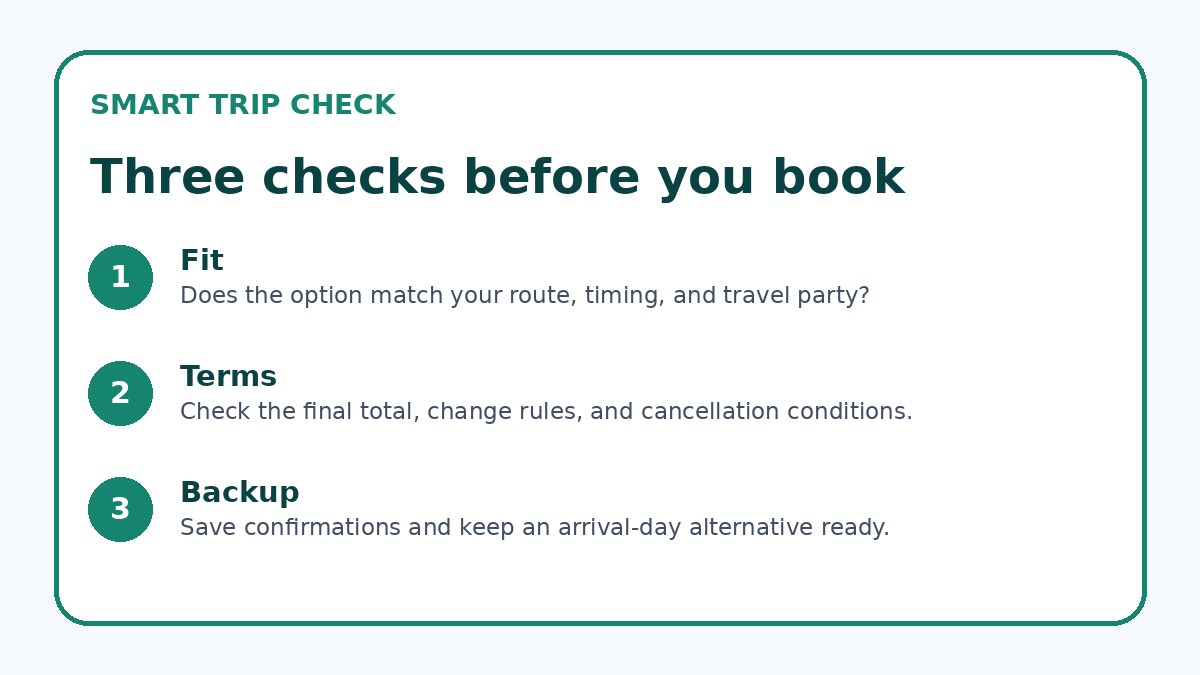
- Save screenshots and contact details of reservations and local transport customer services for quick rebooking or assistance during disruptions.
Disruption backup: practical contingency plans
Prepare for delays, cancellations, or sudden changes in luggage policy by creating simple backups. If you’re booked on a direct rail service, identify the nearest alternative stations or coach terminals you could use if your train is canceled. For coach or mixed trips, pinpoint the next bus departure windows and whether buses allow late check-in for stored luggage. Have contact numbers and screenshots of reservations handy so staff can rebook or advise you quickly, and carry payment options for unexpected taxis if you must shorten the last mile.
Think through how to move your luggage if connections are lost. Luggage forwarding services can be a fallback—if your bag is en route to the arrival city, it may still be delivered even if you arrive later, but confirm policies and time windows on the provider’s booking page. Also know where left-luggage or coin-locker options are located at your destination station and whether they can accommodate your baggage size. Before you leave, save Trip.com or other booking pages and local transport authority contacts to recheck availability and service notices when disruptions occur.
Rail & Intercity Transport questions travelers ask
Can I bring large suitcases on the shinkansen between Tokyo and Kyoto?
You can travel with large suitcases on shinkansen services, but onboard storage options vary by car and seat. Some trains provide overhead racks suitable for smaller bags and designated areas at the carriage ends for large suitcases; space can be limited during peak travel. If you have oversized luggage, check the train operator’s luggage guidelines on their official booking pages before you book. Consider using a luggage delivery (takkyubin) for very large items to avoid last-minute storage issues on the platform or inside the train.
Is it easier to use a coach if I have multiple bags?
Coaches often have underfloor cargo holds that reduce the need to wrestle multiple bags through stations and onto trains. That can make boarding and on-the-ground transfers easier, especially if a coach departs from a convenient pickup point near your accommodation. However, coach stops may sit farther from city centers or require additional taxis. Verify where the bus stops are located and whether the coach operator allows easy retrieval of baggage at intermediate stops. Always confirm luggage size rules and pickup coordinates on the provider’s final booking page.
How reliable are luggage-forward services for same-day delivery between Tokyo and Kyoto?
Luggage-forward services are widely used and generally reliable, but delivery windows and service terms differ by provider and season. Many services require advance booking—sometimes a day or more—and have size and weight limits. If you plan to rely on delivery for a tight schedule, read the provider’s exact pickup and drop-off windows, cutoff times, and exception policies on their booking page. Keep essentials and any important documents with you rather than in the delivered bag, and allow contingency time in case the delivery is delayed.
Final decision note
For travelers with extra luggage making the Tokyo to Kyoto journey, prioritize fewer transfers and clear door-to-door planning over raw travel time. Direct rail often reduces handling and platform stress when stations are convenient for your origin and destination, while coaches can simplify baggage handling with underfloor storage if pickup points fit your itinerary. Luggage-forward services are an effective complement for bulky items, but they require lead time and verification of delivery rules. Before you book, map your full route, confirm station accessibility and luggage rules on provider pages, and prepare a simple backup plan for disruptions to keep the trip stress-free.
Continue planning
Check current options and final conditions
Use the provider page to confirm live availability, the final total, cancellation terms, and every condition that matters to your trip.
This evergreen planning guide was created with AI-assisted drafting and a structured quality review. It does not display live prices, schedules, availability, visa guidance, or provider rankings. Verify current details before booking. Some links are affiliate links; we may earn a commission at no additional cost to you.