If you need to travel to Tokyo for work, the most practical booking advice is: lock flights and essential meetings first, then choose how many auxiliary elements (hotel nights, airport transfers, trains) you bundle based on flexibility needs and refund terms. For many business travelers a mid-range booking window—neither last-minute nor many months ahead—balances availability with the ability to adjust plans. What matters most is not an exact day count but comparing the same dates, traveler count, and cancellation rules across package and individual options. Before accepting a bundle, check which items are changeable, which require full prepayment, and what penalties apply. This guide walks through what to compare, the typical tradeoffs between bundled and separate bookings, and a straightforward checklist to make a confident decision for Tokyo.

Test package value fairly
| Booking approach | Best for | Tradeoff to check |
|---|---|---|
| All-in-one package (flight + hotel + transfer) | Travelers wanting single-point booking and simpler receipts. | Can lock you into nonrefundable components and restrict changes that are common in business trips. |
| Flight booked separately, hotel bundled with transfers | Those who need control over flight timing but want lodging convenience. | Flight flexibility depends on airline fare rules; hotel bundle may still carry strict terms. |
| Everything booked separately | Travelers who need maximum flexibility and precise control over each supplier. | Requires more time to manage multiple reservations, receipts, and possible rebookings. |
| Hybrid: flexible refundable flight + prepaid hotel deal | Business trips with firm dates but potential last-minute attendee or timing changes. | Potentially higher upfront cost; savings from prepaid hotel may be lost if changes occur. |
Check current package and separate options
Use identical dates, travelers, room needs, baggage, and flexibility so the comparison stays meaningful.
What to compare before judging a bundle
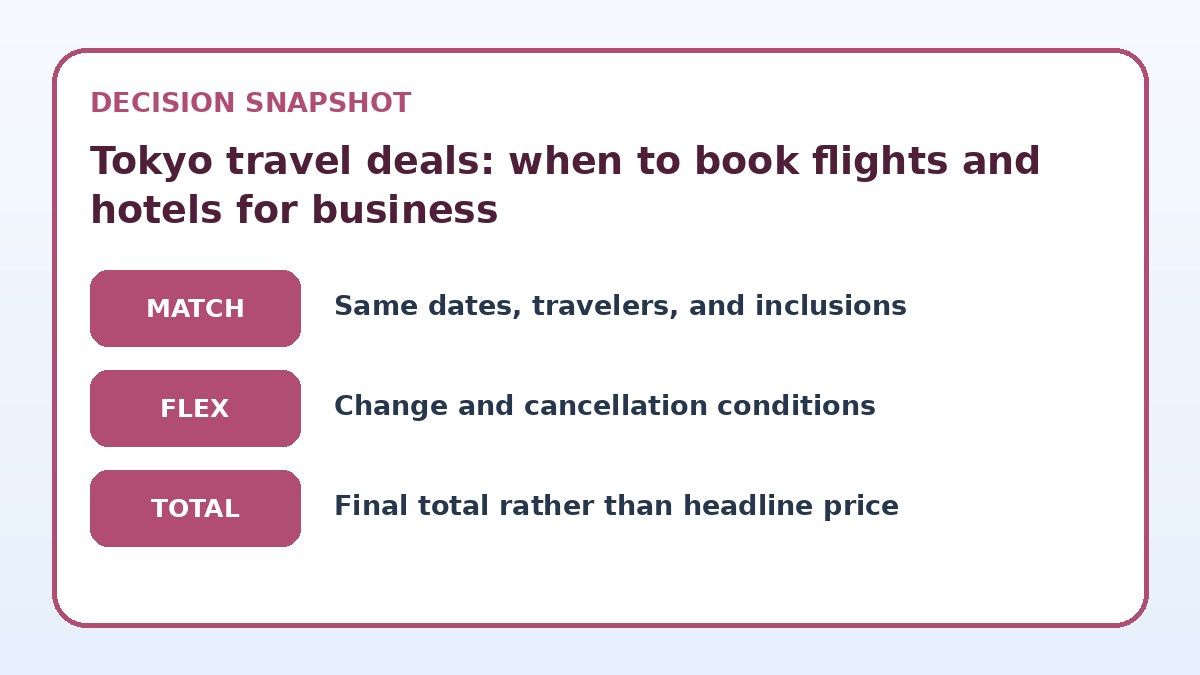
Before you assume a bundled Tokyo travel deal is useful, list the elements a bundle includes and what you’d need to add separately. Typical inclusions are roundtrip flights, hotel nights, and airport transfers; sometimes trains or local SIM cards are packaged. For a fair comparison, create a side-by-side of the same travel dates, identical room types, and the same traveler names. This avoids seeing a bundle as cheaper when it actually includes different dates, fewer nights, or a lower room category.
Next, compare the decision points that matter to a business trip: change and cancellation policies, whether tickets are refundable or rebookable, and whether names or dates can be modified without heavy penalties. Also check whether corporation billing, invoicing, or travel policy approvals are supported by the bundle. Only after these factors are laid out can you judge if a bundle provides real convenience or hides constraints that will cost you time or money if plans shift.
Inclusions and flexibility: tracing the fine print
For business travelers, the inclusion list is less important than how those inclusions behave if plans change. Many bundled offers lock in flights with limited change options or nonrefundable fares, while hotels may offer either fully prepaid nonrefundable rooms or flexible rates with a daily cutoff for free cancellation. Verify in each option whether transfers or seat assignments are guaranteed and whether they can be swapped. A seemingly attractive rate can become costly if any single included component is rigid.
When evaluating flexibility, read the provider’s exact cancellation and amendment conditions on the final booking page. Look for how fees are calculated (flat fee, percentage, or fare-difference only), any deadline for free changes, and whether third-party suppliers are involved, which often complicates refunds. If you rely on corporate travel authorizations, confirm whether the booking supports company invoicing, traveler name changes, or centralized management tools—these operational details can be decisive.
Look past the headline total
Compare inclusions and change conditions before deciding whether a package is genuinely useful for this trip.
Deal comparison checklist
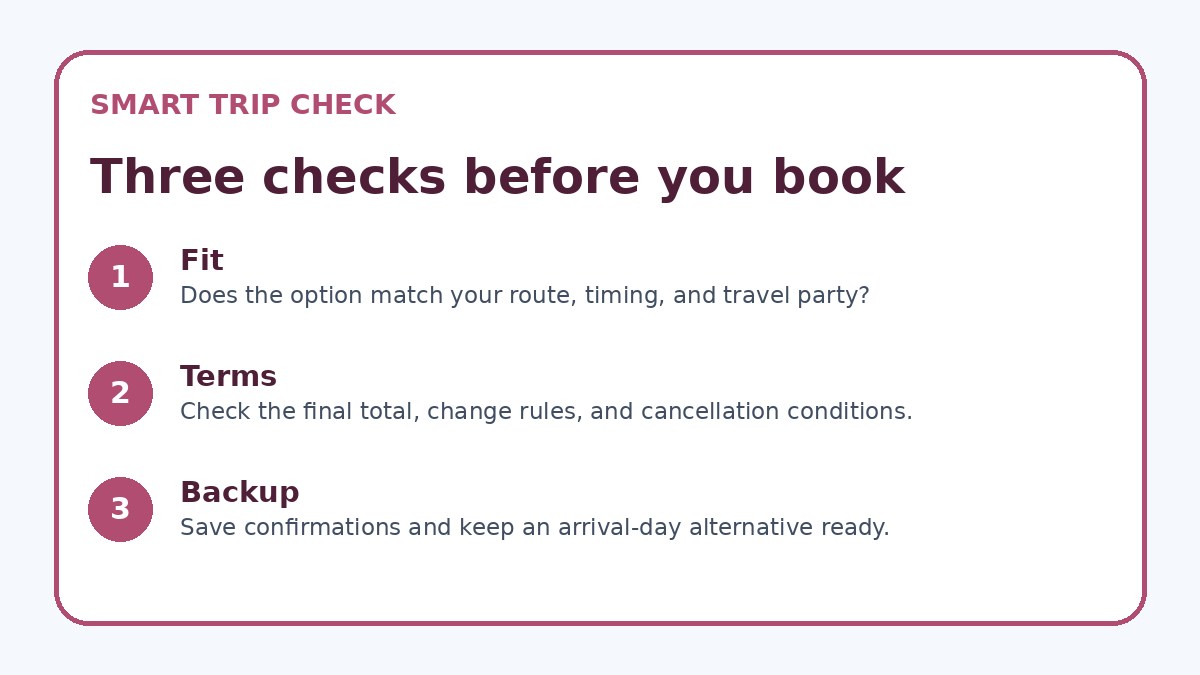
- Lock the international flight only after your meeting times and arrival/departure needs are confirmed.
- Create a side-by-side comparison using identical dates, number of travelers, and room types for each option.
- Read the final provider checkout page for exact change, cancellation, and refund terms before confirming.
- Confirm corporate travel policy compatibility: invoicing, preferred vendors, and required fare types.
- If schedule flexibility matters, choose refundable or changeable fares and hotel rates with clear free-cancellation windows.
- Save PDF copies of e-tickets and hotel vouchers and record supplier contact details for rapid rebooking if plans shift.
Traveler-specific value: corporate policy, risk tolerance, and itinerary
Your company travel policy and personal risk tolerance should shape the booking window. If corporate rules require refundable fares or pre-approved vendors, that narrows viable choices and may favor separate bookings through your managed travel platform. If your role requires late changes—client meetings or variable project timing—prioritize flexible tickets and fully cancellable hotel rates. Conversely, if your schedule is fixed and cost-savings matter, a packaged option that locks in components may be acceptable.
Consider practical itinerary details: arrival airport in Tokyo (Haneda vs Narita) affects transfer time and cost; meeting locations influence hotel neighborhoods; and domestic trains or side trips may be easier to arrange separately. When you need multi-segment logistics (e.g., regional trains after Tokyo), bundling only the main international flight and hotel while keeping domestic legs separate often reduces risk and preserves flexibility for on-the-ground adjustments.
Final terms and where to confirm details
Never finalize a booking until you’ve read the provider’s final terms on their checkout page. Confirm exactly which supplies are third-party, what documentation you’ll receive (e-ticket, hotel voucher), and the timeline and fees for changes and refunds. If a corporate credit card or invoicing is required, test that flow before accepting nonrefundable terms. If you’re comparing offers on consumer sites, remember those platforms may reissue bookings through external suppliers, so the final supplier terms prevail.
If you prefer a convenient place to check availability and compare conditions, you can look at Trip.com as one option—but always verify cancellation terms, baggage allowance, and change fees on the airline or hotel’s official booking page before relying on a deal. For travel managers, collect supplier contract clauses that cover name changes, group policies, and emergency rebookings. Those contractual details are what prevent surprises and preserve your freedom to adapt when business demands change.
Travel Deals & Booking Strategy questions travelers ask
How far in advance should I book flights to Tokyo for a typical business trip?
There’s no single optimal day count; instead, book based on your meeting schedule and risk tolerance. If your dates are fixed and unlikely to change, booking early can secure your preferred flight times. If there’s any chance of shifting meetings, prioritize fares that allow changes or refunds even if they cost more. For hybrid approaches, secure the outbound leg first if arrival time is critical, then monitor fares for return tickets and time transfers while considering corporate policies and approval lead times.
Are package hotel + transfer deals worth it for short Tokyo stays?
They can be convenient for short stays where you want predictable ground logistics, but their value depends on flexibility and how they match your schedule. If the included transfer aligns with your flight times and is refundable or changeable, a package saves coordination. If your flight times are firm but your meetings might shift, separate hotel bookings with flexible cancellation offer safer options. Always verify whether the included transfer is a third-party service and what transfer change or cancellation fees apply on the final booking page.
What should I verify on a booking page to avoid hidden restrictions?
On the provider’s final checkout page check: whether each ticket or room is refundable or changeable and under what penalties; exact names and dates allowed and any fees for name changes; which elements (flights, hotels, transfers) are supplied by third parties; invoice and payment options; and any blackout or advance-purchase requirements. Also confirm baggage allowances, seating rules for flights, and whether hotel rates include taxes and service charges. If any element is unclear, contact the provider directly before confirming.
Final decision note
For business travel to Tokyo, the most realistic booking window is one defined by your meeting certainty and corporate rules rather than a fixed number of days. Compare identical itineraries across bundled and separate options, prioritize refundable or changeable components when dates might move, and verify all terms on the provider’s final booking page. Use packages for convenience when their flexibility matches your needs; otherwise, book critical legs separately to retain control. With these steps—locking essential flight times, cross-checking cancellation rules, and keeping documentation handy—you’ll reduce risk and make a pragmatic booking decision for Tokyo.
Continue planning
Check current options and final conditions
Use the provider page to confirm live availability, the final total, cancellation terms, and every condition that matters to your trip.
This evergreen planning guide was created with AI-assisted drafting and a structured quality review. It does not display live prices, schedules, availability, visa guidance, or provider rankings. Verify current details before booking. Some links are affiliate links; we may earn a commission at no additional cost to you.