For business travellers moving between Kuala Lumpur and Singapore, the practical question is not just which mode is fastest, but which ticket type lets you change plans without losing the meeting. Choose between rail, coach, and mixed multimodal trips depending on how predictable your agenda is: fully flexible or refundable tickets give substitution freedom; semi-flexible fares let you change with a fee; non-refundable, low-cost fares lock you in. Start by mapping your door-to-door timeline — office locations, airport or station transfers, likely luggage, and how much buffer you need for delays. After that, compare the real cost of convenience: flexibility fees, transfer friction, and backup options if a sector is disrupted. This article walks through terminal fit, luggage and transfer friction, timing flexibility, and disruption backups so you can pick the ticket approach that keeps your meeting schedule intact.
Terminal fit: where your trip really starts and ends
For a business trip the effective journey begins at your office or hotel and ends at the meeting room, not the station platform. Compare stations, terminals and their distance from the parts of the city where you’ll actually spend time. A rail terminal that connects directly to city transit or is close to a major business district reduces the need for extra taxis or long rides across town. If your arrival point requires crossing the city, factor the potential for traffic, rush-hour congestion, and how reliable local taxis or ride-hail services are at your arrival times.
Also consider immigration and border formalities when the choice involves cross-border options. Some ticket types bundle through-check-in or fast-track services that save time; others leave you to queue at the border which adds unpredictability. When comparing ticket flexibility, also check how the fare treats missed onward connections or border delays: some flexible tickets allow same-day rebooking while stricter fares may consider missed connections the passenger’s responsibility.
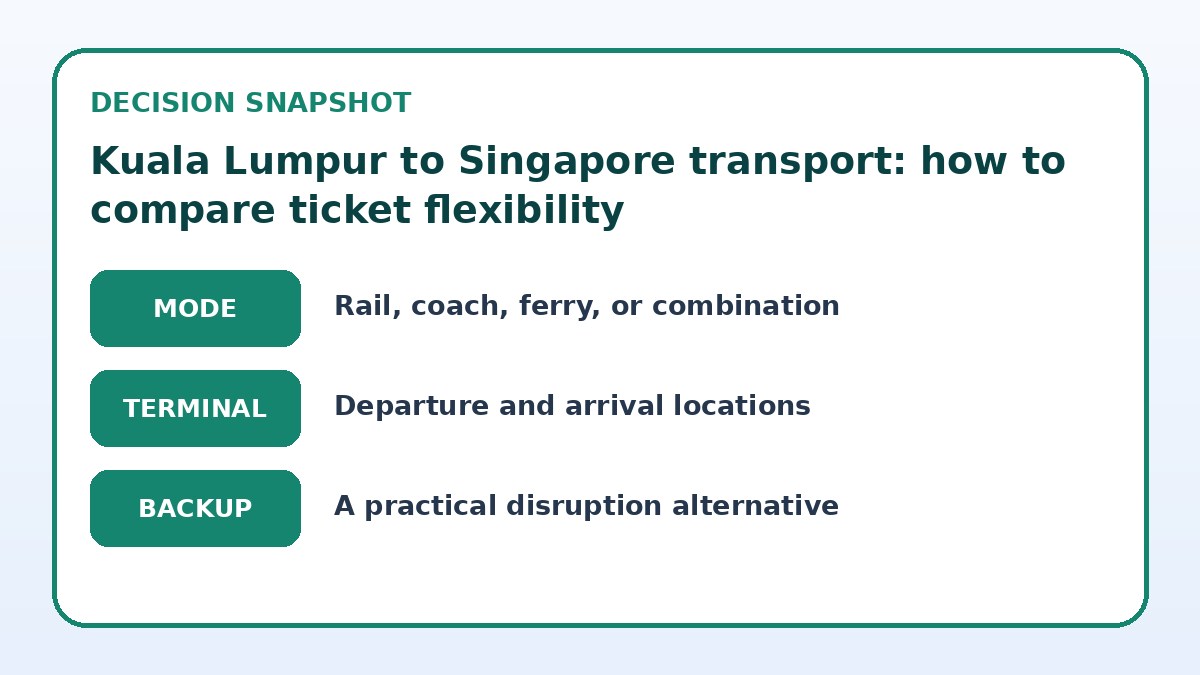
Choose the end-to-end journey plan
| Journey approach | Best for | Friction to check |
|---|---|---|
| Buy the most flexible refundable ticket available | Last-minute schedule changes, high-value meetings where missing a slot is critical | Higher upfront cost and possibly fewer discounted inventory options |
| Choose a semi-flexible fare with lower change fees | Frequent short-notice adjustments where some penalty is acceptable | Change fees or fare difference apply and rebooking can depend on availability |
| Pick the lowest-cost non-refundable fare and plan backups | Fixed itineraries with predictable timing and minimal chance of change | Risk of losing fare if plans change; backups require separate purchases |
| Use a mixed-mode approach (rail + coach or timed transfers) | Balancing city-centre arrival convenience with savings or schedule needs | More transfers increase luggage and delay risk; ticket rules across operators can complicate changes |
Check live intercity options
Look beyond the ride itself and compare terminals, transfers, luggage, and arrival fit.
Luggage and transfer friction: practical limits on a short business trip
Business travellers often prefer minimal handling: a single carry-on and a brief transfer beat cheaper fares with strict baggage fees or long drops at remote terminals. Think about how many handoffs your trip requires: boarding a coach that leaves from a downtown terminal might be simpler than a low-cost rail bus combo that departs from an out-of-town depot. If you must change modes—train to coach or train to ferry—confirm whether tickets permit through-checked baggage or if you’ll need to collect and recheck luggage, which consumes valuable time and creates missed-meeting risk.
Also verify seat and class rules: some rail and coach flexible fares reserve seats that can be changed without penalty, while low-cost tickets may not guarantee a seat on later services. For door-to-door practicality, check how easy it is to add a car service or an express transfer; flexible tickets that allow same-day rebooking make last-mile arrangements easier and reduce the chance you’ll need to wait for a specific service or stand in a check-in line.
Timing flexibility: change fees, rebooking windows and same-day options
Ticket flexibility comes down to the rules for changing or cancelling and the fees or fare differentials involved. For business travel, prioritize fares that allow changes within a reasonable window without a full fare penalty, and look for tickets that permit same-day rebooking on earlier or later services. If your schedule frequently changes at short notice, a fare that charges a modest change fee but waives the fare difference will often be better value than a deeply restricted ticket that requires you to buy a new full-price fare.
When comparing options, don’t just compare the headline change fee; read the fine print on how long before departure changes can be made, whether changes are possible online or must be done via phone, and whether rebooking depends on seat availability. Confirm whether refunds are processed as vouchers or cash and how long credits remain valid — these details affect whether flexibility actually saves you time and money when plans shift.
Compare the practical alternatives
Use the final page to confirm what is actually offered on your dates and save a workable fallback.
Intercity travel checklist
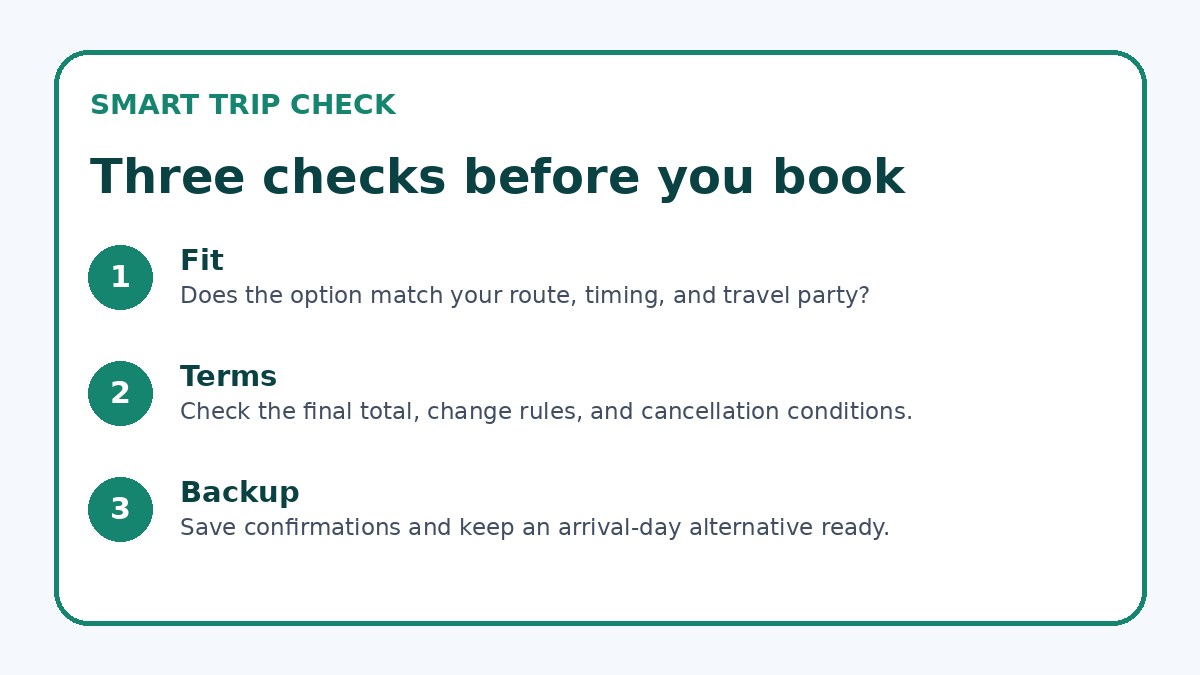
- Map your door-to-door time, including transfer, immigration and likely city traffic before comparing fares.
- Verify on the booking page whether the fare is refundable, changeable online, and what fees or deadlines apply.
- Confirm luggage allowances and whether through-check or recheck is required for each segment of the trip.
- Check whether same-day rebooking or earlier-later service swaps are permitted without paying full fare differences.
- Prepare a disruption backup: a flexible standby ticket or refundable hotel room in case the outbound service is delayed.
- Save screenshots of the provider’s fare rules and the confirmation page so you can reference them when requesting changes.
Disruption backup: what to do if something goes wrong
A good contingency plan is part of ticket choice. For cross-border travel, delays at check-points, weather disruption, or vehicle breakdowns are real possibilities. Prioritize tickets and routes that provide automatic rebooking on the next service when the operator is responsible, or that include access to an assistance desk at the terminal. If an operator does not offer a robust disruption policy, arrange a backup: a later flexible ticket or a refundable fare on an alternative operator to use only if needed.
Also prepare logistical backups beyond the ticket: book a hotel flexible-cancellation room or arrange a meeting time buffer so you can shift without cascading impacts. Keep digital copies of your tickets and the provider’s contact numbers, and—if immigration or customs are involved—carry any required documents ready to present. Finally, when you buy, verify the operator’s disruption and refund policy on their official booking page; vendor policies change, and the booking page is the authoritative source for what you can claim in an emergency.
Rail & Intercity Transport questions travelers ask
How do I compare flexible tickets across different transport modes for the Kuala Lumpur to Singapore route?
Start by listing your door-to-door constraints: meeting time, luggage, and acceptable transfer complexity. For each transport mode, open the provider’s booking page and record the change and cancellation terms, whether rebooking is allowed same-day, and how luggage is handled. Compare not only fees but practicalities: where the terminal is, how transfers are arranged, and whether bookings can be altered online. If you plan mixed-mode travel, check the separate operators’ rules because integrated flexibility is rarer than single-operator policies.
Is it worth paying for fully flexible tickets for frequent business trips between these cities?
That depends on how costly a missed meeting would be versus the price premium for flexibility. If schedule changes happen often or a delayed arrival would cause major professional consequences, flexible fares reduce stress and administrative time. For highly regular, predictable trips, semi-flexible fares with modest change fees or smart planning (buffer time, travel insurance, or a refundable backup) may offer a better balance. Always calculate the potential cost of a missed meeting against the recurring premium you’d pay for flexibility.
What should I verify on the final booking page before completing a purchase?
On the provider’s confirmed booking page, check the exact wording for change and cancellation policies, how refunds are issued (credit or cash), deadlines for free changes, luggage allowances and any seat reservation rules. Look for statements about same-day changes, whether rebooking can be done online, and if disruption protections exist. If the trip crosses borders, confirm whether any additional border or check-in protocols are noted. Keep a copy of that page because it’s the authoritative source for what you can claim later.
Final decision note
Business travel between Kuala Lumpur and Singapore rewards a focus on door-to-door practicality more than the headline travel time alone. Decide first how much schedule risk you can tolerate, then pick a ticket approach that matches: fully flexible fares for unpredictable schedules, semi-flexible for moderate risk, low-cost non-refundable for fixed plans, or mixed-mode for city-centre convenience. Whatever you choose, read the provider’s booking page for exact change and cancellation rules, confirm luggage and transfer details, and create a simple disruption backup. Those steps turn an intercity trip from a logistical gamble into a manageable part of your workday.
Continue planning
Check current options and final conditions
Use the provider page to confirm live availability, the final total, cancellation terms, and every condition that matters to your trip.
This evergreen planning guide was created with AI-assisted drafting and a structured quality review. It does not display live prices, schedules, availability, visa guidance, or provider rankings. Verify current details before booking. Some links are affiliate links; we may earn a commission at no additional cost to you.