For first-time visitors, the practical question isn’t just whether to rent a car in Singapore, but where to collect it. If your plan is mostly within the island and urban core, a car often adds complexity rather than convenience; public transport, taxis and rideshares are excellent and remove parking stress. However, if your itinerary includes day trips to the northern islands, cross-border drives (check entry rules separately), or trips with heavy luggage, renting makes more sense. Picking up at Changi Airport gives immediate mobility on arrival but can come with airport fees, longer queues, and a slightly different return process. City pickup can be faster on arrival and closer to your hotel, but may mean dealing with city traffic and timed office hours. This guide gives the short answer up front, then walks through route value, insurance wording, pickup/return friction and a non-driving fallback so you can choose the best pickup strategy for your trip.
Route value: when driving actually helps your Singapore trip
Decide first whether driving adds real value to your itinerary. Singapore is compact with world-class public transport and dense urban attractions; driving between downtown museums, hawker centres and the Botanic Gardens rarely saves time and introduces parking fees and local driving intricacies. A rental car becomes valuable when your plans extend beyond central Singapore — for example, early-morning island transfers, long day trips to nature reserves at the edges of the island, or if you’re collecting or dropping travelers at different lodgings with lots of luggage. For mixed plans, consider renting only for the days you need a car, rather than the whole stay.
Also factor in companion needs: families with small children or travelers with mobility issues often find door-to-door driving more comfortable and flexible than repeated taxi trips. If your schedule includes crossing any maritime or land borders, check vehicle-crossing permission and insurance requirements before booking. Ultimately, match the car to trip legs where it reduces transit complexity; otherwise, public transport plus occasional rideshares will usually be faster, cheaper, and less stressful.
Decide whether driving earns its place
| Mobility strategy | Best for | Cost or friction to check |
|---|---|---|
| Airport pickup | Arrivals that need immediate mobility, large luggage, or onward drives from the airport. | May include airport location fees, longer queueing and fixed return lanes or after-hours procedures. |
| City pickup | Arrivals who prefer a short hotel transfer, avoid terminal queues, or want daytime office assistance. | May require navigating city traffic to exit and can involve city parking while finalising paperwork. |
| Rent only for specific days | Travelers with mixed plans who need a car for day trips but not for the full stay. | Requires more planning around pickup and return windows and could mean more transfers without luggage support. |
| Skip rental and use transit/taxi | Visitors staying within the urban core who want stress-free movement and avoid parking hassles. | Less flexibility for remote day trips and may be less convenient with lots of luggage or tight schedules. |
Check live rental choices only after the route test
Use the exact driver, dates, pickup point, and return plan to compare current conditions.
Insurance and contract wording: what to verify before you book
Insurance details are decisive. Rental confirmations often list collision damage waiver (CDW), theft protection, third-party liability and an excess amount. Pay attention to excess caps, whether the excess is refundable, and what optional super-cover or zero-excess products actually cover. Look for exclusions such as driving outside permitted areas, using the car on beaches or off-road, and prohibited drivers. If you intend to add an additional driver, make sure they are named in the contract and understand the rules for permitted drivers and age limits.
On the booking page and at the desk, verify fuel policy, mileage limits, and whether you need your own insurance or credit-card coverage will be relied upon. Ask whether roadside assistance is included and check the process for reporting incidents: will the car company provide a replacement vehicle, or must you wait for an assessment? Don’t assume verbal assurances — insist on the exact wording in the rental agreement and a clear copy to take with you.
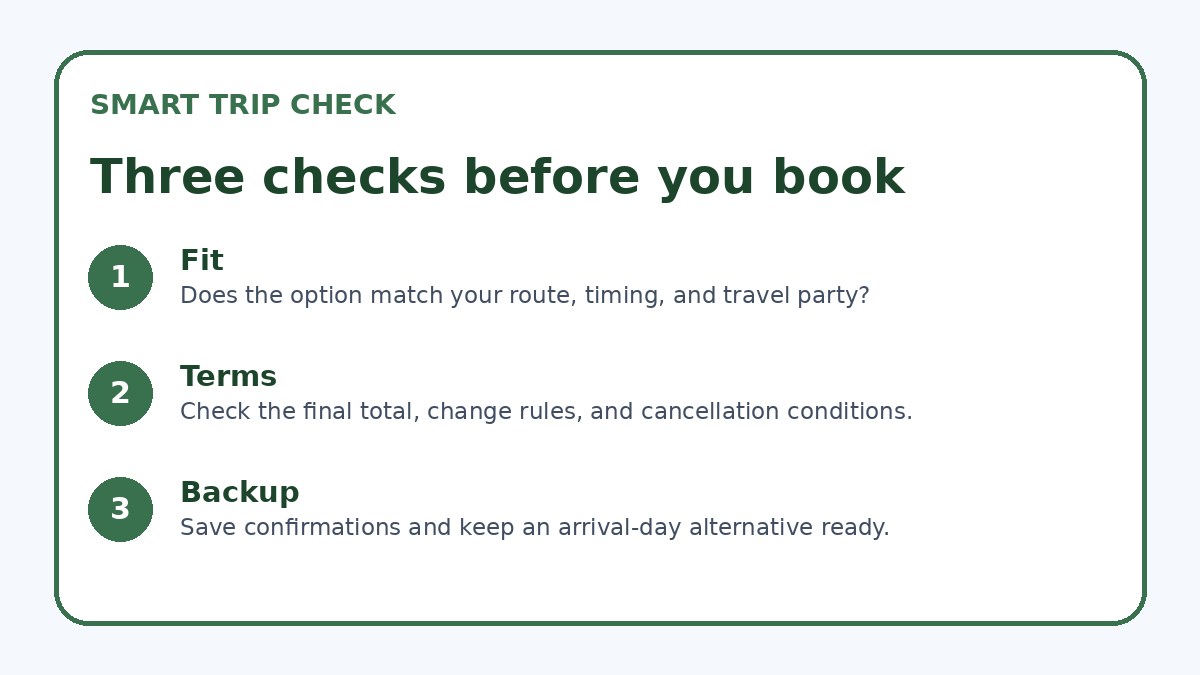
Compare the full rental conditions
Confirm insurance wording, exclusions, deposit, fuel, mileage, and return terms on the final page.
Pickup and return friction: airport vs city collection
Airport pickup at Changi gives you a car immediately after arrival, which can be ideal with heavy luggage or an immediate onward drive. But airports commonly have dedicated rental zones, shuttle waits, and peak-time queues; some companies centralize desks in one terminal which may require moving between terminals. Also check whether airport pickups incur extra location fees, differences in operating hours, and where you must return the car — some airport returns use separate lanes or automated drop boxes. On the booking and confirmation pages, verify the exact terminal instructions and after-hours return procedure.
City pickup typically means a shorter transfer from your hotel and possibly quicker desk service, with fewer location surcharges and more flexible pickup windows. However, collecting in town may involve navigating rush-hour traffic to reach highways, and you’ll likely pay for inner-city parking while you sort paperwork. For returns, consider whether the city office accepts late drop-offs and how they process fuel top-ups and final inspections; returning at a city branch can be faster if the office is close to your departure transit hub.
Car rental terms to verify
- Confirm whether airport pickup carries an extra location surcharge and ask for the exact terminal pickup and return instructions on the booking page.
- Check the rental agreement for excess amounts, whether zero-excess cover is available, and the process for paying or waiving excess at the counter.
- Verify fuel policy (full-to-full or otherwise), permitted mileage, and refuelling charges so you’re not surprised at return.
- Ensure every driver is named on the contract, meets age and licence requirements, and understands cross-border or restricted-area rules.
- Ask about roadside assistance availability and response times; save the operator’s emergency number and your reservation reference.
- Plan a non-driving fallback: list nearby MRT lines, major bus routes, and a trustworthy taxi or rideshare option for your arrival day.
Non-driving fallback: plans if you decide not to rent
Plan a practical non-driving fallback before you commit. Singapore’s MRT, buses, and taxis cover nearly every tourist route reliably and affordably; rideshare apps are widely used and often cheaper than the combined cost of rental, fuel and parking for short urban trips. For day trips to nature or island departures, organized tours or private transfers can replace a rental car and avoid parking and return logistics. If you might later decide a car is useful, pick a flexible rental policy that allows a same-day start without heavy penalties.
Also identify nearby rental offices and flexible hourly car services so you can borrow a vehicle for a single day if needed. Keep digital copies of train and bus routes you expect to use, and confirm luggage allowances on public transfers to the airport or ferry terminals. Having a clear fallback made of public transit options and on-demand taxis reduces the pressure to rent unnecessarily on arrival.
Car Rental & Road Trip questions travelers ask
Will renting a car at Changi Airport be faster than collecting in the city?
It depends on arrival timing and your luggage. Airport collection avoids a transfer to the city but can mean waiting at rental counters or shuttles; peak arrival times create queues. City pickup often requires a short taxi or hotel transfer but can be quicker if airport desks are busy or if your flight lands late and city offices offer extended collection windows. Check the provider’s stated desk hours, expected wait times, and terminal instructions on the booking page to estimate which option is faster for your arrival slot.
What insurance items should I insist are clear before I drive in Singapore?
Make sure you understand the collision damage waiver, theft protection, third-party liability limits, and the excess amount you’d be liable for after an incident. Ask whether optional super-cover removes excess and what exclusions apply—common exclusions include unapproved drivers, off-road use, and driving outside permitted areas. Confirm roadside assistance coverage and the claim reporting process. Always get the exact policy wording or a summary from the booking page or counter and keep a copy with your documents.
If I return the car after hours, what should I verify?
Ask the rental company how after-hours returns are handled and whether any extra fees apply. Verify the drop-off location, whether keys must be left in a secure box, and how the final inspection and fuel reconciliation will be managed. Get written confirmation of the accepted after-hours procedure and a clear process for receiving a final receipt or damage report. If possible, photograph the vehicle at return with a timestamped app to document condition and fuel level.
Final decision note
For first-time visitors to Singapore, the simplest rule is: don’t rent a car unless your itinerary needs it. If you do need a vehicle, airport pickup makes sense when you must drive immediately or have heavy luggage, while city pickup suits arrivals that prefer a short transfer and potentially quicker desk service. Always check insurance excesses, fuel and mileage rules, and exact pickup/return procedures on the provider’s booking page before confirming. Have a non-driving fallback ready using Singapore’s excellent transit and taxi options. For checking current availability and policies you can compare providers on Trip.com or directly on rental company pages, but rely on the rental agreement for final terms.
Continue planning
Check current options and final conditions
Use the provider page to confirm live availability, the final total, cancellation terms, and every condition that matters to your trip.
This evergreen planning guide was created with AI-assisted drafting and a structured quality review. It does not display live prices, schedules, availability, visa guidance, or provider rankings. Verify current details before booking. Some links are affiliate links; we may earn a commission at no additional cost to you.