If you’re visiting Da Nang for the first time, using flexible travel dates can shrink costs and open more comfortable itineraries—but only when you compare the right things. Start by picking a target travel window rather than fixed arrival and departure days: a three- or seven-day range gives search engines and booking tools space to surface lower fares, alternate connections, or cheaper hotel nights. Before you book, always compare identical traveler counts, the same number of nights, and equivalent room types and baggage allowances. Equally important: read final booking terms for change and cancellation rules so a low price doesn’t become an expensive commitment. This guide explains what to compare between bundles and separate bookings, how to test date flexibility efficiently, and what to check on the provider’s final booking page so your flexible-date strategy actually saves you time and money.

Test package value fairly
| Booking approach | Best for | Tradeoff to check |
|---|---|---|
| All-in-one package (flight+hotel+transfer) | Travelers who want a single purchase and coordinated logistics. | Often faster to book but can limit date changes and loyalty benefits; verify change rules for each component. |
| Flight and hotel booked separately | Flexible travelers who want to optimize each component and use date flexibility freely. | More time-consuming to compare; risk of mismatch in arrival times and transfer availability. |
| Hotel-first approach, add flights later | Visitors prioritizing specific hotel location, amenities, or peak-date room availability. | Flight prices may rise if delayed; check hotel’s cancellation policy before committing. |
| Package add-ons (book base package, add transfers/tours) | Travelers wanting a simple core booking with optional services for convenience. | Add-ons can be pricier than separately contracted services; read final checkout to confirm true inclusions. |
Check current package and separate options
Use identical dates, travelers, room needs, baggage, and flexibility so the comparison stays meaningful.
What to compare before you judge a package
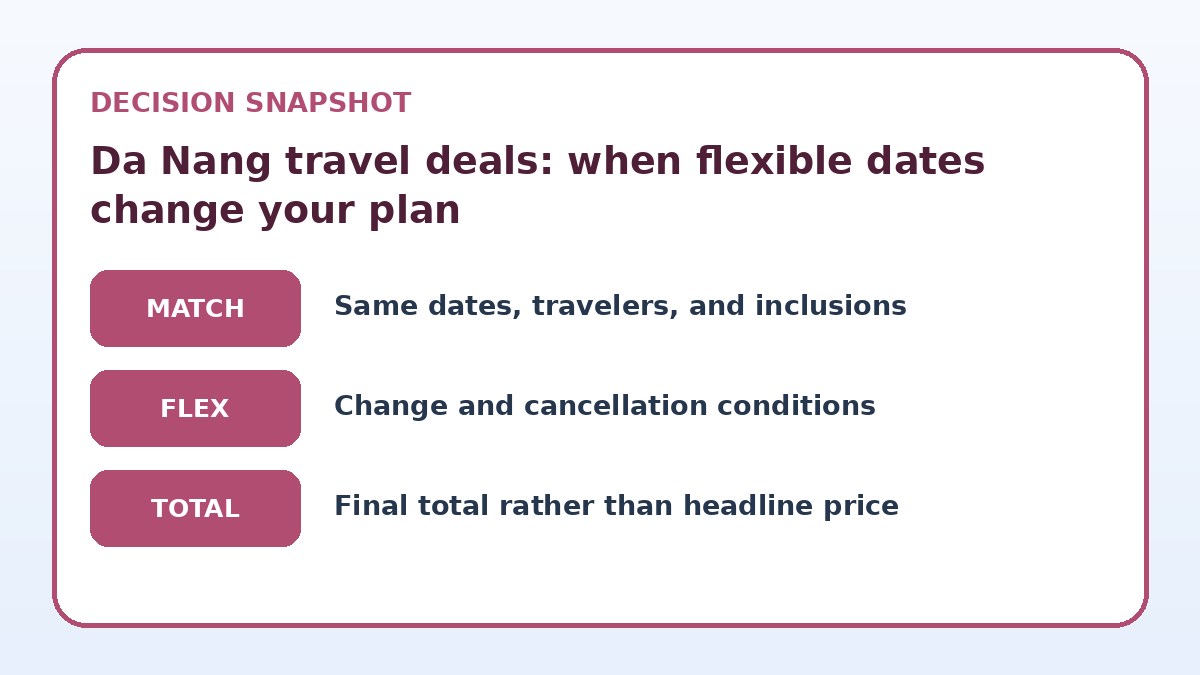
Before accepting a bundled offer, compare the components side by side with separately booked elements. Match the exact flight times (or acceptable connection patterns), hotel room type and board basis, transfer inclusions, and the number of nights. Don’t be swayed by a single headline price: a package that appears cheaper may lock you into nonrefundable flights or a lower-grade room that can’t be changed without penalties. Also check baggage allowances and seat selection—those common add-ons can add up quickly if the bundle’s flight fares are restrictive.
Next, check how date changes are handled for each component. Some packages let you move hotel nights within a flexible window but treat flights as fixed; others may permit full itinerary changes for a fee. If you’re using flexible dates as a search tool, temporarily hold a few separate flight and hotel options so you can directly compare the total cost and change terms. Finally, read the final booking page carefully: the provider must list any change fees, blackout dates, and whether credit or vouchers are issued for cancellations.
Inclusions and flexibility: how to read the fine print
Line-item inclusions determine whether a package gives real value. Look for explicit mentions of transfers, daily breakfast, taxes, resort or city fees, and any included activities. If an inclusion sounds vague—such as “local tour included”—verify the duration, meeting point, and whether additional transport or entrance fees are your responsibility. For hotels, check the refundability and whether the quoted rate is per person or per room; misreading this is a frequent source of unexpected costs.
Flexibility clauses vary widely. Does the package allow date modifications without re-pricing? Are name changes allowed? How are missed flights or schedule changes handled? Some providers issue vouchers for rebookings rather than cash refunds, which may not suit travelers who need flexible cash options. If possible, simulate a change on the provider’s booking interface or contact customer service and note exactly what they confirm so you understand the real-world flexibility behind any advertised “flexible” label.
Look past the headline total
Compare inclusions and change conditions before deciding whether a package is genuinely useful for this trip.
Deal comparison checklist
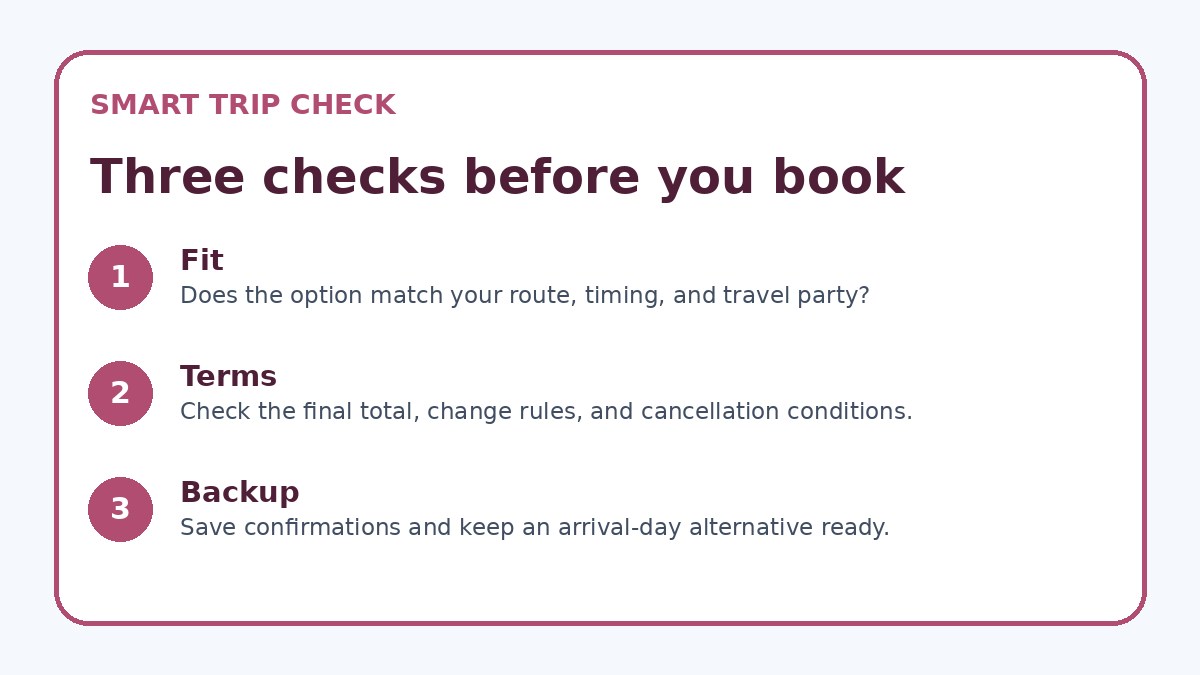
- Search with a three- to seven-day date window for both arrival and departure to see cheaper permutations.
- Match the same traveler count, nights, and room type when comparing any package versus separate bookings.
- Open the provider’s final booking page and copy the change, cancellation, and refund terms before paying.
- Confirm baggage allowance, seat selection rules, and whether flights in bundles earn loyalty points.
- If transfers or tours are included, verify pickup/drop-off times, meeting points, and operator contact details.
- Take screenshots of price breakdowns and terms during checkout to document what was promised at booking.
Traveler-specific value: when bundles help or hurt
Your profile as a traveler matters. Solo travelers, couples, and family groups face different tradeoffs when using flexible dates. Families with young children often prefer packages that include transfers and flexible hotel cancellation to reduce day-of travel stress. Solo travelers who prioritize low cost and last-minute timing might prefer separate flight and hotel bookings to take advantage of unconnected inventory reductions. Frequent flyers or travelers with loyalty programs should check whether bundled flight fares earn miles or if hotels count toward elite status—some bundles use negotiated rates that don’t qualify for loyalty benefits.
Also consider how fixed or flexible your personal schedule is. If you must be in Da Nang for a festival or a specific appointment, date flexibility is less valuable and a package that secures seats and rooms may offer peace of mind. Conversely, if your travel window is open, flexible-date searches will likely surface off-peak nights and midweek flights that reduce cost and crowding. Weigh convenience, loyalty value, and schedule constraints to decide whether a bundle or separate bookings fit your travel priorities.
Final terms: exactly what to verify on the booking page
On the provider’s final booking page verify change and cancellation rules for every component: the amount charged for date adjustments, the timeframe for free cancellations (if any), and whether refunds are monetary or vouchers. Check the name-change policy too; some low-cost fares prohibit name edits entirely or require a full reissue. Confirm baggage allowances, seat selection fees, and any optional add-ons that are not included in the base price. If transfers or activities are included, ensure departure/meeting times and meeting points are listed clearly.
Look for insurer and emergency contact options at checkout and confirm whether booking protection or travel insurance is offered or required. If you use a third-party bundle, note whether the agency acts as an intermediary or issues a combined ticket; this affects who you contact if problems arise. Finally, save or screenshot the full terms page before you pay. If you need to compare current availability and conditions across providers, you can glance at Trip.com as one of several comparison tools, but always rely on the final terms on the provider’s own checkout page for contractual details.
Travel Deals & Booking Strategy questions travelers ask
How much date flexibility should I use when searching for Da Nang travel deals?
Aim for a three- to seven-day window around your preferred travel dates. That range is wide enough to reveal midweek savings or cheaper alternate connections without returning results that are impractical for your schedule. For longer stays, consider shifting the entire trip by a week to compare weekday-heavy vs. weekend-heavy patterns. Use flexible-date calendars on flight and hotel search tools to view price spreads quickly, then narrow options to those that match your personal constraints—family commitments, work, or fixed events.
Will booking a package protect me if flight times change en route to Da Nang?
Packages can simplify problem resolution because one provider often acts as a single point of contact, but protection varies. Some agencies rebook missed connections within the package, while others expect you to handle the affected component directly. Before you buy, read who is responsible for rebooking and whether changes due to carrier schedule adjustments are covered without penalty. Note whether refunds are monetary or vouchers. Keep the provider’s emergency contact handy and document any schedule changes the airline or supplier issues.
Should I use a travel agent or book directly when I need flexible dates?
Both approaches have merits. A travel agent can run multiple date permutations quickly and may explain nuanced change policies, which is helpful for complex itineraries. Booking directly sometimes yields clearer terms and faster refunds because you’re dealing with the supplier, not an intermediary. If you use an agent, request written confirmation of change and cancellation terms and insist they show the final provider checkout terms. Either way, verify the exact penalties for date changes and who issues refunds before completing payment.
Final decision note
Flexible dates are a practical lever for first-time visitors to Da Nang, but they only deliver value when paired with careful comparisons and verification of final terms. Start searches with a sensible date window, compare identical components across packages and separate bookings, and test likely change scenarios on the provider’s checkout page. Prioritize the types of flexibility that matter to you—cash refunds, free date swaps, or included transfers—and document everything before you pay. With those checks in place, flexible-date searching helps you find quieter nights, more convenient flight patterns, and travel conditions that fit your needs without unexpected costs.
Continue planning
Check current options and final conditions
Use the provider page to confirm live availability, the final total, cancellation terms, and every condition that matters to your trip.
This evergreen planning guide was created with AI-assisted drafting and a structured quality review. It does not display live prices, schedules, availability, visa guidance, or provider rankings. Verify current details before booking. Some links are affiliate links; we may earn a commission at no additional cost to you.