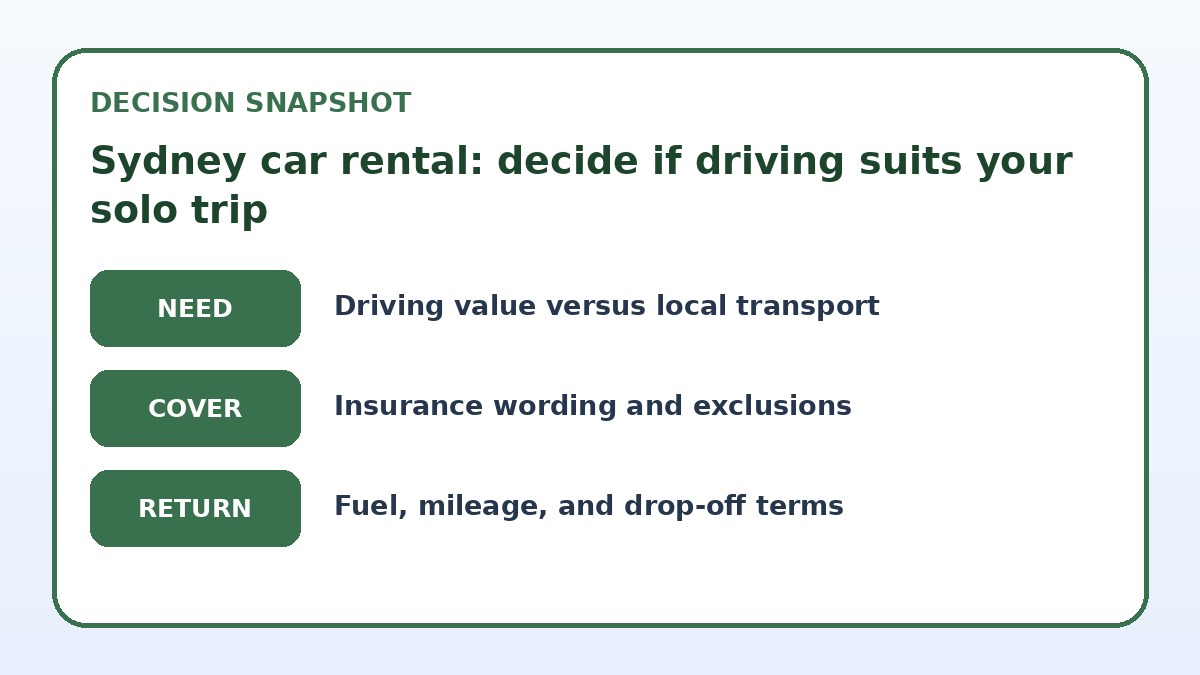
If your itinerary keeps you inside central Sydney and its inner suburbs, a Sydney car rental is probably unnecessary; public transport, rideshares and walking cover most solo traveler needs efficiently. Drive if your plans include coastal or national-park day trips (Royal National Park, Grand Pacific Drive, Blue Mountains side roads) or if you’ll carry bulky gear like surfboards or camping equipment. Before you book, compare total door-to-door time, parking availability and the additional costs of insurance and tolls against the convenience of a vehicle. This guide helps you weigh those tradeoffs, understand insurance wording and fee traps, anticipate pickup and return friction, and choose a non-driving fallback that keeps your days simple and flexible.
Route value: when driving genuinely improves a Sydney solo trip
Assess whether driving changes what you can do in a day. Central Sydney’s attractions — Circular Quay, Darling Harbour, Bondi and major museums — are well served by trains, light rail and buses, so a car adds cost and parking hassle without much time savings. Conversely, if your top priorities include remote beaches beyond public transport, multi-stop coastal routes, or early-morning starts to hike in the Royal National Park or Blue Mountains minima, a car opens routes and schedules that buses and tour departures might not cover.
Think in terms of door-to-door time and flexibility rather than distance alone. A two-hour round trip by car with independent stops can be better than a longer, constrained day that depends on fixed tour times or infrequent regional buses. Also account for where you’ll stay: accommodations with free or cheap parking reduce friction, while city hotels with expensive or limited parking tilt the balance away from renting. Match the vehicle’s advantages to the solo traveler tradeoffs you value: privacy, gear capacity and schedule control versus cost and urban stress.
Decide whether driving earns its place
| Mobility strategy | Best for | Cost or friction to check |
|---|---|---|
| Rent a car daily and self-drive | Maximal route flexibility, multi-stop day trips, carrying bulky gear | Higher cost, parking hassles, and time spent on pickup/return and insurance choices |
| Public transport and ferries | City sightseeing, budget travel, avoiding parking and tolls | Less flexibility for remote sites and schedules depend on timetables |
| Day tours and regional shuttles | Hassle-free access to Blue Mountains and coastal parks without driving | Fixed itineraries and earlier departures reduce spontaneity |
| Rideshare/taxis plus occasional hire | Evening travel, short hops, and avoiding parking; flexible without long-term rental | Can be expensive for full-day remote excursions or repeated long transfers |
Check live rental choices only after the route test
Use the exact driver, dates, pickup point, and return plan to compare current conditions.
Insurance wording and coverage: exactly what to verify
Don’t assume standard rental language matches your expectations. On the rental page and in the contract, verify three items: the liability insurance limit (what third-party damage is covered), the collision damage waiver (CDW) and whether it includes a deductible or excess, and any restrictions that void coverage — for example, driving on unsealed roads or outside New South Wales. If the supplier offers additional protections (zero-excess, theft waiver, roadside assistance), confirm whether those are refundable, mandatory at pickup, or optional add-ons.
If you plan to use a credit-card rental insurance benefit, check the exact wording with your card issuer: what classes of vehicles are included, whether the coverage is primary or secondary, and what documentation the issuer requires after an incident. For each insurance or waiver option the agency presents, read the insurer’s or provider’s final booking page to confirm limits, exclusions and required local phone numbers to report incidents. Trip.com can be useful to compare availability, but always verify the final policy wording on the car supplier’s contract.
Compare the full rental conditions
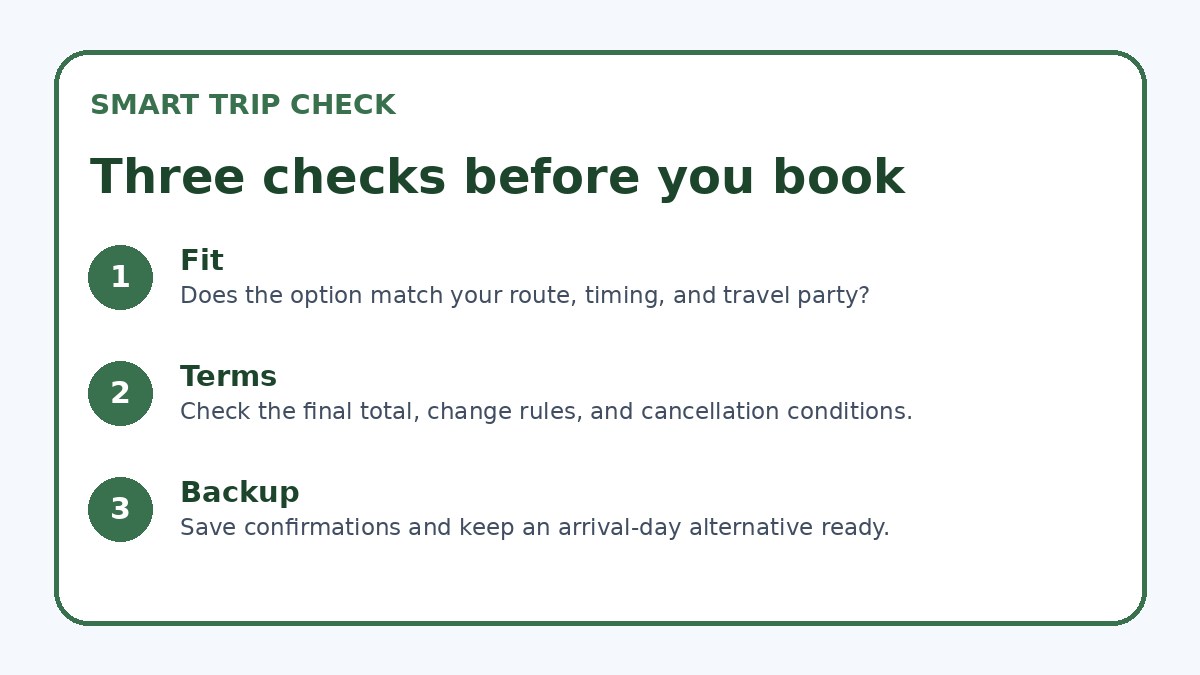
Confirm insurance wording, exclusions, deposit, fuel, mileage, and return terms on the final page.
Pickup, return and local friction: time costs that matter
Pickup and return often determine whether a rental is worth it for a short solo stay. Factor in airport or city location: airport pickups can feel quicker but add shuttle waits and airport surcharges; urban counters may be walkable but limited in hours. Expect a required identity and payment check, a vehicle inspection, and upsell conversations that add 15–40 minutes. When you return the car, account for refuelling rules, toll reconciliations and the inspection process; a rushed return can result in extra charges if you miss a scratch or a tank-filling requirement.
Plan a realistic buffer around pickup and drop-off. Choose an agent with 24/7 return or clear after-hours procedures if your schedule is uncertain. Map parking and fill options near your final drop-off to avoid out-of-hours refuelling issues; if toll roads are in your route, check how tolls are handled—prepaid tags, post-rental billing, or agency processing fees. Verify all these operational details on the supplier’s final booking page before confirming.
Car rental terms to verify
- List every day’s destinations and mark which require a car to reach or would be faster by car than public transit.
- Check the rental contract’s liability limits, CDW excess amount, and the exact wording on exclusions before booking.
- Confirm pickup and return hours, after-hours procedures, and whether airport shuttles or counter waits apply.
- Map parking options and likely costs at each overnight stop and key attractions on your itinerary.
- Decide in advance whether you’ll accept offered waivers at pickup and note how refunds are handled if declined.
- Plan a non-driving backup: transit routes, a reputable day tour for remote sites, and a rideshare fallback for late returns.
Non-driving fallback: how to plan Sydney without a car
A strong non-driving plan minimizes the need to improvise. Start by lining up a base that puts you near major transit: Central, Circular Quay, Town Hall, Surry Hills or Newtown give fast access to trains, light rail and buses. Use Opal card or contactless payment on public transport, download a transit app for real-time departures, and pre-book ferries for harbor trips. For any coastal or national-park day trips you can’t reach conveniently by public transport, organize a reputable day tour or book a rideshare for the final leg to remote trailheads.
Rideshares and short-term bike or scooter rentals bridge gaps in the transit network and avoid parking headaches. If you carry surfboards or bulky gear, check with local shuttles or specialist carriers; some hostels and surf shops provide transfers. Always have a backup plan for late returns: a taxi phone number or one extra night booked at a centrally located hotel reduces stress. With these options, many solo travelers find they keep mobility without the time and cost burdens of a car.
Car Rental & Road Trip questions travelers ask
Can I use my credit card insurance for a Sydney car rental?
Some credit cards provide primary or secondary rental coverage, but benefits vary widely. Contact your card issuer to confirm covered vehicle types, geographic limits (Australia and specific states), whether liability is included, and the claims process. The issuer will likely require the full rental agreement, accident reports and sometimes a police report for theft or serious incidents. If coverage applies, still read the rental company’s contract for clauses that might void your card’s protection, such as driving on unsealed roads or exceeding authorized drivers, and verify these exclusions on the supplier’s final booking page.
Are tolls and congestion charges automatically handled on Sydney rentals?
Toll roads exist around Sydney and are handled differently by suppliers: some provide electronic tags and bill you directly, others charge a convenience fee in addition to tolls, and some require prepayment. Congestion charges are not typical in Sydney, but express lanes and certain bridges carry fees. Always check the rental firm’s toll policy on the booking page and understand whether you will receive a post-rental invoice, a daily service fee, or pay tolls yourself at service points. Knowing the process prevents surprise charges on your card after you return the car.
Is driving in New South Wales difficult for international solo travelers?
Driving on the left is the main adjustment for many international visitors, and urban driving in central Sydney includes heavy traffic, narrow streets and unfamiliar parking rules. Regional roads can be narrower and may require caution around wildlife, especially at dawn and dusk. Read the rental agreement for geographic restrictions, confirm whether the insurer covers unsealed roads, and practice left-side driving in quieter areas before tackling busier routes. If you’re uncertain, consider hiring a car only for specific day trips with comfortable local navigation options or booking a guided trip.
Final decision note
For most solo visitors staying mainly inside Sydney, a car adds cost and logistical friction without major advantages; public transport, ferries and rideshares handle city sightseeing and evenings efficiently. Choose a rental if your plan includes multiple remote day trips, irregular departure times, or bulky equipment that’s impractical on trains and buses. Before you commit, check the rental contract’s insurance wording, clarify toll and fuel policies, and allow realistic time for pickup and return procedures. If you decide against driving, assemble a fallback of transit routes, a trusted day tour and rideshare options so your plans remain flexible and stress-free.
Continue planning
Check current options and final conditions
Use the provider page to confirm live availability, the final total, cancellation terms, and every condition that matters to your trip.
This evergreen planning guide was created with AI-assisted drafting and a structured quality review. It does not display live prices, schedules, availability, visa guidance, or provider rankings. Verify current details before booking. Some links are affiliate links; we may earn a commission at no additional cost to you.