If you and your partner are weighing Sydney travel deals, the practical starting point is simple: compare cancellation terms for every element that affects your total trip — flights, hotels, transfers, and major activities. That single comparison tells you whether a package saves stress or simply bundles inflexibility. Couples often value flexibility differently: one of you may prefer refundable hotels while the other prioritizes lower flight fares. To choose confidently, map the identical dates, number of travelers, room type and activity inclusions across options. Verify who has authority to change or cancel, what fees apply, and whether refunds are immediate, credited as vouchers, or subject to supplier policies. Read the provider’s final booking page for exact wording — and, if you need a quick cross-check, consider looking up current offers on Trip.com to see how different suppliers present rules, but rely on the booking page to confirm terms.
Test package value fairly
| Booking approach | Best for | Tradeoff to check |
|---|---|---|
| All-in-one package (single supplier handles flights, hotel, activities) | Couples who want simplified customer service and one-stop claims handling. | Can tie all components to a single cancellation policy, increasing potential loss if one item is nonrefundable. |
| Flight + hotel bundle from a booking platform | Pairs seeking convenience with separate supplier protections often preserved. | Platform-specific rules and change fees may apply; always compare the platform policy with each supplier’s terms. |
| Separate bookings for flights, hotel, and activities | Couples who want maximum control over flexibility and selectively refundable components. | More administrative work and multiple refund channels; partial refunds can become fragmented and slower to receive. |
| Package with nonrefundable discounts plus add-on protection | Travellers willing to accept lower upfront prices if they can insure or add protection for key risks. | Protection costs and insurance exclusions may reduce or eliminate the apparent savings if a claim is denied or limited. |
Check current package and separate options
Use identical dates, travelers, room needs, baggage, and flexibility so the comparison stays meaningful.
What to compare before judging a package
Start by lining up the same dates, traveller count, and room/seat classes for every option you’re considering. A bundle can look cheaper until you realize it uses a lower room category or a nonrefundable fare that won’t match your flexibility needs. Also check whether the package lists inclusions such as airport transfers, breakfast, or attraction tickets — those items can carry separate cancellation rules. If the package price is compared to a custom mix of separate bookings, make sure the separate bookings include the same add-ons or show the cost to add them.
Next, isolate which elements are fully refundable, partially refundable with fees, or nonrefundable. Don’t assume a package’s overall policy applies uniformly; some bundles let individual suppliers keep their own terms. Note deadlines for free cancellation and any differences between cancel windows for flights versus hotels or experiences. Finally, identify who administers refunds — the travel supplier, an intermediary, or the booking platform — because processing times and dispute routes differ and impact how quickly you get your money or credit back.
Inclusions and how they affect flexibility
Inclusions change not only the convenience but also the cancellation calculus. Prepaid attraction tickets or prepaid transfers often carry stricter rules than a hotel room that offers a partial refund up to a week before arrival. For couples, consider which included elements matter most: a prepaid Harbour Bridge climb or dinner cruise may be central to the trip and thus worth paying for, but make sure its change policy aligns with your tolerance for risk. When a package includes activities, read their individual supplier policies instead of assuming the package’s headline refund terms cover them.
Also look for conditional inclusions: some deals say ‘breakfast included’ but inconsistently define whether it’s refundable with the room cancellation. If extras are refundable separately, you might get a partial refund while others remain nonrefundable. Calculate the worst-case financial exposure by summing nonrefundable components; that number should guide whether you prefer a more flexible (often slightly pricier) option or accept the risk for savings. Ask directly via customer support if the listing isn’t clear — written confirmation can help in case of disputes.
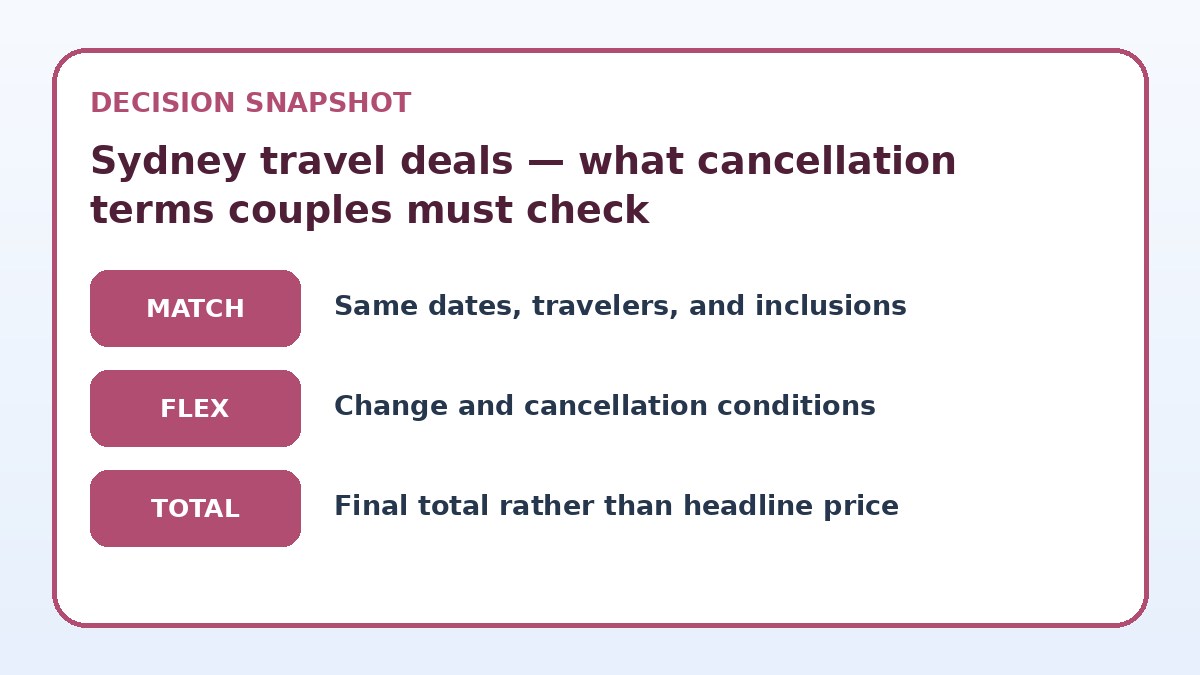
Look past the headline total
Compare inclusions and change conditions before deciding whether a package is genuinely useful for this trip.
Deal comparison checklist
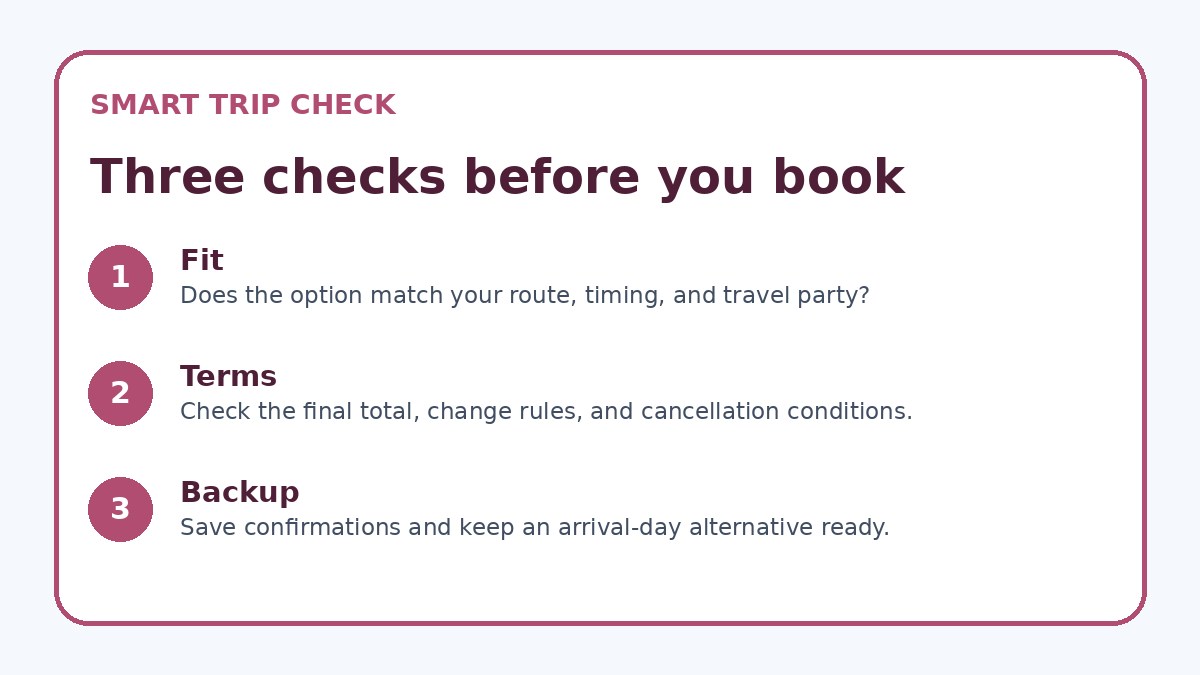
- Match dates, room type, number of travellers, and any included activities across all quotes before comparing prices.
- Open the final booking page and copy the cancellation window, refund method, and any listed fees for comparison.
- Ask whether refunds are processed to the original payment method or as travel credit and note expected processing times.
- Confirm who can make amendments and cancellations (lead passenger, cardholder, or agency) and get written confirmation if needed.
- Calculate the total nonrefundable exposure by summing all prepaid components that have strict cancellation rules.
- Compare whether travel insurance or add-on protection covers your specific cancellation reasons and read claim requirements.
Traveler-specific value: what couples should prioritize
Couples should agree on their primary tradeoffs: security versus savings, or certainty of itinerary versus the option to pivot. If one partner has limited leave dates or a strict schedule, prioritize refundable flights and a room with a flexible cancellation window. If you value spontaneous changes or expect the possibility of postponement, aim for options that allow free amendments or credit vouchers with long expiry windows. Couples who plan to split responsibilities should confirm who can make changes to the booking, since some suppliers restrict amendments to the lead passenger or original payment method.
Consider travel insurance that explicitly covers cancellations for reasons you’re likely to encounter; a flexible hotel plus basic insurance may be cheaper than fully refundable rates across all elements. For health or family-related risks, read the insurer’s terms carefully to ensure coverage for cancellations, not just medical emergencies. Remember that emotional value also counts: paying a little extra for peace of mind can be worth it if it reduces stress and preserves the trip experience for both partners.
Final terms to verify on the booking page
Always finish by reading the provider’s final booking page — the exact cancellation wording there overrides summary descriptions. Check cancellation windows, fee amounts, voucher versus cash refund policies, and the process for requesting a refund. Look for phrases that require proof (medical certificates, government orders) and any exclusions that might void a refund. If the language is ambiguous, use the provider’s chat or call line and save the exchange; a written statement about cancellation terms can be helpful if a dispute arises later.
Also verify how refunds are processed: are they returned to the original payment method, issued as travel credit, or subject to administrative fees? Check timelines for processing refunds and whether taxes or third-party fees are refundable. Confirm who handles changes — the supplier or the booking platform — and whether intermediary fees or processing penalties apply. If the trip involves different suppliers, ensure you know which cancellation policy applies to each component and whether cancelling one part (for example, a flight) affects the rest of the package.
Travel Deals & Booking Strategy questions travelers ask
Can a package’s cancellation policy differ from the hotel’s public policy?
Yes — a package can bundle components under a single administrative policy while individual suppliers retain their own terms. That means a hotel listed within a package may still have its standard guest-facing rules, but the package provider could limit refunds differently. Always open the hotel’s direct policy and the package’s cancellation section and compare them side by side. If they conflict or a summary is unclear, request a clear written statement from the package provider clarifying which policy governs cancellations and refunds.
Is refundable always better for couples on a tight budget?
Not necessarily. Refundable rates offer peace of mind but often cost more up-front. For budget-conscious couples, weigh the price difference against the likelihood of needing to cancel and consider travel insurance as an alternative. If the refundable premium exceeds the probable cost of buying protection or rescheduling, a nonrefundable rate plus targeted insurance might be smarter. The right choice depends on your risk tolerance, travel dates flexibility, and how much of the trip’s cost is prepaid and nonrecoverable.
What should we verify when an activity is included in a Sydney deal?
Check the activity provider’s cancellation cutoff, rescheduling policy, and any weather or minimum-participant clauses. Determine whether the activity is transferred as a timed ticket, voucher, or operator reservation because each format has different amendment processes. Confirm whether the package provider or the activity operator issues refunds or rebooks, and note any proof required for cancellations. If the activity is essential to your trip, consider booking a refundable option or buying a protection add-on specifically covering that experience.
Final decision note
For couples planning a Sydney trip, the clearest route to a confident booking is methodical comparison: align dates, traveller counts, room and seat classes, and included activities, then read the final booking page for exact cancellation wording. Packages can reduce hassle but may bundle inflexibility; separate bookings give control at the cost of complexity. Identify which components you can’t afford to lose money on, and either secure refundable rates for those items or buy protection that explicitly covers your risks. When in doubt, get written confirmation of any nonstandard terms and double-check processing timelines so you know how refunds or credits will be handled if plans change.
Continue planning
Check current options and final conditions
Use the provider page to confirm live availability, the final total, cancellation terms, and every condition that matters to your trip.
This evergreen planning guide was created with AI-assisted drafting and a structured quality review. It does not display live prices, schedules, availability, visa guidance, or provider rankings. Verify current details before booking. Some links are affiliate links; we may earn a commission at no additional cost to you.