If your trip from Hanoi to Da Nang is for business, the most practical decision is to pick the transport option that balances schedule flexibility, predictable transfers, and low luggage friction. For many business travelers that means choosing between a flexible train ticket with easy rebooking, a bus or coach with frequent departures, or a flight whose change policies you can confirm before purchase. You may also consider mixing modes — for example an early flight out and a late train back — to protect your schedule while minimizing airport transfer time. This article explains how to evaluate each option for terminal fit, luggage and transfer friction, timing flexibility, and fallback plans for disruptions so you can book with confidence. Where provider-specific rules matter, I’ll tell you exactly what to verify on the provider’s final booking page.
Terminal fit: where each mode actually starts and ends
When you plan door-to-door travel, the terminal location often matters more than the ride itself. Trains between Hanoi and Da Nang depart and arrive at city railway stations that are usually closer to central offices and hotels, reducing taxi time and unpredictable traffic. Flights use airports that can be 30–60 minutes from downtown depending on traffic and time of day; that extra transfer time can wipe out the flight’s airborne time advantage for short business trips. Coaches and private transfers may drop you near major hotels or bus terminals; confirm whether the terminal is convenient for your meeting location to avoid last-mile headaches.
For each provider, check the precise station or terminal address before booking. If you rely on rideshares or a company car, estimate pickup windows and buffer time for peak traffic. Identify whether the station has express city links or frequent taxis waiting and whether the airport requires extra pre-departure arrival time for security. On the booking page, verify the listed terminal, whether luggage service is offloaded at a depot, and any suggested transport connections so you can plan the full door-to-door sequence.
Choose the end-to-end journey plan
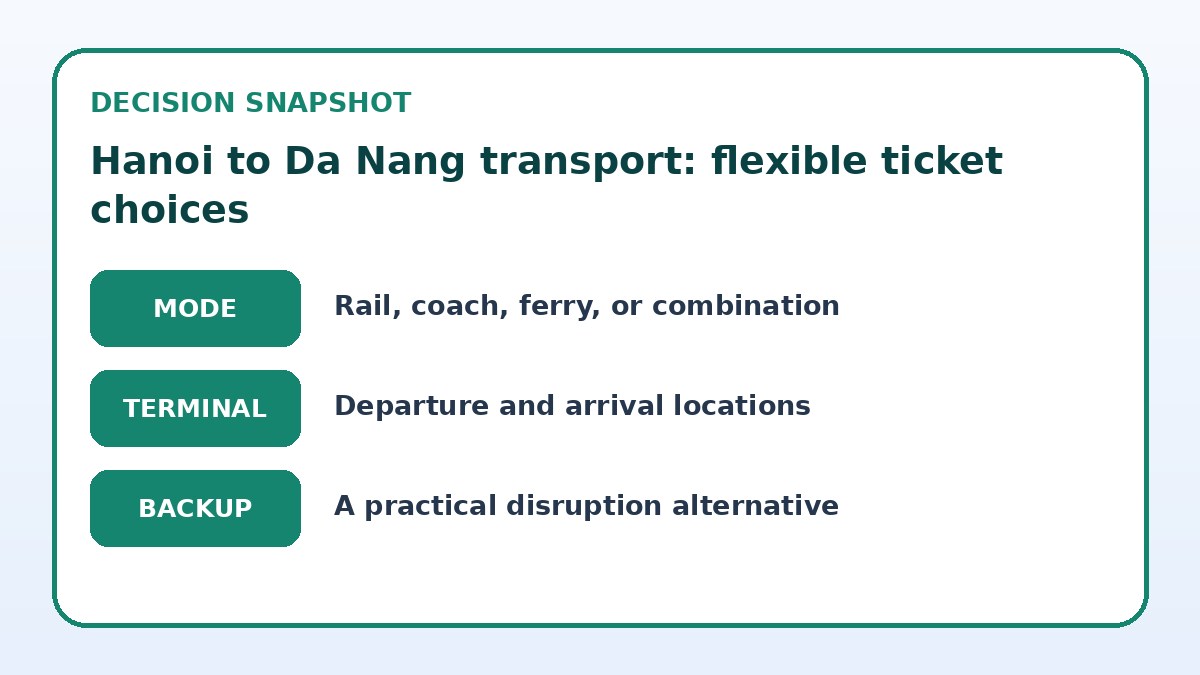
| Journey approach | Best for | Friction to check |
|---|---|---|
| Book a flexible train ticket (changeable/refundable fare) | Meetings in the city center or unpredictable schedules | Longer onboard travel time but lower last-mile transfer and easier same-day swaps |
| Book a refundable or flexible flight fare | Tight door-to-door time windows where airborne time matters | Higher fare classes and airport transfers can eat into time savings; verify baggage and change rules |
| Choose frequent-coach departures or open-return coach ticket | Multiple departure choices and simpler boarding with less advance planning | Luggage hold access and terminal drop-off may add time and reduce in-journey access to materials |
| Combine modes (fly one way, train/coach return) | Protecting a one-way meeting timetable while saving cost/flexibility on the return | Requires managing two bookings and transfer logistics; verify both providers’ change policies |
Check live intercity options
Look beyond the ride itself and compare terminals, transfers, luggage, and arrival fit.
Luggage and transfer friction: real impacts on a business schedule
Luggage rules and how luggage is handled affect how fast you move from door to meeting. Trains typically allow larger carry-on items and make it easy to keep important documents with you; some higher-class carriages offer dedicated storage near seats for quick access. Flights impose stricter carry-on rules and checked-bag procedures that add time at check-in and retrieval. Coaches sometimes have hold luggage that is inaccessible during the journey, which can be a problem if you need something mid-trip. Consider whether you need to work onboard, and whether your bag must stay within reach.
Also consider transfers between station, terminal, and hotel. If the train station is walkable from your hotel, you’ll avoid taxi variability. If an airport transfer is mandatory, factor in average travel time plus congestion risk during morning or evening peaks. Wherever possible, confirm the provider’s luggage allowance, restrictions on oversized items, and whether assistance is offered for heavy bags. On booking pages, verify who handles luggage claims and what happens if an item is delayed or left behind.
Timing flexibility: rebooking, refunds, and last-minute changes
For business travelers, timing flexibility — the ability to change departure times or get a refund with minimal cost — is a top priority. Trains often sell refundable or exchangeable fares that let you change to another service the same day with a manageable fee, and station staff can sometimes assist with swaps. Flights have a range of fare classes; flexible airline fares allow changes but are priced higher. Coaches may offer flexible tickets or open returns; check whether changes are permitted at the counter or only online.
Because policies vary by operator and fare class, always read the final booking page before paying. Look specifically for permitted change windows, how refunds are processed, penalties for same-day changes, and whether rebooking must be done through the original vendor or at a station/airport counter. For multinational carriers or cross-border bookings, verify whether you need the original booking confirmation to change a ticket and whether changes are allowed by phone or require an online account.
Compare the practical alternatives
Use the final page to confirm what is actually offered on your dates and save a workable fallback.
Intercity travel checklist
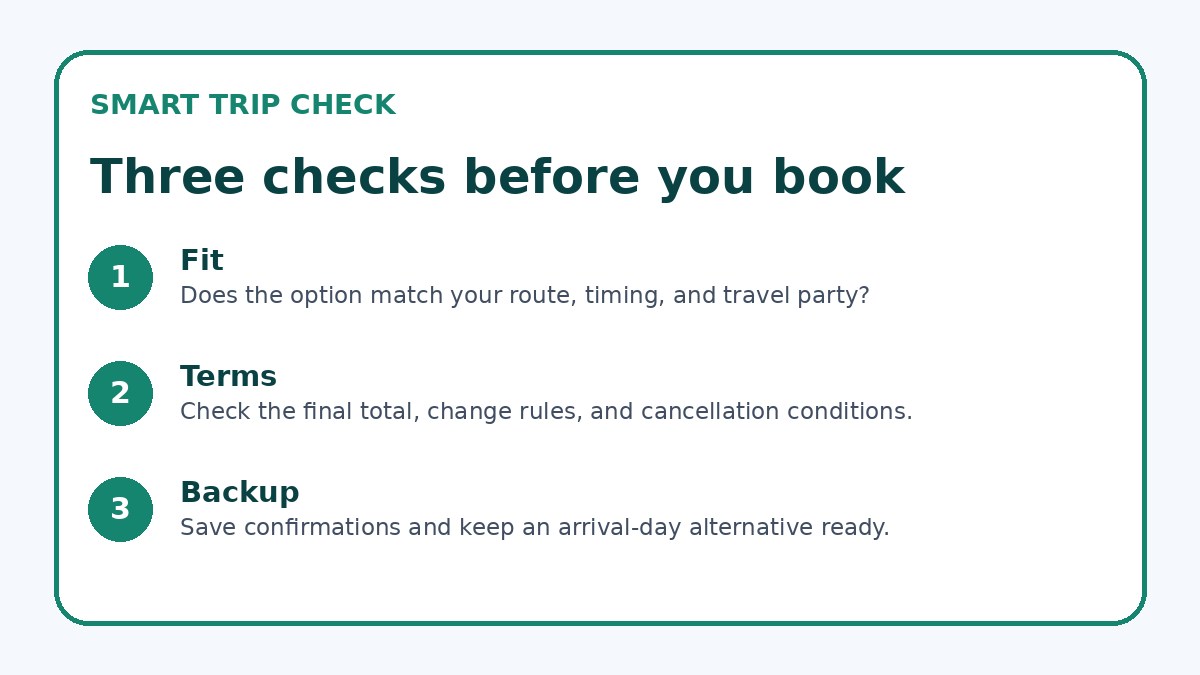
- Confirm the exact station or airport terminal address and an estimated door-to-door time before booking.
- On the provider’s final booking page, read change, refund, and same-day rebooking policies word-for-word.
- Estimate taxi or rideshare wait times at arrival and add buffer for peak traffic when scheduling meetings.
- Verify luggage allowance and where checked luggage is stored during the journey for quick access to essentials.
- Identify one realistic alternative mode and check how quickly you could purchase and board that option same day.
- Save booking confirmations and customer-service contacts for both primary and backup providers in case you must change plans quickly.
Disruption backup: practical alternatives if something goes wrong
A robust disruption plan for business travel includes a clear fallback mode and a realistic timeline for switching. If a flight is delayed or canceled, look to trains for same-day alternatives that depart from city centers and avoid airport transfer delays. Conversely, if rail services are disrupted, a flight or a fast private transfer might still get you to Da Nang on schedule. Coaches can be a good low-cost backup when other services are full — but only if the terminal drop-off aligns with your final destination.
Before booking, identify at least one realistic alternative and how long it would take door-to-door compared with your primary plan. Note whether you’ll need to buy a new ticket or if your provider’s policy covers rebookings. For each candidate mode, check whether there are late departures that could rescue a same-day meeting or early options to return if your schedule shortens. On provider pages, verify the conditions for reissue, the timeline for refunds, and whether there is a customer service desk at the terminal to handle urgent changes.
Rail & Intercity Transport questions travelers ask
Should I always choose the fastest travel time between Hanoi and Da Nang for business trips?
Not necessarily. Fastest travel time on paper — for example a short flight — can be negated by airport transfers, early check-in requirements, and security lines. For many business trips the more important metric is predictable door-to-door time and the ability to rebook if something goes wrong. Evaluate how far the departure and arrival terminals are from your meetings, how comfortable you are working en route, and how easy it is to change the booking. If a train reduces transfer variability and offers flexible rebooking, it can be a better practical choice than the quickest airborne option.
How do I compare ticket flexibility when booking online?
When comparing online, open each provider’s fare rules or terms before you commit. Look for explicit details on permitted changes, change fees, deadlines for free changes, refund processing times, and whether changes can be made at the station or must go through an online portal or call center. Note any restrictions on same-day changes and whether rebooking is subject to availability. If information is unclear, contact the provider’s customer service and take screenshots of terms shown at checkout; third-party sites may show different rules than the operator’s final page.
If my schedule might change, is it better to buy two one-way tickets with different modes?
Buying two one-way tickets with different modes can increase flexibility: you can choose the most suitable option for each leg and reduce single-point failure risk. Flying one way minimizes outbound time while returning by train or coach can offer a more relaxed schedule and easier luggage access. The tradeoff is managing two bookings and ensuring both have reasonable change policies. Always verify each leg’s change and refund rules separately and keep contacts for both providers handy in case you need to swap legs quickly.
Final decision note
For business travelers on the Hanoi to Da Nang route, the practical choice is the option that minimizes unpredictable transfers and maximizes rebooking flexibility. Trains often win on terminal convenience and same-day changeability, flights win on short airborne time if the airport transfer is acceptable, and coaches offer many departure choices with lower booking friction. Combining modes can give the best of both worlds but requires careful management of two separate bookings. Before you commit, review the final booking page for change and refund rules, confirm terminal addresses, and plan a realistic door-to-door timeline so you can arrive at meetings with confidence and an actionable backup if plans shift.
Continue planning
Check current options and final conditions
Use the provider page to confirm live availability, the final total, cancellation terms, and every condition that matters to your trip.
This evergreen planning guide was created with AI-assisted drafting and a structured quality review. It does not display live prices, schedules, availability, visa guidance, or provider rankings. Verify current details before booking. Some links are affiliate links; we may earn a commission at no additional cost to you.