Quickly: for most solo travelers, the most practical Busan to Gyeongju transport is the option that minimizes transfers and luggage handling while matching your timing flexibility — usually a direct rail or coach that leaves from a terminal you can reach without a long taxi ride. Deciding between train, intercity bus, or a mixed approach depends on where you’ll start in Busan, how much luggage you carry, and whether you value a predictable timetable or the cheapest available seat. This guide helps you weigh terminal fit, ease of transfers, schedule flexibility, and a simple disruption backup so you can pick and book with confidence. I’ll explain tradeoffs in everyday terms, show four planning approaches to compare, and finish with a practical checklist and answers to common solo-traveler questions.
Terminal fit: where you begin and end matters most
A practical choice starts with terminals. Map your lodging and the main hubs in Busan: which rail stations, bus terminals, or ferry piers are within an easy taxi or public transit ride? A cheaper ride that requires a long transfer or multiple subway changes can quickly become the least practical option for a solo traveler carrying luggage or arriving late. Prioritize options that depart from locations you can reach in 20–40 minutes without rush-hour tortures, or that align with a direct city-to-city service.
At the Gyeongju end plan the same way: where will you actually be going on arrival? Some services drop you at the city center, others at outlying stations that need another taxi or bus. If you must get to a specific hotel or site, choose the service whose arrival point minimizes onward transfers. Real-world testing — checking a map and an estimated taxi fare from terminals to your final address — is a quick, practical step before booking.
Choose the end-to-end journey plan
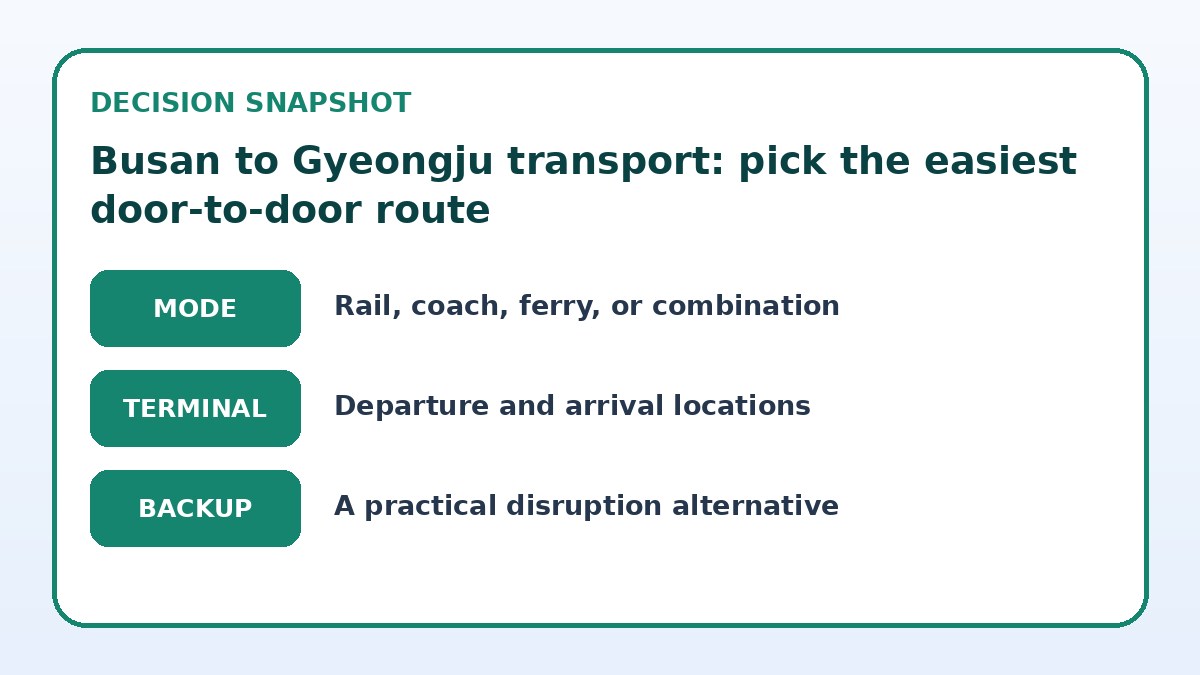
| Journey approach | Best for | Friction to check |
|---|---|---|
| Direct train from a central Busan station | Travelers who prioritize predictable, fast vehicle time and station amenities near city-center lodgings. | May require a specific station transfer; check first/last-mile effort and luggage handling at the station. |
| Intercity coach from a main bus terminal | Those wanting fewer transfers and a single-seat, door-to-door coach experience from convenient terminals. | Coach may have longer on-road time and variable traffic delays; confirm drop-off proximity to your Gyeongju plans. |
| Mixed approach (train + local bus or taxi) | Travelers matching a specific timetable or reaching an area not served directly by one mode. | Adds transfers and luggage moves; requires buffer time and good connection planning to stay practical. |
| Flexible backup-first planning (book flexible ticket or leave margin) | Solo travelers who want to avoid stress from delays and prefer the ability to change last-minute. | May cost more or mean choosing less-convenient departure times; verify change rules before booking. |
Check live intercity options
Look beyond the ride itself and compare terminals, transfers, luggage, and arrival fit.
Luggage and transfer friction: keep handling to a minimum
Solo travelers often undervalue transfer friction. Think through how many times you’ll lift your bags: into a taxi, down subway stairs, onto a coach, across platform gaps. Each lift and stair increases fatigue and travel time. If you have one medium backpack, you’ll be more flexible; if you have large suitcases, choose services that advertise luggage space or fewer mode changes. When possible, pick departures with level boarding or station elevators nearby to reduce physical strain and avoid tight connections.
Also consider security of your belongings during stops or transfers. A single-seat, direct service reduces the number of places your bag is temporarily unattended. If a direct option isn’t available, schedule longer transfer windows to avoid rushing and to give yourself time to store and retrieve luggage comfortably. Simple packing choices — using a wheeled bag you can handle solo or bringing a small daypack for valuables — make a big difference in real-world comfort.
Timing flexibility: matching schedules to your day
Timing matters: are you aiming to arrive in Gyeongju by a certain hour for a tour or museum opening? Or do you have a flexible afternoon and prefer a relaxed ride? Frequent services let you be flexible but may have more crowded conditions; fewer departures usually mean more comfortable seats but require precise planning. Look at the span between the first and last departures, not just the headways. A narrow window forces tight schedules and increases the impact of small delays.
Solo travelers should also balance travel time on vehicle versus waiting and transfer time. A faster train that requires a long transfer to the station can end up slower door-to-door than a slightly longer coach that leaves from a more convenient place. Think in door-to-door minutes rather than just in-vehicle minutes. If you value predictability, prefer options with multiple departures through the day so you can shift plans without needing complex rebooking.
Compare the practical alternatives
Use the final page to confirm what is actually offered on your dates and save a workable fallback.
Intercity travel checklist
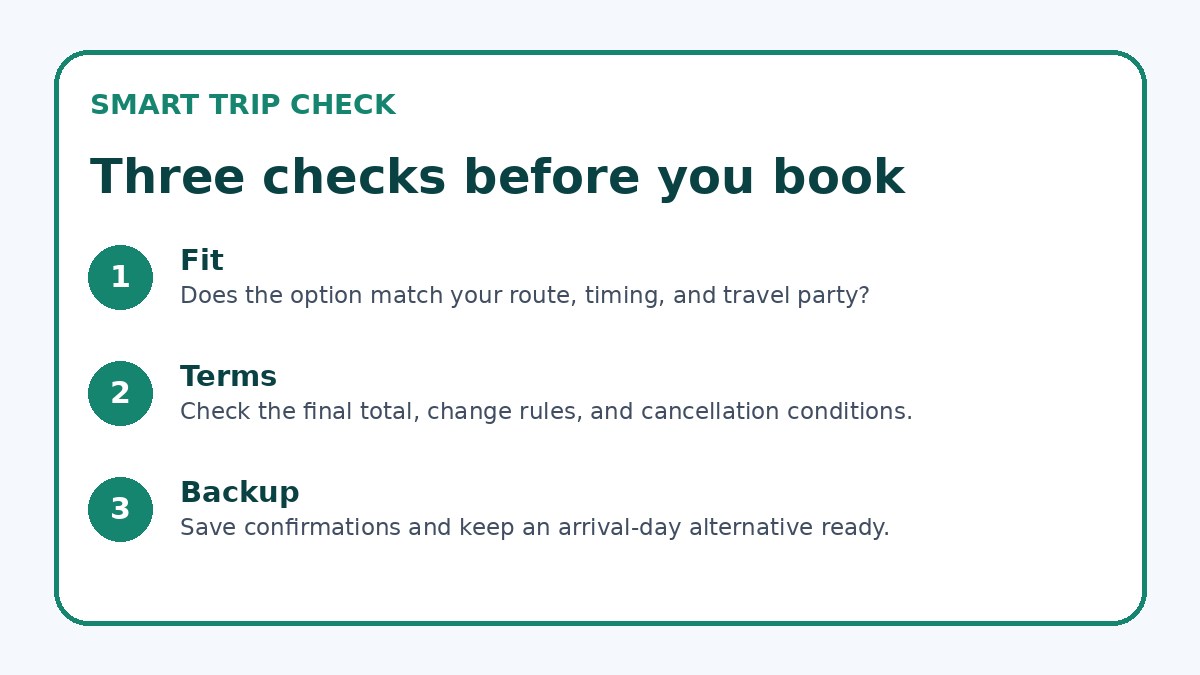
- Map your exact start address in Busan and the terminal addresses for trains, coaches, and ferries to compare door-to-door travel time.
- Estimate taxi or transit minutes and likely luggage lifts needed to reach each terminal and to leave the arrival point in Gyeongju.
- Check the provider’s final booking page for luggage rules, boarding procedures, and how to change or cancel a booking if plans shift.
- Choose a single realistic disruption backup that you can reach from your departure point without additional transfers.
- Confirm the arrival location in Gyeongju and pre-check a taxi or bus route to your accommodation to avoid surprises on arrival.
- Pack a small daypack for valuables and essentials so you can travel between modes without unpacking checked bags.
Disruption backup: a simple safety net keeps trips calm
Always pick one straightforward backup you can reach without complicated changes. That could be a later bus from the same terminal, a nearby train that runs less frequently, or a taxi fallback if public transport is disrupted. Check how easy it is to switch to that backup: is there a ticket desk at the terminal, a ride-hail zone, or frequent local buses? If you’re traveling on a tight schedule, make sure your backup can get you to the same arrival area; otherwise your backup may cause more problems than it solves.
Before you leave, save the provider’s final booking page, terminal address, and a local taxi contact or app. If you buy a timed ticket, know the provider’s change and refund rules on the booking page. In busy seasons or after service alerts, allow generous buffer time and prefer backups that keep you within the same catchment area to avoid extra transfers. A simple, realistic backup plan reduces stress and keeps your solo trip enjoyable even when things don’t go perfectly.
Rail & Intercity Transport questions travelers ask
Should I prioritize train speed or coach convenience for Busan to Gyeongju transport?
Prioritize what reduces your door-to-door friction. If a train saves in-vehicle time but requires an extra transfer that adds stress or luggage lifts, a direct coach leaving from a nearer terminal may be more practical. Compare total time from your lodging to your final Gyeongju address, the number of times you must handle luggage, and how comfortable you are with transfers. If you need predictability for appointments, trains often win; if you want a single-seat, single-transfer experience, coaches can be better.
How much buffer time should I allow between connections when combining modes?
Allow at least enough time to step off one vehicle, collect luggage, and walk or take a short taxi to the next departure point without running. For most solo travelers a 30–60 minute buffer between scheduled services is sensible; increase that in bad weather, heavy traffic hours, or if you have large bags. Always confirm station layout and elevator/escalator locations ahead of time and choose longer buffers if your transfer requires changing between distant terminals.
What should I verify on the provider’s booking page before finalizing?
On the final booking page verify the exact departure and arrival addresses (not just station names), luggage allowances and any fees, boarding and check-in instructions, and the provider’s rules for changes or cancellations. Also look for notes about platform changes, terminal entrances, or special boarding zones that affect first/last-mile logistics. If you plan to use a backup option, check its terms as well so you’re not surprised by rebooking restrictions after you buy.
Final decision note
For solo travelers between Busan and Gyeongju, the most practical choice is the one that reduces transfers, limits luggage handling, and fits your timing needs. Start by matching departure and arrival terminals to your lodging, then layer in luggage realities and schedule flexibility. Choose one clear backup you can reach without extra transfers and verify critical details on the provider’s final booking page — terminal addresses, luggage rules, and change policies. When in doubt, prioritize door-to-door simplicity over a marginally faster in-vehicle trip: fewer transfers and less handling make solo travel easier and more enjoyable.
Continue planning
Check current options and final conditions
Use the provider page to confirm live availability, the final total, cancellation terms, and every condition that matters to your trip.
This evergreen planning guide was created with AI-assisted drafting and a structured quality review. It does not display live prices, schedules, availability, visa guidance, or provider rankings. Verify current details before booking. Some links are affiliate links; we may earn a commission at no additional cost to you.