The practical answer: when planning a family trip to New York City, prioritize cancellation and change flexibility above headline savings so you don’t lose money if plans shift. Before judging whether a package (flight + hotel + activities) is smarter than booking each component separately, compare the same dates, travelers, inclusions and cancellation windows. Focus on: whether the hotel allows free cancellation and until when; whether airline tickets are refundable or allow fee-free changes for family name/seat issues; if prepaid attractions or transfers offer credits, reschedules, or refunds; and how third-party booking sites handle refunds and timelines. This article walks families through those comparisons, explains tradeoffs, and gives a simple checklist to use on final provider pages. Follow these steps to avoid apparent savings that evaporate when kids get sick, work changes, or weather disrupts plans.

Test package value fairly
| Booking approach | Best for | Tradeoff to check |
|---|---|---|
| All-in-one package (single vendor handles flights, hotel, activities) | Families who want one booking contact and prefer bundled customer service handling | Convenience can mask rigid supplier rules; a strict component can limit refunds for the whole package |
| Book flights and hotels as a bundle, add activities separately | Families who want simplified air/hotel logistics but flexibility for day activities | Still exposes you to airline/hotel cancellation policies; activities may remain nonrefundable if prebooked |
| Book each component separately (airline, hotel, activities) | Families who want to mix refundable and nonrefundable options to control cost and flexibility | More administrative work and multiple refund processes if plans change; requires careful record-keeping |
| Flexible-rate hotel plus separate low-cost flights or activity bundles | Families prioritizing a changeable home base while economizing on lower-risk items | Risk of losing prepaid activity or flight value if those suppliers are strict; need to balance which items to make flexible |
Check current package and separate options
Use identical dates, travelers, room needs, baggage, and flexibility so the comparison stays meaningful.
What to compare before judging a package
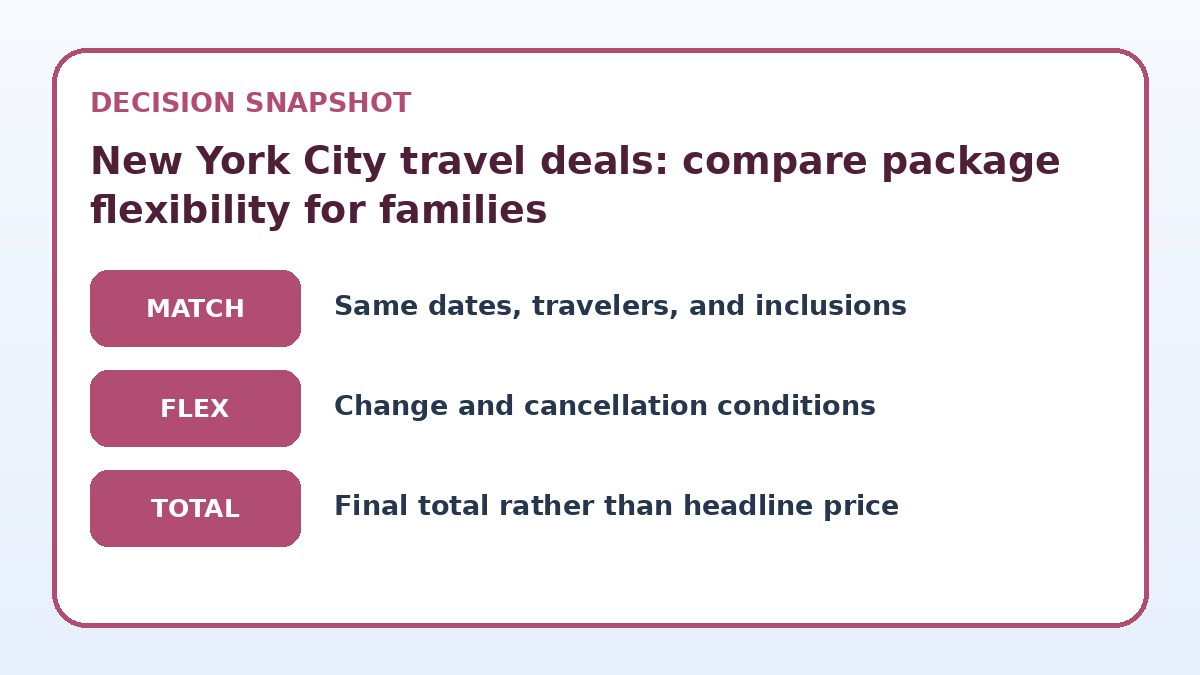
Start by lining up the same basic inputs for any comparison: identical travel dates, the same number and ages of travelers, and the same room configuration (two rooms versus one suite, for example). Only then will you see whether a bundled offer truly covers the needs of your family. Look at the headline inclusions—are transfers, attraction tickets, or breakfast included? Make a short matrix that lists what is included in each option and the explicit cancellation terms attached to each inclusion.
Next, map out the cancellation windows and who manages them. A package sold by one vendor might promise a single point of contact, but that vendor’s right to issue refunds depends on the suppliers it contracts with: the airline’s fare class, the hotel’s rate condition, and third-party activity providers. Write down the last day you can cancel each element without penalty and the exact penalties after that date. That makes it possible to compare a packaged price that looks lower with a separate booking that may be more flexible when plans change.
Inclusions and how they affect refundability
Not all inclusions carry the same cancellation rules. Airline tickets are typically governed by the airline’s fare rules—some fare classes are fully refundable, others allow only changes for a fee, and many low-cost families fares are nonrefundable. Hotels tend to offer a mix of nonrefundable prepaid rates and flexible rates with free cancellation up to a specific date. For family trips, prioritize refundable or changeable airline options and at least one flexible hotel room to retain options if a traveler becomes ill or plans change.
Activities and transfers often have the strictest policies, especially for popular tours and shows. Check whether those inclusions are merely reserved or prepaid and whether providers offer credits, reschedules, or refunds. For family-friendly attractions, some operators let you reschedule without charge inside a long notice window but impose steep penalties for last-minute cancellations. When comparing deals, convert those policy differences into expected costs for likely change scenarios (one sick child, one missed flight) to see which option truly reduces your financial risk.
Look past the headline total
Compare inclusions and change conditions before deciding whether a package is genuinely useful for this trip.
Deal comparison checklist
- Match the exact travel dates, traveler count, and room configuration across all options you compare so you’re comparing identical apples-to-apples scenarios.
- Write down each element’s last free-cancellation deadline, the penalty after that date, and whether refunds go to card, voucher, or account credit.
- For flights, check fare rules on change and refundability, whether name changes are permitted, and whether child fares differ from adult terms.
- For hotels, confirm the room rate condition (refundable vs nonrefundable), the cutoff time for free cancellation, and whether deposits are refundable.
- For prepaid activities and transfers, find the operator’s reschedule and refund policy and whether they accept documentary support (medical notes) for refunds.
- Confirm who issues the refund in a package booking (the vendor or the supplier) and the expected refund timeline before you complete the purchase.
Traveler-specific value: families vs. solo travelers
Families need to think about different risks than solo travelers: multiple passengers increase the chance that someone will need to cancel, and families often require specific room types that change cancellation rules. If your trip’s primary risk is a parent needing to change travel dates, prioritize refundable or changeable airfare for adults. If the risk is a sick child shortly before travel, ensure at least one component—often the hotel—allows late cancellations or rollovers without heavy fees. Also consider how changes affect extras like crib rental, connecting rooms, or seat assignments.
Bundles can simplify logistics—one invoice and one help desk—but that convenience matters less if a single strict supplier in the package controls refunds. Separate bookings give you granular control: choose refundable flights or flexible rates where it matters and cheaper nonrefundable options for lower-risk items. Evaluate the family’s tolerance for calling customer service, filing claims with multiple vendors, and managing credit card chargebacks—families with limited time or patience may prefer a single seller with clear, family-friendly policies even if it costs a bit more.
Final terms to verify on the booking page
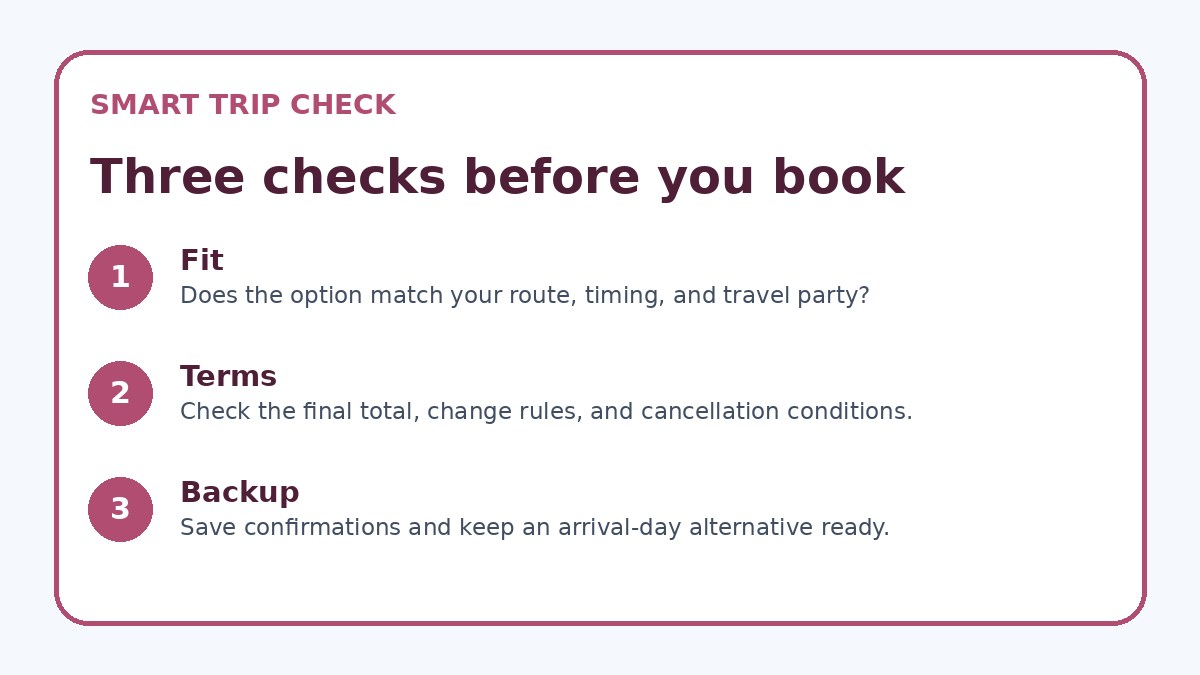
Before you click pay, verify the exact wording on the provider’s final booking page. Look for: the last free-cancellation date and time (including time zone), whether refunds go to your original payment method or as vouchers, any administration fees for changes, and how long refunds take to process. If the refund is a credit or voucher, confirm expiry dates and blackout periods. For flights, confirm whether name changes are allowed, whether infants or children have different rules, and whether changes require paying the fare difference.
Also check who you call for problems: does the package vendor manage refunds and rebookings, or will they redirect you to the airline, hotel, or activity operator? If a third party is involved, ask how disputes are escalated and what documentation you’ll need for refunds (medical notes, travel advisories). If you want a single point of contact, confirm the provider’s customer-service hours and whether family-support features—like priority rebooking after schedule disruptions—are included.
Travel Deals & Booking Strategy questions travelers ask
Are package deals usually less flexible than booking separately for a family?
Packages can be either more or less flexible depending on how they’re structured. If a single vendor negotiates flexible terms with airlines and hotels, a package can simplify changes. More often, however, a package aggregates suppliers with different rules—airlines, hotels, and activity operators—so one strict supplier can effectively limit the flexibility of the whole package. That’s why you must inspect each supplier’s cancellation terms in the package and compare them to the standalone policies you could buy separately for the same dates and travelers.
What’s the safest way to protect a family’s payment if a child gets sick before travel?
Safest means minimizing out-of-pocket loss: prioritize refundable or changeable airline fares for the people most likely to change, and at least one refundable hotel room. For activities, choose providers that issue refunds or credits with documentation. If you buy a package, verify whether the package seller issues refunds or must collect refunds from third-party suppliers. Also check whether your travel insurance or credit card purchase protection covers illnesses and whether you need medical records to file a claim; these documents are often required for reimbursements.
How do I compare apparent savings without falling for false discounts?
Compare total cost outcomes for common change scenarios rather than headline prices. Create two columns with identical dates and travelers: one for the package and one for separate bookings. For each likely change (one passenger cancels, flight delayed, family reschedules by a week), calculate the penalty or refund you’d get under each option. Include refund timelines and voucher expirations in your math. This approach reveals whether a lower initial price holds up after realistic changes, and helps you decide which flexibility is worth the extra spend.
Final decision note
For families planning a New York City trip, cancellation flexibility should be a top decision factor—not an afterthought. Packages can be convenient, consolidating documentation and support, but convenience is only valuable if the underlying suppliers offer family-friendly cancellation and change terms. Building an apples-to-apples comparison—matching dates, travelers, inclusions, and deadlines—lets you see where real value lies when plans change. Use refundable fare classes for the highest-risk travelers, keep at least one flexible hotel room, and vet activity providers’ reschedule or refund policies. Always confirm the final booking page details, and if you want a quick way to check current availability and terms, consider comparing options on a marketplace like Trip.com while remembering to confirm policies directly with the supplier before you book.
Continue planning
Check current options and final conditions
Use the provider page to confirm live availability, the final total, cancellation terms, and every condition that matters to your trip.
This evergreen planning guide was created with AI-assisted drafting and a structured quality review. It does not display live prices, schedules, availability, visa guidance, or provider rankings. Verify current details before booking. Some links are affiliate links; we may earn a commission at no additional cost to you.