If you’re arriving in Busan with extra luggage, the first practical question is simple: will renting a car genuinely improve your trip? Driving can look appealing because it keeps bags inside the vehicle and can save transfers, but it brings added decisions: where to pick up and drop off the car, insurance coverage language, parking hassles near popular attractions, and whether local roads suit your comfort level. This article gives a straight answer up front, then explains the tradeoffs that matter for travelers with oversized suitcases, musical instruments, or sports gear. Use the decision checklist and comparison rows to match your itinerary to the right mobility choice, and follow the “what to verify” notes before you book—especially for insurance wording, pick-up/return logistics, and parking rules. Trip.com may be useful when checking current availability and provider terms before final booking.
Route value: when driving actually improves your trip
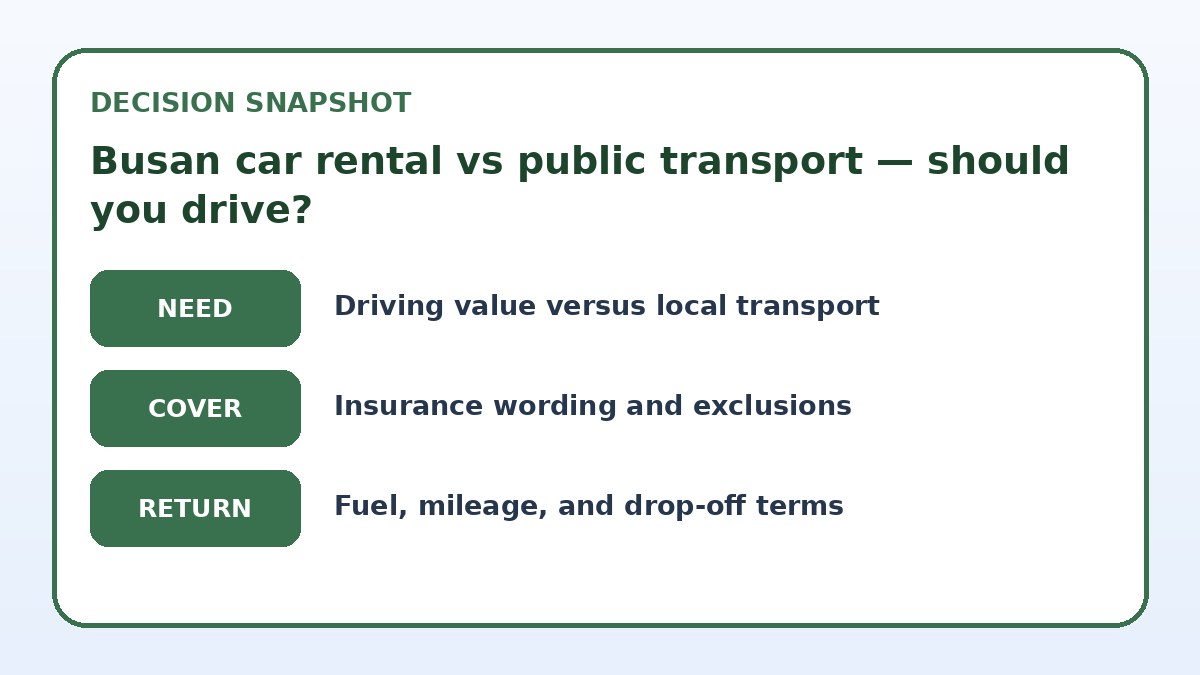
Driving in Busan pays off when the value of door-to-door flexibility outweighs the effort of handling a car. Consider itineraries that include multiple coastal viewpoints, day trips to places with limited public transit, or stays in rural guesthouses where taxis are infrequent. If each heavy bag would otherwise require multiple transfers—train to bus to taxi—the time and physical effort saved by keeping luggage in a single vehicle can be substantial. Also weigh whether you plan to move between accommodations frequently; frequent check-ins and check-outs with bags favor a car.
Contrast that with compact city-focused plans. If you’re staying in central neighborhoods near the subway lines and only making one day trip, the subway plus an occasional taxi will often be faster and less stressful than parking and navigating busy streets. Evaluate the actual legs of your trip: map each major stop, note walking distances from stations, and count the number of individual bag handlings. When the extra handling count is high and public-transit legs are slow or indirect, driving typically improves the overall experience.
Decide whether driving earns its place
| Mobility strategy | Best for | Cost or friction to check |
|---|---|---|
| Full rental car for the whole trip | Travelers with many transfers, multiple rural day trips, and bulky gear. | Higher pickup/return friction, parking searches, and more insurance decisions to manage. |
| Public transit + taxis for heavy-luggage legs | City-focused stays with occasional door-to-door needs and short distances between sites. | Some bag handling and possibly higher taxi costs; less flexibility for remote day trips. |
| One-way or short-term rental for specific days | Those who only need a car for one or two remote excursions during a city stay. | Requires precise scheduling and extra pickup/return steps but minimizes overall rental exposure. |
| No-drive plan with luggage delivery services | Travelers who want minimal physical handling and can schedule arrivals between hotels. | Adds delivery lead times and coordination; not ideal for ad-hoc route changes. |
Check live rental choices only after the route test
Use the exact driver, dates, pickup point, and return plan to compare current conditions.
Insurance wording: what to read before signing
Insurance language on rental contracts can hide important obligations: check definitions for ‘collision damage waiver’ (CDW), ‘theft protection,’ and any stated excess or deductible amounts. Pay attention to phrases about third-party liability, who is permitted to drive the vehicle, and whether coverage excludes certain roads or uses. If a provider offers an optional reduction of excess, verify how claims are handled and whether you must pay up front and wait for reimbursement. On the provider’s booking page, confirm whether damage to tires, glass, undercarriage, or roof is covered or explicitly excluded.
Also look for policy wording on cross-border travel and towing—if you plan a day trip outside Korea or on remote coastal roads, specific permissions may be needed. Note any requirements for police reports after an accident, and how quickly claims must be filed. If the terms use unfamiliar legal words, ask the rental agent to explain how they apply in plain language before you sign. Finally, if you buy supplemental coverage from a credit card or third-party insurer, verify how that cover interacts with the rental company’s contract on the final booking page.
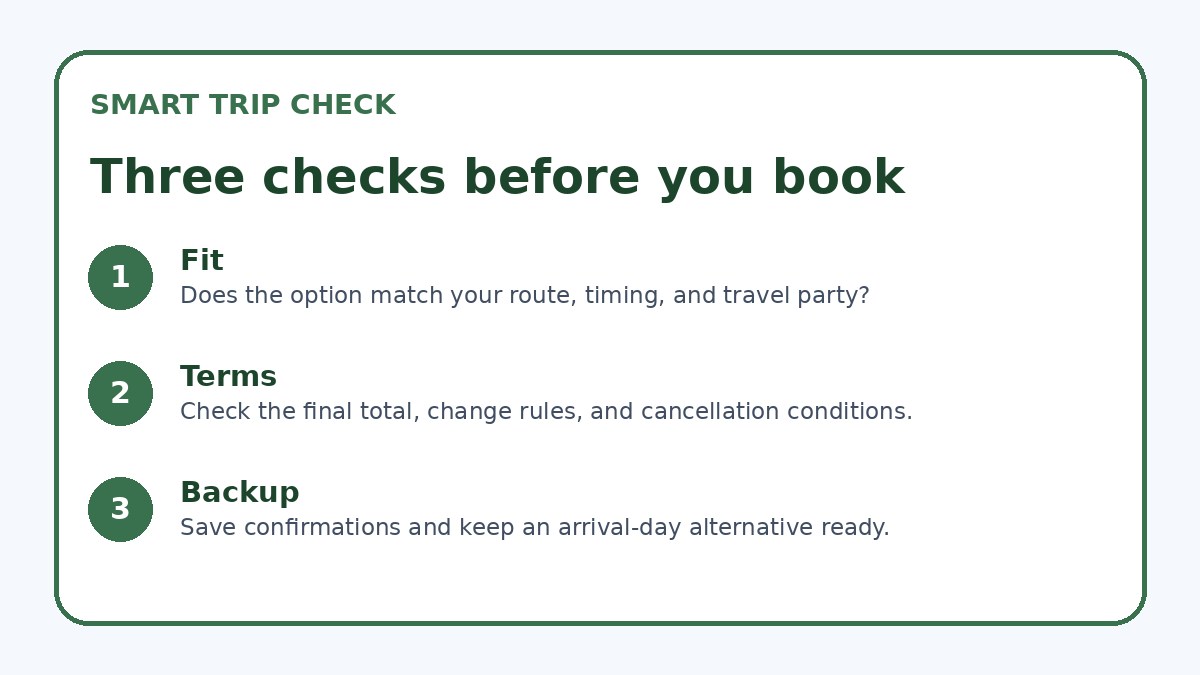
Compare the full rental conditions
Confirm insurance wording, exclusions, deposit, fuel, mileage, and return terms on the final page.
Pickup and return friction: realistic logistics with heavy bags
Collecting and returning a rental car when you have oversized luggage creates friction that’s easy to underestimate. Airport pick-ups often have shuttle buses to off-site lots, which means loading heavy items onto a bus before reaching the desk or vehicle. Alternatively, downtown offices may require hauling bags up stairs or across a station concourse. Before booking, check whether the rental desk is inside the terminal, whether shuttles run frequently, and whether elevators or curbside assistance are available for heavy items.
Return logistics matter just as much: confirm drop-off hours and where to park for the check-in inspection. If you have an early flight, find out whether an after-hours key drop is permitted and whether you must refill fuel or face additional charges. For one-way rentals, double-check whether the company accepts returns at a different location and if there are extra fees. These operational details should be verified on the rental provider’s final booking page so you won’t be surprised at pickup, return, or shuttle steps when you arrive.
Car rental terms to verify
- Map each stop and count how many times you’ll move luggage between transport modes; if more than three handlings, favor driving or a private transfer.
- On the rental booking page, read exact insurance terms: deductible amount, covered damage types, and whether tires, glass, and undercarriage are included.
- Confirm pickup and return locations, shuttle availability, and after-hours key drop procedures on the provider’s final booking page.
- Check parking options at your principal accommodations and attractions—ask hotels about guest parking and street permit rules.
- If you plan one-way rentals, verify allowed drop-off locations and any associated fees before you reserve.
- Compare public-transit routes, taxi fares for heavy-luggage legs, and luggage-forwarding services to calculate total door-to-door time and effort.
Non-driving fallback: a plan if you opt out of renting
A solid non-driving fallback makes skipping a rental low-friction. Use Busan’s subway network for most intra-city travel—it’s efficient for central neighborhoods—and plan taxi rides for door-to-door transfers when you have heavy luggage. For luggage-heavy segments, consider pre-booked airport transfer vans, ride-hailing services, or local luggage delivery (baggage forwarding) options that move large items between hotels. Map each day from door to destination and identify the single taxi or transfer segment that replaces an entire car day.
Also keep a contingency for day trips: if a remote stop proves inaccessible by public transit on your planned day, book a local tour or private transfer for that leg only. That avoids the overhead of a full rental while still allowing flexible exploration. Before finalizing travel, compare combined costs and convenience of transit + targeted taxis or transfers against the hassles of a rental for your exact route, and verify booking and cancellation terms on each provider’s page.
Car Rental & Road Trip questions travelers ask
Will renting a car in Busan save time compared with the subway when I have oversized luggage?
Renting can save time if your route includes multiple transfers, distant coastal stops, or rural accommodations where subway access is weak. Subway travel is fast and dense in central Busan, but moving heavy luggage through stations, stairs, and transfers can be slow and tiring. To decide, list your arrival point, nightly hotels, and major day-trip destinations. Then estimate door-to-door times including walking and transfer waits versus driving times. If driving significantly reduces the number of times you must lift or re-pack heavy bags, it likely saves time overall.
How do I handle insurance overlap if my credit card and the rental company both offer coverage?
Before declining any coverage, compare the rental company’s contract wording with your credit card’s benefit guide. Confirm whether the card covers deductibles, theft, and third-party liability, and whether coverage is primary or secondary. Ask the rental company how claims are processed and whether you must pay up front for damages. On the booking page or at the counter, request clear confirmation of what remains your financial responsibility. If terms are unclear, consider purchasing supplemental protection from a reputable third party or the rental company to avoid dispute risk.
What practical steps reduce pickup and return hassle when traveling with many suitcases?
Choose a rental office inside the terminal when possible to avoid shuttles, or verify that shuttle service is frequent and accommodates heavy luggage. Reserve a vehicle with adequate trunk space and request curbside assistance if available. Photograph the car at pickup and document existing damage in writing on the rental agreement. For returns, pick a location with clear after-hours procedures if you have an early flight, and note required fuel policy. If uncertain, ask the provider to confirm pickup/return flow and any luggage handling help on their booking confirmation page.
Final decision note
For travelers with extra luggage in Busan, the right choice depends on the specifics of your route. Rent a car when multiple remote stops, repeated transfers, or bulky gear make door-to-door control worth the pickup/return and insurance complexity. If you plan a city-centric stay with mostly subway-accessible sites, pair public transit with taxis or luggage-forwarding to minimize friction. Regardless of your choice, read the rental contract’s insurance and return terms on the provider’s final booking page, confirm pickup logistics, and pre-check parking options at your accommodations. These confirmations turn a comfortable decision into a smooth arrival and departure.
Continue planning
Check current options and final conditions
Use the provider page to confirm live availability, the final total, cancellation terms, and every condition that matters to your trip.
This evergreen planning guide was created with AI-assisted drafting and a structured quality review. It does not display live prices, schedules, availability, visa guidance, or provider rankings. Verify current details before booking. Some links are affiliate links; we may earn a commission at no additional cost to you.