Practical answer first: before you open a booking page for Seoul to Osaka flights, lock in your travel dates, the exact number and ages of travelers, and a maximum acceptable transfer time and luggage allowance. With those details you can compare direct versus connecting routing, weigh baggage and connection risk, and match schedules to your arrival and onward plans. This checklist-focused approach saves time and reduces surprises: it forces specific verifications on fare conditions, refund/change policies, transfer protections, and whether the fare includes the baggage you need. Bring the documents and payment method you'll actually use to the booking screen. Finally, have two backup flight windows (early and late) for each travel day so you can react quickly if a preferred option is unavailable.
See live routes for your exact travel day
Compare direct and connecting choices with the same baggage and traveler details.
Routing: direct flights versus connections
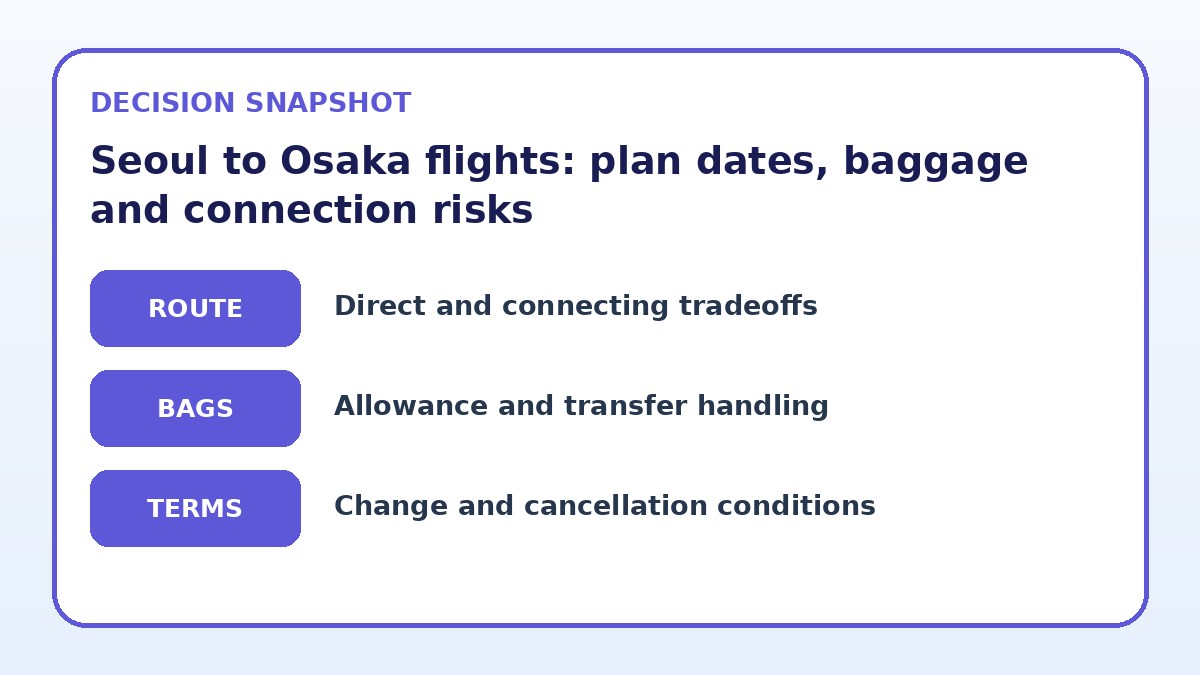
Start by deciding if you want the simplicity of a direct flight or are willing to trade time for a lower fare or better schedule with a connection. For Seoul to Osaka, direct routing removes the risk of missing a tight connection and simplifies baggage handling—ideal for first-time visitors who prefer fewer moving parts. Meanwhile, a connecting option can expand your price and schedule choices, sometimes offering more departure times or lower fare buckets, but it adds steps: re-clearing security, possibly switching terminals, and managing transfer windows.
When comparing routing options, list preferred departure windows and mark the maximum connection time you'll accept at each transit airport. For connections, check whether the itinerary is sold on a single ticket or as separate legs; single-ticket itineraries usually offer transfer protection from the carrier, while separate bookings leave you responsible for missed connections. On the booking page, verify whether baggage is checked through to Osaka or must be collected and rechecked during the connection—this detail changes how much buffer time you should plan.
Baggage and connection risk: what to verify
Before you commit, read the fare’s baggage allowance and weight/size rules on the airline’s final booking page—not a summary from a third-party. Confirm whether a checked bag is included, whether carry-on sizes match your luggage, and whether fees apply for additional pieces. For first-time visitors planning shopping or souvenirs, a fare that seems cheap but excludes checked baggage can become costlier once airport fees and overweight charges are added.
Assess connection risk by reviewing minimum connection times and typical transfer procedures at the transit airport. If your itinerary is a single booking, check the carrier’s missed-connection policy and ask whether they rebook you on the next flight without extra charges. If legs are booked separately, plan generous buffers and consider travel insurance that covers missed connections due to delays. Always screenshot or save the fare rules and baggage terms shown at checkout so you can reference them if policies differ post-purchase.
Compare flight-selection strategies
| Flight strategy | Best for | Risk to check |
|---|---|---|
| Prioritize nonstop flights | Travelers who want simplicity and lowest connection risk | Often fewer schedule choices and potentially higher base fares compared with connecting itineraries |
| Choose lowest upfront fare | Budget-conscious travelers willing to accept tight connections | May exclude checked baggage and have strict change/cancellation rules increasing total trip cost |
| Book single-ticket connections | Those wanting transfer protection and single-bag handling | Less flexibility to mix carriers; rebooking rests with the operating carrier’s policy |
| Mix-and-match separate legs | Travelers seeking the widest schedule and carrier choices | You bear missed-connection risk and must handle baggage and recheck logistics yourself |
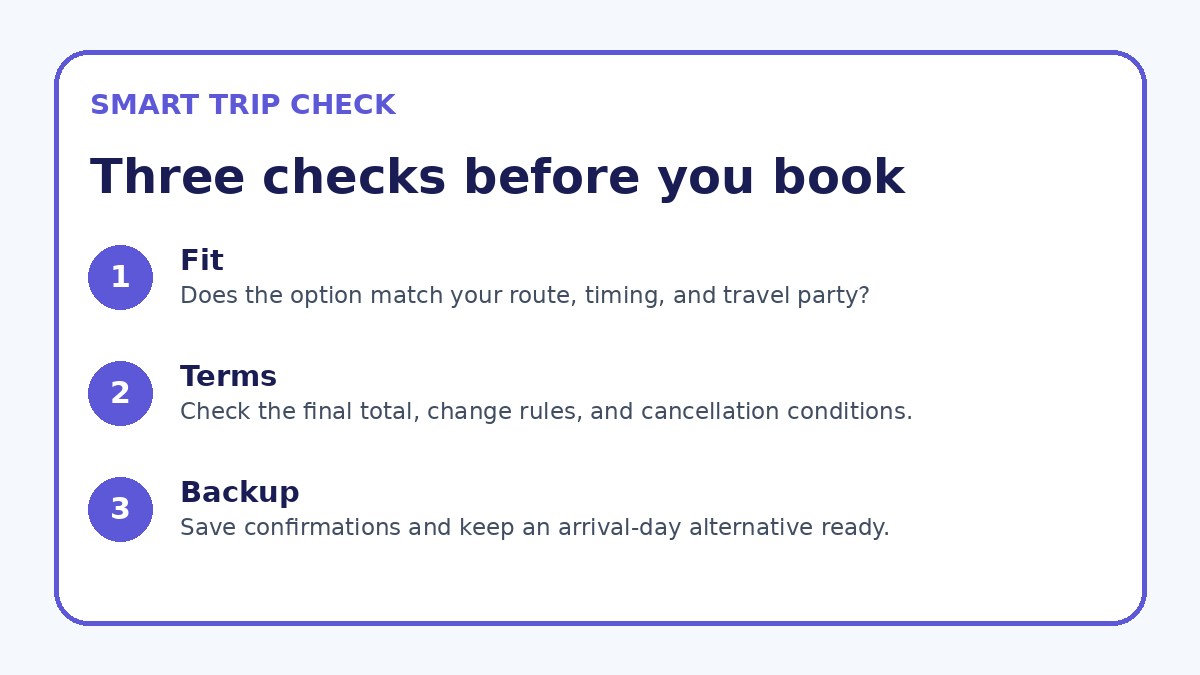
Recheck the complete itinerary
Confirm airports, connection handling, baggage, and change conditions before deciding.
Schedule fit and ground logistics
Match flight times to your ground plans in Osaka: arriving late at night may limit public transport and complicate hotel check-in, while an early arrival could be ideal for maximizing time but requires early departures from Seoul. Note local transit schedules from Osaka’s arrival airport to the neighborhoods you plan to visit—this determines realistic check-in and sightseeing windows for your first day. Build in extra time for immigration and customs, and for collecting luggage if your baggage isn’t checked through.
When checking schedules, verify both the local arrival time in Osaka and the local departure time in Seoul on the provider’s final booking page, and confirm which airport terminals serve your flights. If you plan to join a cruise or catch a train onward, align layover risk with those booked commitments, and pick flights that allow comfortable transfer margins. Keep a separate calendar with flight times in local time zones to avoid confusion during booking and at the airport.
Flight details to verify
- Set your travel window and two backup date windows, then note exact traveler names, dates of birth, passport numbers, and passport expiry dates before searching.
- Decide if nonstop routing is a priority; record the maximum acceptable connection time and whether a single-ticket itinerary is required for transfer protection.
- Open the fare rules on the airline or agency’s final booking page and screenshot change, cancellation, and refund conditions for the chosen fare class.
- Confirm baggage allowance and fees on the provider’s checkout screen, including carry-on limits and checked-bag weight/size so you pack accordingly.
- Check local arrival time and ground transport options from Osaka’s arrival airport; plan hotel check-in and onward rail or ferry connections around realistic transfer times.
- Prepare your payment method, verify accepted cards and foreign transaction fees, and save the final price breakdown and fare code after booking.
Fare conditions and payment verification
Fare rules determine whether you can change dates, cancel for credit, or get a refund; these vary widely. On the carrier or agency booking page, open the fare conditions and read the change and cancellation sections thoroughly before you enter payment. Look for details on change fees, fare differences, and the process to request a refund; if the wording is unclear, take a screenshot and contact the provider’s customer service to confirm the policy in writing before you pay.
Also verify which payment methods are accepted and whether a foreign-transaction fee applies to your card. Check whether seat selection and meal options are included or cost extra, and whether the fare requires immediate payment in full. If you use loyalty points or miles, confirm award availability and the taxes/fees required. Keep records of the final price breakdown, fare code, and policy screenshots so you can reference them if the carrier later changes the offering.
Flight Guide questions travelers ask
Should I always choose a direct Seoul to Osaka flight if it’s available?
Choosing a direct flight reduces the number of things that can go wrong—no terminal changes, easier baggage handling, and lower missed-connection risk. For first-time visitors who value simplicity, direct routing is often preferable. However, direct options may not match your preferred departure time or could be priced differently from connecting itineraries. If a direct flight forces an inconvenient schedule or exceeds your budget, compare single-ticket connecting itineraries that include transfer protection and factor in total travel time and baggage terms before deciding.
How much buffer time should I allow for connections when booking?
The safe buffer depends on whether your itinerary is on a single ticket and whether baggage is checked through. For single-ticket transfers with baggage checked through, moderate connection windows may suffice because carriers typically assist with missed connections. For separate bookings or when baggage must be claimed and rechecked, plan generous buffers to account for delays, immigration, and terminal changes. Always check the airport layout and minimum connection guidance on the provider’s booking pages, and if uncertain, pick a later connecting flight to reduce stress.
What booking page details must I verify before I hit pay?
On the final booking page, verify these essentials: exact passenger name spellings and birthdates, total fare including taxes and fees, baggage allowances and related fees, the fare code and its change/cancellation terms, accepted payment methods and currency charged, and whether seats or meals cost extra. Take screenshots of the full itinerary and the fare rules page. If you find ambiguous wording about refunds or transfers, contact the carrier or agency for a written confirmation before completing the purchase.
Final decision note
A practical pre-booking process for Seoul to Osaka flights begins by choosing a routing priority, then confirming schedules, baggage, and fare rules before payment. Lock in exact traveler details, create a pair of backup date windows, and use those constraints to filter options efficiently. Compare direct flights, single-ticket connections, and separate-leg itineraries against the four decision approaches above, and always verify baggage inclusions and the fare’s change and cancellation wording on the final booking page. If you need a quick cross-check of availability, Trip.com can show live options—but always confirm the carrier’s conditions on its own booking screen before you pay.
Continue planning
Check current options and final conditions
Use the provider page to confirm live availability, the final total, cancellation terms, and every condition that matters to your trip.
This evergreen planning guide was created with AI-assisted drafting and a structured quality review. It does not display live prices, schedules, availability, visa guidance, or provider rankings. Verify current details before booking. Some links are affiliate links; we may earn a commission at no additional cost to you.