Practical answer up front: for most families staying in Amsterdam’s central neighborhoods and visiting the city proper, a rental car creates more hassle than benefit. Narrow streets, restricted low-emission zones, expensive and scarce parking, and strong public-transport and cycling options usually mean you’ll spend time managing logistics instead of enjoying the trip. A car becomes worthwhile when your itinerary includes day trips to rural destinations not well served by public transport (for example, multiple destinations outside major train corridors), you’re traveling with lots of bulky gear, or you need the flexibility to depart on your own schedule. Read on to compare route value, insurance wording you should verify, pickup and return friction at airports and downtown locations, and a practical non-driving fallback that keeps a family moving without a car.
Route value: when a car actually improves family plans
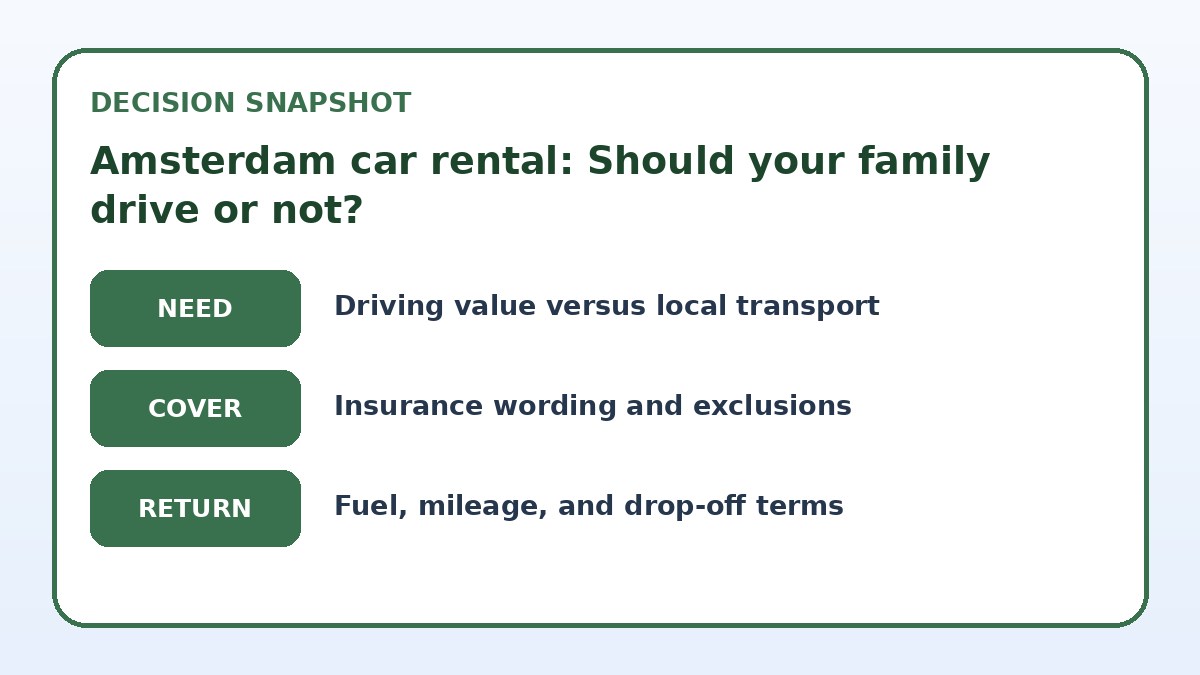
Decide whether a car adds real value by mapping each day’s destinations and checking public-transport links. If your itinerary includes child-focused attractions within Amsterdam—museums, parks, canal attractions—or you plan to rely on trams and short bike rides, the car will mostly sit idle while creating parking headaches. Conversely, if your family intends to visit multiple spread-out destinations in a single day outside the main rail corridors—coastal villages, remote nature reserves, or several small towns in one loop—a car can save hours and make transitions with children and gear significantly easier.
Estimate driving time and door-to-door convenience rather than just distance. Trains and regional buses often drop you closer to central attractions than a parked car, and bicycle infrastructure lets you cover short hops quickly. For day-trip sequences that involve long rural stretches with limited public transport frequency, a car is more valuable. A hybrid approach—renting only for a specific day trip and returning it that evening—can capture the benefits without full-trip parking and emission-zone complications in Amsterdam itself.
Decide whether driving earns its place
| Mobility strategy | Best for | Cost or friction to check |
|---|---|---|
| Full-time rental car | Families doing multiple remote day trips or traveling with lots of bulky gear | Adds parking hassles, low-emission zone compliance, and potential high city-hour costs |
| Public transport + bikes | Families staying in central Amsterdam who want fast, cheap, stress-free short trips | Less flexible for remote or multi-stop rural excursions and for transporting large gear |
| Trains/taxis for city plus single-day rental | Families who need a car for only one or two specific day trips outside transit corridors | Requires extra booking steps and coordination, but minimizes city parking and emissions issues |
| Organized day tours and on-demand taxis | Families preferring guided logistics without driving, especially for multi-stop cultural routes | Can be less private and may follow fixed schedules that reduce spontaneous flexibility |
Check live rental choices only after the route test
Use the exact driver, dates, pickup point, and return plan to compare current conditions.
Insurance and coverage: what words to verify before you book
Insurance terminology varies and the fine print matters for families. On the rental contract page, verify liability limits, whether the Collision Damage Waiver (CDW) or Loss Damage Waiver (LDW) is included or optional, and what the deductible/excess amount is. Check whether theft coverage applies when the vehicle is unattended, whether child seats are covered for damage, and whether driving in low-emission zones or crossing national borders is permitted without invalidating coverage. If a credit-card benefit is expected to cover insurance, confirm the card’s exact exclusions and whether you must decline the rental company’s CDW to trigger the card insurer.
Also confirm named-driver rules and the process for adding drivers—families often share driving duties and sometimes pick up a local spouse or grandparent. Look for explicit language about roadside assistance, towing, and procedures after an accident or damage report. If you plan to use car-sharing or agency onsite add-ons, read those terms too: temporary child-seat rentals, GPS devices, or young-driver surcharges change the effective coverage and cost. If anything is unclear, contact the rental company’s booking support and save written responses to your reservation record.
Compare the full rental conditions
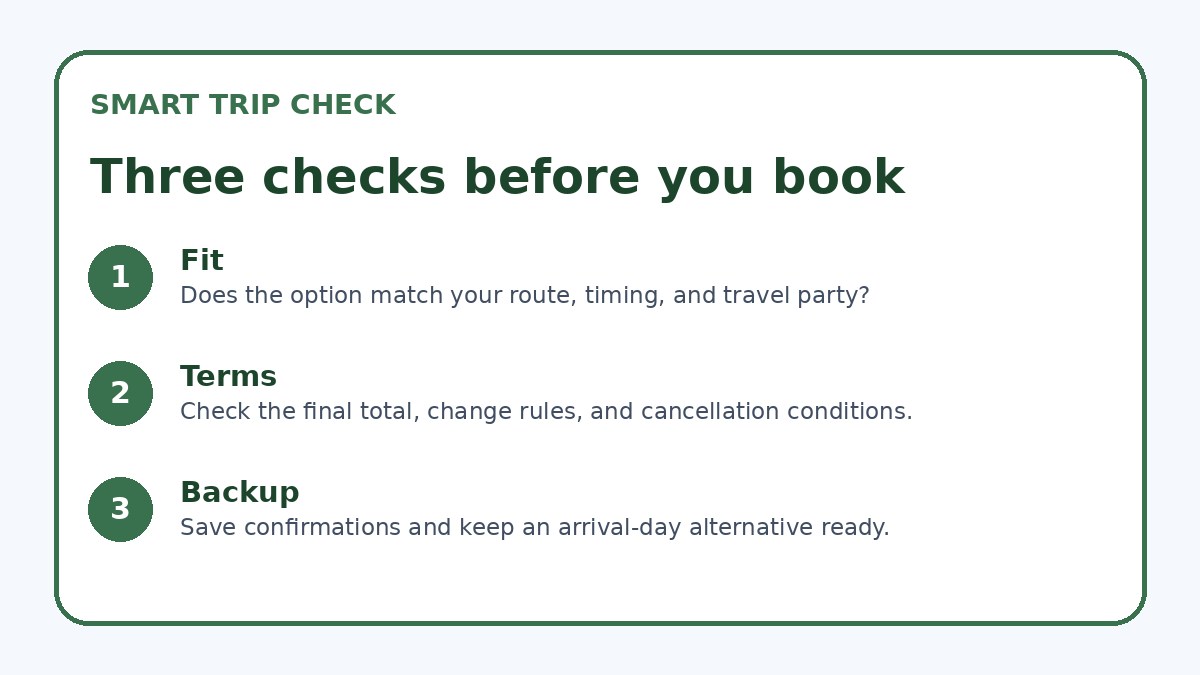
Confirm insurance wording, exclusions, deposit, fuel, mileage, and return terms on the final page.
Pickup and return friction: airports, downtown desks, and parking realities
Pickup and return can consume a larger share of family time than the drive itself. Airport counters usually offer extended hours and a wide fleet choice but factor in shuttle rides, extra airport fees, and traffic getting into the city. Downtown pickups avoid long urban drives and airport queues but may have limited office hours and smaller vehicles. Read the provider’s instructions for after-hours returns, late pickups, and where to park and leave keys. Make a simple plan for returning the car with tired children: allow buffer time for cleaning the car, refueling requirements, and the return inspection process so a problem at drop-off doesn’t become a travel-day crisis.
Remember parking rules and low-emission zones in Amsterdam change behavior. Short-term street parking is scarce and paid by the hour; long-term parking garages are easier but expensive and sometimes off-center. If your accommodation advertises parking, confirm whether space is guaranteed, costs extra, or requires a reservation. Also verify how local permits or resident-only streets could affect access to specific areas. If you expect to arrive late or depart very early, check whether the rental company supports key-drop returns to avoid waiting for the counter to open.
Car rental terms to verify
- Map every planned stop and note the closest train, tram, or bus station to compare door-to-door times.
- Review the rental contract’s CDW/LDW, deductible amount, theft coverage, and cross-border permissions before booking.
- Confirm pickup and return hours, after-hours key-drop policies, and the address for returns in writing.
- Check whether your accommodation guarantees parking, whether a reservation is required, and the daily cost.
- Identify local transit card purchase points and download any required ticketing apps or riders’ guides.
- Plan one non-driving backup for at least one day—train plus taxi or an organized tour—and note cancellation terms.
Non-driving fallback: how to move a family without a car
Plan an effective fallback before you cancel or book a car. Amsterdam’s public transport network (trams, buses, metros, and regional trains) serves the city core and many nearby towns reliably; adding bicycles—rental, cargo, or bike-trailer options—makes short family trips much easier. For specific day trips that aren’t well served by transit, combine regional trains with a single short taxi or rideshare to cover the last mile. Organized small-group day tours can also substitute for rented cars when you want to visit several rural highlights without managing driving, parking, and navigating unfamiliar country roads with children.
Prepare for contingencies: identify the nearest tram or bus stops to your accommodation, locate a family-friendly taxi app or phone number, and learn how to buy and top up local transit cards or contactless options. If you decide to skip the car, consider booking accommodation with easy luggage storage so you can take short regional trips by train without hauling suitcases. Keep a shortlist of vendor policies and cancellation windows so you can rent a car for a single day if weather or child needs change your plans mid-trip.
Car Rental & Road Trip questions travelers ask
Is driving in central Amsterdam difficult with kids and luggage?
Driving in central Amsterdam can be more stressful than helpful when you’re managing children and luggage. Many central streets are narrow, bicycle traffic is heavy, and pedestrian zones restrict vehicle access at certain times. Finding legal short-term parking near popular attractions is often challenging, and many accommodations do not include private parking. If your travel days are focused on the city center, compare door-to-door times using public transport and consider getting a luggage storage solution for easier mobility with kids. If a car still seems necessary, plan for a garage near your route and longer transfer times.
What specific insurance wording should families check on the rental page?
On the rental page, look for explicit language about Collision Damage Waiver (CDW) or Loss Damage Waiver (LDW) inclusion, the size of the deductible/excess, and whether theft is covered when the car is unattended. Verify if third-party liability limits meet your expectations and whether roadside assistance is included or available as an add-on. If you plan to rent child seats or roof racks, confirm whether damage or loss to those items is the renter’s responsibility. If relying on credit-card coverage, read the card issuer’s terms to find exclusions and required steps to activate coverage.
Can I combine public transport and a short-term rental to save money and hassle?
Yes—combining transit with a short-term rental often gives the best balance for families. Use public transport, trams, and bikes for city days, then rent a car for a single planned day trip outside the rail network or when you need to move bulky items. This approach reduces time spent searching for city parking and lowers exposure to emission-zone rules. When booking a short-term rental, check local provider pickup locations near train stations or outside the city to avoid driving through densely trafficked central areas.
Final decision note
For most families centered on Amsterdam’s core, the practical choice is to skip a full-time rental and rely on trams, metros, regional trains, bikes, and occasional taxis. A car is justified when your trip includes multiple remote day trips, significant bulky equipment, or a need for flexible departure times that public transport can’t match. Before you decide, map your daily plans, read insurance wording carefully, and factor pickup/return logistics into total travel time. If uncertain, reserve a short-term rental option for one or two days or keep a list of reliable local tours and taxi services; that compromise often delivers flexibility without city parking headaches. If you want to compare current vehicle availability or schedules, consider checking Trip.com as one place to review options, then verify insurance and pickup details on the provider’s final booking page.
Continue planning
Check current options and final conditions
Use the provider page to confirm live availability, the final total, cancellation terms, and every condition that matters to your trip.
This evergreen planning guide was created with AI-assisted drafting and a structured quality review. It does not display live prices, schedules, availability, visa guidance, or provider rankings. Verify current details before booking. Some links are affiliate links; we may earn a commission at no additional cost to you.