If you’re planning Busan to Jeju flights with children, the practical answer is: prepare exact travel dates and ages, choose a routing that minimizes connections, confirm baggage allowances and carry-on rules for family needs, and lock fare conditions that allow easy changes. That checklist covers the four decision areas that most affect parents: route-versus-fare tradeoffs, baggage and connection risk, schedule fit for family rhythms, and fare conditions (cancellations, name changes, seat selection). Start by noting who’s traveling, birthdates for infants/children, preferred airports in Busan and Jeju, and whether you’ll bring strollers or bulky gear. With those details at hand, you can compare options clearly and avoid last-minute surprises at airport check-in or boarding.

See live routes for your exact travel day
Compare direct and connecting choices with the same baggage and traveler details.
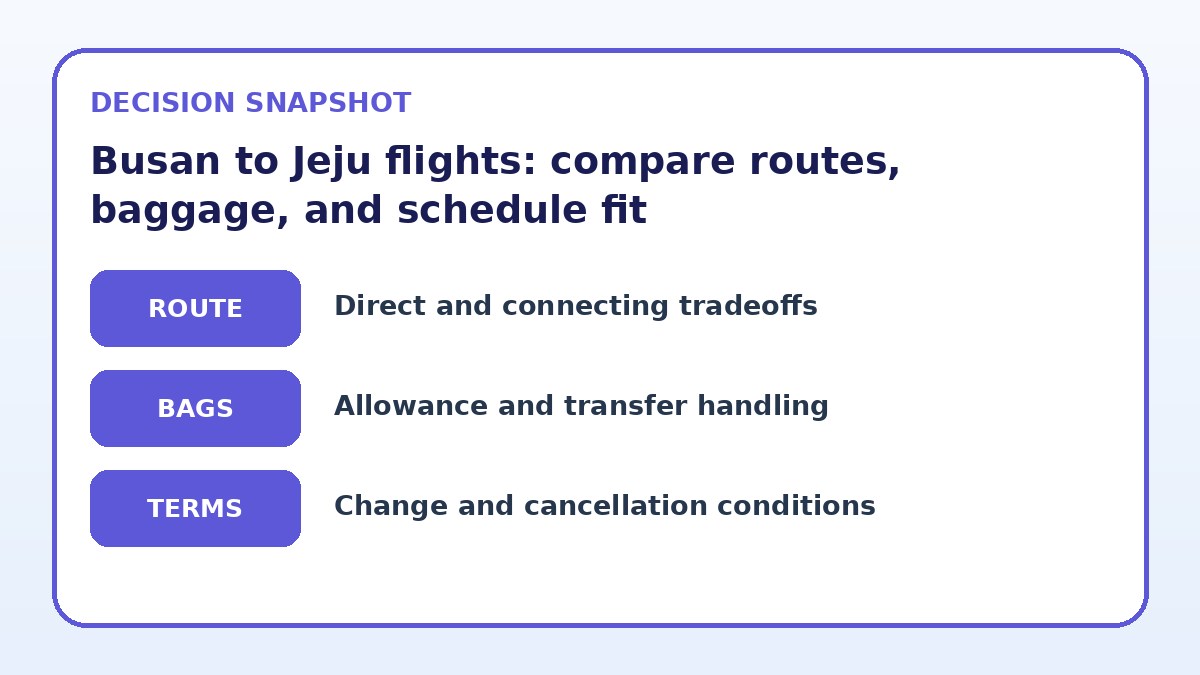
Routing: direct versus connecting — the family tradeoff
Families often face the choice between a faster, simpler routing and a lower fare that uses connections or off-peak transfers. Direct options reduce the number of handoffs, lower the chance of lost items, and shorten total travel time — all important when you’re managing children and luggage. Connecting itineraries can look appealing on price but add time sitting in terminals, more security lines and potential stress when coordinating transfers between flights, ferry/ground options, or different airports in Busan.
When comparing routes, list exact departure and arrival airports and note whether a flight is labeled direct or involves a change. If a connection is included, check minimum connection times the carrier recommends, and plan extra buffer for families (allow at least 60–90 minutes more than the airline minimum). Think about whether the time you save on fare is worth the added complexity of transfers, especially with infants, toddlers, or older relatives who need seating or mobility assistance.
Baggage and connection risk: what to verify before you pay
Baggage allowances and rules for strollers, bassinets, and car seats differ by fare and carrier; these differences can change the true cost of a ticket. Before booking, note how many checked pieces and carry-ons each passenger is allowed, the weight limits per bag, and whether kids’ equipment counts as a free allowance or requires a fee. If you plan to check items, consider the likelihood of delays or lost baggage on connecting itineraries and whether you'll need to transfer luggage yourself during a gate change or across terminals.
In your pre-booking checklist, add a column for equipment needs (stroller, car seat, pack-and-play) and the carrier’s handling rules. If a connection is required, verify whether checked bags are automatically transferred or must be rechecked, and what happens if you switch from one carrier to another. When provider-specific facts could change, always verify baggage policy, oversized-item rules, and any fee details on the carrier’s booking page before finalizing payment.
Compare flight-selection strategies
| Flight strategy | Best for | Risk to check |
|---|---|---|
| Choose the fastest direct routing | Families prioritizing minimal transfers and quicker door-to-door times | Higher fares and potentially less flexibility in low-cost fare buckets |
| Pick the lowest-fare connecting itinerary | Families focused on saving money and willing to manage extra logistics | More transfer stress, higher risk of delays or baggage issues, and extra time in transit |
| Select a mid-price flexible fare | Families wanting balance between cost and changeability | Costlier than basic fares but still may require fees for some conveniences |
| Prioritize schedule fit over price | Families whose routine and sleep schedules are essential to reduce meltdowns | May pay a premium for ideal departure or return times |
Recheck the complete itinerary
Confirm airports, connection handling, baggage, and change conditions before deciding.
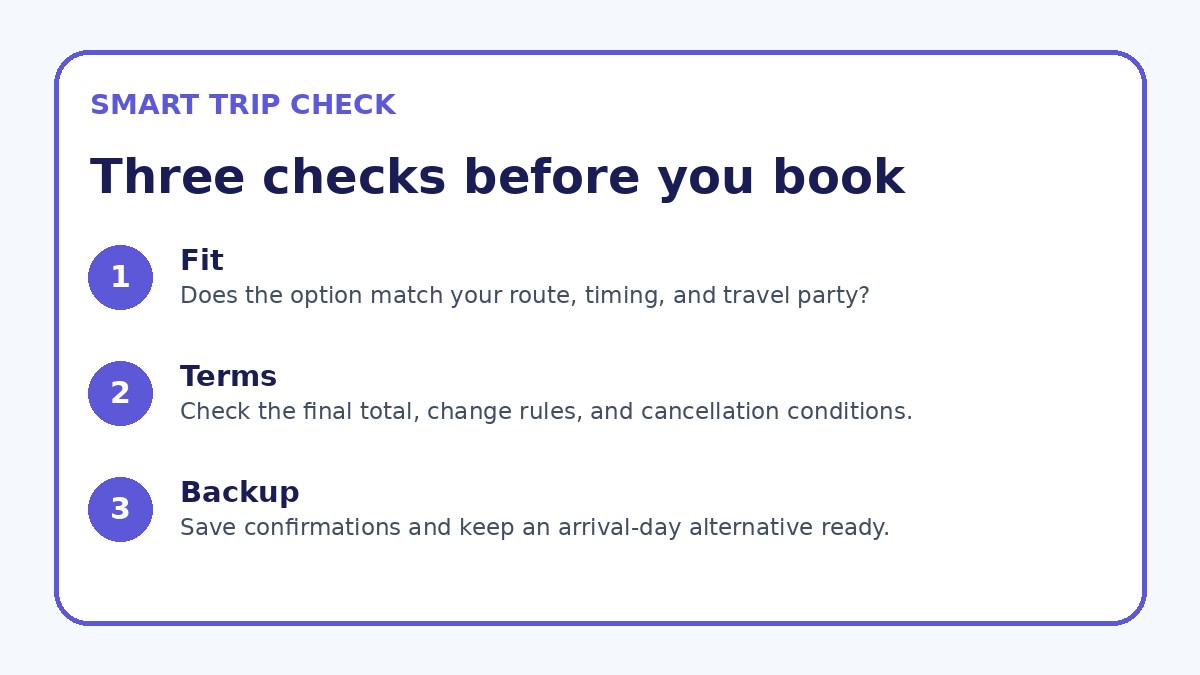
Schedule fit: align flight times with family routines
A schedule that fits your family’s routine can make travel days far less stressful. Consider nap and meal times for infants and toddlers, and factor in the time it takes to get to Busan’s departure point and from Jeju’s arrival airport to your accommodation or ferry port. Early morning flights may benefit families who can board and settle before meals, whereas mid-morning departures avoid very early alarms but can clash with snack or nap schedules. Evening flights might seem convenient but can lead to overtired children and difficult first nights at your destination.
When evaluating options, write down realistic door-to-door times for each candidate itinerary: include transit to the airport, recommended check-in or curbside arrival times with kids, security lines, potential waits, and travel from Jeju’s airport to lodging. For return travel, plan extra buffer time for airport restaurants, restroom breaks, and last-minute item searches. These practical time estimates help you pick flights that reduce on-day stress rather than simply minimizing airborne time.
Flight details to verify
- Write down full traveler names, birthdates for all children and infants, and contact phone numbers before searching flights so fares and infant policies display correctly.
- Decide whether you need direct routing; mark acceptable maximum total travel time and maximum number of connections for your family.
- List required gear (stroller, car seat, travel crib) and check each carrier’s policy on free carriage, gate check, or extra fees on the provider’s booking page.
- Record preferred flight time windows that match naps and meals, and calculate door-to-door times including airport transit and recommended family check-in buffers.
- Compare baggage allowances for each fare and estimate any additional checked-bag fees; add those fees to the ticket price when comparing total cost.
- Read the exact fare conditions on the carrier’s final booking page: change/cancellation rules, seat assignment costs, and what documentation is needed for infants.
Fare conditions: flexibility, seat selection and final checks
Fare rules often determine whether a cheaper ticket is actually practical for families. Before booking, check change and cancellation policies, child or infant fare definitions, the cost and availability of assigned seats together, and whether unaccompanied-minor services are available if needed. Some lower fares restrict changes or charge high fees; others include modest flexibility or permit name corrections. Make a point of seeing the exact language about refunds, credits versus cash refunds, and the process for making changes.
Because carrier policies and bundled options can change, verify the final fare conditions on the carrier’s booking confirmation page before you complete payment. Confirm whether seat selection is free or paid, how to add priority boarding if you need extra time to board with children, and whether meals or special assistance must be requested in advance. If you prefer a third-party search, Trip.com can be used to compare availability, but always validate fare rules on the provider’s official checkout page.
Flight Guide questions travelers ask
Should I always book a direct Busan to Jeju flight for children?
Direct flights reduce the number of transitions, which usually lowers stress with young children, lessens luggage handling, and shortens overall travel time. However, direct options can be more expensive and sometimes have less flexible fare rules. If a connecting itinerary offers substantial savings, weigh the connection length, terminal transfers, and baggage transfer responsibilities. For families with infants or mobility needs, a direct flight often makes logistical sense; for others who prioritize budget, a well-timed connection with generous layover time can work if you prepare accordingly.
How do I handle strollers, car seats, and bulky baby gear when booking flights from Busan to Jeju?
Before booking, list every piece of equipment you intend to bring and check how each carrier treats those items: some allow gate-checking without a fee, others count them as checked baggage. Verify whether car seats must meet specific standards for onboard use and whether advance notification or a special seat purchase is required. On the carrier’s booking or baggage policy page, confirm size and weight allowances, whether a stroller can be used in terminals, and the recommended procedure for checking items at the gate versus the counter.
What fare rules should I prioritize if I’m booking for a family?
Focus on change and cancellation flexibility, seat selection cost for keeping the family together, and baggage inclusions. Prioritize fares that allow easy, low-cost date changes or provide travel credits in case illness forces postponement. Also check whether seat selection is included or requires payment, because having adjacent seats matters for many families. Finally, confirm refund processes and timelines on the carrier’s final booking confirmation so you know what documentation or steps are needed if plans change.
Final decision note
When planning Busan to Jeju flights for a family, the most useful preparation is practical detail-gathering: exact traveler names and ages, a clear list of gear, a realistic door-to-door time estimate, and a prioritized preference between speed and savings. Use those facts to compare routing options, baggage rules, schedule fit, and fare conditions side by side. Double-check carrier baggage and change policies on the official checkout page before committing, and factor the real total cost—including any equipment fees—into your choice. With a short, specific pre-booking checklist and a realistic view of tradeoffs, you’ll make a calmer, more confident booking decision for your family trip.
Continue planning
Check current options and final conditions
Use the provider page to confirm live availability, the final total, cancellation terms, and every condition that matters to your trip.
This evergreen planning guide was created with AI-assisted drafting and a structured quality review. It does not display live prices, schedules, availability, visa guidance, or provider rankings. Verify current details before booking. Some links are affiliate links; we may earn a commission at no additional cost to you.