If you’re traveling solo from Dubai to Doha, the core tradeoff you’ll face is straightforward: pay a bit more for a smooth, convenient schedule (simpler check‑in, fewer connections, predictable arrival time), or keep your fare flexible and cheaper but accept tighter connections, longer total travel time, or stricter baggage rules. Start by deciding which matters most to you — strict arrival time, minimum hassle, or the freedom to change plans — because that choice determines which fare rules and routing choices are acceptable. This guide gives you a short, practical decision path: how to compare direct and connecting options, what to check on fare rules and baggage allowances, how schedule fit affects solo travelers, and which risk points to mitigate during the booking and day-of-travel process.
See live routes for your exact travel day
Compare direct and connecting choices with the same baggage and traveler details.
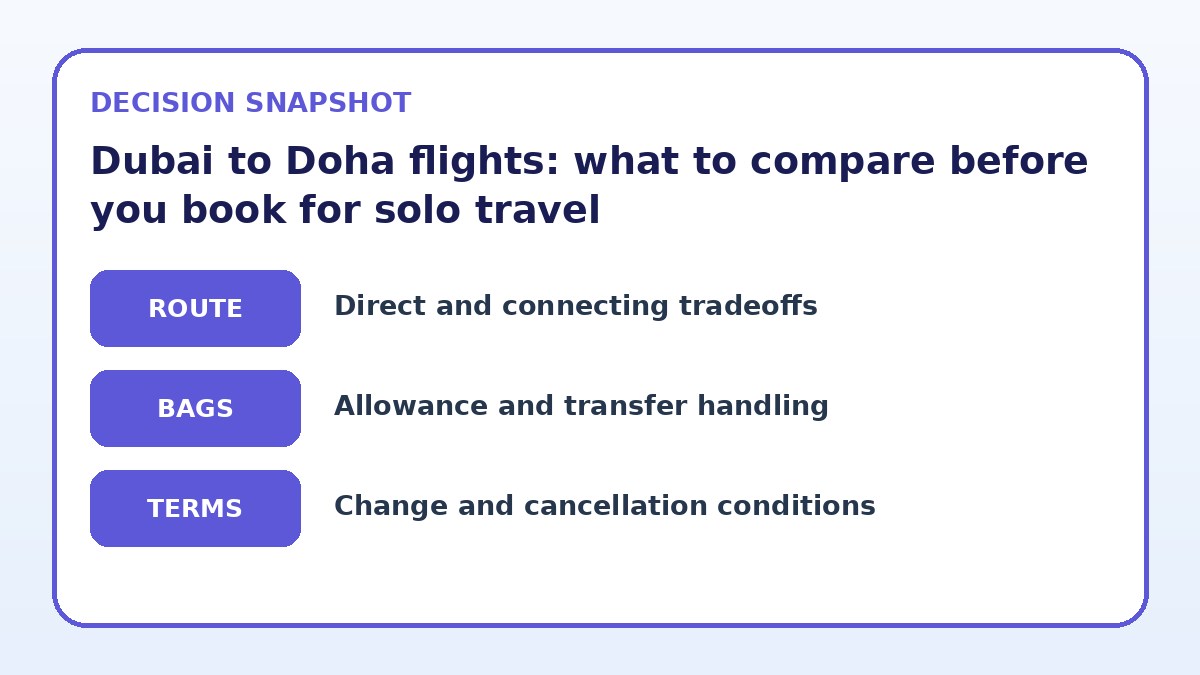
Routing: direct versus connecting options
For Dubai to Doha travel you will typically compare direct and connecting routings. A direct routing (if offered on your chosen dates) reduces the number of touchpoints: fewer gate changes, less time waiting in transit, and a simpler arrival plan. Direct trips are easier for solo travelers who prefer to travel light, minimize navigation in unfamiliar airports, and who need reliable arrival times for meetings or onward connections. When you search, filter for nonstop/ direct options first and note the total door-to-door time rather than only airborne duration.
Connecting routings can widen your price and scheduling choices by using different carriers or airports. They can be attractive if the direct schedule doesn’t fit your required arrival or departure window, but they introduce additional factors: transfer time, possible terminal changes, and the risk that delays ripple through to your next flight. For solo travelers who value flexibility in dates or want to save on the fare, connecting options can be reasonable — provided you check transfer corridors, minimum connection times, and if your baggage is booked through or needs to be rechecked.
Baggage and connection risk for solo travelers
Verify baggage allowances and how they apply to connections before you buy. Some fare classes have strict weight or piece limits and charge for each add‑on; other fares include one checked bag but impose size or weight caps. For connecting itineraries, find out whether your checked luggage will transfer automatically across carriers or whether you must reclaim and re‑check it. Solo travelers carrying a single checked bag and one carry‑on should favor itineraries that guarantee through‑checked baggage to avoid extra stress moving between terminals or rechecking during short layovers.
Connection risk grows when you mix carriers on separate tickets or select tight layovers. If you miss a connection on a single ticket, the operating carrier typically rebooks you, but this isn’t guaranteed and may involve long waits; on separate tickets you assume full responsibility. For peace of mind, add buffer time between flights, avoid layout-heavy airports or late-night tight turns, and consider travel insurance or a fare with flexible change terms that explicitly covers missed connections. Solo travelers often tolerate a slightly higher fare in exchange for fewer transfer risks.
Compare flight-selection strategies
| Flight strategy | Best for | Risk to check |
|---|---|---|
| Book a direct flight with stricter fare class | Solo travelers who prioritize predictable timing and minimal touchpoints | Higher base fare and less flexibility to change dates without penalties |
| Choose a cheaper connecting itinerary with separate tickets | Travelers prioritizing lower cost who can absorb connection risk | Greater risk of missed connections, baggage recheck, and rebooking responsibility |
| Select a flexible fare on any route | Solo travelers who value the ability to change plans with minimal hassle | Higher upfront cost for changeability and sometimes nonrefundable ancillary fees |
| Mix carriers on a single ticket via an alliance or through-ticket | Those seeking broader schedule options with some protective transfer rules | Complex rules about baggage and rebookings; check through-ticket transfer policies carefully |
Recheck the complete itinerary
Confirm airports, connection handling, baggage, and change conditions before deciding.
Schedule fit: matching flight times to solo traveler needs
Think about what ‘time’ means for your trip: arriving earlier to check into accommodation or meet someone, or leaving later to avoid early alarms. Direct flights are usually best when you have fixed commitments — business meetings, tour starts, or a tight onward connection — because they reduce variability. If your schedule is fluid, you can prioritize lower fares or more convenient departure airports. Solo travelers should also factor in airport access time from where they’re staying in Dubai and onward travel from Doha, since early‑morning or late‑night flights can add taxi or transfer complications.
Also weigh flight frequency and day‑of‑week patterns. Some days may have more direct services or better-timed options, making the price-flexibility tradeoff easier to accept. If you prefer to travel without worrying about missed opportunities, plan alternate arrival times and shortlist at least two viable flights per day. That gives you a backup if one option sells out or its fare rules are unsuitable. Before booking, confirm the exact scheduled arrival and departure times on the carrier page and whether those times include seasonal variations.
Flight details to verify
- Choose exact travel dates and preferred time windows before searching to get meaningful fare comparisons.
- Have passport number, date of birth, and contact email/phone ready to check eligibility and quoted rules.
- Filter search results by nonstop/direct first, then save two alternative connecting itineraries for flexibility.
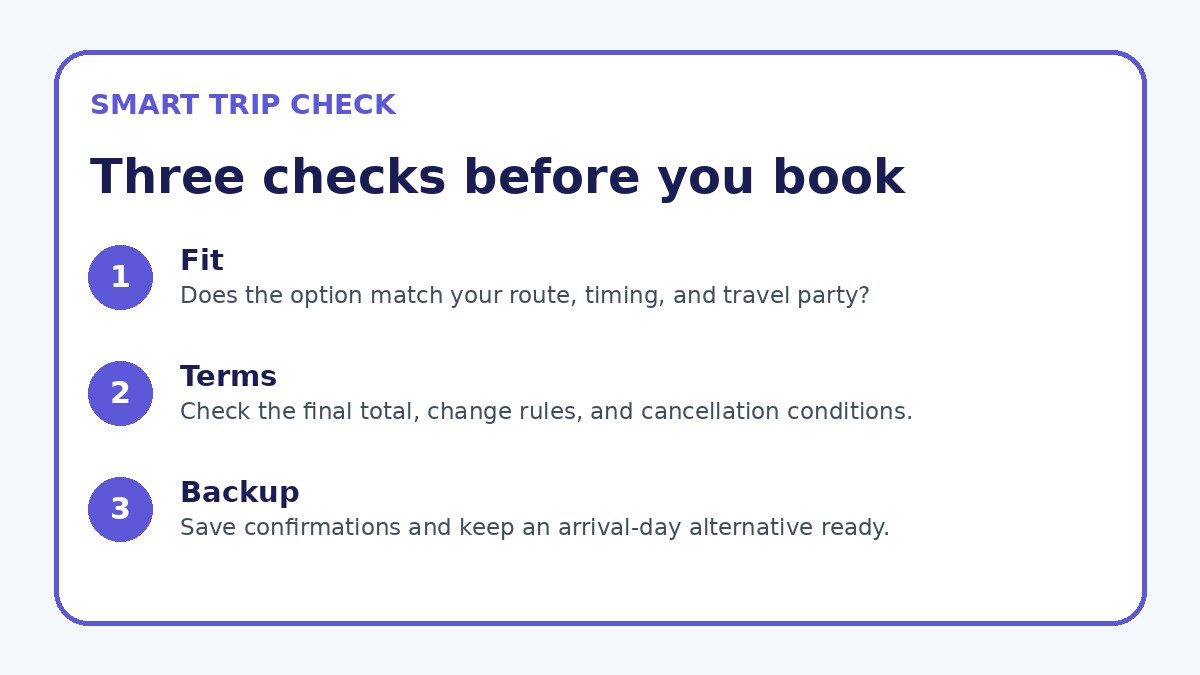
- On the airline booking page, verify change and cancellation fees, same-day change policies, and refund routing.
- Confirm whether checked baggage is included and whether it will be auto-transferred on connections.
- Add buffer time for transfers and consider travel insurance or flexible fares if you need schedule protection.
Fare conditions and what to verify on booking pages
Fare conditions determine how much flexibility you actually get. On the booking page, verify change and cancellation fees, whether changes can be made online, if a fare difference applies, and how refunds are processed. Look for explicit text about same‑day changes, name corrections, and the deadline for free changes if any. For solo travelers, a mid‑price fare with lenient change rules often provides the best balance between cost and peace of mind—just be sure the carrier’s terms on the booking page match what you expected.
Also check ancillary rules that affect your day-of travel: carry‑on inclusion, seat selection rules, and whether priority boarding or fast-track services are available and relevant to you. If you’ll need to rest or work on arrival, inspect baggage delivery and meeting-point details for Doha. When provider-specific facts could change, always verify the precise fare conditions, baggage allowances, and connection handling on the airline or reseller final booking page before paying. Trip.com can be used as one place to compare current availability and conditions, but confirm final terms with the carrier.
Flight Guide questions travelers ask
Can I rely on cheap connecting fares if I’m traveling solo from Dubai to Doha?
Cheap connecting fares often appeal because they expand timing and price options, but they come with tradeoffs you should accept consciously. On separate ticket itineraries you assume responsibility for missed connections and baggage reclaims; on through-ticket connections the airline usually assists but you still face delay risk. For solo travelers, weigh whether the cost savings justify the stress of tight layovers or rechecking luggage. If you need reliable arrival times or want minimal airport navigation, a slightly higher fare that removes connections can be a better overall value.
What exactly should I verify about baggage rules when comparing flights?
Look for specifics on the booking page: number of checked bags allowed, weight or piece limits, and carry-on dimensions. Check whether the fare includes a checked bag or if you must add it separately, and confirm baggage policy across connecting carriers if your itinerary uses more than one airline. Also verify fees for overweight or oversized items and whether the carrier permits online purchase of extra baggage at a reduced rate. If the booking page is unclear, contact the airline’s customer service before purchase to avoid surprises at the airport.
How much connection buffer time should a solo traveler allow between flights?
There’s no universal minimum because airport layouts, terminal transfer times, and whether bags transfer automatically vary. As a practical rule for solo travelers, avoid the tightest available connection windows on the search results and aim for extra time that accounts for immigration, baggage transfer, and potential terminal changes. If you’re unfamiliar with the airport, prefer longer layovers or choose itineraries on a single ticket to gain some protection. Always verify the carrier’s published minimum connection time and then add personal buffer based on your comfort with navigating airports alone.
Final decision note
Choosing Dubai to Doha flights as a solo traveler means deliberately trading off schedule certainty against fare flexibility. Decide early whether predictable timing or the ability to change plans cheaply is more important, then let that choice prioritize direct flights, through-ticket connections, or flexible fare classes. Before you book, prepare exact dates and traveler details, read fare conditions and baggage rules on the carrier’s final booking page, and save at least one backup itinerary. Small extra investments in buffer time, a more flexible fare, or a direct routing often pay off with less stress and smoother solo travel.
Continue planning
Check current options and final conditions
Use the provider page to confirm live availability, the final total, cancellation terms, and every condition that matters to your trip.
This evergreen planning guide was created with AI-assisted drafting and a structured quality review. It does not display live prices, schedules, availability, visa guidance, or provider rankings. Verify current details before booking. Some links are affiliate links; we may earn a commission at no additional cost to you.