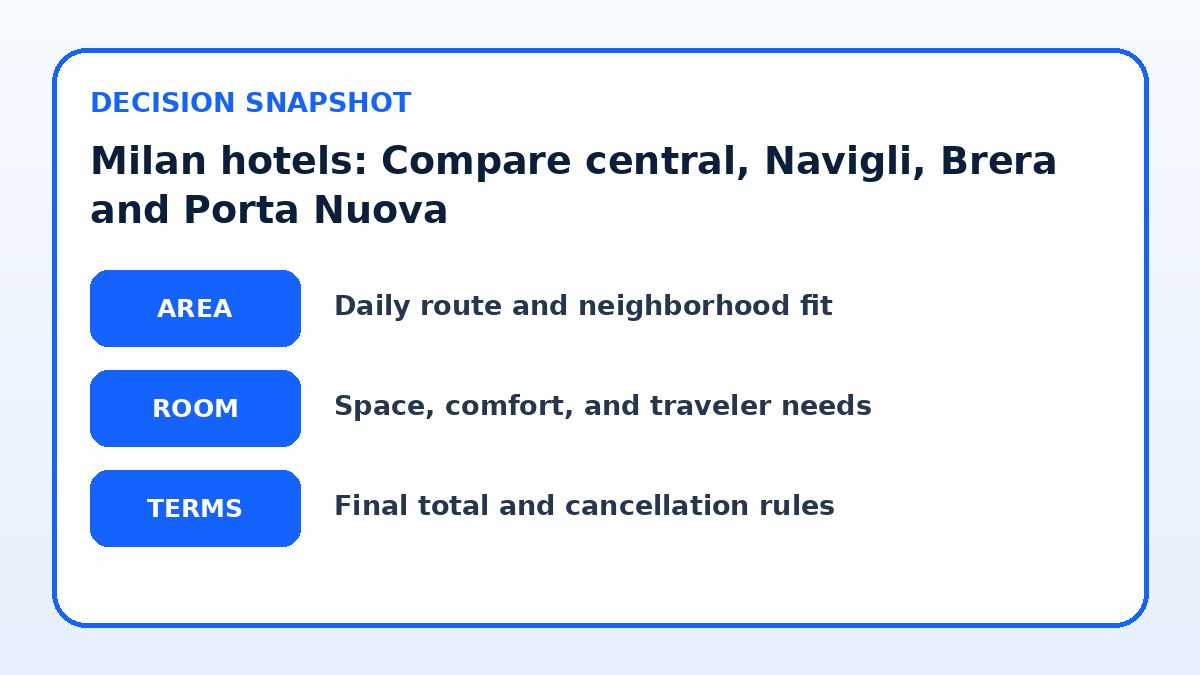
Quick practical answer: for a first-time visitor who wants to be close to the Duomo, museums, and major sights, book a hotel in Centro Storico (Duomo/Brera). If you prefer nightlife and canals, choose Navigli; for fashion, shopping and a stylish base, consider Quadrilatero/Brera; for modern business vibes and easier train/airport links, Porta Nuova/Garibaldi works well. Each area balances location, nightlife, price, and transport differently. Use the tradeoffs below to match your priorities: proximity to landmarks, evening atmosphere, transit connections, and walking vs public transport time. Before you finalize a booking, check the hotel's exact address on the booking page, public-transport stops within a short walk, and whether the room type and cancellation policy fit your plans. Trip.com is one optional place to compare current availability and conditions, but always verify the final details on the provider's booking page.
Centro Storico (Duomo) — most convenient for first-timers
Centro Storico is the obvious pick if your main goal is sightseeing. Staying near the Duomo means short walks to the cathedral, Galleria Vittorio Emanuele II, Teatro alla Scala and the main museum circuit. That proximity converts directly into more efficient days: you can drop back to your room during the afternoon, return quickly to freshen up before dinner, and avoid long transit rides after evenings out. The neighborhood is dense with cafés, tourist services and guided-tour meeting points, which simplifies planning when you have only a few days.
The tradeoff is that Centro Storico is busier and often louder, with higher room rates for comparable hotel standards than in outlying districts. Streets close to attractions are geared toward short-stay visitors and can feel crowded, especially around peak midday and early evening times. If quiet evenings are essential—for example, if you have jet lag or travel with children—look for hotels with soundproofing or slightly backstreet locations a few minutes’ walk from the main piazza.
Brera and Quadrilatero — art, cafés, and shopping
Brera is beloved for its narrow, cobbled streets, galleries, and intimate restaurants. It sits just north of the Duomo and offers a quieter, more bohemian alternative while still keeping most central sights within easy walking distance. Brera's mix of art shops, small designer boutiques, and relaxed squares makes it a good choice if you want a stylish base without the full bustle of the main piazza. Many hotels here are boutique properties housed in older buildings that emphasize local character.
The Quadrilatero della Moda (fashion district) overlaps with Brera in spirit but tilts toward upscale shopping and high-end dining. This area suits travelers prioritizing luxury shopping or a polished, fashionable atmosphere. Expect hotel rooms here to sometimes be smaller and marketed for style and location rather than generous space. If shopping and impressing a client or partner are priorities, this area delivers; if you want larger rooms or lower nightly rates, compare nearby neighborhoods like Porta Venezia.
| Approach | Best for | Tradeoff to check |
|---|---|---|
| Centro Storico / Duomo | Visitors prioritizing walking access to major sights and short daytime logistics | Higher noise and generally higher rates; can be tourist-crowded |
| Brera / Quadrilatero | Art and shopping lovers who want style and centrality with character | Smaller boutique rooms and often premium prices for location and design |
| Navigli | Visitors seeking nightlife, canal ambiance, and a relaxed dining scene | More evening noise and longer transit time to central museums |
| Porta Nuova / Garibaldi | Travelers wanting modern hotels, easy train/airport links, and larger rooms | Less historic atmosphere and a short metro ride to core attractions |

Navigli — canals, nightlife, and a relaxed vibe
If you want evenings filled with aperitivo bars, live music, and canal-side dining, Navigli is the neighborhood to consider. It’s farther from the core Duomo area than Brera but has its own pull: charming canals, walking paths, and a lively local scene after dark. Navigli suits travelers who plan to spend at least some nights out and don’t mind using public transit to reach the main museum district. It’s particularly popular with younger visitors and those who appreciate food markets and artisanal shops.
Noise and late-night crowds are the principal tradeoffs. Canalside terraces stay busy well into the night, so choose a hotel set back from the main canal or with verified quiet rooms if you need rest. You’ll also spend more time on trams or the metro to reach central museums, so factor those short transit times into your daily schedule—sometimes a 15–25 minute tram ride is all that separates you from the Duomo.
Before you book
- Confirm the hotel’s exact street address on the booking page and check its location on a map to verify walking time to your key sights.
- Check which metro, tram, or train stops are within a 10–15 minute walk and compare those transfer times to your planned daily route.
- Read the room description carefully for bed configuration, room size, and whether the hotel lists soundproofing or quiet rooms.
- Review the cancellation and change policy on the provider’s final booking page before completing payment to match your flexibility needs.
- Ask the hotel (or check the listing) about luggage storage options if you have early arrivals or late departures.
- If late-night noise matters, request a room away from the main street or canal and confirm this preference in writing where possible.
Porta Nuova/Garibaldi — modern, business-friendly, and connected
Porta Nuova and the Garibaldi area are Milan’s newer skyline — glass towers, contemporary hotels, and efficient transit links. This neighborhood works well if you want newer amenities, larger rooms, and simpler rail or airport connections. Milano Centrale station and multiple metro lines are within easy reach, making it a logical choice for travelers who will use Italy’s train network for side trips or who prefer a direct link to transport hubs. Business travelers and visitors with early departures often favor this area for its predictability and modern services.
The tradeoff is atmosphere: Porta Nuova lacks the historic charm of Brera or the canalside mood of Navigli. It’s quieter in the evenings, with fewer traditional trattorie, though restaurants and contemporary bars are plentiful. If you prioritize walking to museums and galleries, expect a short metro ride; if you prefer straightforward logistics and contemporary hotel comforts, this area balances convenience and a slightly more residential feel.
Frequently asked questions
Which Milan neighborhood offers the best public transport links to airports and trains?
Porta Nuova and Garibaldi have the most straightforward rail and metro connections for onward travel: Milano Centrale is within easy reach from there, and multiple metro lines intersect nearby. Centro Storico is walkable for sightseeing but may require a transfer or a taxi for direct airport routes. Navigli has tram and metro options as well, but you should factor in tram travel time if catching early trains or flights. Always check the exact station names and line maps on the hotel’s booking page and public-transport websites when planning airport transfers.
Is Brera better than Centro Storico for quiet evenings and local dining?
Brera generally feels quieter and more intimate than the busiest parts of Centro Storico because its streets are narrower and oriented around small squares and galleries. You’ll find more neighborhood cafés and independent restaurants in Brera with a local atmosphere, while Centro Storico concentrates larger tourist-facing venues. If you want evenings that feel more like a neighborhood experience, Brera is a good choice—just confirm hotel placement so you remain within walking distance of the sights you plan to visit.
Will staying in Navigli add a lot of extra travel time to visit Milan’s museums?
Staying in Navigli typically adds short transit time—often a 15–25 minute tram or metro ride—to get to the museum cluster near the Duomo and Brera. It’s a manageable tradeoff if you plan to spend evenings in Navigli but want daytime access to central attractions. If you anticipate many museum-heavy days and prefer minimizing transit, a hotel closer to Duomo or Brera will reduce commute time. Check tram and metro routes on the booking page or public transport maps when choosing a property.
Final planning note
Choosing where to stay in Milan comes down to priorities: short walks to the Duomo and museums (Centro Storico/Brera), nightlife and canals (Navigli), fashion and chic cafés (Quadrilatero), or modern convenience and transport links (Porta Nuova/Garibaldi). Match the neighborhood to how you plan your days and evenings, then verify the hotel’s exact address, transit stops, room details, and cancellation terms on the provider’s booking page before you confirm. If you want to compare availability quickly, Trip.com can be used as an optional place to view current options, but always double-check the final booking conditions directly with the hotel or provider.
Continue planning
Check current options and final conditions
Use the provider page to confirm live availability, the final total, cancellation terms, and every condition that matters to your trip.
This evergreen planning guide was created with AI-assisted drafting and a structured quality review. It does not display live prices, schedules, availability, visa guidance, or provider rankings. Verify current details before booking. Some links are affiliate links; we may earn a commission at no additional cost to you.