
If you’re visiting Istanbul for the first time, pick a neighborhood based on how you want to spend your days: historic sights within walking distance, lively dining and nightlife, scenic waterfront views, or a more local, less touristy rhythm. For the fastest access to major monuments like Hagia Sophia and the Blue Mosque, stay in Sultanahmet. For restaurants, nightlife and trams that connect to Taksim, choose Beyoğlu or Karaköy. If you prefer calmer streets, local cafes and ferry rides across the Bosphorus, the Asian-side Kadıköy is an excellent choice. Read on for a practical comparison of what each area offers, how transport and walkability affect your days, and the booking details you should verify on the hotel’s page before you commit.
Sultanahmet — historic center for walkable sightseeing
Sultanahmet puts you within easy walking distance of Istanbul’s most iconic monuments: the Blue Mosque, Hagia Sophia, Topkapi Palace and the Istanbul Archaeological Museums. Hotels here tend to cluster around pedestrian streets and small squares, so you can maximize daytime sightseeing without relying on public transport. That convenience is especially valuable for a single-day sightseeing plan or for travelers who prefer to return to the hotel between museum visits. Expect quieter evenings in many parts of Sultanahmet; restaurants serve tourists but the area doesn’t hum with late-night nightlife.
Tradeoffs include fewer modern shopping and nightlife options within immediate reach; you’ll need to use tram or taxi to reach Istiklal Avenue, Karaköy or the Asian side. Streets can be crowded during peak visitor months, which affects door-to-door travel time between attractions. If you choose Sultanahmet, check the hotel’s proximity to the Tram T1 line stops, elevator/lift availability if you have mobility needs, and whether rooms face quieter inner courtyards versus busy streets. Confirm cancellation and payment policies on the booking page before finalizing.
Beyoğlu and Taksim — nightlife, restaurants and central transport
Beyoğlu, with its heart at Taksim Square and Istiklal Avenue, suits visitors who want restaurants, bars, galleries and short tram or funicular rides to the ferry piers. Hotels here range from boutique to international chains and usually offer faster evening options for dining and entertainment than Sultanahmet. Transport links from Taksim connect you across the city by metro, funicular and buses, making it a practical base for balancing museum visits with nightlife. The area feels energetic and sometimes noisy, which is desirable if you want to stay where the city is active after sunset.
The tradeoff is that Istiklal’s pedestrian crowds and nightlife noise can make sleep harder and walking to historic monuments takes longer than from Sultanahmet. If you plan day trips or early-morning museum visits, factor in the time and cost of public transport to the historic peninsula. When booking, verify whether a hotel offers soundproofing, whether rooms have air conditioning (important in warm months), and how far the property is from the nearest funicular or metro entrance.
| Approach | Best for | Tradeoff to check |
|---|---|---|
| Base near major monuments (Sultanahmet) | Maximizing sightseeing on foot | Less nightlife and longer trips to modern dining and transport hubs |
| Stay in the city’s social hub (Beyoğlu/Taksim) | Evening entertainment and broad transport links | Noisier nights and longer walks to historic sites |
| Waterfront boutique base (Karaköy) | Scenic ferries, cafes and compact exploring | Hilly streets and potential nightlife noise |
| Neighborhood life on the Asian side (Kadıköy) | Local markets, food scenes and lower-key stays | Extra ferry or tram time to most European-side monuments |

Karaköy — compact, waterfront, boutique atmosphere
Karaköy sits on the waterfront between Galata and the historical peninsula and has become popular for boutique hotels, cafés and easy ferry access. From Karaköy you can walk to the Galata Tower, cross to Sultanahmet by tram or ferry, or take short walks to up-and-coming restaurant scenes. Its waterfront location gives scenic morning and evening walks and quick ferries to Kadıköy and Üsküdar. Many properties are smaller, design-forward hotels suited to travelers who like exploring on foot and hopping between cafes and galleries.
Consider that Karaköy’s terrain includes steep streets and cobbled lanes, which may be inconvenient with heavy luggage or limited mobility. Nightlife here is lively along certain streets, so check if your chosen hotel has inward-facing rooms or noise mitigation. Ferry schedules and pier accessibility can affect morning transfers, so verify the hotel’s recommended route options to major sights and whether they provide port or transfer advice on the booking page.
Before you book
- Confirm the hotel’s exact distance to the nearest Tram T1 stop, metro or ferry pier on the booking page so you can plan daily routes to sights.
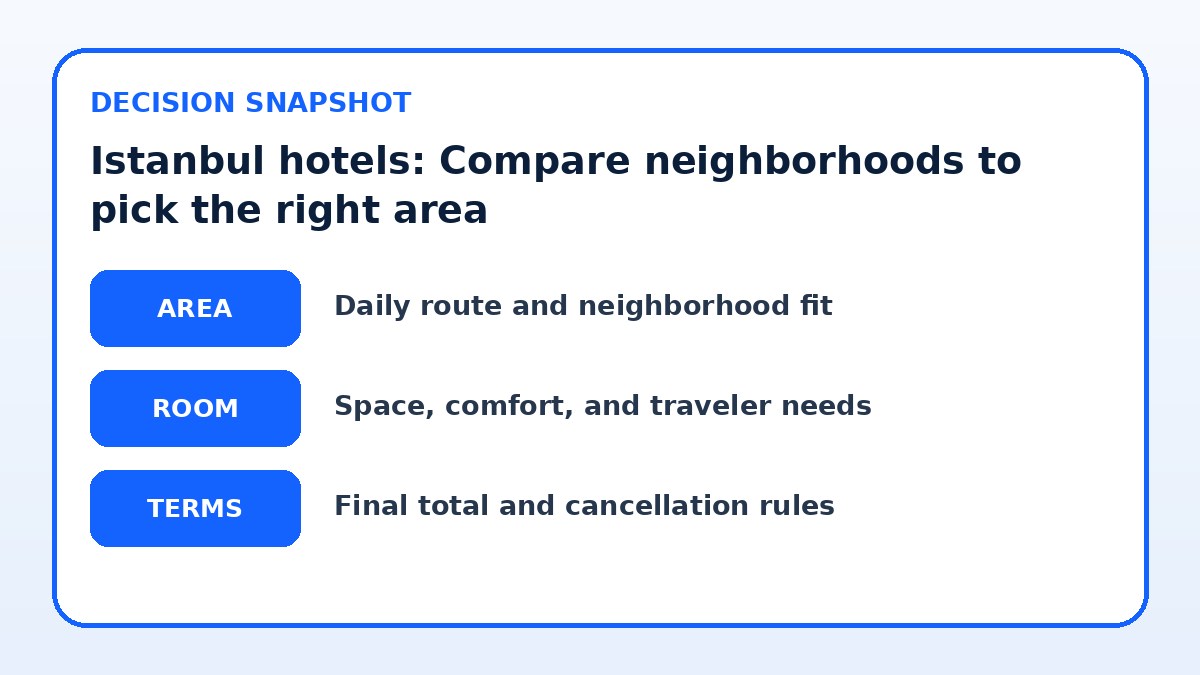
- Verify room features that matter to you—soundproofing, air conditioning, elevator access and bed configuration—before completing your reservation.
- Check the hotel’s cancellation, prepayment and arrival time policies on its official booking page to avoid surprises if plans change.
- If mobility is a concern, ask the property about stairs, cobbled streets nearby, and availability of ground-floor or accessible rooms.
- Compare ferry and tram times for your planned early-morning visits; factor transit windows into your daily itinerary.
- Read recent guest comments about noise, neighborhood safety and morning traffic flow to confirm the stay matches your comfort needs.
Kadıköy — local life on the Asian side with ferry convenience
Kadıköy offers a different vibe: markets, neighborhood cafés, and relaxed evenings that feel more local than tourist-focused. Staying on the Asian side is attractive if you prefer lower hotel rates for similar quality, open-air markets, and easy ferry rides to the European shore for sightseeing. Ferries add scenic travel time and are pleasant ways to move across the Bosphorus, but they also mean you're dependent on their schedules when planning early starts to visit crowded monuments. Kadıköy is especially good for food-focused travelers who appreciate vibrant neighborhood life.
The main tradeoff is transit time — while ferries are pleasant, many top monuments are on the European shore, requiring a short ferry plus tram or bus. For a first-time visit with limited days, factor in that each ferry crossing uses time that could otherwise be spent at sights. When booking in Kadıköy, confirm the hotel’s distance from the ferry terminal, whether local taxis or ride-hailing work reliably at night, and any shuttle services the property might offer for airport connections.
Frequently asked questions
Which Istanbul neighborhood is best for a one-night stay between an early arrival and a late departure?
For a very short stay anchored by arrival and departure logistics, pick a hotel near transport links you’ll use most. If you arrive at Istanbul Airport and want quick access to sightseeing the same day, a central European-side location near the M2 metro or the T1 tram (around Sultanahmet, Karaköy or Eminönü) reduces transit time. If you’ll arrive by ferry or prefer evening entertainment, Beyoğlu/Taksim is convenient. Always verify the hotel’s shuttle or transfer options, and check the estimated travel time from your arrival point on the provider’s booking page.
Is the European side better than the Asian side for a first visit to Istanbul?
The European side concentrates most famous historic monuments, making it the most efficient base if you have limited days and want to focus on sights. The Asian side offers a more local atmosphere, lively food markets and often quieter streets, and is a great choice if you value neighborhood life over immediate monument proximity. Ferries connect the two quickly, but factor ferry crossing times into your schedule. Match the choice to whether you prioritize monument proximity (European) or local daily life and food exploration (Asian).
How should I balance hotel cost, location and convenience when booking?
Start by listing your non-negotiables: walking distance to specific sights, easy access to a metro or tram, quiet nights or lively evenings. Use those priorities to filter properties and then compare tradeoffs—saving on a hotel farther from the historic peninsula may add daily transit time and taxi costs. Look at recent guest photos and reviews for practical details like room size and noise, and confirm the hotel’s payment and cancellation terms on the booking page. Optionally compare current availability on Trip.com to see a snapshot of options, but verify final details with the hotel’s own booking information.
Final planning note
Deciding where to stay in Istanbul comes down to the rhythm you want for your trip. Choose Sultanahmet if your priority is waking up steps from the major monuments, Beyoğlu/Taksim for nighttime energy and broad transport connections, Karaköy for a compact waterfront base with boutique options, or Kadıköy for a local, food-focused Asian-side experience. Each choice shortens certain experiences and lengthens others; the best pick balances your daily priorities with practical transit realities. Before you book, confirm transport links, room features and cancellation terms on the hotel’s booking page so you arrive with clear expectations.
Continue planning
Check current options and final conditions
Use the provider page to confirm live availability, the final total, cancellation terms, and every condition that matters to your trip.
This evergreen planning guide was created with AI-assisted drafting and a structured quality review. It does not display live prices, schedules, availability, visa guidance, or provider rankings. Verify current details before booking. Some links are affiliate links; we may earn a commission at no additional cost to you.