Pick the neighborhood first, then the room. Business travelers in Rome face a simple but decisive tradeoff: choosing an area that cuts commute friction to meetings, conferences, or stations versus booking a room that supports focused work and reliable rest. Make the stay-area decision by mapping your primary destinations (client offices, conference venue, or Fiumicino/Termini access) and selecting one of four neighborhood approaches below. Once you pick an area, narrow rooms by desk space, noise control, connectivity, and bed comfort—then confirm cancellation, check-in windows, and transport options before you book. This guide lays out which Rome neighborhoods suit specific business itineraries, how to judge daily-route time and hassle, the room features to prioritize depending on your working style, and the final booking terms to verify on the provider’s page. Use the comparison rows to shortlist an area so you can open live inventory with clear criteria.
Check live stays in the areas that fit
Use your dates and party size to compare current rooms after you narrow the neighborhood fit.
Neighborhood fit: match your itinerary to one of four area approaches
Decide which type of area best aligns with your priorities: proximity to business districts and conference centers, central access for multi-meeting days, scenic prestige for client entertainment, or transport-node convenience if you need fast airport or train links. For example, if most meetings are in EUR or near the Olympic Stadium, staying in that neighborhood cuts taxi and metro time. Alternatively, if client dinners and site visits disperse across the historic center, a central hotel reduces repeated long commutes even if rooms are smaller.
To choose, sketch a simple map with pins for your primary destinations and color the zone where most pins fall. If a clear cluster appears, favor whichever neighborhood sits inside it. If locations scatter, bias toward Termini or a tram-rich district for broad access. This step makes the rest of the booking process practical: you’ll shortlist areas first, then filter rooms in each area for workspace, noise control, and rest quality—rather than getting distracted by attractive but poorly located properties.
Choose an area-selection strategy
| Area approach | Best for | Tradeoff to check |
|---|---|---|
| Business-district stay | Concentrated meetings and corporate offices | Shorter commutes but fewer evening dining options and sometimes less tourist appeal |
| Historic-center stay | Client dinners and short walks between diverse stops | Higher foot traffic, smaller rooms, and potential street noise |
| Transport-node stay (Termini/Fiumicino link) | Fast arrival/departure, multi-destination itineraries | Practical but less tranquil; some hotels prioritize capacity over comfort |
| Suburban or EUR stay | Large rooms, quiet nights, conference centers in those districts | Longer transfers to central client locations and tourist areas |
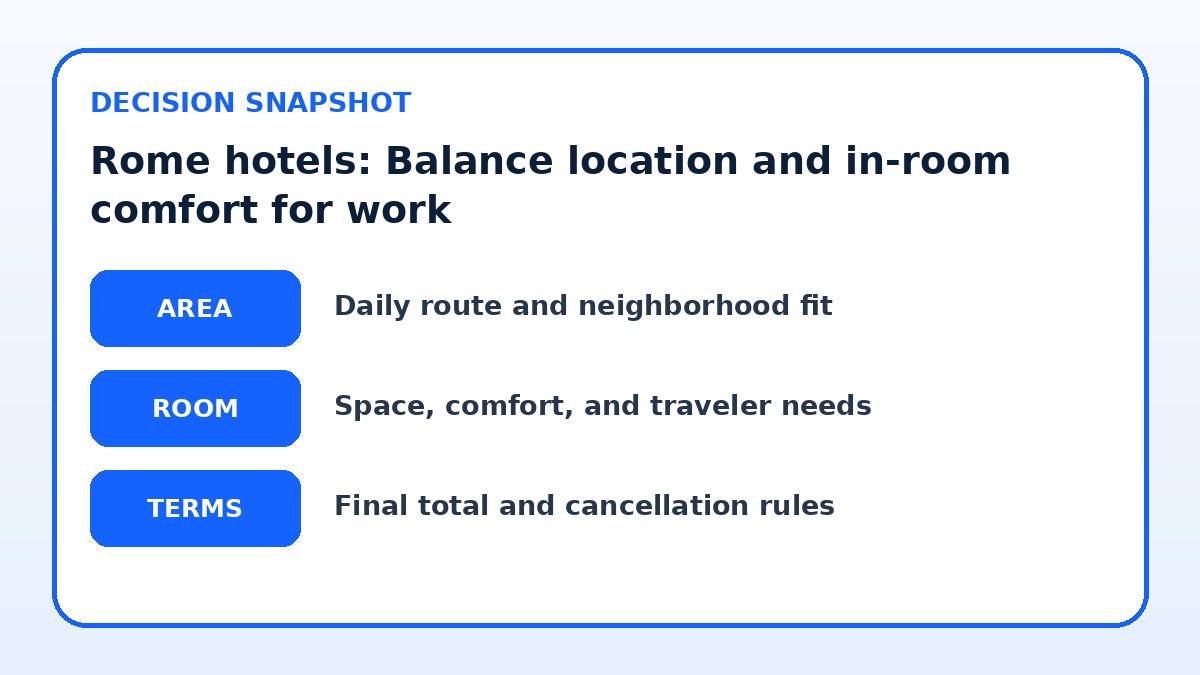
Daily-route friction: how to evaluate door-to-door time and stress
Door-to-door time matters more than straight-line distance. Factor walking to transit, waiting, transfers, and last-mile steps to the office. Use realistic buffers for peak-hour congestion, especially on buses and surface taxis. If you have time-sensitive appointments, prioritize neighborhoods with direct metro lines or reliable tram services rather than marginally closer areas that require multiple transfers or long walks between connections.
Also consider morning and evening stressors: routes that involve crowded transfers or steep cobblestone streets—common near tourist hubs—can add fatigue. Ask whether a hotel offers early breakfast, breakfast-to-go, or grab-and-go options and whether it can help with quick luggage drops. When comparing properties in the same area, pick the one with the simplest route to your daily endpoints, even if the room is slightly less spacious, because saved commute minutes compound across a multi-day trip.
Now compare like with like
Keep the same dates, guests, room needs, and cancellation preferences while you compare the final choices.
Room and party needs: choose the right in-room features for productive stays
Work needs vary. If you run long video calls or need a dual-monitor setup, look for rooms advertised with a proper desk, a desk lamp, and ergonomic seating; ask the hotel whether rooms have easily accessible power outlets near the desk and whether they can provide an Ethernet connection or signal booster. For overnight rest before early meetings, prioritize blackout curtains, a quiet-facing room, and a high-quality mattress. If you travel with a colleague, check whether twin or larger rooms are available and whether the hotel can guarantee adjoining rooms or suites for simultaneous privacy and collaboration.
Noise and privacy considerations also change what you accept in trade for location. In central neighborhoods, rooms are often smaller and may face busy streets—so request soundproofing or higher-floor rooms. In quieter business districts you can usually get larger rooms with work areas but fewer dining or evening options within short walking distance. Decide which room amenities genuinely impact your productivity (Wi‑Fi reliability, desk ergonomics, lighting) and which are negotiable (extra square footage, scenic view).
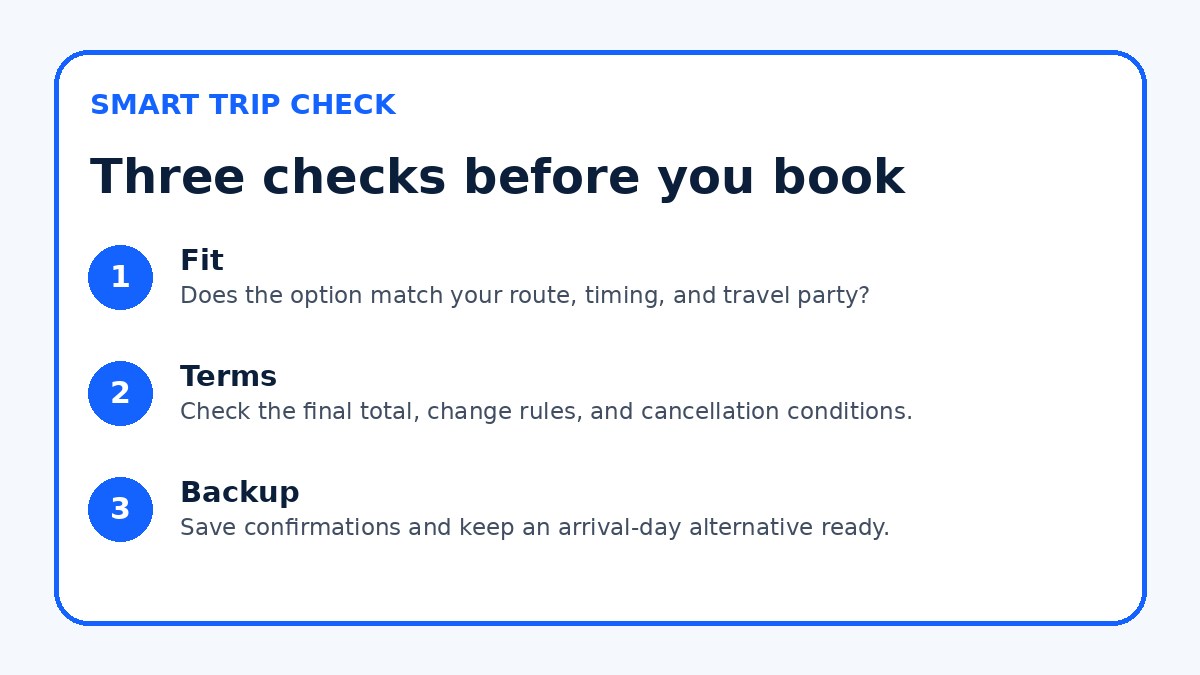
Hotel booking check before payment
- Map all meeting and conference addresses and draw a 20–40 minute door-to-door travel radius to identify candidate neighborhoods.
- Prioritize at least three non-negotiable room features (desk, quiet, reliable Wi‑Fi) and use them as filters when viewing inventory.
- Request a quiet-facing, higher-floor room and ask the hotel directly about soundproofing during reservation.
- Confirm check-in/check-out times, early check-in or late check-out options, and any deposit or card‑hold policies on the final booking page.
- Verify whether the hotel can provide a VAT invoice or billing details required by your employer for expense reimbursement.
- Test Wi‑Fi immediately after arrival and have a backup plan (local SIM, portable hotspot, co-working pass) if speeds or stability are inadequate.
Final booking terms: what to verify on the hotel’s page before you book
Before completing the reservation, confirm cancellation and modification policies that match your risk tolerance. If your schedule might change, verify free cancellation windows or flexible rates. Check exact check-in and check-out times and whether early check-in or late check-out is available or possible for a fee. Also confirm whether breakfasts are included, whether the property charges resort or city taxes at checkout, and whether the hotel requires ID and a card hold at arrival.
Verify practical service details you’ll rely on: whether the hotel can provide an invoice with VAT details for expense reporting, whether they have 24-hour reception for unpredictable arrival times, and whether porter service or luggage storage is available. For connectivity, confirm whether the listed Wi‑Fi is complimentary, if there are any reported speed tiers, and whether a wired connection is an option—then test connectivity right after check-in. If using Trip.com or another booking platform, use it to compare availability but verify final terms on the hotel’s own booking page.
Hotel Guide questions travelers ask
How central should my Rome hotel be if I have meetings in different parts of the city?
If your meetings are scattered, choose a hotel near a major transport node (Termini or a tram/metro interchange) so you reduce transfers and walking between connections. Central locations shorten travel between many points but often come with smaller rooms and more street noise. Balance by prioritizing direct metro or tram lines to your top two meeting areas and accepting a modestly sized room with good work amenities. Always check door-to-door travel estimates rather than straight-line distances and ask the hotel whether they can advise on quickest routes during your stay.
What room features make the biggest productivity difference for business travel in Rome?
A dedicated desk with an ergonomic chair, reliable wired or 5GHz Wi‑Fi, accessible power outlets near the workspace, and effective blackout curtains are the most impactful. Good natural or adjustable lighting for video calls and a quiet location—higher floor or soundproofed room—will reduce interruptions. If you require extended video conferencing, ask about Ethernet access or a room on the hotel’s business floor. Confirm these features directly with the property before booking, because listed amenities may vary between room types at the same hotel.
Should I trade room size for a shorter commute in Rome?
Yes, if your schedule prioritizes multiple daily meetings or early starts, save commute minutes by choosing a better-located hotel and accept a smaller room. Time spent commuting in Rome can add stress and reduce productive hours. However, if your trip requires quiet concentrated work or overnight rest before important events, prioritize a room with a proper workspace and good noise control even if it means longer daily travel. The right choice depends on whether your highest-value activity is being onsite for meetings or producing uninterrupted work from the hotel.
Final decision note
For business travelers, the practical route is clear: choose the neighborhood that minimizes your daily travel friction first, then pick a room that supports your work and rest needs. Use a simple map of your key destinations to shortlist between the four area approaches—business district, historic center, transport node, or suburban conference zones—then apply firm in-room filters like desk quality, connectivity, noise control, and check-in flexibility. Before booking, verify cancellation terms, check-in policies, VAT invoicing, and exact connectivity options on the hotel’s final booking page. With the area decided and your room criteria set, you’ll enter live inventory with a shortlist and book a stay that optimizes both time and productivity in Rome.
Continue planning
Check current options and final conditions
Use the provider page to confirm live availability, the final total, cancellation terms, and every condition that matters to your trip.
This evergreen planning guide was created with AI-assisted drafting and a structured quality review. It does not display live prices, schedules, availability, visa guidance, or provider rankings. Verify current details before booking. Some links are affiliate links; we may earn a commission at no additional cost to you.