Decide where to stay in Seoul by the trips you plan to make each day — that single choice cuts friction more than any brand or price point. For solo travelers, prioritizing proximity to specific subway lines, an airport rail link, or major bus hubs turns commuting time into usable hours and reduces late-night transfer anxiety. Start by identifying the top three places you expect to visit (e.g., Gyeongbokgung/Insadong, Gangnam, Hongdae/Mapo), then match those to neighborhoods served by the fewest transfers. This article gives a quick decision you can act on, lays out the tradeoffs by neighborhood fit and nightly routine, and walks you through room and final booking considerations so you can shortlist an area before opening live inventory.

Check live stays in the areas that fit
Use your dates and party size to compare current rooms after you narrow the neighborhood fit.
Neighborhood fit: map your day, then pick a district
Make a list of where you will spend most of your time: museums, markets, coworking spots, nightlife, or business meetings. Seoul’s subway network is dense, but lines run radially and require transfers to cross the Han River or reach specific clusters. Once you have three primary locations, place them on the metro map and look for the smallest overlap of lines. For instance, if your priorities are historic palaces and Insadong, central stations near Jongno and Gwanghwamun reduce intra-day travel. If your itinerary centers on clubs and late-night cafés, prioritize proximity to Hongdae or Itaewon with reliable late-night taxi access.
Choosing a neighborhood by fit also means thinking about off-hours. Some neighborhoods are lively late into the night and offer food stalls and 24-hour convenience stores, while others are quieter after 10pm. Solo travelers should also consider walking comfort: well-lit streets, a consistent supply of eateries, and easy routes to a station. Finally, consider what you want walking distance to be: under 10 minutes to a transfer station is a reasonable baseline for a city like Seoul, but if you plan heavy luggage movement, prioritize elevator access and minimal stairs.
Choose an area-selection strategy
| Area approach | Best for | Tradeoff to check |
|---|---|---|
| Choose the neighborhood nearest your top attraction | Minimal daily commute to one primary site | Less convenient for other parts of the city, may require multiple transfers for side trips |
| Pick a central hub with multiple transfer lines | Flexible routing and easy access to many areas | Busy stations and longer above-ground walking or noise at night |
| Base in a quieter residential area a short ride from nightlife | Better sleep and local cafés while staying a few stops from busy spots | Slightly longer evening commutes and fewer late-night transit options |
| Stay by the airport rail or bus terminal | Stress-free arrivals/departures and early/late travel windows | Further from central attractions; daily sightseeing often requires longer travel |
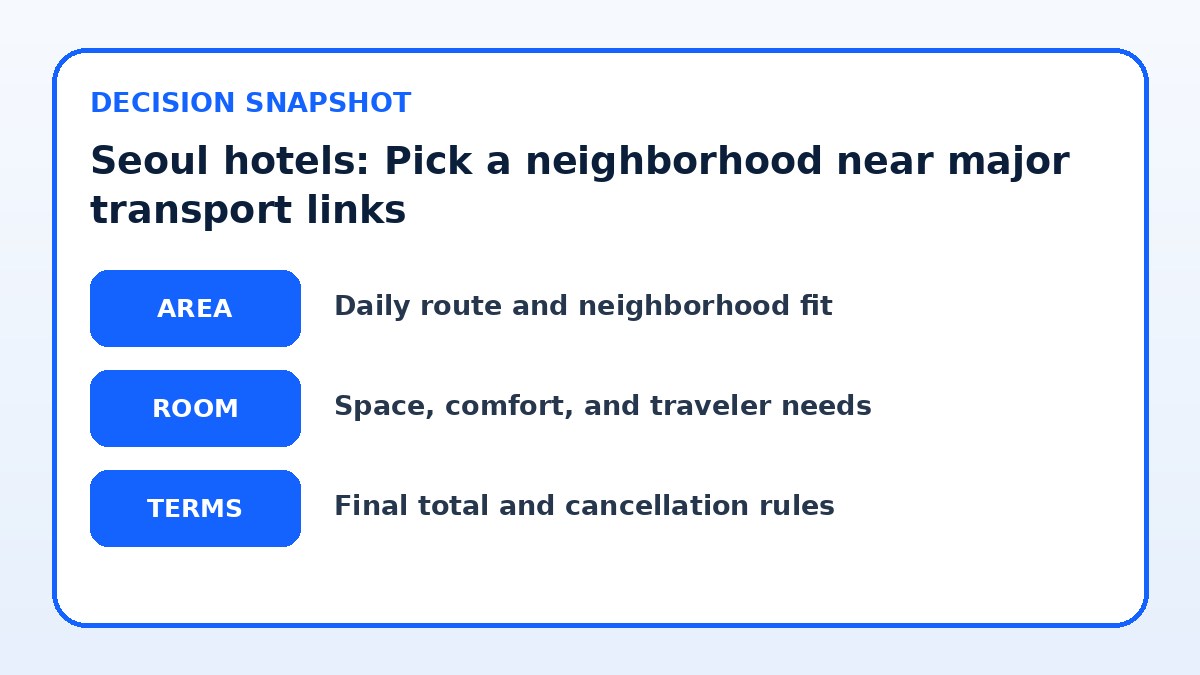
Daily-route friction: count transfers, stairs, and luggage hassle
Every transfer adds time and decision fatigue. When comparing hotel locations, simulate a typical day in detail: hotel to morning destination, midday move, evening return. Count stations, platform crossings, and whether those transfers require staircases or long underground walks. Seoul’s larger transfer hubs can be efficient but may involve long concourses and crowding during peak hours. If you travel lightly, a single extra transfer may be tolerable; with more luggage or mobility concerns, prefer a single-line commute even if the distance is longer.
Also evaluate end-of-day and emergency routing. If you finish late, is there a straightforward taxi rank, or will you navigate a crowded subway with limited service? Look for hotels near stations that list elevator access to platforms and exits (verify on the station’s official page or the hotel listing before booking). If you expect to move between north and south banks of the Han River frequently, target properties close to lines with cross-river connections to avoid repeated long transfers.
Now compare like with like
Keep the same dates, guests, room needs, and cancellation preferences while you compare the final choices.
Room and party needs: what matters when you’re alone
Solo travelers often prioritize safety, compact comfort, and spaces that support both rest and short-term work. Decide whether you need a double bed, a desk, or a small kitchenette. If you plan long hours out exploring or working, choose a room with a comfortable workspace and reliable Wi‑Fi. For light sleepers, factor in the hotel’s proximity to nightlife hubs—close is convenient, but a few stops away can offer much better sleep with only minor extra travel time.
Consider shared facilities too. Some solo travelers prefer small guesthouses or guest lounges to meet others; others want private hotel offerings like 24-hour reception, luggage storage, and quiet corridors. If late-night arrivals are likely, prioritize 24-hour front desk service and clear late-check-in instructions. Verify cancellation terms, the hotel’s policy on late arrivals, and whether they charge for storing luggage before or after your stay on the provider’s booking page.
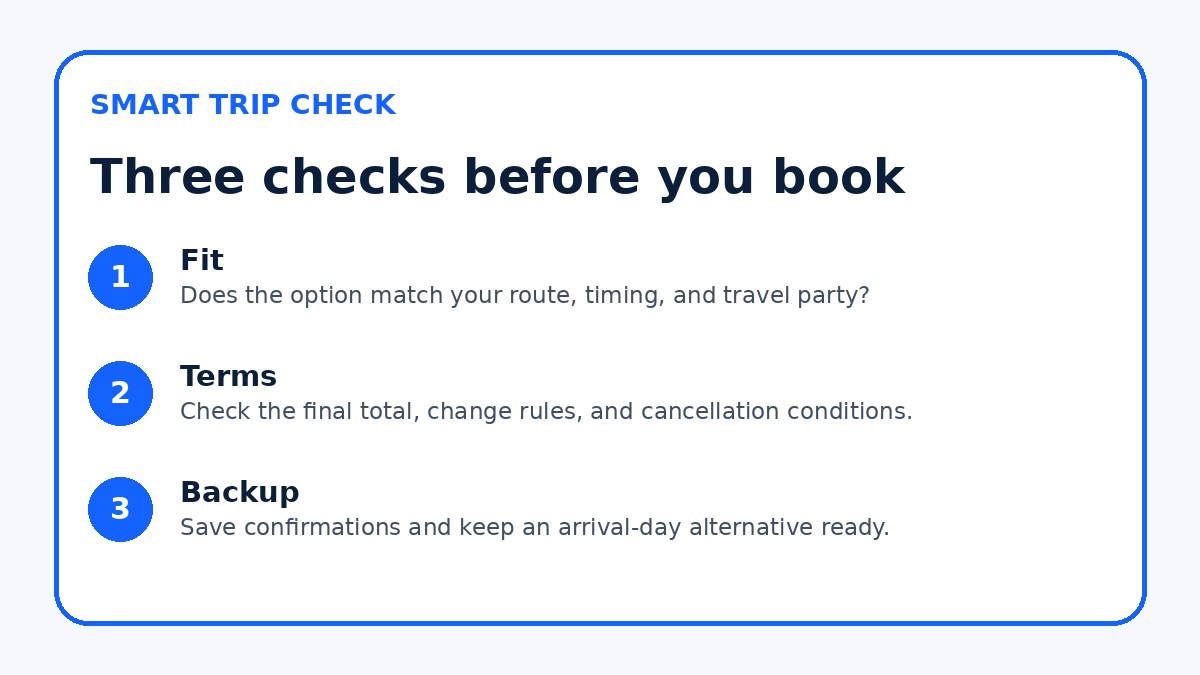
Hotel booking check before payment
- Map your three most-visited sites and check which subway lines serve them before choosing a neighborhood.
- Confirm exact walking time and exit number from your prospective hotel to the nearest subway station on the hotel listing.
- Ask the hotel or check station pages for elevator/escalator availability if you have luggage or mobility needs.
- Verify the property’s check-in hours, late arrival policy, and whether they hold luggage for early arrivals or late departures.
- Compare transit-first and comfort-first options by simulating a typical day’s route with a map and transit planner.
- Before booking, read the property’s cancellation and prepayment terms on its official booking page and confirm any extra local charges.
Final booking terms: what to verify before you click
Before you finalize a reservation, confirm a concise checklist of provider facts that commonly change: walking minutes to the nearest station, elevator/escalator availability, check-in and check-out flexibility, luggage storage policy, and whether the hotel lists a verified address in Korean (useful for taxis). Don’t rely on general statements like “near subway”—look for station exit numbers, walking times, and map pins. If a provider mentions shuttle or airport transfer services, verify schedules and costs on their final booking page or by contacting them directly.
Also compare payment and cancellation conditions, and check whether the property charges local taxes or requires pre-authorization. If public transit or airport rail links are part of your arrival plan, compare train frequency and first/last service times on official transit sites (or confirm with the property) rather than depending on third-party summaries. For live availability and to compare options quickly, you can check Trip.com but always verify details on the hotel’s own booking page.
Hotel Guide questions travelers ask
Which Seoul neighborhoods are best if I want minimal transfers between sightseeing spots?
If minimizing transfers is the priority, choose a neighborhood situated on or near the subway line that directly serves the clusters you’ll visit most often. For example, central areas along a single line that passes by major palaces, museums, or markets reduce switching trains during the day. However, which single line is best depends on your chosen attractions. Use a Seoul metro map to plot your destinations; pick the area where most pins fall on the same color line. Verify station exits and walking times on the hotel’s page before booking.
Is it better to stay in a lively district like Hongdae or a quieter area with easy transit access?
The tradeoff is between immediate atmosphere and restful nights. Staying inside a lively district puts you within walking range of nightlife and late dining, which can be great for socializing. A quieter area a short subway ride away will likely offer better sleep and calmer streets, but requires deciding whether the extra few stops are worth the calm. For solo travelers who value both, pick a hotel a short walk from a well‑connected station that gets you to nightlife areas quickly while staying outside the loudest blocks.
How should I evaluate late-night arrival or early departure logistics from my hotel?
Check how close the property is to the airport rail link, major express bus terminals, or a 24-hour taxi stand. Confirm the first and last train times for the airport link and whether the hotel lists shuttle options or partners for transfers. If arriving late, ensure the hotel has 24-hour reception or detailed late-check-in instructions. Always verify these specifics on the hotel’s booking page or by contacting the property directly, because schedules and services can change.
Final decision note
Choosing the right Seoul hotel for solo travel starts with the trips you’ll actually take, not with aesthetic preference or brand loyalty. Shortlist a neighborhood that minimizes transfers for your daily itinerary, then check practical details: walking time, exit numbers, elevator access, and late-arrival procedures. Balance convenience against local atmosphere—sometimes a short subway ride is worth quieter nights. Use a transit map to simulate full days, verify mobility and luggage needs with the property, and read cancellation and payment terms on the hotel’s booking page before you commit. If you want to compare current availability quickly, Trip.com can be a starting point, but always confirm final details with the hotel itself.
Continue planning
Check current options and final conditions
Use the provider page to confirm live availability, the final total, cancellation terms, and every condition that matters to your trip.
This evergreen planning guide was created with AI-assisted drafting and a structured quality review. It does not display live prices, schedules, availability, visa guidance, or provider rankings. Verify current details before booking. Some links are affiliate links; we may earn a commission at no additional cost to you.