When your Lisbon return flight is within 24–48 hours, the first-hour decision is which transfer style reduces stress given your solo status, luggage, and time buffer. If you want the simplest setup, decide now whether you’ll rely on public transport, a taxi or ride-hail, a prebooked private transfer, or a shared shuttle. That single choice shapes where you sleep, how close you stay to a reliable pickup spot, and what to do if delays happen. This guide gives the practical answer up front—pick the transfer that matches how much time, budget flexibility, and help you want—and then explains the tradeoffs, meeting-point details, and last-minute contingency moves so you can book with confidence.
Check options for your arrival details
Use your flight, luggage, party size, and accommodation address to compare current choices.
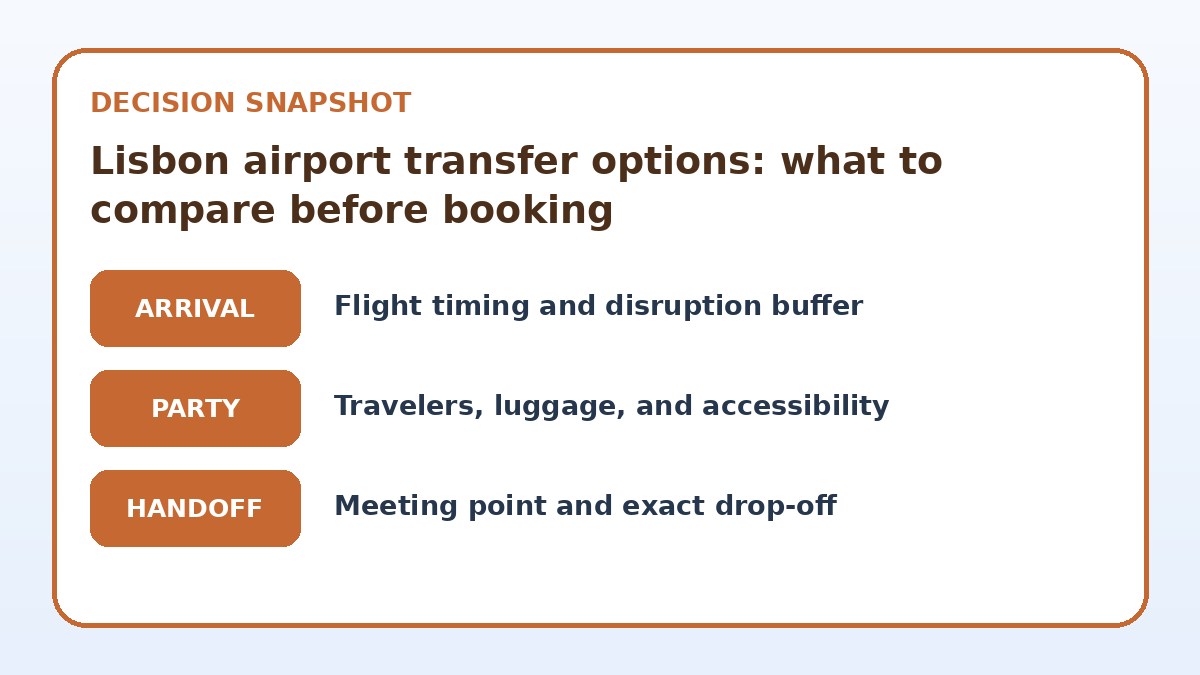
Luggage, party size and the simplest practical choice
Start by matching your luggage and party size to the transfer mode that will feel least stressful. Solo travelers with one small checked bag and a daypack often manage perfectly on metro, Aerobus, or a ride-hail. If you’re carrying multiple suitcases, sporting equipment, or fragile gear, a private transfer or taxi reduces handling and avoids stairs or crowded trains. Consider how many door-to-door movements you want: the fewer transfers between modes, the less chance something goes missing or you get tired before the flight.
Also weigh physical comfort against cost. A late-night flight after a long day may push you toward a private option for guaranteed seating and storage space. If you’re comfortable standing on public transport for a short leg, staying near a well-served metro or bus stop keeps your options flexible and cheaper. Whatever you choose, confirm the exact drop-off or meeting point at the airport and how accessible it is with luggage so you don’t face a difficult carry at the last minute.
Arrival details to have ready
- Confirm your flight arrival terminal and note the exact landing time in local time on your phone and booking confirmations.
- Decide on transfer type (metro, taxi/ride-hail, private, shuttle) based on luggage count, budget, and how much walking you can handle.
- If prebooking, save the provider’s contact number, driver name (if given), clear pickup landmark, and any wait-time policy.
- Check your accommodation’s allowed drop-off point and whether the driver can approach the entrance or must stop on a main road.
- Prepare a printed or offline note with your hotel address in Portuguese and a map pin to show drivers if language is an issue.
- Keep a contingency plan: know the nearest taxi rank, metro line name and direction, and an emergency contact at your accommodation.
Handling late or disrupted arrivals
Solo travelers should plan for delays by picking transfer providers that offer simple rebooking or clear driver contact. If your arrival might be late, prioritize services that explicitly allow schedule changes or give a local phone number for a pickup window. Shared shuttles and some prebooked low-cost options may have strict schedules, so read the provider’s change and cancellation policy before you buy. On the other hand, taxis and ride-hail apps usually operate continuously and let you request a vehicle once you land, which can be a relief after an uncertain arrival time.
Prepare a backup plan: know the taxi rank location and the nearest metro or night bus stop at your destination, and save local emergency transport numbers and your accommodation address in Portuguese and your own language. If delays are long, inform your driver or provider as soon as possible; for private transfers, verify how long drivers will wait before they consider the pickup canceled. Having this information in your pocket reduces stress and keeps options open if flights run late or baggage takes longer than expected.
Match the transfer to your arrival
| Arrival approach | Best for | Detail to verify |
|---|---|---|
| Metro / Aerobus | Solo travelers with light luggage who want the lowest-cost, predictable route. | Requires walking and handling luggage to/from stations and may be crowded at peak times. |
| Taxi or regulated ride-hail | Travelers wanting door-to-door transport without prebooking and with variable arrival times. | Potential waits at rank times and variable fares; confirm the pickup point and expected route. |
| Prebooked private transfer | Those who value guaranteed pickup, minimal walking, and direct terminal drop-off. | Less flexible if you experience long flight delays unless the provider explicitly allows changes. |
| Shared shuttle | Cost-conscious solo travelers comfortable with scheduled pickups and a bit of extra travel time. | Longer door-to-door time due to multiple stops and stricter pickup windows; check schedule rules. |
Make the meeting plan clear
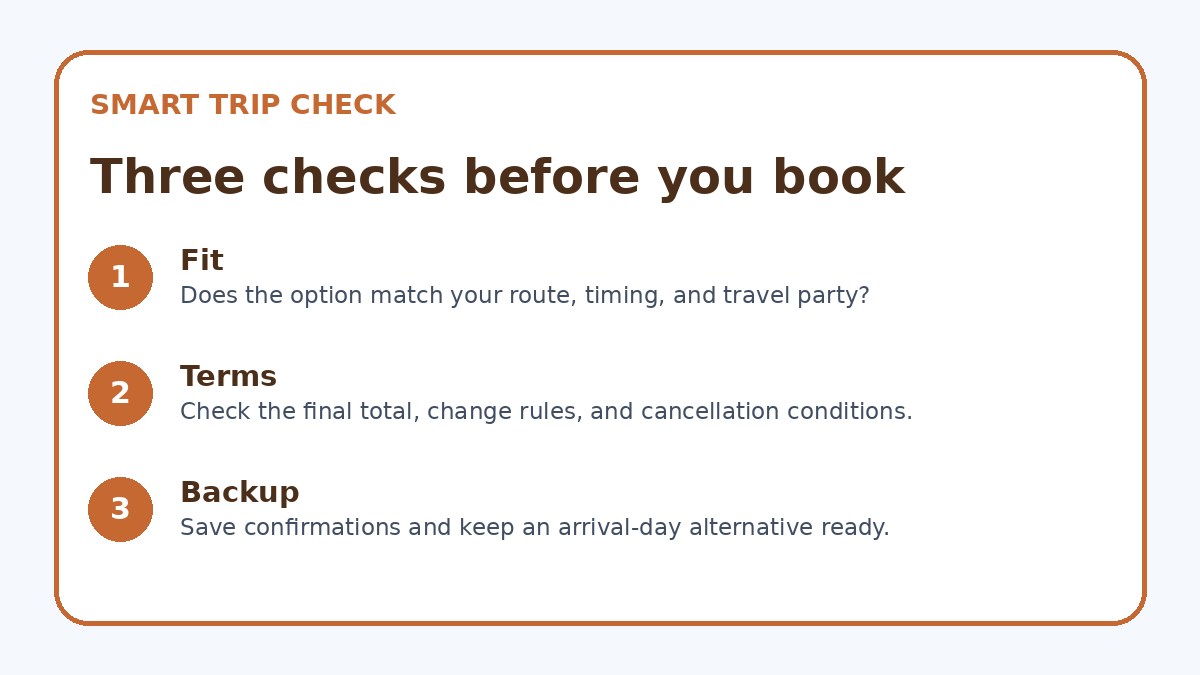
Check the final pickup instructions, waiting conditions, and exact drop-off coverage.
Meeting-point clarity and communication
Meeting-point confusion is one of the easiest things to avoid but also a common source of stress. Confirm the terminal (Lisbon has specific terminals and clear signage), the exit or curbside zone, and a nearby landmark the driver will use. For ride-hail services, confirm the app’s pickup pin once you’re on site; for taxis, agree on a taxi rank or official cab stand. If you book a private transfer, request the driver’s name, mobile number, and a firm meeting landmark so you can find each other quickly after baggage claim.
If language could be a barrier, prepare a short written note with your flight number, pickup time, terminal, and hotel address in Portuguese to show a driver. Also keep a screenshot of your booking confirmation and the local operator’s contact details offline in case cellular service is poor on arrival. Clear communication prevents missed pickups and helps you resolve small problems fast, which is especially valuable when traveling alone late at night or during busy airport hours.
Destination-side drop-off and final steps before booking
Think through the exact drop-off point at your accommodation before committing. Some hotels and apartments allow curbside drop-off; others require a short walk from a permitted stopping point. If your chosen transfer drops at the terminal entrance, confirm which terminal door or level—this saves time hauling bags across pedestrian zones. For accommodations on narrow or pedestrianized streets, ask the provider whether they’ll drop you as close as vehicle access allows and whether the driver can help with carry-in.
When booking, verify the provider’s final booking page for pickup window rules, luggage limits, meeting-point instructions, and the driver’s contact method. If you need a child seat, bike rack, or accessible vehicle, confirm availability explicitly. You can compare current options on Trip.com or directly on operator sites, but always use the provider’s final page to verify cancellation policy, pickup instructions, and any additional fees so you know exactly what to expect at the airport.
Airport Transfer & Local Mobility questions travelers ask
Is it safer to prebook a transfer to Lisbon airport when traveling alone?
Prebooking can offer peace of mind because it gives you a confirmed pickup window, a driver’s contact, and a clear meeting point—useful when arriving late or tired. However, licensed taxis and reputable ride-hail apps also provide secure, regulated options and operate continuously if your flight changes. Safety is about choosing licensed providers, sharing your route with someone you trust, and confirming identity details with the driver before you get in. If you plan to rely on prebooking, verify the provider’s change and cancellation rules on their booking page.
How do I choose between metro and a private transfer for my return to Lisbon airport?
Compare the time of day, luggage, and your tolerance for transfers. Metro or Aerobus is efficient and low-cost for light luggage and daytime travel, but requires walking and possibly a change of line. A private transfer gives door-to-door convenience and reduces walking, which is valuable with heavy bags or early/late flights. Check where the metro stops relative to your accommodation and terminal, then weigh that effort against the comfort and directness of a private ride before booking.
What exactly should I verify on a transfer provider’s final booking page?
On the provider’s final page, confirm pickup time window, exact pickup landmark or terminal door, driver contact method, luggage limits, cancellation or change policies, and whether any extras (like child seats) cost more. Also check the maximum wait time included and how the provider handles late arrivals or flight delays. If any detail is unclear, contact the operator before you pay so there are no surprises at the airport.
Final decision note
For solo travelers the best Lisbon airport transfer is the one that fits your luggage, energy level, and how much unpredictability you can tolerate. If you want guaranteed door-to-door service with minimal carrying, pick a private transfer and confirm the driver information and wait rules. If you’re budget-aware and traveling light, metro or Aerobus is straightforward—just confirm stop locations and terminal connections. Taxis and ride-hail blend flexibility with convenience, while shared shuttles save money at the cost of time. Use the checklist, double-check the provider’s final booking page for pickup and cancellation details, and keep one simple backup plan for peace of mind.
Continue planning
Check current options and final conditions
Use the provider page to confirm live availability, the final total, cancellation terms, and every condition that matters to your trip.
This evergreen planning guide was created with AI-assisted drafting and a structured quality review. It does not display live prices, schedules, availability, visa guidance, or provider rankings. Verify current details before booking. Some links are affiliate links; we may earn a commission at no additional cost to you.