Practical choice trumps theory: if you’re traveling solo from Seoul to Bangkok, decide first whether you value schedule flexibility (ability to shift dates or rebook easily) or convenience (shorter door-to-door time and fewer transfers). This decision drives everything: which airports to prefer in Seoul, whether to accept a connection, and what fare conditions to buy. The fastest itinerary can be more tiring and riskier if connections are tight; flexible fares cost more but reduce stress if plans change. Before you search live, gather exact travel dates, your preferred Seoul airport, earliest arrival and latest departure times in Bangkok, baggage needs, and whether you want lounge access or seat selection. With those details, you can compare direct versus connecting options, examine fare-change policies closely, and map how each choice affects baggage handling and missed-connection risk.
See live routes for your exact travel day
Compare direct and connecting choices with the same baggage and traveler details.
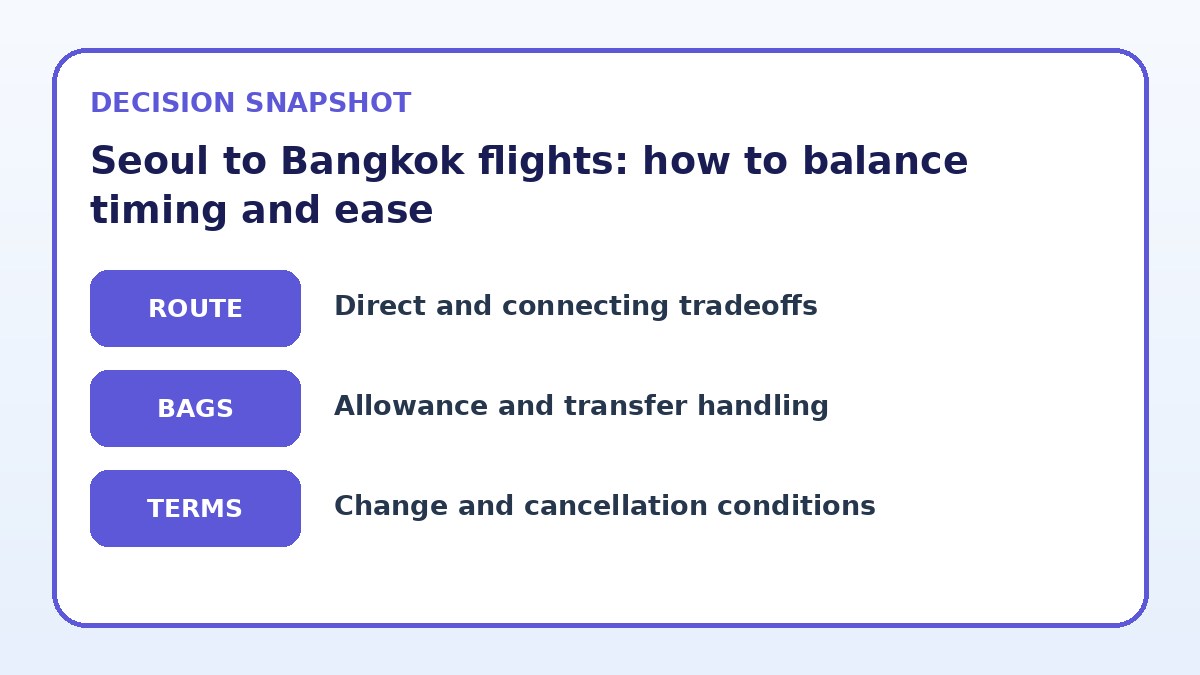
Routing choices: direct vs. connecting
Start by listing routing options: direct flights (if available), single-connection itineraries, and multi-connection alternatives. A direct flight reduces complexity and is usually more convenient for a solo traveler who wants a predictable journey; it minimizes the number of times you handle baggage and the chance of a missed connection. However, depending on schedules and fares, a well-timed connection can open up earlier departures, later returns, or lower fares that make an overnight stay or slightly longer travel time acceptable.
When comparing routes, don’t just look at airborne time. Add transfer times to reach your departure airport in Seoul and from your arrival airport in Bangkok to your final destination. Connections at the same alliance or single-ticket itineraries typically reduce the risk of lost baggage and provide rebooking support if delays occur. If booking separate tickets, assume higher risk: you may need to re-check luggage and cover missed connections yourself. Make a note of any minimum connection times the airline or airport recommends and give yourself buffer for security and immigration.
Baggage and connection risk for solo travelers
Baggage handling is a practical concern that often decides whether a connecting itinerary is actually convenient. On a single-ticket itinerary, airlines generally transfer checked bags to the final destination, which is helpful when you’re traveling alone. If you mix carriers on separate tickets, plan for re-checking bags and longer layovers; this increases time on the ground and the mental load of managing transfers solo. Carry-on packing strategies can mitigate this risk—keep essentials and a change of clothes in your carry-on in case your checked bag is delayed.
Also check the fare rules about ticket protection and missed connections: some tickets include rebooking assistance when a connection is missed due to airline delays, while low-cost or separate-ticket options often do not. For solo travelers without a travel companion to help, consider a slightly longer connection that gives you time to clear immigration and reach the next departure gate, or choose an itinerary with the same carrier for both legs so the airline handles disruptions. Before you finalize a purchase, verify baggage allowances, especially if you expect to carry sports equipment or oversized items.
Compare flight-selection strategies
| Flight strategy | Best for | Risk to check |
|---|---|---|
| Direct flight, flexible fare | Solo travelers prioritizing convenience and low connection risk | Higher upfront fare for more predictable timing and fewer logistics to manage |
| Direct flight, basic fare | Solo travelers focused on lowest base price with simple itinerary | Limited changes, possible extra fees for seat selection and carry-on baggage |
| Connecting single-ticket itinerary | Travelers seeking time or fare balance with airline-protected transfers | Longer total travel time but airline handles baggage and rebooking if disrupted |
| Separate-ticket connections or low-cost legs | Price-sensitive solo travelers who accept self-managing transfers | Higher missed-connection and baggage risk; requires longer layovers and contingency plans |
Recheck the complete itinerary
Confirm airports, connection handling, baggage, and change conditions before deciding.
Schedule fit: timing, fatigue and transfer logistics
Match flight times to your personal tolerance for early starts and late arrivals. Convenience for solo travelers often means arriving at a reasonable hour to navigate Bangkok transport options safely and find accommodation without hassle. If you land late, confirm airport transfer availability to your neighborhood and whether it’s straightforward to reach your booked accommodation. Early-morning departures may demand overnight stays near Seoul’s airport or very early transit across the city, which adds time and cost but can be worth it to maximize time in Bangkok.
Consider fatigue when you plan connections. A short connection might shave hours off total travel time but increase stress, especially if terminals require long walks or shuttle transfers. If a connection involves a terminal change or additional security checks, add at least an hour to your planned minimum connection time. Solo travelers should also think about contingencies: keep an eye on local transport strikes, unusual traffic patterns, or seasonal crowds in both cities and leave margin in your schedule for unforeseen delays.
Flight details to verify
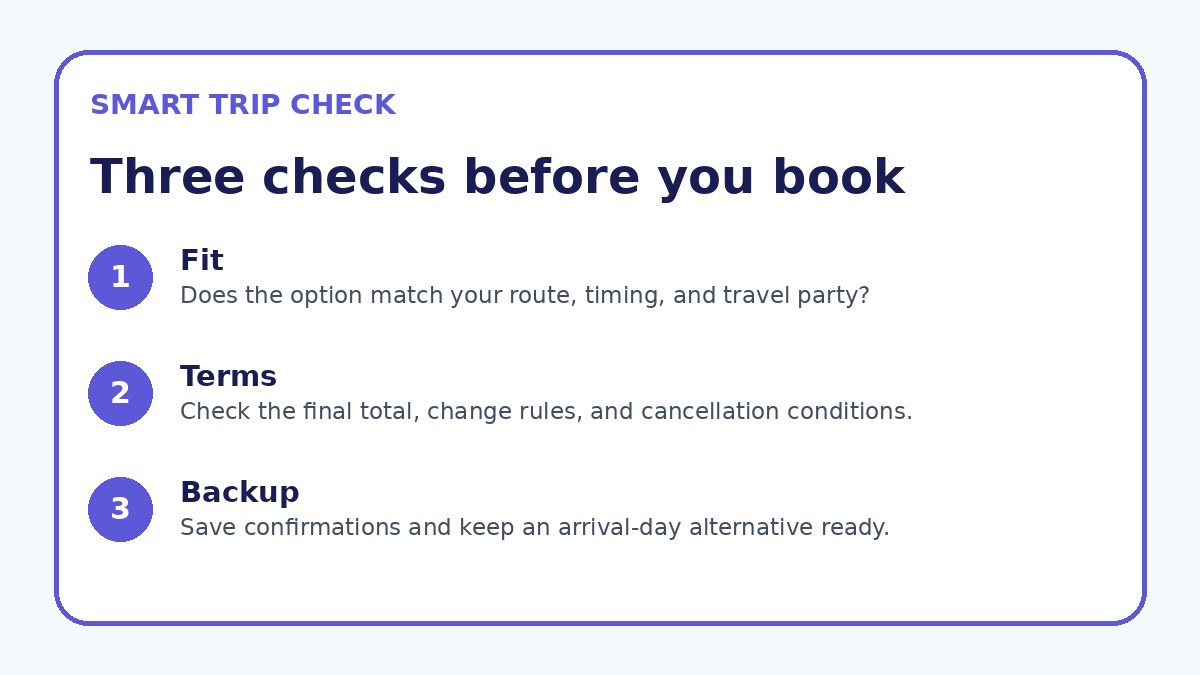
- List exact travel dates, full traveler name as on passport, and contact details before searching live fares.
- Decide which Seoul airport you prefer (both options if available) and how you’ll reach it from your accommodation.
- Check baggage allowances and special-item rules for each potential carrier before comparing prices.
- Confirm minimum connection times, terminal transfer requirements, and whether the itinerary is a single ticket.
- Verify change, cancellation, and refund terms on the airline or booking page before entering payment.
- Plan a realistic buffer for transfers and have a simple backup plan for overnight accommodation if a missed connection forces it.
Fare conditions: change fees, refunds and add-ons
Fare rules are the practical lever for balancing flexibility and price. Flexible fares let you change dates with lower fees or buy refundable options that reduce rebooking stress—but they usually cost more up front. Non-refundable or basic economy fares can be tempting for solo travelers watching budgets; however, verify whether these fares allow seat selection, carry-on baggage, or free changes. If any of those extras matter to your comfort or plans, either upgrade the fare class or buy the add-ons offered at booking.
When comparing options, check the provider’s final booking page for exact change and cancellation conditions, how fees apply, and whether taxes are refundable. Also confirm any rules about voluntary changes versus schedule changes initiated by the airline, since the remedies for each can differ. If you need to combine a low-cost carrier for one leg with a legacy airline for another, read both carriers’ change policies and consider travel insurance or paying for a protected single-ticket routing to reduce the risk of unexpected costs.
Flight Guide questions travelers ask
Should I always book a direct flight from Seoul to Bangkok when traveling alone?
Not always. Direct flights lower the complexity of travel and are often the most convenient option for solo travelers, but they may not match your schedule or budget. If a direct flight forces an inconvenient departure or a very late arrival, a single-connection itinerary can offer better timing or a lower fare while still giving some protection if booked on one ticket. Evaluate door-to-door time, transfer logistics, and whether the itinerary is protected by the same carrier before deciding.
How much layover time is safe for a connection when traveling solo between Seoul and Bangkok?
There’s no single safe number because airport size, terminal layout, and whether you clear immigration change the answer. As a solo traveler, favor a longer layover when connections involve terminal changes or different carriers, and allow extra time for security, passport control, and potential delays. For single-ticket connections on the same carrier, the published minimum connection time may suffice, but adding a conservative buffer reduces stress—especially if you’re unfamiliar with the transfer airport.
What fare features should a solo traveler prioritize on this route?
Prioritize fare features that reduce disruption and improve comfort: reasonable change/cancellation terms, included checked baggage if you need it, and seat selection if having a preferred seat matters. If you’re budget-conscious, weigh the cost of add-ons against the inconvenience of managing disruptions. Also check whether the fare allows same-airline rebooking for missed flights and confirm these conditions on the airline’s final booking screen before purchase.
Final decision note
Balancing schedule flexibility and convenience for Seoul to Bangkok flights comes down to a clear personal priority: do you prefer the reassurance of flexible fares and protected connections, or are you willing to accept longer travel time and extra logistics to save money? For solo travelers, convenience often means fewer connections, predictable baggage handling, and arrival times that align with safe transfers to your accommodation. Organize exact dates, airport choices, baggage needs, and acceptable connection times before searching live. Verify change and baggage rules on the booking page and consider a slightly higher fare if it meaningfully reduces stress or risk during your solo journey to Bangkok. Trip.com can be one place to compare availability and final conditions, but always confirm the airline’s official terms before you complete payment.
Continue planning
Check current options and final conditions
Use the provider page to confirm live availability, the final total, cancellation terms, and every condition that matters to your trip.
This evergreen planning guide was created with AI-assisted drafting and a structured quality review. It does not display live prices, schedules, availability, visa guidance, or provider rankings. Verify current details before booking. Some links are affiliate links; we may earn a commission at no additional cost to you.