If you’re traveling from Seoul to Gyeongju with extra luggage, the practical decision is not only which flight to buy but which fare and routing will actually get your bags there without stress. Start by deciding whether you prioritize fewer connections, guaranteed hold space for oversized bags, or a lower fare that might force extra fees or tighter connection windows. This article gives a clear checklist and the decision criteria to use when you go live to book: how to compare direct and connecting options, which baggage rules to verify, how to assess connection risk, and which fare conditions to read before payment. Gather exact travel dates, the number and size of your bags, traveler ages, and any mobility or cargo needs before you search live options so you can compare apples to apples.
See live routes for your exact travel day
Compare direct and connecting choices with the same baggage and traveler details.
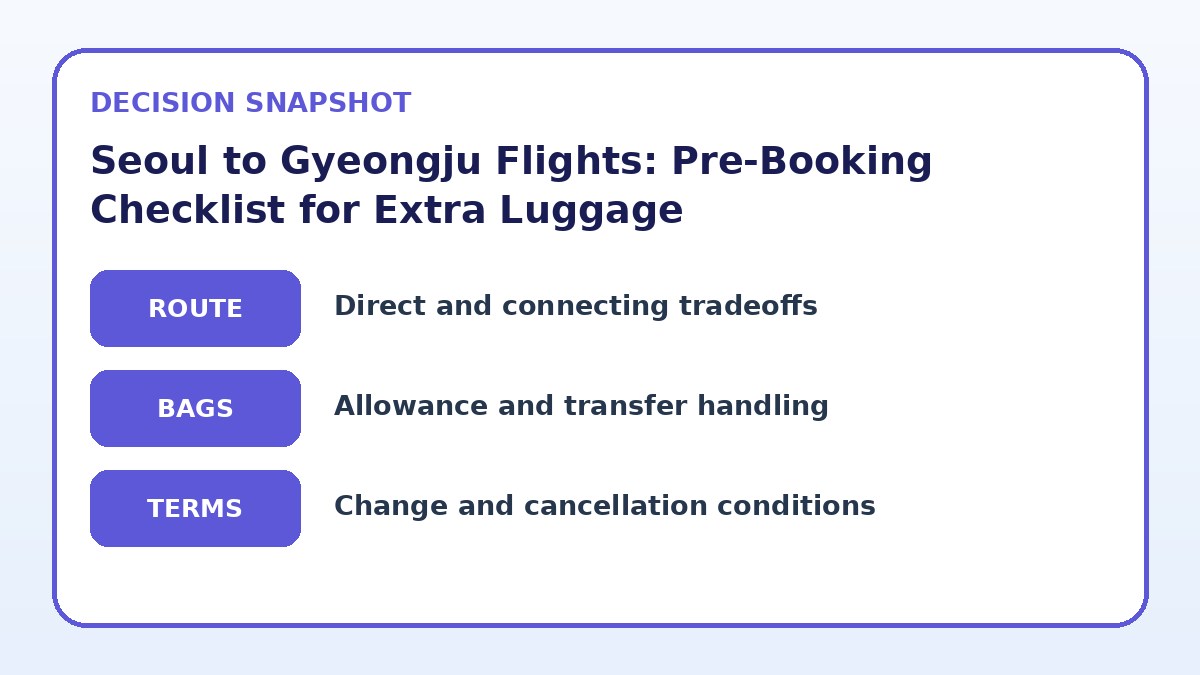
Routing: direct vs. connecting and what it means for extra luggage
On the Seoul to Gyeongju route you’ll need to compare the whole journey, not just airborne time. A direct flight (if offered) reduces handoffs and generally lowers the chance of checked bags missing a connection. A connecting itinerary can be cheaper or offer better schedule fit, but every additional change of plane increases the number of times ground crews must move your bags and the risk window for delays, misrouting, or separate checked-bag transfer procedures.
When assessing routing options, look for itineraries with the fewest transfers and the same airline or partner carriers on all legs—this helps ensure checked luggage is interlined with a single booking. If you must accept a connection, prioritize longer layovers at airports known for efficient transfers and verify whether the airline requires you to re-check luggage between legs; that requirement changes how you pack and how much time you need in transit.
Baggage rules and fees: exact checks to make before payment
Airlines and ticket types vary widely on included luggage. Before you finalize any booking, open the carrier’s final booking page for the exact fare you selected and check: included number of checked bags, maximum weight per piece, maximum linear dimensions, and charges for overweight or oversize items. For extra or bulky pieces—musical instruments, sports gear, or multiple suitcases—confirm whether they must be pre-declared and whether your booking class allows online prepayment for discounted fees.
Also verify carry-on allowances and whether a personal item is considered separate; if one traveler’s oversized bag needs to travel as checked luggage, you’ll want to know whether the gate staff routinely gate-check carry-ons on full flights. If the carrier’s baggage policy links to a PDF or a separate baggage calculator, use that tool to produce the final fee numbers to compare fare options accurately before you hit purchase.
Compare flight-selection strategies
| Flight strategy | Best for | Risk to check |
|---|---|---|
| Buy a higher-fare ticket that includes generous checked baggage | Travelers wanting predictable baggage handling and no surprise fees | Higher upfront cost but fewer unexpected charges and simpler airport check-in |
| Pick the cheapest base fare and add bags a la carte | Price-focused travelers who can accept variable fees to save on ticket cost | Lower ticket cost but potentially higher total fees and more work at booking |
| Choose an itinerary with one longer connection on a single ticket | Those balancing lower fares with reduced transfer risk for checked luggage | Longer travel time but lower chance of missed baggage transfer compared with tight connections |
| Mix carriers to get a better schedule or price | Experienced travelers who can manage separate tickets and self-transfer baggage | Can save money or time but increases risk: you may need to re-check bags and handle missed connections yourself |
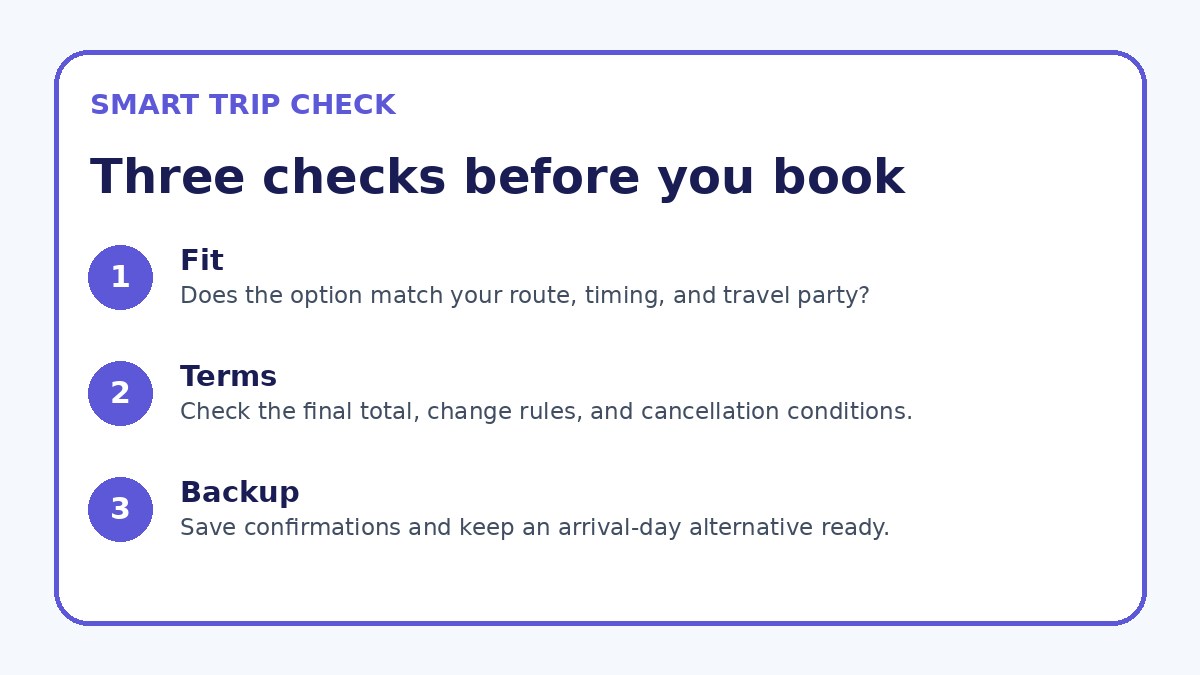
Recheck the complete itinerary
Confirm airports, connection handling, baggage, and change conditions before deciding.
Connection risk and schedule fit: planning for contingencies
Even modest delays can turn a connection into a luggage nightmare. When evaluating schedules, calculate realistic transfer times: longer isn’t always better, but plan a margin for deplaning, passport or security lines (if applicable), and baggage re-screening. If your itinerary requires changing terminals, factor walking time and any shuttle transfers. For travelers with heavy or multiple bags, an extra 30–60 minutes of connection time can be the difference between a smooth transfer and an urgent sprint for recheck counters.
Consider how your itinerary fits the rest of your trip: arriving late in Gyeongju with delayed baggage may mean a missed hotel check-in or a lost day. If you have priority needs—meeting times, guided tours, or lodging without late check-in—favor schedules that build buffer into arrival or book fares that include priority baggage handling and connection protection where offered. Always note the airline’s published minimum connection time and add a personal safety margin before selecting a tight itinerary.
Flight details to verify
- Before searching, write down exact travel dates, full traveler names, number and dimensions of each bag, and any oversized item details to enter into booking pages.
- On the carrier’s final booking page, open and read the specific baggage allowance for your chosen fare class, including weight, piece limits, and size caps.
- Compare total door-to-door risk: prefer same-ticket itineraries with no or one connection and at least a 45–90 minute buffer for transfers depending on terminals.
- Decide if you need pre-paid excess/oversize baggage and pay it online during booking to avoid higher airport fees; save confirmation receipts with the reservation.
- Check fare rules for changes, cancellations, and whether the airline offers priority baggage or guaranteed transfer protection on the fare you select.
- If traveling with fragile, valuable, or business-critical items, arrange special handling or dedicated cargo services and confirm required documentation on the provider’s booking contact page.
Fare conditions and booking details to verify on the provider page
Fare conditions control more than refunds. Read the provider’s full fare rules on the checkout page: change and refund penalties, whether the fare can be upgraded or reissued, and whether name or date changes are allowed. For excess luggage planning, check whether the fare class and booking reference allow online prepayment of excess-baggage fees; some low-fare classes disallow online payment and force higher airport fees. Also confirm whether the carrier marks bags as guaranteed on certain fares or offers paid services like priority baggage delivery.
When you’re ready to book, have exact traveler details and bag counts ready to enter—not estimates. That ensures the booking engine applies the correct baggage allowances and fees to the itinerary; discrepancies at the airport can lead to last-minute charges or refused carriage. If the airline’s booking page is unclear, use the carrier’s baggage calculator or contact the airline’s support for a clear written confirmation you can save with your reservation email.
Flight Guide questions travelers ask
How should I factor bag size and weight into choosing between direct and connecting flights?
Bag size and weight change the connection calculus: larger or heavier bags take longer to move and may trigger special handling that can delay transfer. If you can book a direct flight on the same ticket, you reduce the number of times baggage must be transferred between ramps and conveyors, lowering the chance of misrouting. For connecting flights, prioritize itineraries with longer layovers and same-airline or codeshare partners so baggage is interlined automatically. Before you book, confirm on the carrier’s booking page whether oversized or overweight items require advance notice or separate charges.
What specific baggage policies should I verify on the airline’s final booking page?
On the final booking page verify: how many checked pieces are included with your fare, maximum weight per piece, maximum linear dimensions per piece, fees for additional pieces, overweight and oversize charges, and any requirements for pre-declaring special items. Also check carry-on allowances and whether personal items are counted separately. If the booking tool offers a baggage fee calculator or a downloadable policy PDF, use that to produce the exact fees you’ll pay when adding extra bags. Save screenshots or confirmation emails that show the baggage terms for your record.
If my itinerary mixes separate tickets, how do I protect my luggage when traveling to Gyeongju?
Mixing separate tickets increases the chance you must claim and re-check bags between flights. To protect luggage, try to avoid separate-ticket transfers; if unavoidable, build generous transfer time and plan for the first arrival airport’s customs and baggage reclaim process if applicable. Consider shipping oversized items ahead with a ground courier or booking dedicated cargo for fragile gear. If you must self-transfer, pack essentials and a change of clothes in carry-on, and confirm the second carrier’s check-in policies and late check-in deadlines on their booking page before you leave Seoul.
Final decision note
Booking Seoul to Gyeongju flights with extra luggage succeeds when you turn assumptions into verifiable facts. Start by collecting exact dates, traveler names, and full bag specifications, then use the airline’s final booking page to confirm baggage allowances and fees for the particular fare class you intend to buy. Balance routing and schedule fit against connection and baggage-transfer risk: a slightly higher fare that includes bags or a same-ticket itinerary with a single connection often saves hassle. Before you complete payment, photograph or save the baggage policy and receipt shown at checkout. If you prefer a one-stop place to compare live availability and conditions, consider checking Trip.com as an optional reference, but always verify final baggage rules on the carrier’s official booking page.
Continue planning
Check current options and final conditions
Use the provider page to confirm live availability, the final total, cancellation terms, and every condition that matters to your trip.
This evergreen planning guide was created with AI-assisted drafting and a structured quality review. It does not display live prices, schedules, availability, visa guidance, or provider rankings. Verify current details before booking. Some links are affiliate links; we may earn a commission at no additional cost to you.