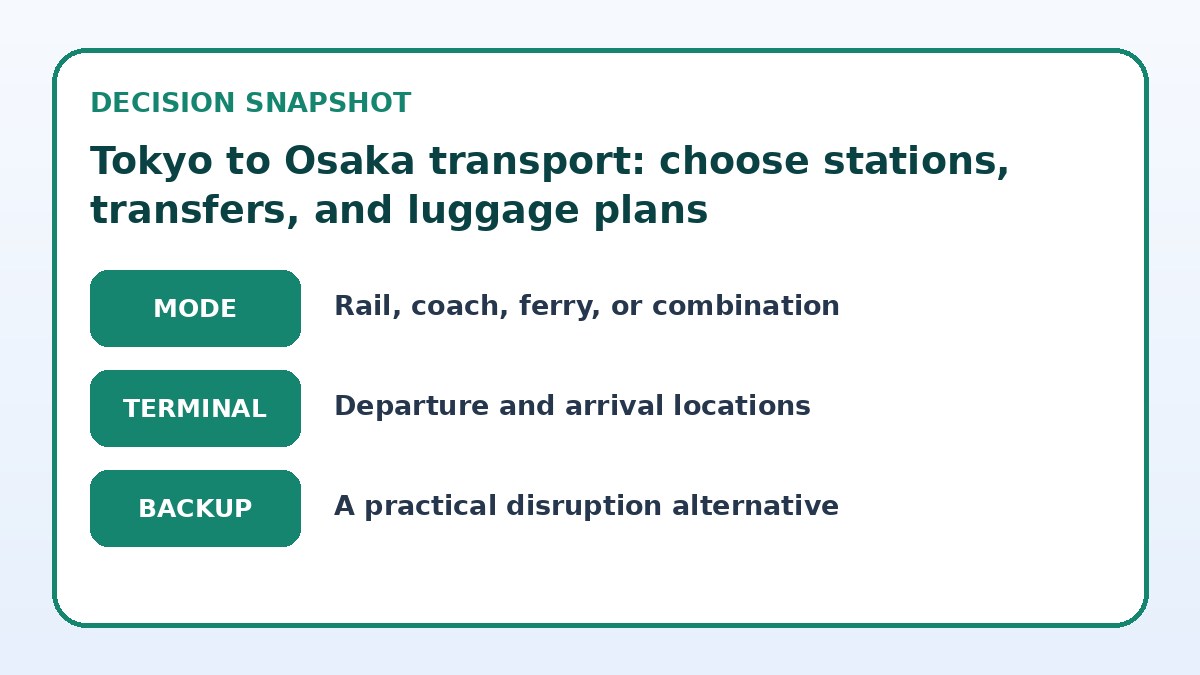
For most families deciding how to travel from Tokyo to Osaka, the practical choice comes down to balancing door-to-door time, how many transfers you can manage with children and luggage, and which terminals or stations minimize walking and stress. Start by comparing rail (including high-speed options), long-distance coach, and any available ferry segments — or a mix of these — with a focus on where each service drops you off and how easy it is to get from station to hotel or rental. Prioritize minimizing transfers, choosing terminals with simpler layouts, and booking time buffers for bathroom breaks and snack stops. Read the sections below to weigh terminal fit, luggage friction, timing flexibility, and a concrete disruption backup so your family trip stays under control even when plans shift.
Terminal fit: pick arrival and departure points that reduce strain
Station and terminal choice changes the whole trip for families. In Tokyo and Osaka, multiple major stations and terminals serve intercity travel; some are sprawling complexes with many exits and underground passages, while others are more compact. For a family with small children or heavy luggage, prefer services that start or finish at stations with direct transit links to your lodging. That might mean selecting a departure point in Tokyo that has simpler station navigation or an Osaka arrival that connects by one metro line or a short taxi ride to your hotel. If station maps look complex, factor in extra time to move between platforms and exits, and plan which entrance you'll use at each end.
Also check for family-friendly station features when deciding where to travel from or to. Look for elevators, ramps, designated stroller parking, and clearly marked restrooms with changing areas. Even if a particular line is slightly faster, a terminal with fewer stairs and easier platform transfers can save you time and stress. If you expect to use taxis after arrival, note where taxi ranks are located at each station; some large terminals require a long walk or an underground passage to reach the taxi stand, which can be difficult with children and suitcases.
Choose the end-to-end journey plan
| Journey approach | Best for | Friction to check |
|---|---|---|
| Direct high-speed rail to central station | Families prioritizing short post-arrival transfers and fewer changes | May involve busier terminals and more walking inside major stations |
| Coach to a coach terminal near your hotel | Families wanting simpler boarding and central drop-offs with less station complexity | Longer on-road time and potential intermediate stops that lengthen journeys |
| Mixed rail plus short taxi for final leg | Families balancing faster intercity travel with minimal walking at arrival | Adds taxi cost and requires arranging a suitable pick-up point at the station |
| Split itinerary with overnight stop | Families who prefer shorter daily segments and lower stress over speed | Requires extra lodging planning and transfers between accommodation and terminals |
Check live intercity options
Look beyond the ride itself and compare terminals, transfers, luggage, and arrival fit.
Luggage and transfer friction: realistic handling for families
Luggage determines how many transfers you should tolerate. Each transfer — changing trains, moving between a train and a coach, or crossing a large station concourse — multiplies the effort of carrying or moving bags. Consider packing so essential items for children are in a daypack that stays with you; check whether the carrier you choose offers on-board luggage storage, station lockers, or concierge luggage transfer services. If you plan to use public transport inside cities after arrival, think about whether you can manage a stroller folded into a compact bag rather than a bulky model.
If using national rail or a high-speed rail option, verify platform access and whether staff assistance is available for families. For coach travel, confirm where luggage is stored and how it's retrieved at stops — sometimes coaches load undercarriage bags, which adds time at intermediate stops. For mixed modes, plan where you will move luggage between modes and allow at least 15–30 minutes extra at each transfer for retrieving bags, restroom breaks, or calming a distressed child. On booking pages, verify luggage allowances and transfer procedures before you finalize tickets.
Timing flexibility: build buffers and choose family-friendly schedules
Speed matters less when traveling with children than reliability and breathing room between connections. Look for schedules that give you at least one robust buffer between successive legs — enough time for restroom stops, snacks, and calming restless kids. Morning departures can be easier if they align with nap schedules; evening travel may be attractive if children can sleep through longer stretches, but late arrivals complicate check-ins and first-night logistics. When comparing options, consider door-to-door time, not just onboard travel time: how long will it take from your home to the departure terminal and from the arrival terminal to your accommodation?
Be realistic about rush-hour travel inside cities. If a departure or arrival places you in congested station corridors at peak commute times, that adds stress and extra minutes to transfers. If your family needs to be at a certain place by a particular time (hotel check-in, event), choose earlier services that create a cushion for delays. Confirm on provider pages whether advance seat reservations are recommended, and whether family seating or nearby seats are available so your group can travel together without splitting up.
Compare the practical alternatives
Use the final page to confirm what is actually offered on your dates and save a workable fallback.
Intercity travel checklist
- Confirm which Tokyo departure station and Osaka arrival station align best with your accommodation and mark the exact entrances you will use.
- Check elevator/stroller access and family restroom locations on station maps for every transfer point you plan to use.
- Pack essentials (snacks, diapers, spare clothes, medication) in a carry-on that stays with you during transfers.
- Allow at least one 15–30 minute buffer at each planned transfer to collect luggage and handle breaks.
- Save provider booking references and the operator’s official contact or app on your phone before travel.
- Identify an alternate route and the nearby taxi ranks at arrival and departure stations in case of delays.
Disruption backup: practical alternatives and where to get help
Build a simple backup plan before you leave the hotel. Identify one solid alternative route that uses different stations or a different mode so you can switch without starting from scratch. For example, if your main plan is rail into a central Osaka station, know which nearby stations or coach terminals accept arrivals and how you’d reach your accommodation from them. Map out nearby taxi ranks and a rough fare expectation with drivers or apps; know where family restrooms and station information desks are located along your route so you can get assistance quickly.
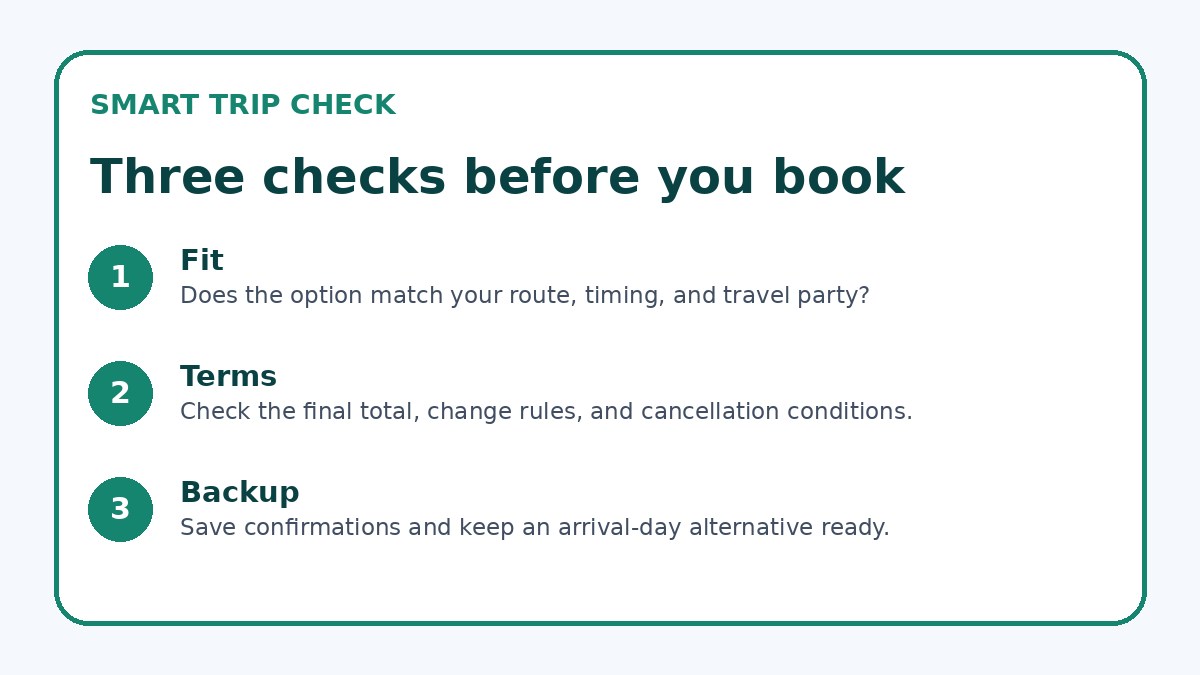
Also prepare for smaller disruptions like delayed luggage retrieval or a missed connection. Pack a compact emergency kit with spare clothes, basic snacks, and medication in your carry-on. Save provider contact details and booking confirmations on your phone, and note where to check live service updates — on the provider’s booking page or official transport apps. Trip.com can be used to compare current availability and conditions, but always verify final timing, luggage rules, and boarding procedures on the operator’s official booking or information page before relying on them.
Rail & Intercity Transport questions travelers ask
How do I choose between rail and coach for Tokyo to Osaka transport with kids?
Decide by comparing door-to-door convenience. Rail often gets you to central stations quickly but may mean navigating large station complexes; coaches can offer simpler boarding and central drop-offs, reducing walking. Assess where each option stops relative to your hotel, how many transfers are required after arrival, and whether onboard facilities and luggage arrangements suit your family. Verify luggage rules, seat reservation policies, and station access on the operator’s official booking pages before choosing.
What is the smartest way to handle luggage and strollers during transfers?
Minimize what you carry between legs: put important child items in an accessible daypack and use compact stroller models that fold easily. Check for station lockers or luggage storage options if you plan short stops, and verify whether your chosen service allows on-board storage or has staffed handling. At large stations, follow signage to elevators and designated transfer corridors to avoid stairs. Always leave extra time to move bags and to calm or feed children during transfers.
If a connection is delayed, what immediate steps should families take?
First, check official service updates on the operator’s app or website and keep booking references handy. Locate the nearest station information desk or customer service counter for advice and possible rebooking. If you need to reroute, use your previously identified alternate station or a short taxi to reach accommodation; compare estimated times and costs in the moment. Keep children comfortable with snacks and entertainment, and if luggage retrieval is affected, ask staff about holding or storage options.
Final decision note
When planning Tokyo to Osaka transport for a family, the most useful metric is how little you and your children must carry, navigate, and wait between home and accommodation. Choose a route and terminal that minimize transfers and walking, factor realistic buffers into your schedule, and verify luggage and boarding rules on the provider’s final booking pages. Prepare a simple disruption plan and pack a small emergency kit so delays don’t derail the trip. With those practical steps, you’ll trade a little planning time for a much calmer travel day.
Continue planning
Check current options and final conditions
Use the provider page to confirm live availability, the final total, cancellation terms, and every condition that matters to your trip.
This evergreen planning guide was created with AI-assisted drafting and a structured quality review. It does not display live prices, schedules, availability, visa guidance, or provider rankings. Verify current details before booking. Some links are affiliate links; we may earn a commission at no additional cost to you.