If your family trip to Taipei centers on flexible day trips to scenic north-coast beaches, mountain parks, or temples outside central Taipei, a rental car can transform your schedule and simplify kid-friendly stops. But for a stay focused inside Taipei city—museums, night markets, and Metro-accessible neighborhoods—driving adds parking stress and traffic. This guide gives a practical yes-or-no decision up front, then explains the route value that makes driving worthwhile, how to read insurance wording and contract details, pickup and return friction you should expect, and a non-driving fallback plan that keeps children comfortable and your itinerary intact. Use this to decide before you book and to know exactly what to verify on provider pages and reservation confirmations.
Does driving add value to your Taipei family itinerary?
Start by mapping the places you want to visit beyond central Taipei. Driving truly adds value when your daily plan includes multiple sites with limited public-transport links, such as coastal parks, small towns on the north coast, or mountain trails where timetables are sparse. Consider how many times you would stop for meals, diaper changes, or unplanned photo breaks; a car turns those pauses into predictable comfort instead of transfers and tight connections.
Balance that against parking and traffic friction. Central Taipei has many attractions close together and efficient Metro service; on those days a car becomes more of a liability than an asset. Also think about the ages and needs of your kids—infants and toddlers benefit from a dry, climate-controlled space for naps, but older children may enjoy short public-transit hops that let you avoid long search times for parking.
Decide whether driving earns its place
| Mobility strategy | Best for | Cost or friction to check |
|---|---|---|
| Self-drive rental car | Families needing full-day flexibility for multiple off-city destinations and frequent stops. | Higher responsibility for parking, insurance details, and navigating unfamiliar roads; added pickup/return time. |
| Public transit plus taxis | City-centric itineraries that prioritize easy access, lower cost, and minimal planning stress. | Less convenient for remote spots and carrying lots of luggage or gear; more transfers with young children. |
| Private driver or car-with-driver | Families wanting door-to-door service without driving responsibilities or parking hassles. | Higher per-day cost and less independence for spontaneous detours; check hours and overtime rules before booking. |
| Guided day tours and scheduled intercity trains/buses | Single-day excursions to popular outside-city sights where logistics are simplified and guides handle entry and transfers. | Fixed schedules and less time flexibility; may be less suitable for customized stops or nap-time planning. |
Check live rental choices only after the route test
Use the exact driver, dates, pickup point, and return plan to compare current conditions.
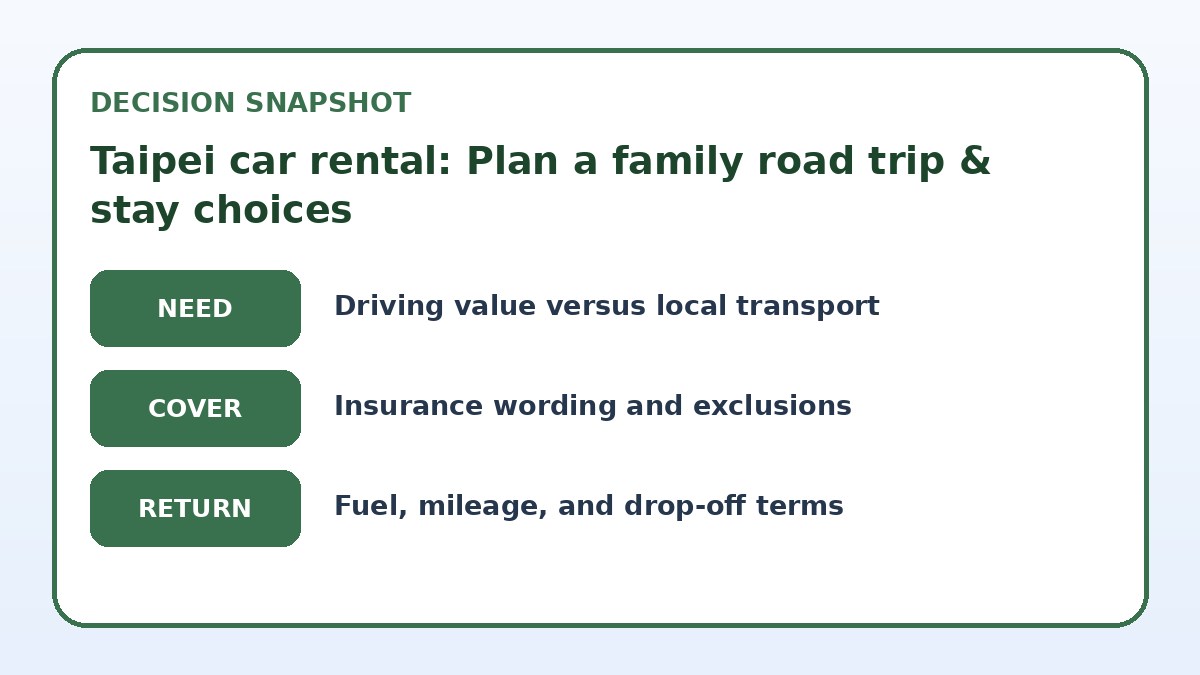
Insurance wording and contract details to verify
Insurance language can hide crucial limits. Before booking, confirm the rental contract’s liability limits, collision damage waiver (CDW) terms, and whether there is a deductible or excess you must pay if there’s damage. Look for specific phrasing about third-party liability, theft protection, and whether loss of use or administrative fees are covered. If an extra-driver fee applies, check whether family members who will take turns driving are listed and included.
Also verify restrictions that affect family safety and comfort: are child seats available or must you bring your own, and is roadside assistance 24/7 with English support? If you plan to drive to rural or mountainous areas, check clauses that mention off-road, ferry, or tunnel exclusions. Keep screenshots or PDF copies of the exact insurance and roadside assistance wording from the provider’s final booking page in case you need to show them at pickup.
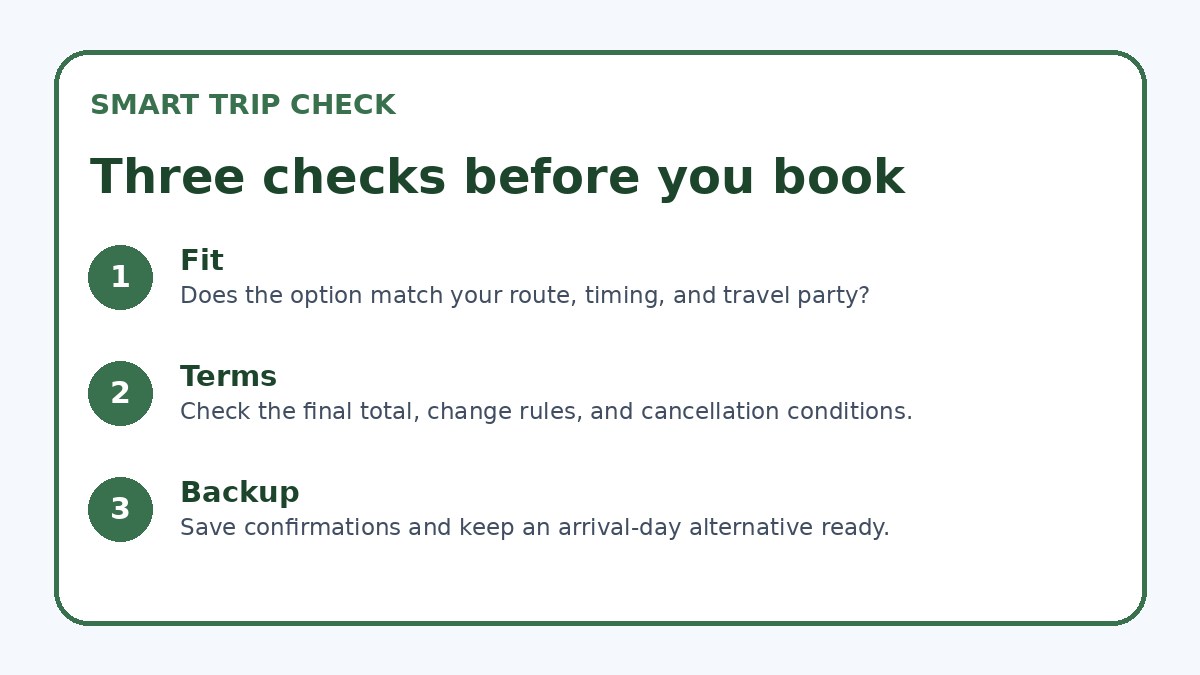
Compare the full rental conditions
Confirm insurance wording, exclusions, deposit, fuel, mileage, and return terms on the final page.
Pickup, return friction, and practical tips
Pickup and return can consume a surprising chunk of a rental day, especially with family luggage, strollers, and car seats. Choose a pickup location that minimizes transfer time from your arrival point—airport counters are convenient but sometimes slower than city outlets; weigh convenience against queue times. Ask the provider about free waiting time if flights delay your arrival, and know the documented fuel policy so you aren’t charged for missing liters after a long day with children.
On return, inspect the vehicle together and take timestamped photos of mileage and any pre-existing damage noted on the contract. Confirm the drop-off process and where to leave keys if you must return outside business hours. If you have a morning departure, consider returning the car the night before and arranging transport to your accommodation or the airport: it often reduces morning stress for small families.
Car rental terms to verify
- Map each day’s primary destinations and mark how many are more than a 20–30 minute drive from the nearest train or frequent bus stop.
- Download and screenshot the exact insurance policy text and roadside assistance terms from the rental provider’s final booking page.
- Reserve or confirm appropriate child seats in writing and note any extra-driver fees you must add at pickup.
- Plan pickup and return logistics: select the most convenient counter, note operating hours, and photograph the vehicle condition at handover.
- Identify at least one non-driving backup for each long-day plan: scheduled train, intercity bus, or a guided tour with family amenities.
- Pack a small ‘travel comfort’ kit for the car: snacks, disposable bags, spare wipes, a compact blanket, and a paper map or offline GPS option.
Non-driving fallback and when to choose it
If you decide not to drive, you still have strong family-friendly options in Taipei. The Metro is stroller-friendly, punctual, and connects to major museums, parks, and Taipei 101, while taxis and ride-hailing services handle short hops when luggage or tired kids make walking impractical. For day trips, intercity trains and scheduled buses often serve coastal towns and mountain trailheads—book seats on services with space for baggage or look for family-oriented shuttle services.
A practical fallback pairing is to reserve a few guided day tours for longer excursions and rely on public transit for city days. That keeps your schedule flexible without committing to driving costs and responsibilities. If family comfort is a priority, pre-book child seats with taxis or select tours that advertise family amenities; and keep the option to rent a car locally for a single day if a particular outing genuinely needs it.
Car Rental & Road Trip questions travelers ask
Do I need an international driving permit (IDP) to rent a car in Taipei?
Requirements for driving documents vary by rental provider and your home country. Many countries’ licenses are accepted with an International Driving Permit or an officially translated license. Before you book, check the rental company’s final terms to confirm which documents they require at pickup—bring originals, any required translations, and a passport. If you are unsure, contact the provider directly using their listed help channel to avoid a last-minute refusal at the counter.
How can I avoid unexpected charges on the rental bill when traveling with family?
Avoid surprises by reading the rental contract line by line: confirm fuel policy, late-return grace periods, extra-driver fees, child-seat charges, and cleaning or administrative fees for damage. Take time-stamped photos of the car from multiple angles when you pick it up and again when you return it. Keep all receipts, and if you’re charged afterwards, request a written explanation and reference the condition photos. On the booking page, save or screenshot the price breakdown and included extras as proof of what you agreed to.
Is driving in Taiwan safe for families unfamiliar with local roads?
Driving safety depends on route choice and experience. Main highways and urban expressways are generally well maintained; narrow rural or mountain roads may be more challenging, with tight curves and limited shoulders. If you plan those routes, choose a comfortable vehicle, avoid night driving, and ensure the rental includes roadside assistance. If driving confidence is low, opt for a private driver or guided day tour for remote legs and use Taipei’s reliable public transit for city days.
Final decision note
For families, the decision to rent a car in Taipei should start with where you intend to spend most days. If your trip includes multiple off-city destinations with limited transit service, a rental provides flexibility, comfort, and time savings that can justify the extra logistics. If the itinerary is mostly inside Taipei, public transit plus taxis and occasional guided tours usually reduce stress and avoid parking headaches. Whatever you decide, verify insurance wording, child-seat availability, pickup/return rules, and roadside assistance on the provider’s final booking page. Keep a non-driving fallback and the checklist above handy so you can make a confident, child-friendly choice before you commit.
Continue planning
Check current options and final conditions
Use the provider page to confirm live availability, the final total, cancellation terms, and every condition that matters to your trip.
This evergreen planning guide was created with AI-assisted drafting and a structured quality review. It does not display live prices, schedules, availability, visa guidance, or provider rankings. Verify current details before booking. Some links are affiliate links; we may earn a commission at no additional cost to you.