If you’re visiting Sydney for the first time, price alerts can be a helpful tool—but they’re also a trap if a low notification prompts an impulse booking that doesn’t fit your trip. The practical approach is simple: set alerts, but create a short decision routine before you click "book." That routine compares the same dates, traveler count, and inclusions across package and separate bookings; checks flexibility and cancellation terms on the provider’s final booking page; and asks whether the bundle actually saves money for your priorities (hotel location, flight times, luggage, transfers, or tours). Use alerts to gather data, not to force a sale. This article lays out what to compare, how to use alerts responsibly, the tradeoffs of packages versus separate bookings, and a checklist so your first Sydney trip is planned, not panicked.
Test package value fairly
| Booking approach | Best for | Tradeoff to check |
|---|---|---|
| Book a bundled flight+hotel package | Travelers who want one checkout and potentially coordinated scheduling | May lock you into less-flexible fare classes, specific flight times, or hotel room types that don’t match your needs |
| Book flights and hotels separately | Travelers who prioritize specific flight times, airlines, or hotel locations | Requires more time to coordinate and check separate cancellation or change rules |
| Buy a flight-only alert and add hotel later | Those who prioritize securing preferred flights while comparing hotel choices | You may miss bundled transfer or tour discounts and must sync refund windows |
| Choose a package with included transfers and tours | Travelers valuing convenience and fewer logistical decisions after arrival | Added convenience can raise cost and reduce flexibility if plans shift |
Check current package and separate options
Use identical dates, travelers, room needs, baggage, and flexibility so the comparison stays meaningful.
What to compare before deciding a package is worth it
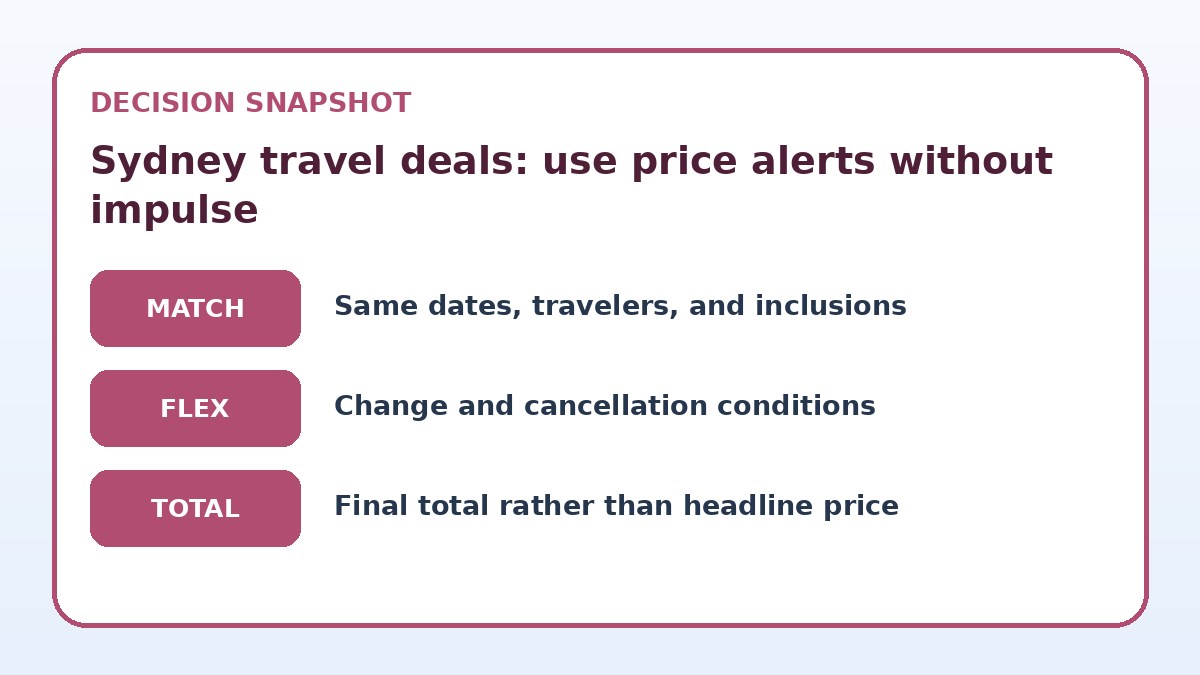
Before you decide a package is a good deal for Sydney travel, compare exactly the same elements: identical travel dates, the same number of travelers, and the same room type or flight class. Packages sometimes show a lower headline price because they bundle extras you don’t need or show a slower flight option; the only fair comparison includes transfers, baggage allowances, seat selection, and any included tours. When you run searches for separate flights and hotels, add the same optional services the package includes, then compare total cost and convenience for your priorities. This prevents false savings created by mismatched assumptions in package displays.
Also examine flexibility and change rules in both the package and standalone bookings. Many packages advertise convenience yet lock in nonrefundable terms or require fees for name or date changes. For first-time visitors who could shift plans because of unexpected work or weather, the value of a slightly more expensive flexible ticket or refundable hotel room can outweigh a lower locked-in package price. Always click through to the provider’s final booking page to confirm penalties, how to request refunds, and whether third-party suppliers (airlines or hotels) enforce different rules.
How to use price alerts without succumbing to impulse
Treat alerts as market signals, not commands. When an email or app notification reports a drop, immediately record the key facts: travel dates, cabin/class, baggage allowance, hotel location and room type, and the provider’s stated cancellation policy. Then, create a short waiting rule—such as a 24- to 72-hour review period—during which you re-run searches for the exact same items on at least one other site or directly with the airline and hotel. This delay reduces impulsive clicks and lets you spot mismatches between a package’s headline and the true total cost after fees.
During the waiting window, evaluate whether the alert aligns with your real priorities for Sydney. If the alert is for a package that bundles early-morning flights or a hotel far from the CBD, those “savings” might cost you time and extra local transport fare. Use the delay to check location maps, transfer options from the airport, and typical travel times to the attractions you want to visit. If your priority is a central base for walking or easy public transport to the Opera House and Darling Harbour, a slightly higher rate for a better-located hotel can be the smarter choice.
Look past the headline total
Compare inclusions and change conditions before deciding whether a package is genuinely useful for this trip.
Deal comparison checklist
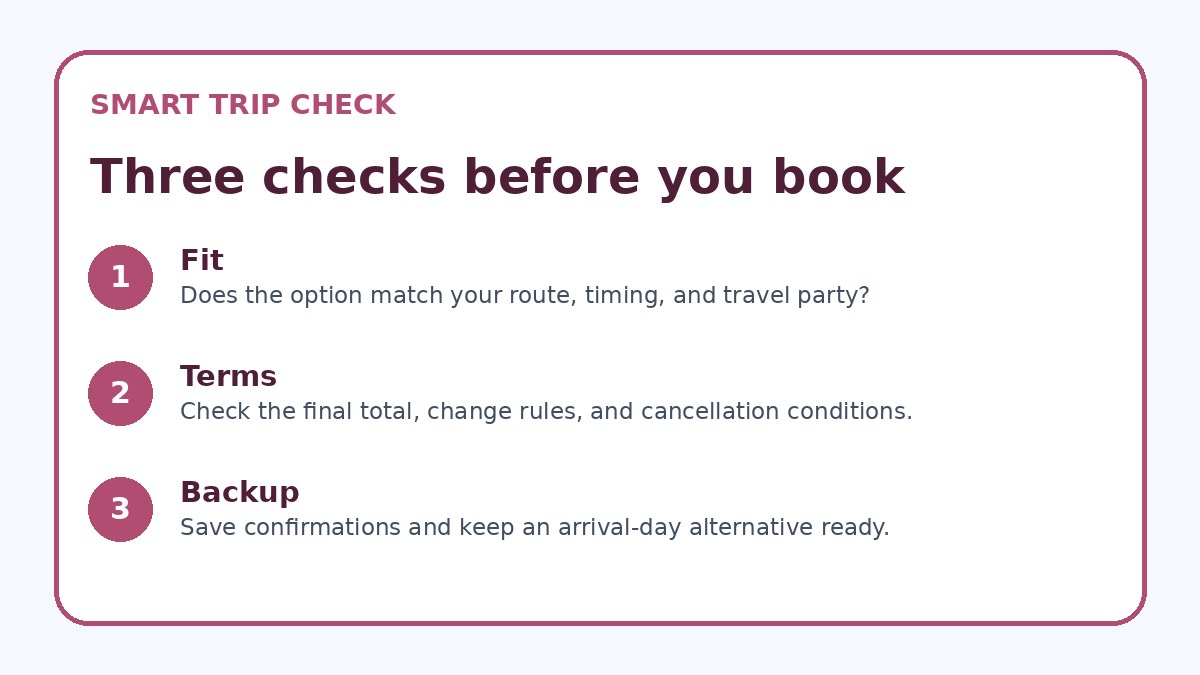
- When an alert arrives, record all core details: travel dates, number of travelers, flight cabin and baggage rules, hotel name and room type, and listed cancellation policy.
- Re-run searches for the identical dates and traveler count on at least one separate site and directly with the airline and hotel to compare totals.
- Confirm room location and hotel address on a map and estimate transfer time and cost from Sydney arrival airports before accepting a package.
- Check the provider’s final checkout page for exact cancellation, refund timelines, name-change rules, and any third-party supplier notes.
- Score options by priority (cost, location, flexibility, included services) and choose the option with the best total score for your needs, not the lowest headline price.
- Set a short calm-down period (24–72 hours) before booking after an alert to verify details and avoid impulse decisions.
Package inclusions, flexibility, traveler-specific value
Carefully list what each option includes. For flights: checked baggage, seat selection or seat assignment, change and cancellation fees, and connection times. For hotels: room type, daily rate conditions, breakfast inclusion, and any resort or service fees. For add-on items: airport transfers, city tours, or attraction passes. Assign each item a personal value based on your needs—for example, if you always bring a checked bag, a flight without included baggage has a hidden cost. When alerts show packages, check whether the included components are categories you actually need.
Factor traveler-specific value into the decision: families may prioritize a single-reservation package that reduces coordination, seniors may prioritize flexible cancellations and shorter airport transfers, and solo travelers may prefer cheaper rooms in central locations to cut local transport. If you or your co-travelers have mobility concerns or timing constraints, those should carry more weight than a small headline saving. Make a simple scoring sheet (cost, location, flexibility, included services) and score each option to see whether the package truly fits your personal priorities.
Final terms, verification, and avoiding false savings
Never finalize a booking without verifying final terms on the provider’s own checkout page. Price alerts and aggregator pages can omit taxes, fees, dynamic baggage charges, or third-party supplier rules. Click through to the airline, hotel, or package provider’s final confirmation page and read the cancellation policy, name-change rules, and whether the fare or rate is refundable. Note the timeframe for refunds and who pays any administrative fees. If the booking includes separate suppliers, verify each supplier’s terms; a refundable hotel paired with a nonrefundable flight can still leave you exposed.
To avoid false savings, always compare a package to the combined cost of booking the same exact flights and the same exact hotel independently, including all optional fees. If a package claims to save money but forces inconvenient connections, poor hotel location, or rigid nonrefundable terms, the nominal saving might not be worth the tradeoff. Use Trip.com or another aggregator to check availability and to spot price trends, but remember the aggregator is a comparison tool: verify the final booking conditions on the seller’s page before you commit.
Travel Deals & Booking Strategy questions travelers ask
How do I know if a package’s advertised saving is real for my Sydney trip?
Compare like with like: search for the same flights and hotel room type separately, include baggage fees, airport transfers, and any optional extras the package lists. Add those separate totals and compare them against the package total. Check cancellation and change terms—sometimes a cheaper package is nonrefundable while booking separately offers flexible options that better match your risk tolerance. Finally, factor location and convenience: a lower price for a remote hotel might cost more in local transport and lost time.
Should I prioritize flexible tickets or the lowest fare when using alerts?
Prioritize based on your personal risk and schedule certainty. If your travel dates can shift or work might interfere, paying a bit more for a flexible or refundable ticket reduces worry and potential penalty costs. For first-time Sydney visitors who have fixed dates and want certainty, a lower nonrefundable fare can be acceptable—but only after confirming that your travel plans and connecting services are firm. Use alerts to notice price drops, but verify refund and change penalties on the provider’s final booking page before committing.
Can I rely on aggregators to spot the best Sydney travel deals?
Aggregators and alert tools are useful for spotting market movement and compiling options quickly, but don’t treat them as the final authority. They sometimes omit final taxes, supplier-imposed fees, or different cancellation rules. Use aggregators to gather options and set alerts, then click through to the airline, hotel, or package provider’s checkout page to verify exact terms, total price, and supplier conditions. You may also cross-check one or two reputable providers directly to confirm availability and fine print.
Final decision note
Price alerts are a valuable planning tool for first-time visitors to Sydney when used deliberately. The key is to resist the reflex to book on notification and instead use each alert as an opportunity to compare identical dates, traveler counts, and inclusions across bundled and separate options. Prioritize what matters for your trip—hotel location, flexible travel dates, baggage needs, or included transfers—and verify final terms on the seller’s checkout page. A short waiting routine and a simple scoring sheet will help you avoid false savings and choose the option that actually fits your priorities, ensuring your first Sydney trip is well planned and stress-minimized.
Continue planning
Check current options and final conditions
Use the provider page to confirm live availability, the final total, cancellation terms, and every condition that matters to your trip.
This evergreen planning guide was created with AI-assisted drafting and a structured quality review. It does not display live prices, schedules, availability, visa guidance, or provider rankings. Verify current details before booking. Some links are affiliate links; we may earn a commission at no additional cost to you.