For most business travelers, the key decision on Busan to Jeju flights is a straight tradeoff: do you prioritize schedule flexibility or the smoothest, fastest door-to-door experience? Start by deciding which matters more for your trip—ability to change times without penalty, or minimizing connection and baggage risk en route. Practical planning means lining up exact travel dates, departure window from your office or meeting, and the total trip time you can tolerate, then comparing direct versus connecting options (if both are offered), fare rules, and baggage handling policies. This article gives the short answer up front, then walks through routing choices, baggage and connection risk, schedule fit considerations, and how to read fare conditions so you can pick the flight strategy that matches your meeting schedule and stress tolerance.
See live routes for your exact travel day
Compare direct and connecting choices with the same baggage and traveler details.
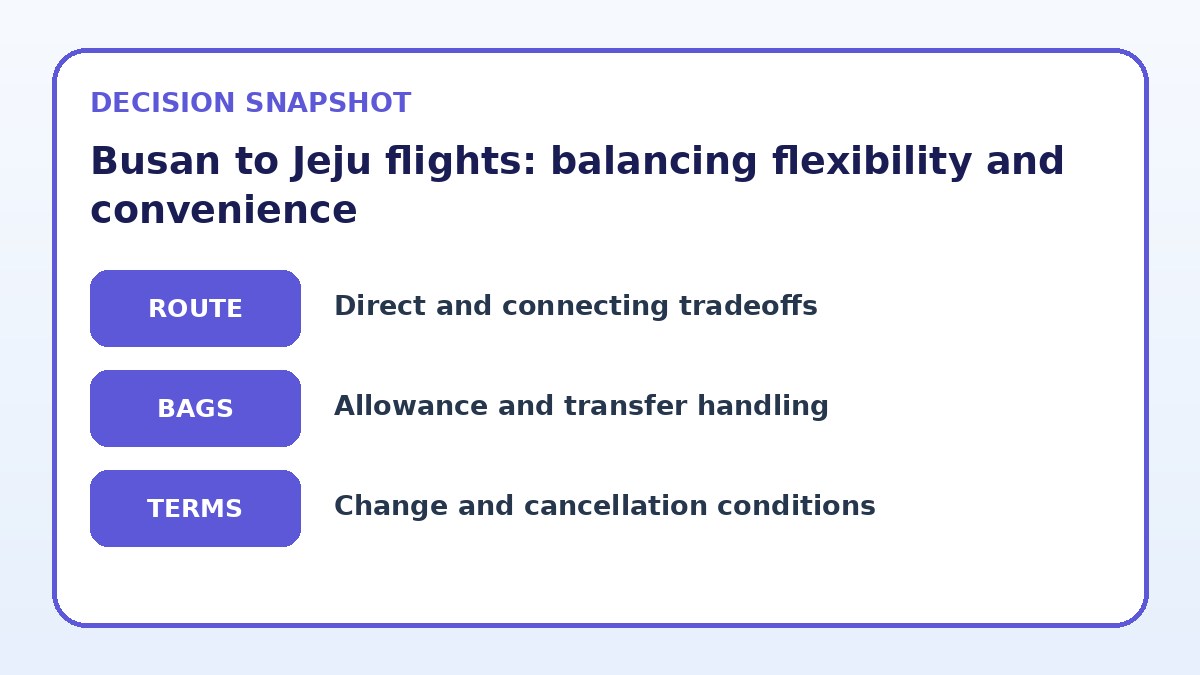
Routing: direct versus connecting options
The first routing decision is whether to prioritize a direct flight if available or accept a connection for more schedule choices or lower fares. Direct flights reduce variables—single boarding, fewer legs for delay to ripple through, and generally simpler baggage transfer. But direct options may be less frequent outside peak business hours, so if your meeting time forces an off-peak departure you’ll need to weigh whether a connection expands practical departure times without adding unacceptable risk.
If connections are part of your comparison, examine transfer airports and minimum connection time estimates. Short connections save time but increase chance of missed onward flights if an earlier leg is delayed. For business travel, prefer connections at airports with efficient transfer flows and clear re-accommodation rules. Always confirm how baggage is handled at each transfer: whether it transfers automatically or needs re-checking, and what that means for potential delays and lost luggage scenarios.
Baggage and connection risk: what to protect against
For a tight business trip, baggage handling and connection policies can make or break your plan. Check whether the fare includes checked baggage and how many pieces; if not included, calculate the out-of-pocket cost and the time needed at check-in and baggage claim. When routing through a connection, confirm whether your bags are tagged through to the final destination—if not, factor time for re-checking and the possibility of missed connections that leave you without critical items.
Also evaluate the re-accommodation and compensation procedures for missed connections or delays. Some fare types and carriers give proactive rebooking; others require you to join a new queue. If you’re carrying presentation equipment or sharp time commitments, consider carrying essentials in a small cabin bag and choosing itineraries with buffer time. For absolute critical meetings, book a later onward flight or an earlier arrival to reduce the chance that baggage or a delayed leg will harm your schedule.
Compare flight-selection strategies
| Flight strategy | Best for | Risk to check |
|---|---|---|
| Pick the earliest direct flight available | Travelers who need the shortest door-to-door time | Fewer schedule options and sometimes higher fares or limited seat availability |
| Choose a later direct for more schedule buffer | Those prioritizing reliability over minimal airtime | May add waiting time at origin or evening arrival, reducing usable meeting time |
| Accept a short connection to expand departure windows | Flexible travelers seeking more schedule choices or lower fares | Higher risk of missed connections and possible baggage complications |
| Buy a flexible fare on any routing | Frequent reschedulers or trips with uncertain timing | Higher fare cost in exchange for lower change and cancellation penalties |
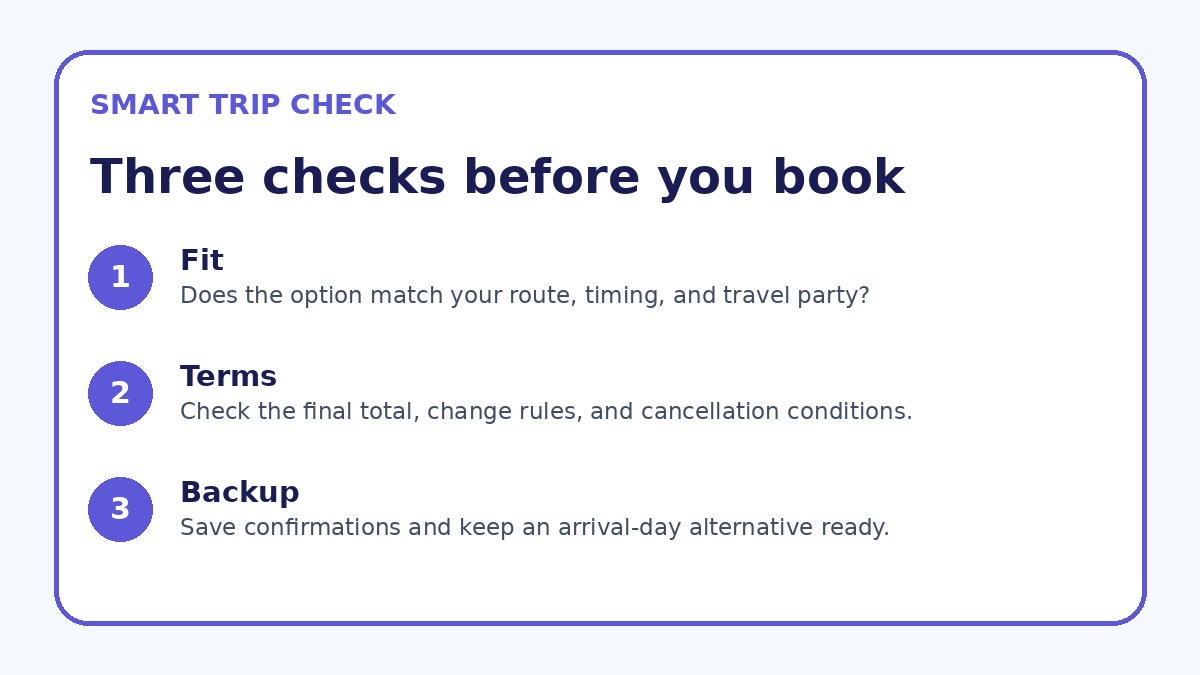
Recheck the complete itinerary
Confirm airports, connection handling, baggage, and change conditions before deciding.
Schedule fit: matching flights to business time windows
Business travel is about aligning flights with obligations: meetings, hotel check-in, and local transit. Before you search, define a clear arrival window and the maximum allowable total travel time from door to destination. Then compare flights for both scheduled departure and realistic arrival—factor in recommended airport arrival times, typical traffic between your office and the airport, and any internal buffer you require for unforeseen delays. This approach keeps you from choosing a flight that looks good on paper but leaves too little margin for business contingencies.
Also consider the cost of schedule risk versus inconvenience. A slightly earlier or later flight may add a long wait but reduce the chance of missed meetings; conversely, a tight same-day return can save time but increases pressure if the inbound leg is delayed. If you anticipate last-minute meeting shifts, prioritize fares with change allowances or flexible rebooking windows so schedule adjustments don’t become costly disruptions.
Flight details to verify
- Confirm exact travel dates, full traveler names, and frequent flyer numbers before checking fares to avoid name-change hassles.
- Decide on an acceptable door-to-door time and calculate airport transfer time from your meeting location.
- Compare total journey time for direct and connecting options, including recommended airport check-in and baggage pickup.
- Open fare rules and note change fees, refundability, same-day rebooking policies, and baggage inclusions on the booking page.
- If carrying critical equipment, pack essentials in carry-on and verify baggage transfer procedures on connecting itineraries.
- Reserve a little schedule buffer for the return trip—avoid back-to-back meetings immediately after expected arrival without contingency plans.
Fare conditions: what to read and verify before booking
Fare rules determine how easy it is to make the schedule flexible you need. Before you click purchase, read the fare conditions for change fees, rebooking rules, refundability, and whether name corrections are permitted without penalty. Also check whether any promotional or restricted fares exclude changes entirely or restrict same-day rebooking. When flying for business, even a modest premium for a flexible fare can be worth avoiding hassle or rebooking penalties when plans change.
Finally, verify what the provider’s final booking page shows about seat selection, priority boarding, and baggage inclusions—these can affect both convenience and total cost. If provider specifics could change, note them exactly: baggage allowance, change fee amount, and the window for same-day changes. If you prefer to compare availability and terms side-by-side, Trip.com is an optional place to do that, but always confirm the final terms on the airline or booking agent’s checkout page.
Flight Guide questions travelers ask
Should a business traveler always choose a direct Busan–Jeju flight if available?
Not always. Direct flights minimize legs and baggage transfers, lowering the chance of disruption, which is valuable for tight schedules. However, if direct flights don’t match your required departure or arrival window, a connecting option could provide a better fit and more departure times. The choice depends on whether reducing transfer risk outweighs potentially longer total door-to-door time. Also consider fare rules: a connecting itinerary sold with flexible change terms might be preferable to a low-cost direct fare with no changes allowed.
How much schedule buffer should I build in for Busan to Jeju travel?
Build buffer based on the importance of the meeting and the components of your journey: travel time to the airport, recommended pre-flight arrival, potential traffic variability, and baggage handling time. For critical meetings, aim for at least one to two hours beyond the minimum airborne time as a simple hedge, plus extra if your routing includes connections. If you have limited tolerance for risk, choose flights that arrive earlier than strictly needed, and allow time for local transit to the meeting venue.
What exactly should I verify on the airline booking page before confirming a business booking?
On the airline or agent checkout page verify the fare class, explicit change and cancellation fees, whether the fare is refundable, included checked baggage allowance, seat selection rules, and the carrier’s minimum connection time policies. Also confirm passenger name spelling, loyalty program number, and any ancillary items (priority boarding, cabin baggage) you relied on when choosing the itinerary. If anything is unclear, contact the carrier or booking agent to get written confirmation before completing payment.
Final decision note
Choosing between flexibility and convenience on Busan to Jeju flights is a practical, context-driven decision. Start by listing your non-negotiable meeting windows and how much total door-to-door time you can tolerate. Compare direct and connecting routings for total journey time and baggage handling complexity, then read fare rules carefully for changes and refunds. For uncertain schedules, a flexible fare often reduces operational stress despite higher cost; for fixed itineraries, prioritize fewer transfers and earlier arrival times. Collect exact dates, traveler details, and your preferred arrival buffer before checking live options so you can compare like-for-like and make the booking that protects both your schedule and your sanity.
Continue planning
Check current options and final conditions
Use the provider page to confirm live availability, the final total, cancellation terms, and every condition that matters to your trip.
This evergreen planning guide was created with AI-assisted drafting and a structured quality review. It does not display live prices, schedules, availability, visa guidance, or provider rankings. Verify current details before booking. Some links are affiliate links; we may earn a commission at no additional cost to you.