When you step off the plane in New York City, your first-hour decision is simple: do you navigate public transit or arrange private transport? That choice sets the tone for your arrival—stressful and slow, or smoother and more direct. For a first-time visitor this often hinges on how much luggage you have, who you’re traveling with, whether your arrival time is late or affected by delays, and how clearly your final drop-off point fits into streets, hotels, or short-term rentals. This guide gives the practical answer up front, then explains tradeoffs and what to check while you still have your flight and accommodation details handy. Use it to decide quickly after landing, and to confirm the exact pickup or meeting arrangements before you leave home.
Check options for your arrival details
Use your flight, luggage, party size, and accommodation address to compare current choices.
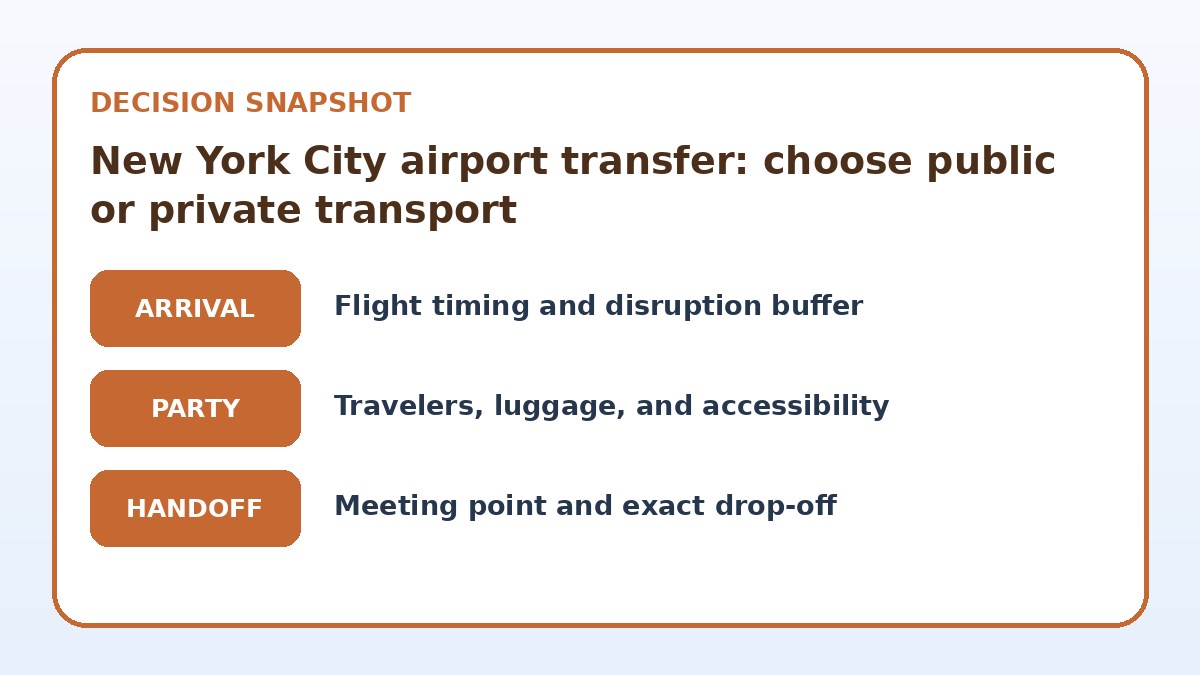
Luggage and party size: what fits where
Luggage volume and the number of people in your party determine how realistic public transit is as an airport transfer. A solo traveler with one carry-on can often manage a subway or rail link plus a short walk and a transfer. But if you have multiple checked bags, oversized items, strollers, or three-plus travelers, the physical effort of stairs, crowded platforms, and changing lines will add time and stress. Consider the comfort of having space to store bags upright and the ability to keep your party together without juggling doors or elevator waits.
Private cars, ride-hail, and prepaid shuttles will accommodate heavier baggage more comfortably and reduce the number of lifts and transfers. Shared shuttles may require curbside waits while the operator collects several passengers, so confirm how baggage is handled and whether there are additional stops. If your group includes elderly travelers, small children, or someone with mobility needs, prioritize options with minimal walking and explicit assistance promises. Always check the vehicle size and baggage allowances on the provider’s booking page before you commit.
Arrival details to have ready
- Confirm your terminal, arrival time, and baggage count in one place before comparing options.
- Check whether your accommodation allows curbside drop-off or requires an off-street meet and note the exact address or landmark.
- If choosing private transport, request the driver’s contact and a precise pickup point (baggage claim, curb number, or arrivals hall).
- If choosing public transit, save station names, terminal exit instructions, and a screenshot of the route to your phone for offline use.
- Plan a backup: note the late-night taxi rank or a reliable ride-hail zone in case transit is unavailable or your flight is delayed.
- Before booking, read the provider’s cancellation, wait-time, and delay policies on their official booking page or operator terms.
Late or disrupted arrivals: flexibility and backup plans
Flights delayed or canceled are common enough that your arrival plan should include a backup. Public transit generally runs on fixed schedules that won't accommodate missed connections or sudden late-night arrivals, and some services reduce frequency overnight. If you arrive during off-hours, weigh safety, wait times, and how easy it is to find the correct platform or station from the terminal. Have a transit map screenshot, a working transit app, and a clear sense of the last departures for rail or buses departing the airport.
Private cars and dedicated airport shuttles often offer later pickup flexibility but vary in cancellation and rebooking policies. When booking, check what constitutes a late arrival, how to contact the driver or dispatcher, and whether the provider will wait if your flight is delayed. If you prefer a private option, keep the driver’s or operator’s contact method visible and save any booking reference—those details are what you’ll need if plans change after landing.
Match the transfer to your arrival
| Arrival approach | Best for | Detail to verify |
|---|---|---|
| Public transit (subway, rail, bus) | Solo travelers, light luggage, budget-focused arrivals | More transfers and walking; less private space and flexibility |
| Ride-hail or taxi | Flexible door-to-door pickup without prebooking | Costs can rise with traffic; curbside rules and surge pricing vary |
| Private prebooked car | Groups, heavy luggage, or fixed arrival times | Needs precise meeting instructions; typically higher cost than transit |
| Shared airport shuttle | Travelers seeking a middle ground between cost and convenience | Potential multiple stops and longer door-to-door time |
Make the meeting plan clear
Check the final pickup instructions, waiting conditions, and exact drop-off coverage.
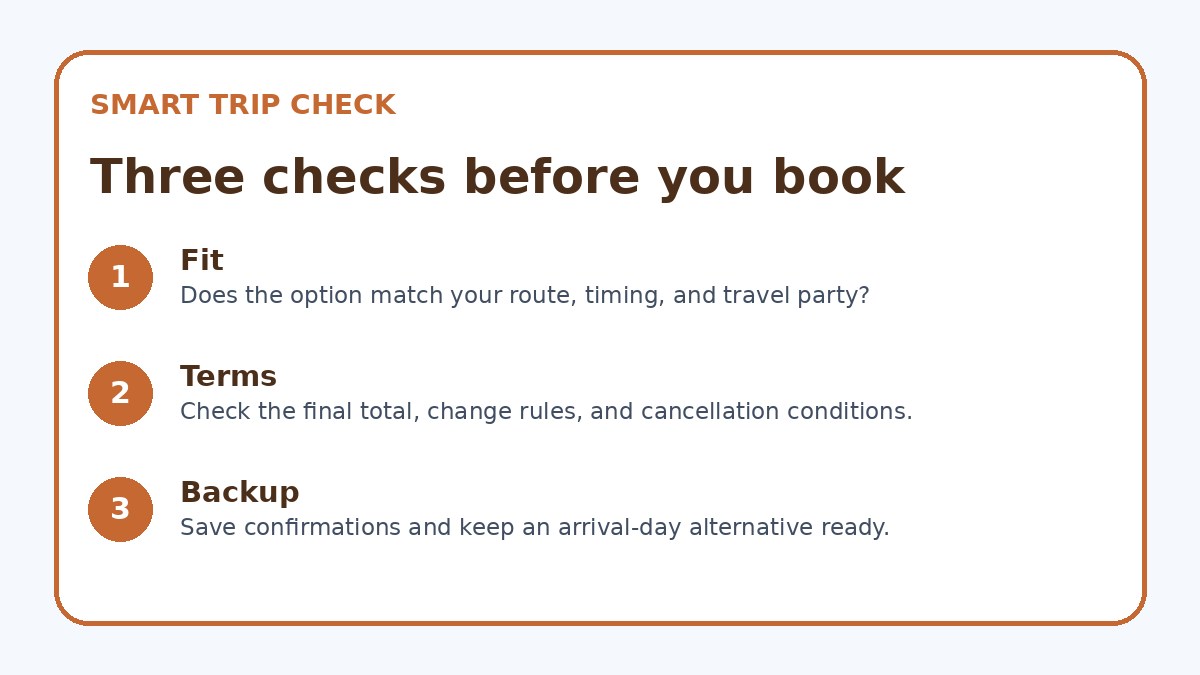
Meeting-point clarity: findable pickup spots and communication
Meeting points at New York City airports can be confusing: multiple terminals, numbered curbs, and separate arrival halls for international and domestic flights. If you choose public transit, identify the station or rail stop name and the best terminal exits in advance. Note signage landmarks you’ll see as you follow directions so you can confirm you’re headed the right way while still carrying luggage. If you are using ride-hail, check which curbside zone, terminal level, or designated pickup lot the app tells you to use; apps can change pickup locations due to traffic or construction, so refresh directions after you land.
For private transfers or prebooked car services, insist on a single, specific meetup location and exchange mobile contact numbers. Confirm whether the driver meets you at baggage claim, at the arrivals hall, or at an external curb—it makes a big difference in how long you wait and where you should move after clearing customs. If your party is split between arrivals, designate one person to stay at the confirmed meeting point and tell the driver how you’ll be identified; drivers rely on visible names, vehicle descriptions, or app check-ins, so verify these on the booking page.
Drop-off fit: where your accommodation lets you go
Not all hotels or rentals allow vehicles to stop at the door. Some Manhattan hotels have small porte-cocheres or regulated curb zones; many apartment buildings and short-term rentals require curbside drop-offs or instructions to meet off-street. If your accommodation requires a short walk from the curb, consider how comfortable you and your luggage will be carrying bags across sidewalks and up stoops. For stays in dense neighborhoods, a shorter car option plus a brisk walk or a single transit hop might be a faster overall choice.
If you pick public transit, look at the exact station or stop relative to your address and whether the last leg involves stairs, elevators, or ramps—this affects travelers with mobility concerns. For private vehicles, check with your host or hotel about permitted drop-off locations and whether the driver can stop briefly to unload. If you're booking a private service, confirm the driver will be permitted to enter the property, or whether they'll wait nearby; verify these details on the operator’s and the property’s information pages before confirming.
Airport Transfer & Local Mobility questions travelers ask
Can I take the subway directly from New York City airports to my hotel?
Many airport terminals connect to regional rail or shuttle services that link to subway stations, but there’s rarely a single subway line that takes you door-to-door. Compare steps: identify the nearest airport rail or bus stop, the transfer points to the subway system, and the walking distance from the final station to your hotel. If you have heavy luggage or limited mobility, a private car or taxi may be a simpler alternative. Always confirm terminal-to-transit transfer routes on the airport’s official site or transit authority maps before choosing.
How should I decide between booking a private car in advance or using a taxi on arrival?
If predictability matters—fixed pickup time, minimal walking, or a guaranteed vehicle size—book a private car in advance and verify meeting details. For arrivals during normal hours with light luggage, a licensed taxi or reputable ride-hail can be quicker to access and avoids a prepayment. If you prebook, read the operator’s instructions for delayed flights and contact methods. If you plan to hail a taxi, note the official taxi stands and be prepared for curb regulations and potential wait times during busy periods.
What information should I have ready to ensure a smooth pickup from the airport?
Keep your flight number, terminal, arrival time (with expected delays), accommodation address, and best phone contact easily accessible. If someone is meeting you, share a clear meeting point description and a photo of the meetup area or the driver’s vehicle if provided. For international arrivals, keep your passport, any bags consolidated, and local currency or card ready to pay any immediate transport fees. Finally, save the operator’s booking reference and phone number to resolve issues quickly if your flight is delayed or rerouted.
Final decision note
For most first-time visitors making a New York City airport transfer decision: if you’re traveling alone with light luggage and want to save money, public transit or airport rail is a practical choice; if you’re traveling in a group, with heavy bags, or arriving late, a private car or prebooked shuttle reduces hassle. The right pick depends on luggage, group size, arrival timing, and how clearly your accommodation accepts curbside drop-off. Before you book, verify terminal pickup points, vehicle size and baggage rules, driver contact details, and any late-arrival policies on the provider’s official booking page. For a quick comparison of current options and availability, Trip.com can be one place to check—but always confirm final details with the operator you intend to use.
Continue planning
Check current options and final conditions
Use the provider page to confirm live availability, the final total, cancellation terms, and every condition that matters to your trip.
This evergreen planning guide was created with AI-assisted drafting and a structured quality review. It does not display live prices, schedules, availability, visa guidance, or provider rankings. Verify current details before booking. Some links are affiliate links; we may earn a commission at no additional cost to you.