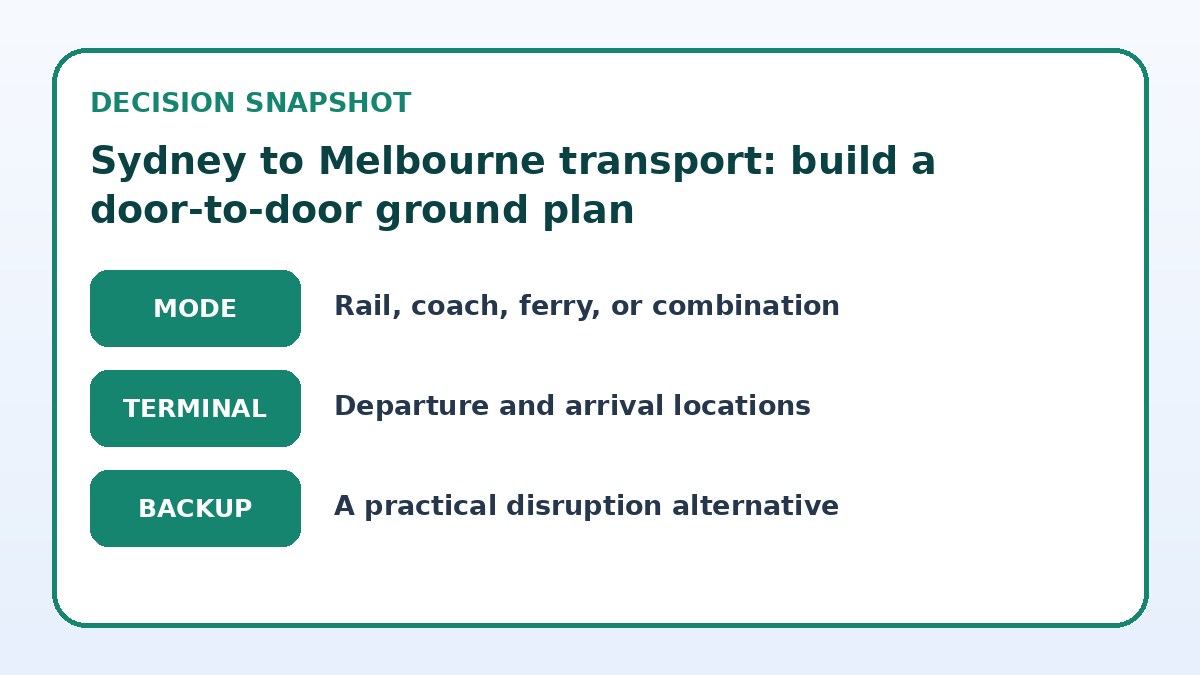
Practical answer: for couples, pick the main mode (train or coach) based on comfort and terminal fit, then stitch in short local transfers or scenic detours so the end-to-end journey works for your schedule and luggage needs. Start by comparing door-to-door time and transfer friction rather than just on-vehicle travel time—where you arrive in the city and how easy it is to get to your hotel changes the whole experience. If you want scenery and fewer stops, favour rail legs; if you need more frequency or lower transfer complexity, a coach-first plan can win. Consider combining modes on a longer route to break the trip into overnight stops, use ferries or coastal shuttles for variety, and always build an explicit disruption backup (alternate departure, nearby station or coach hub, and a shared ride option). Before booking, verify final baggage rules, terminal addresses, and transfer options on the provider’s booking page or a comparison site such as Trip.com.
How to choose between train, coach, ferry, or a mix
Start by matching what you value most as a couple: comfort and spacious seating, scenic outlooks, or scheduling flexibility. Trains typically offer more room to spread out and can be easier to walk about together, which suits longer intercity legs and couples who want to relax. Coaches tend to have more departures and can be better if one partner prioritises flexible departure times or if you need more inexpensive options. Mixing modes — for example, a scenic train leg followed by a short coach or shuttle — lets you balance comfort and practicality without committing to a single provider for the whole route.
Next, consider how each option affects transfers and the first/last mile. A train arriving at a central station could put you a short taxi or tram ride from your hotel, whereas some coach terminals are located farther from city centres and add a transfer. Ferries or coastal shuttles are useful only if you plan a detour along the coast; they add variety but usually increase complexity. Make a simple two-column comparison of door-to-door time and transfer complexity for each mode to see which gives the smoother couple-friendly experience.
Choose the end-to-end journey plan
| Journey approach | Best for | Friction to check |
|---|---|---|
| Single-mode train-first plan | Couples prioritising comfort, space, and scenic rail travel with fewer stops. | Fewer daily departures and potentially longer waits if you miss a service; verify baggage policy and arrival station transit options. |
| Single-mode coach-first plan | Couples needing flexible departure times and more frequent schedules. | Often less onboard space and a coach terminal that may increase last-mile transfers; check terminal locations carefully. |
| Mixed-mode (train + coach or ferry) | Couples wanting a balance of scenery, flexibility, and the chance to visit intermediate towns. | More transfers and luggage handling; plan clear transfer windows and confirm baggage rules across providers. |
| Segmented multi-city itinerary with overnight stops | Couples who prefer a leisurely pace and sightseeing en route with lower transfer stress. | Requires extra accommodation planning and time; ensure each stop has reliable onward connections and simple transfers. |
Check live intercity options
Look beyond the ride itself and compare terminals, transfers, luggage, and arrival fit.
Terminal fit, luggage friction, and transfer details
Terminal fit is about more than distance: check how easy it is to move luggage between the arrival point and your accommodation. Large stations often have porters or luggage trolleys and direct public transport links; some coach stops require a longer walk or an extra bus. For couples, weigh whether you’re willing to carry two larger bags across multiple transfers or prefer a single, longer leg with minimal handling. If one person will manage bags, plan seating and luggage stowage so both of you can sit together without blocking aisles during boarding or alighting.
Luggage rules differ by operator and sometimes by fare class, so use the provider’s final booking page to confirm what’s included and whether oversize items need advance notice. Think about transfer friction: how many times will you change vehicles, whether the platforms involve stairs or elevators, and if there are secure storage options at city terminals. If you plan an overnight stop en route, choose accommodation near the arrival terminal to reduce night-time transfers and lower the risk of missed connections for the following day.
Timing flexibility and building a multi-city itinerary
When building a multi-city plan, map out your preferred pace: continuous travel with short breaks, or breaking the route into two or more overnight stays. Couples often appreciate a mid-route stop to stretch, explore a regional town, and reset luggage needs. Use timing flexibility to match activities—if you want a morning coastal walk, schedule a longer layover in a seaside town. Conversely, if the priority is arriving in Melbourne early in the day, choose a more direct leg even if it reduces scenic time.
Consider frequency and windows: coaches usually run more often than long-distance trains, which can constrain same-day alternatives if you miss a connection. Build buffer time between segments for meals, brief sightseeing, or unexpected delays. For each candidate itinerary, produce a simple timeline that lists departure and arrival locations, transfer method, expected transfer duration, and critical checkpoints like luggage drop-off or check-in deadlines to keep the plan realistic and stress-free.
Compare the practical alternatives
Use the final page to confirm what is actually offered on your dates and save a workable fallback.
Intercity travel checklist
- Compare door-to-door travel time for each option, including transfers from your Sydney address to the departure terminal and from the arrival terminal to your Melbourne accommodation.
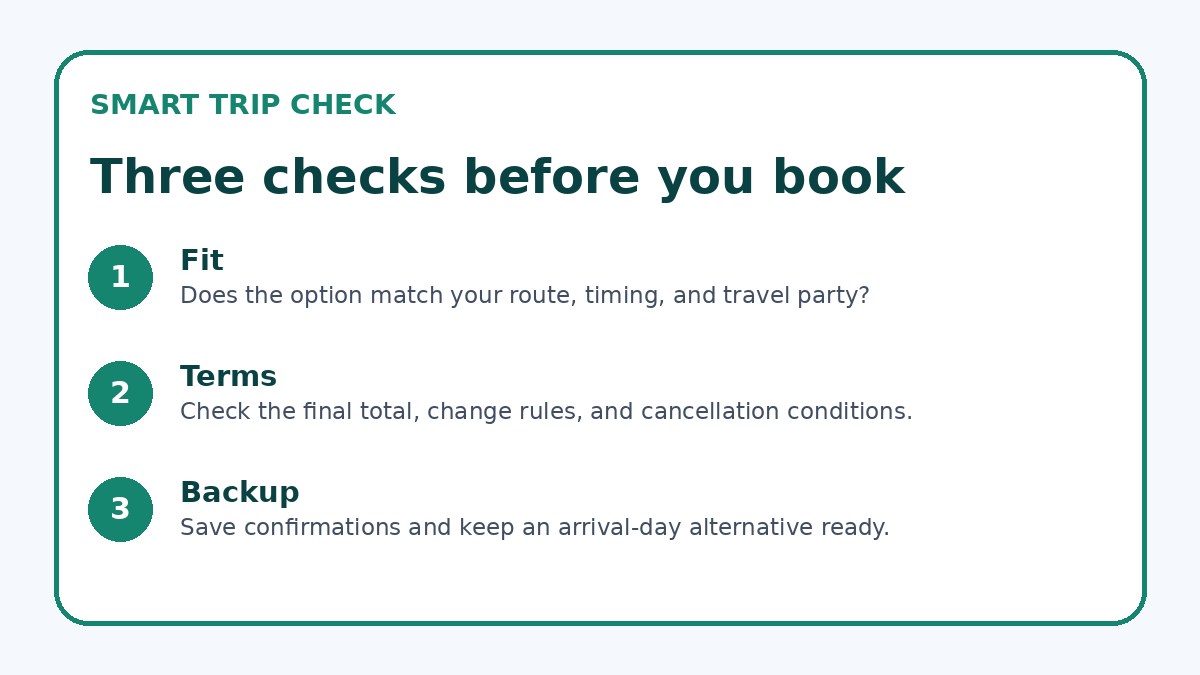
- Confirm luggage allowances and any needed advance booking for oversized items on each provider’s final booking page before you pay.
- Map terminal addresses, main entrances, and likely pickup/drop-off points so you can estimate taxi or public-transport time at both ends.
- Build a realistic buffer for each transfer—add at least 30–60 minutes around connection times depending on complexity and daypart.
- Choose and note one disruption backup for each critical leg (alternate departure, nearby hub, or overnight stop) and share it with your travel partner.
- Pre-book key last-mile items you want guaranteed—hotel airport shuttles, a first-night room near the terminal, or a trusted ride-share—so arrivals are smooth.
Disruption backup and door-to-door practicalities
Create layered backups: first, alternate departures on the same mode; second, nearby stations or coach hubs you can reach; third, an on-call shared ride or taxi option for essential transfers. Couples should pre-book one realistic backup that keeps the trip cohesive—this might be an evening coach if the train faces delays, or a short overnight stop at a town with direct onward services. Keep important phone numbers and the addresses of both pickup points and your accommodation in a shared note so either partner can manage a change if needed.
Don’t ignore door-to-door practicalities: estimate the full travel time from your lodging in Sydney to your lodging in Melbourne, including transfers, buffer windows, and arrival transit to your hotel. Verify on the provider’s booking pages the station entrance to use, platform or bay information, and whether luggage assistance is available. If you’ll need local transport on arrival, check public transit connections or book a transfer ahead—this reduces airport-like scramble at the other end and keeps the day relaxed for both of you.
Rail & Intercity Transport questions travelers ask
Should couples prioritise arrival location over on-vehicle comfort when choosing Sydney to Melbourne transport?
Yes—arrival location strongly affects the first impression and remaining logistics of your trip. A comfortable long-distance seat matters, but if a service dumps you far from your hotel with a complex transfer, the convenience advantage can evaporate. Couples should weigh how much they value on-vehicle comfort against the time and effort needed to reach their accommodation from the terminal. Check transit links from each arrival point and factor taxi or public transport times into your door-to-door evaluation before deciding.
How much transfer time is safe when planning mixed-mode segments between Sydney and Melbourne?
Allow transfer windows that reflect the number of steps involved: for a same-terminal change, 20–30 minutes may be adequate; for transfers requiring a shuttle, ticket collection, or crossing a major road or station, 45–90 minutes is safer. If luggage handling, stairs, or overnight check-in is involved, increase the buffer further. For critical connections, create a plan B with an alternate departure later the same day so you avoid rushed decisions and keep the journey enjoyable for both partners.
What should we verify on a provider’s booking page before committing to a ticket?
On the provider’s final booking page, verify the exact departure and arrival addresses or terminal names, baggage inclusions and size limits, whether seat reservations are required or included, and any change or cancellation terms you might need. Also check boarding procedures, platform or bay information if provided, and whether the service accepts contactless tickets or requires printed confirmations. If a connecting service is on another provider, confirm how late you can arrive and still make the onward leg, and whether you need separate tickets or a combined booking.
Final decision note
For couples planning Sydney to Melbourne transport, focus on the whole door-to-door experience rather than only the ride. Choose a dominant mode that suits your priorities—comfort, frequency, or scenic value—and then build practical transfers, luggage handling, and disruption backups around it. Mixed-mode itineraries and overnight stops let you customise pace and sightseeing, while verifying terminal fit and baggage rules in advance reduces stress. Use a simple timeline and shortlist a backup plan so both partners can enjoy the trip without last-minute scrambling; check provider booking pages for final baggage and terminal details before you confirm.
Continue planning
Check current options and final conditions
Use the provider page to confirm live availability, the final total, cancellation terms, and every condition that matters to your trip.
This evergreen planning guide was created with AI-assisted drafting and a structured quality review. It does not display live prices, schedules, availability, visa guidance, or provider rankings. Verify current details before booking. Some links are affiliate links; we may earn a commission at no additional cost to you.