Decide your stay area first, then use flexible booking terms to reduce stress. For first-time visitors, the core choice is not a specific property but the neighborhood: central (for sightseeing), transit-adjacent (for fast connections), quieter residential districts (for longer stays), or experience-focused pockets like markets and nightlife. Once you have a short list of neighborhoods, compare refundable vs. nonrefundable rates, free-cancellation windows, and whether full or partial refunds apply. Flexible terms can give you time to confirm travel plans, change arrival dates, or swap hotels if something better opens up. This article helps you pick a neighborhood based on your daily routes, room and party needs, and how much booking flexibility you should expect and check for before you press confirm.

Check live stays in the areas that fit
Use your dates and party size to compare current rooms after you narrow the neighborhood fit.
Neighborhood fit: match your priorities to a stay area
Start by deciding what you want to spend most of your time doing in Seoul. If you plan to hop between major tourist sites and museums, central areas like those surrounding major palaces and main boulevards reduce transit friction. If food and nightlife are primary, pick areas known for dining and late-night scenes so you can walk home. For shoppers, being near large shopping districts or market streets reduces carrying time and gives easy access to stores before they close.
For travelers who prefer quieter mornings and local coffee shops, residential neighborhoods offer a slower pace and often better apartment-style hotels. Families or longer stays may want larger rooms or suites and access to grocery stores. Business travelers frequently prioritize proximity to convention centers or corporate offices and reliable transit connections. Make a shortlist of two or three neighborhoods that put your daily priorities within easy reach, then layer flexible booking terms on top of those location choices.
Choose an area-selection strategy
| Area approach | Best for | Tradeoff to check |
|---|---|---|
| Central tourist districts (palaces, museums) | Sightseeing with minimal transit time between major attractions | Typically shorter walks but may cost more; check if refundable rates apply to desired room types |
| Transit-hub areas near major subway lines | Travelers planning day trips or frequent moves across the city | Great connectivity but less local charm; verify free-cancellation windows to handle itinerary shifts |
| Residential neighborhoods and serviced apartments | Longer stays, families, and quieter mornings | More space and local feel but possibly longer journeys to tourist spots; refundable policies vary by property type |
| Markets and nightlife pockets | Food-focused visits and evening entertainment | Convenience for eating and nightlife comes with more noise; flexible booking useful if you want to change to quieter areas |
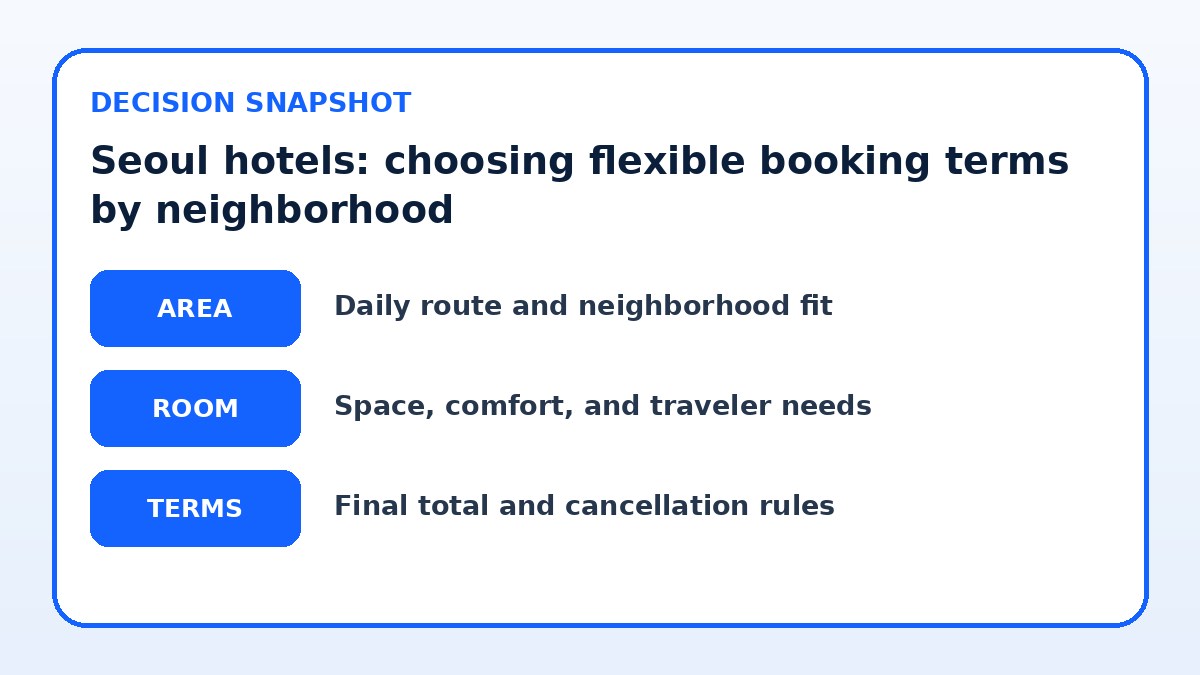
Daily-route friction: transportation and time tradeoffs
Map typical daily routes you expect to take: airport to hotel, hotel to main attractions, and evening returns. Neighborhoods adjacent to major subway lines reduce walking and transfer time, while areas farther from transit hubs increase taxi or transfer reliance. Consider the number of transfers, likely walking distances to stations, and whether you prefer short commutes at the cost of higher nightly rates or longer commutes with lower prices. Ask yourself whether you’d rather be steps from one attraction or centrally located with many one- or two-transfer routes.
Flexible booking terms help if transit or schedule uncertainty exists: choose options that allow date changes without penalties in case you shift priorities mid-trip. If you’ll be doing early or late airport transfers, check whether the hotel’s flexible policy covers late arrivals or unforeseen delays. For itineraries with many day trips, staying near a major transfer station can save hours; for slow-paced stays, prioritizing neighborhood comfort over transit speed might be preferable. Use the travel days you expect to average per day to weigh this tradeoff when shortlisting areas.
Now compare like with like
Keep the same dates, guests, room needs, and cancellation preferences while you compare the final choices.
Room and party needs: matching space and amenities
Decide on room configurations, bed types, and accessibility needs before filtering by price or flexibility. Solo travelers often prioritize single rooms close to transit, while couples might want rooms with better views or larger beds. Families and groups should shortlist properties that offer connecting rooms, suites, or family rooms. If you’ll be working from your room, prioritize properties advertising a dedicated workspace, good natural light, or quieter floors—then compare whether refundable rates include the same room types as nonrefundable ones.
When comparing flexible terms, verify if room upgrades or changes are allowed without penalty and whether the property charges for additional guests on free-cancellation rates. For parties with special requests—cribs, extra bedding, accessibility—the safest path is to book a refundable or changeable rate and confirm requests directly with the property after booking. If you’re booking a nonrefundable deal to save money, ensure the room configuration is final and will meet everyone’s needs, because changes may be restricted or come with cost.

Hotel booking check before payment
- Choose two or three neighborhoods that match your daily priorities (sightseeing, transit, quiet stay, or nightlife) before checking rooms.
- On each hotel page, copy or screenshot the full cancellation terms including exact cut-off time and refund method.
- Compare whether refundable rates require immediate payment, a deposit, or pay-at-property to gauge your cash flow and refund timing.
- Confirm that your preferred room type (bed configuration, extra bed, accessible room) is available on the flexible rate.
- If you have special requests, message the property after booking but before arrival to get confirmations in writing.
- Before finalizing, check whether changing dates is treated the same as cancelling, and whether third-party bookings have different policies.
Final booking terms: what to check on the checkout page
Before completing a reservation, read the provider’s final booking page in full. Confirm the exact cancellation window (times and timezone), whether refunds are full or partial, and the method of refund. Check whether payment is due immediately or at the property, and whether refundable rates require a pre-authorization or deposit. Watch for wording that limits changes to dates versus cancellations and whether penalties scale with how close to arrival you cancel.
Also verify whether special requests are guaranteed or only requests, and whether any additional property rules apply (for example, quiet hours, extra-guest fees, or identification checks). If your plans might change, prioritize rates labeled refundable with reasonable windows, but always double-check the fine print. If you prefer a quick comparison, Trip.com can be used to view live availability and terms, but always confirm the cancellation and payment details on the hotel or provider’s final booking page before relying on them.
Hotel Guide questions travelers ask
How do I compare refundable and nonrefundable rates without seeing prices?
Focus on the rules rather than the price tag. Read cancellation windows, whether refunds are full or partial, and who processes refunds (the hotel or booking site). Note payment timing — some refundable rates still charge a deposit or preauthorization. If you can’t see exact prices yet, shortlist hotels by neighborhood and room needs, then check the provider’s checkout page for each shortlisted stay to compare the concrete terms before committing.
If I choose a refundable rate, what exactly should I verify on arrival and checkout pages?
Verify the cancellation deadline time and timezone, whether cancellations are fully refunded or incur penalties, and how refunds are returned. Check payment terms: is the card charged immediately or only a pre-authorization? Look for clauses about date changes, no-shows, and the treatment of special requests. If any term is unclear, contact the provider directly and keep written confirmation of any exceptions or promises before you rely on them.
Can neighborhood choice reduce the need for flexible bookings?
Yes—picking a neighborhood that naturally fits your itinerary reduces the likelihood you’ll need to change hotels mid-trip. If your plans are fixed and your short-listed area puts attractions and transit within easy reach, you can reasonably weigh nonrefundable options for savings. But if your schedule might shift, or you’re unsure about arrival times, maintaining a flexible booking gives you options. Weigh how much inconvenience a move would cause against the cost difference between rate types.
Final decision note
First-time visitors should shortlist neighborhoods before hunting for specific Seoul hotels: the right area determines daily convenience, transit time, and how much you’ll use hotel amenities. Once you know the neighborhood and room needs, make flexibility the next filter—compare cancellation windows, payment timing, refund handling, and whether changes are allowed without penalties. Keep screenshots or copies of the final booking terms and confirm special requests with the property after booking. Shortlisting by neighborhood first makes it practical to compare flexible terms across a small set of suitable hotels and finalize a booking with confidence.
Continue planning
Check current options and final conditions
Use the provider page to confirm live availability, the final total, cancellation terms, and every condition that matters to your trip.
This evergreen planning guide was created with AI-assisted drafting and a structured quality review. It does not display live prices, schedules, availability, visa guidance, or provider rankings. Verify current details before booking. Some links are affiliate links; we may earn a commission at no additional cost to you.