If you’re carrying extra suitcases, camera gear, sports equipment or bulky shopping, planning the travel day from Bangkok to Chiang Mai becomes more about logistics than comfort. The practical answer: choose the mode and itinerary that minimizes transfers, avoids tight metro or bus station stairs, and gives you a clear plan for offloading and storing bags before, during and after the main leg. Start by comparing door-to-door time, how many times you’ll lift or wheel luggage, where you’ll store bags at each terminal, and how flexible your ticket is if trains or coaches run late. This article walks you through the decision between train, long-distance coach, and mixed options; how to evaluate terminals and transfers; what timing flexibility to seek; and a simple disruption backup plan so you don’t get stuck under a pile of bags in an unfamiliar station.
Choosing between train, coach, or mixed options
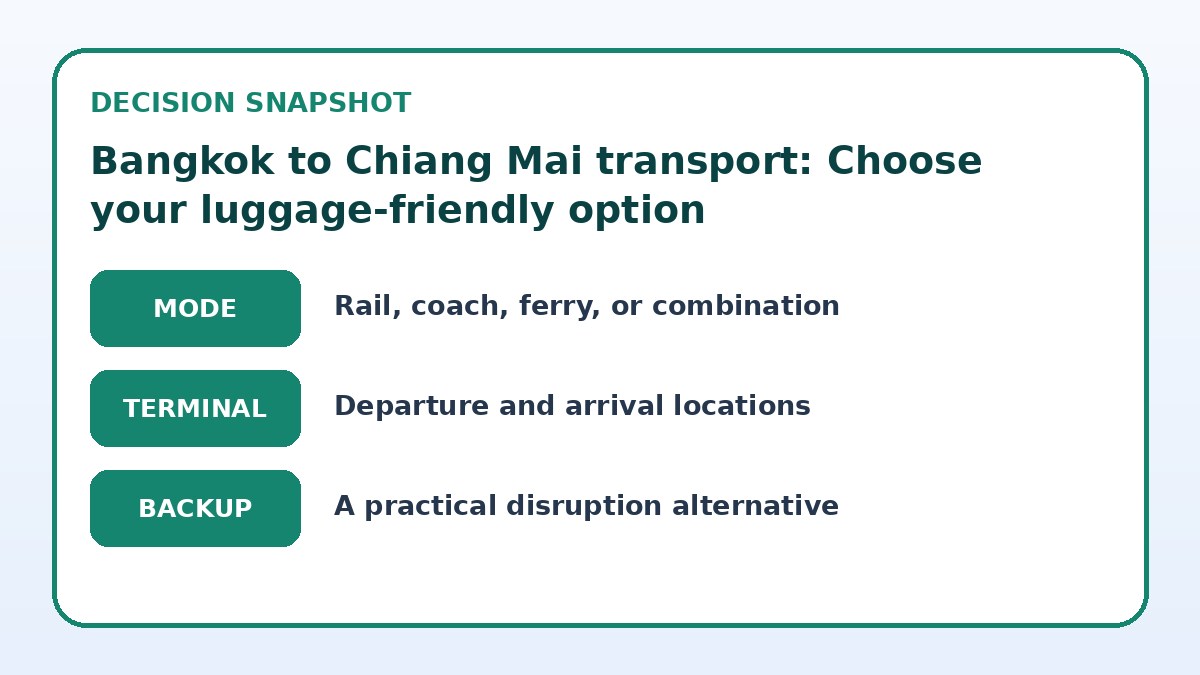
When picking how to travel from Bangkok to Chiang Mai with extra luggage, the core tradeoff is door-to-door convenience versus onboard space. Trains often have larger dedicated luggage areas and room to maneuver through aisles, while long-distance coaches may limit the size and number of items you can bring into the luggage bay. Mixed options—such as a short airport or terminal transfer followed by a different main leg—can reduce time on congested roads or offer more comfortable sleeping arrangements, but they add transfer steps. Each transfer increases the number of times you lift or check your bags, so count them carefully.
To decide, list your priorities: do you want minimal lifting, guaranteed space beside you, or the quickest overall door-to-door time? If minimal handling is the goal, look for direct services that depart from terminals with easy street-level access or staffed baggage handling. If onboard space or reclining seats are key, compare vehicle types and coach classes. Wherever you plan to buy tickets, verify the baggage allowance rules and whether the provider accepts oversized items before you finalize the booking.
Choose the end-to-end journey plan
| Journey approach | Best for | Friction to check |
|---|---|---|
| Choose a direct train with minimal transfers | Travelers who prioritize fewer lifts and steady onboard luggage space | May require boarding at a larger station that’s less convenient door-to-door |
| Take a direct coach from a suburban terminal | Groups sharing baggage or those who prefer vehicle-level luggage bays | Buses may use smaller terminals and can be slower in heavy traffic, increasing total handling |
| Mix modes: short transfer to a faster long-distance leg | People seeking a balance of speed and onboard comfort | Adds transfer steps—each one increases chance of handling snafus with luggage |
| Split the journey with an overnight stop | Those who want to rest and manage baggage in smaller moves | Adds hotel logistics and extra handling but reduces rushed transfers and fatigue |
Check live intercity options
Look beyond the ride itself and compare terminals, transfers, luggage, and arrival fit.
Terminal fit and luggage friction at departure and arrival
Terminal characteristics matter more than ride comfort when you have extra luggage. In Bangkok, pick a departure point with elevator access or ground-level boarding and confirm whether porters, luggage trolleys or pay-to-store counters are available. At arrival in Chiang Mai, know where the drop-off curb is, whether there are stairs from the platform to street level, and if taxi and ride-hail pickup zones are close to the terminal entrance. A longer wheelchair-access ramp or a nearby covered walkway can save you multiple heavy lifts and protect bags from sudden rain.
Before travel day, map out the exact terminal entry you’ll use and plan the short transfer between station and hotel or onward transport. If you must move bags between two stations or between a bus station and a train station, factor in time for queuing and for finding lifts or ramps. Photographs of station layouts, saved maps on your phone, and a clear plan for the first and last 500 metres of the journey prevent the common mistake of assuming curbside pickup is always quick and straightforward.
Timing flexibility and minimizing stress on travel day
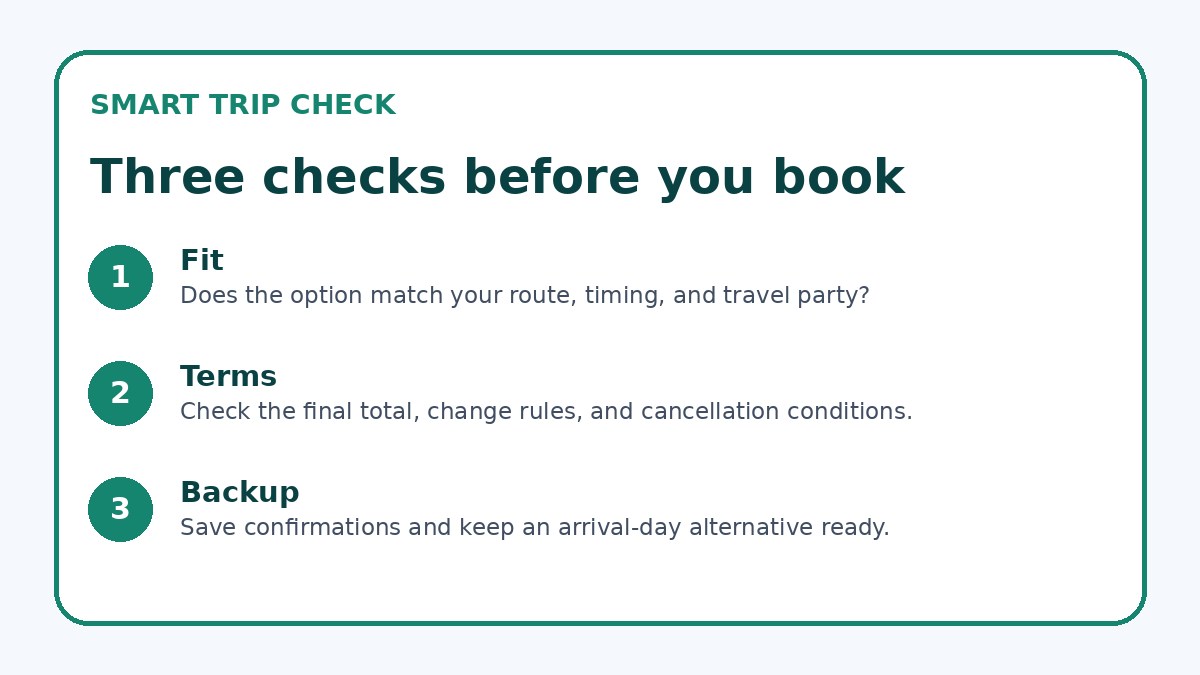
Allow buffer time beyond the published departure window: with heavy or many bags, check-in and boarding take longer, and traffic or elevators can add unexpected delay. Aim for departures that leave a comfortable margin between your arrival at the terminal and vehicle boarding time. If you’re booking a service that operates multiple times a day, prefer the slots that avoid commuter peaks and late-night transfers when fewer staff and fewer transport options might be available in case something goes wrong.
Also consider ticket flexibility: if your schedule allows, pick fares or ticket types that permit easy changes or rebookings. Flexibility matters more for travelers with extra luggage because missing one connection often forces multiple re-handlings of baggage. Keep digital and printed copies of booking references and take photos of luggage contents and labels; these small steps speed up any necessary recovery or claims process and help prove ownership if a bag is misplaced during a transfer.
Compare the practical alternatives
Use the final page to confirm what is actually offered on your dates and save a workable fallback.
Intercity travel checklist
- Measure and weigh every item to confirm it fits provider baggage rules before booking the main leg.
- Scan and save digital photos of luggage, labels, and contents; store copies in cloud and on your phone.
- Map exact station entrances and the shortest route to your first-night accommodation; screenshot offline maps.
- Reserve a bolster or porter service at larger terminals where available, and confirm operating hours.
- Pack a small carry-on with essentials, chargers, documents, medication and valuables to reduce risk from any lost checked bag.
- Identify and note one alternative transport provider and a nearby luggage storage option at both origin and destination.
Simple disruption backup plan for luggage-heavy trips
Disruptions happen. Have a short plan that covers three likely scenarios: delay of the main service, missed connection due to transfer friction, and loss or damage to baggage. Identify a nearby short-stay hotel or luggage-friendly public storage option at both ends of the trip, so you can offload and reduce stress while you sort alternatives. Keep emergency contacts handy—your booking reference, the carrier’s customer service number, and a local contact if possible—to speed up rebooking or baggage tracing.
If you can, split essentials into a carry-on that stays with you and a larger checked bag; that reduces consequences of any single mishap. Carry a compact lock, a list of contents, and snapshots of valuable items. When calling or visiting a provider to resolve a disruption, be ready to provide departure and arrival times, ticket numbers, and precise descriptions of luggage and where it was last seen. This practical backup reduces the time you spend managing an issue and keeps the trip salvageable even with bulky baggage.
Rail & Intercity Transport questions travelers ask
How do I verify a carrier’s baggage policy for oversized or extra suitcases?
Before you book, check the carrier’s official booking page for baggage dimensions, weight limits, and item-type rules—don’t rely on third-party summaries. If the booking page is unclear, contact the carrier’s customer service and get confirmation in writing (email or chat screenshot) that states whether oversized items are accepted, whether they require advance notification, and any handling instructions. When comparing options, make these requirements a decision filter rather than an afterthought; note any fees or need for pre-booked cargo slots if provided on the carrier’s final booking page.
What’s the best way to move bulky items between Bangkok and Chiang Mai if I don’t want to carry them on the journey?
If you prefer not to handle bulky items, arrange for a dedicated freight or courier service that specializes in intercity baggage delivery, or use a luggage forwarding service available in the region. Confirm pickup and delivery windows, insurance coverage for high-value items, and whether the service requires you to pack to specific standards. Compare door-to-door pickup versus station drop-off options and always verify expected delivery dates with the provider’s booking page; if timing is tight, keep critical items with you in a carry-on and avoid relying on same-day baggage freight.
What should I do on travel day if my scheduled train or coach is delayed and I have a lot of luggage?
If a delay occurs, prioritize securing your luggage in a supervised area—ask station staff for a temporary locker, luggage room, or supervised corner rather than leaving bags unattended. If the delay threatens a connection, immediately check alternative services and whether you can rebook onto a later service or different provider; have booking references and ID handy to speed staff assistance. If staff assistance is limited, move essentials into an accessible bag and consider short-term storage with a nearby luggage facility while you sort replacement transport; always document delays and keep receipts for any extra expenses for later reimbursement claims.
Final decision note
Traveling from Bangkok to Chiang Mai with extra luggage requires planning the whole day, not just the ride. Prioritize options that reduce the number of transfers and choose departure and arrival points with easy ground access, lifts, or staffed baggage services. Time your trip to avoid peak crowds, separate essentials into a carry-on, and keep digital proof of bookings and luggage contents. Finally, have a short disruption plan—an alternative provider, a nearby luggage-friendly hotel, and clear contact details—so you can adapt quickly without a mountain of bags slowing you down. Small pre-trip logistics pay off in less strain and a more reliable door-to-door journey.
Continue planning
Check current options and final conditions
Use the provider page to confirm live availability, the final total, cancellation terms, and every condition that matters to your trip.
This evergreen planning guide was created with AI-assisted drafting and a structured quality review. It does not display live prices, schedules, availability, visa guidance, or provider rankings. Verify current details before booking. Some links are affiliate links; we may earn a commission at no additional cost to you.