If you travel alone between Seoul and Gangneung, pick the ticket option that matches how much flexibility, luggage support, and disruption tolerance you need. Practically, that means deciding between rail, intercity coach, private transfer (or a mix) by weighing where you start in Seoul, how easily you can reach terminals, and how important it is to change plans last minute. This article gives a clear decision rule up front: choose a highly flexible rail or coach ticket if you expect schedule changes or tight connections; select a prepaid fixed ticket only if you’re certain of arrival times and want simpler booking. Below you’ll find terminal-fit considerations, luggage and transfer friction, timing flexibility, and a simple disruption backup plan for each approach so you can finish booking with confidence.
Terminal fit: where you start and end matters
Start your planning by mapping door-to-door time, not just ride time. Seoul has multiple departure points—major train stations, express bus terminals, and urban pickup zones for private transfers—while Gangneung has set arrival points that might be some distance from coastal areas you want to reach. For solo travelers, a longer walk with heavy luggage or an unfamiliar local transfer increases stress and can negate savings from a cheaper ticket. Use a simple map check from your accommodation to the station or terminal and mark public transport or ride-hail options between terminals and final addresses.
Also consider terminal amenities and opening hours as they affect wait comfort and last-minute changes. If your chosen departure point is a large rail station, you’ll usually have more food, seating, luggage storage, and clearer signage, making early or delayed departures less troublesome. Smaller bus stops and private transfer pickup points may be quicker to reach but offer fewer services. Before booking, verify the exact terminal address and recommended pickup points on the provider’s booking page so you’re not left guessing on the day.
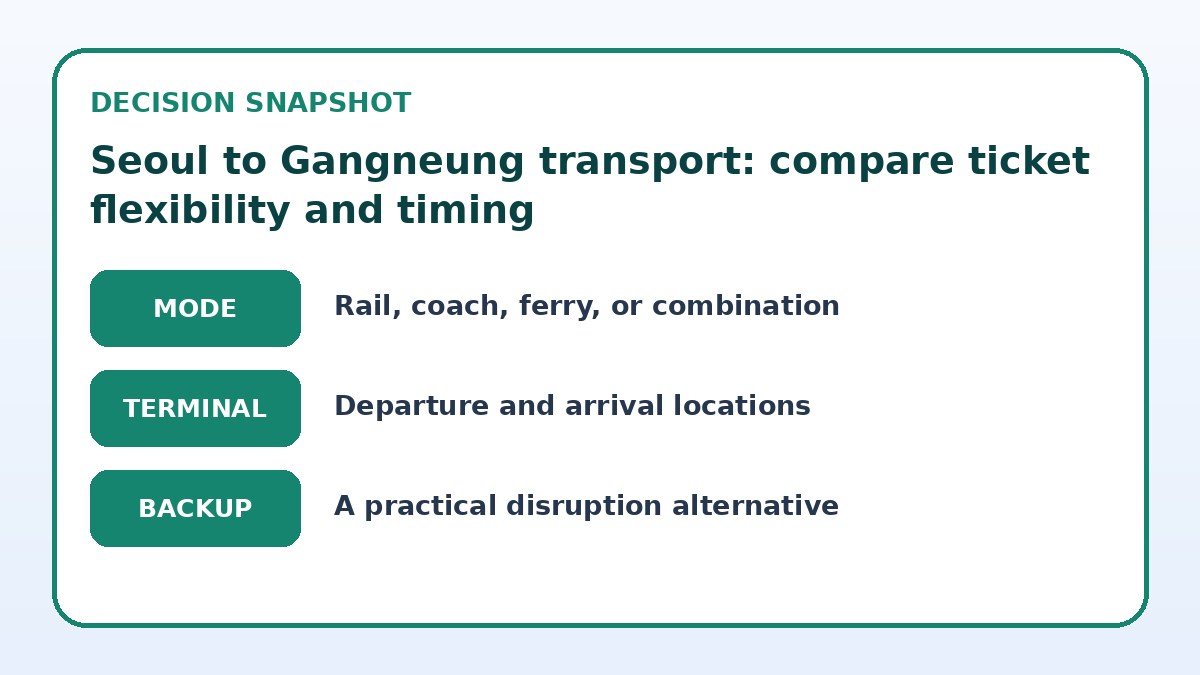
Choose the end-to-end journey plan
| Journey approach | Best for | Friction to check |
|---|---|---|
| Flexible rail tickets with seat reservation | Solo travelers wanting moderate luggage handling and easy terminal access | Usually better on-board comfort but may require station travel and checking change rules on the booking page |
| Intercity coach tickets (flexible fare) | Those prioritizing direct terminal pick-up and simple booking processes | Lower transfer complexity but luggage limits and fewer onboard amenities can increase friction |
| Private door-to-door transfer | Travelers who value minimal transfers and full luggage assistance | High convenience at the expense of less flexible cancellation windows unless explicitly stated |
| Mixed itinerary (train or coach plus local ride-hail) | People needing schedule options and local last-mile flexibility | Maximizes route choices but increases coordination and risk of missed connections |
Check live intercity options
Look beyond the ride itself and compare terminals, transfers, luggage, and arrival fit.
Luggage and transfer friction for solo travelers
Luggage handling is a practical constraint that often determines whether a ticket is actually usable for a solo traveler. Trains typically allow larger carry-on and checked items with easier storage on board, while coaches may limit overhead space or require stowing under the bus. Private transfers remove the need to move bags between modes, which is a decisive convenience if you have bulky or heavy items. If you plan to change from one mode to another, factor in the physical effort and time to move luggage between platforms, terminals, or vehicles.
Think also about the number and quality of transfers. A single direct leg with one operator is simplest; combined itineraries multiply points where errors, delays, and last-minute changes can occur. If you must transfer, choose transfer points with short walking distances, elevators or escalators, and easy signage. Check whether the operator’s booking confirmation states luggage allowances and whether assistance is available; when such specifics might change, confirm them on the final booking page before committing.
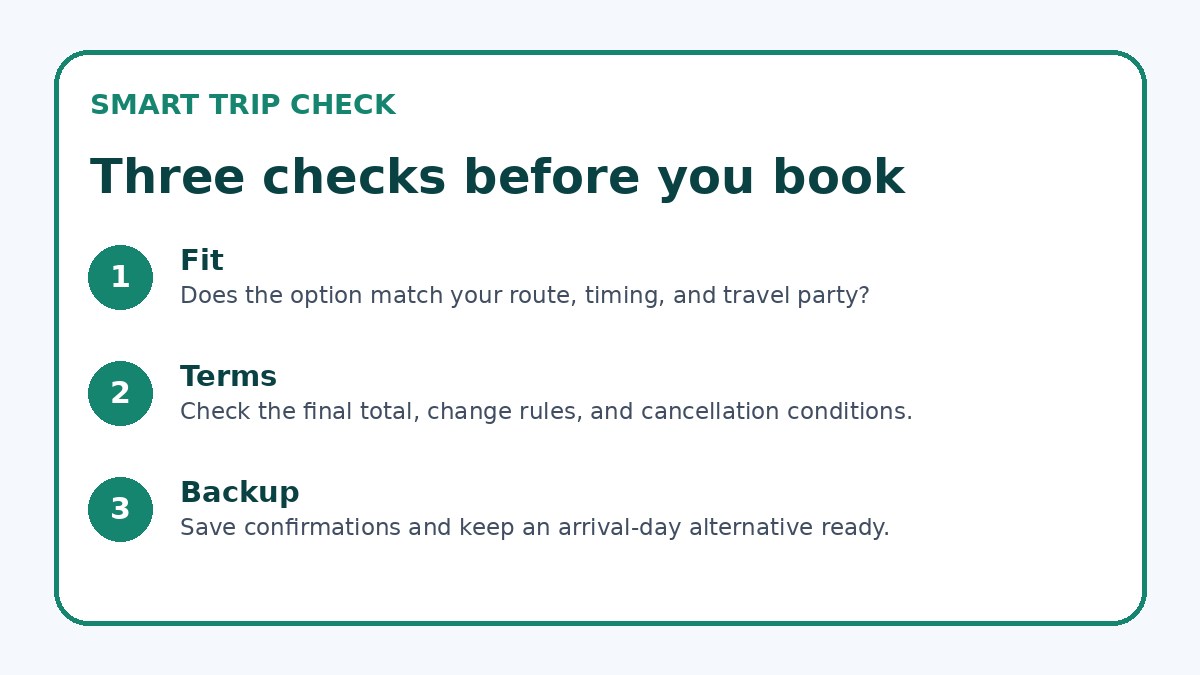
Timing flexibility: booking terms that match your plans
Different ticket types give different levels of timing flexibility. Fully flexible tickets let you change or reschedule with minimal penalty, giving solo travelers room for unexpected delays or itinerary shifts. Restricted or nonrefundable fares can be cheaper but leave no recourse if you miss your departure. When comparing options, read the cancellation, change, and reissue rules on the provider’s final booking page—these define how much control you retain if trains or coaches are booked full or your schedule changes.
Also decide how much buffer time you want between connections—conservative buffers reduce stress but can mean longer travel days. If you rely on scheduled public transport in Seoul to reach a terminal, choose a ticket with later permitted rebooking or buy a flexible ticket so you can move to a later service. For solo travelers who prefer a precise itinerary, reserved seating reduces the risk of being left standing on busy services but may limit last-minute moves; evaluate whether seat reservations are transferable or refundable before finalizing.
Compare the practical alternatives
Use the final page to confirm what is actually offered on your dates and save a workable fallback.
Intercity travel checklist
- Map your door-to-door route, including walking, local transit, and any ride-hail needed to reach departure and arrival points.
- Check the operator’s final booking page for exact terminal addresses, luggage allowances, seat reservation rules, and change/cancellation terms.
- Allow at least one realistic time buffer between connections and choose a ticket that permits moving to a later service if delays occur.
- If carrying heavy luggage, prefer options with minimal transfers or book a private transfer; confirm luggage handling rules before paying.
- Save digital confirmations and local contact numbers for each operator, and screenshot terms that might change on later pages.
- Identify one alternate same-day departure or route and the fastest way to reach it so you can act quickly if your original plan fails.
Disruption backup: simple plans for delays and cancellations
Every solo trip benefits from a compact disruption plan: identify one realistic alternate departure on the same day, a nearby travel option (ride-hail or other terminal), and a contact point for help. If you book a flexible train or coach ticket, confirm how to change to a later departure and whether you can do it online or must visit a counter. If the operator requires in-person changes, plan extra time or a secondary option because solo travelers are more vulnerable to missed connections.
Private transfer bookings typically offer direct refund or rebooking but check the provider’s policy and local support channels. For combined itineraries, keep digital copies of tickets and local contact numbers, and know where to store luggage temporarily if needed. If you need to buy a last-minute alternative, use an official app or the operator’s site (Trip.com can be a place to compare availability) and verify final terms before purchase so you don’t lose flexibility when a disruption occurs.
Rail & Intercity Transport questions travelers ask
Can I change a reserved train or coach ticket from Seoul to Gangneung on the day of travel?
It depends on the ticket type and the operator’s rules. Some flexible fares allow same-day changes online or at counters, while nonrefundable or deeply discounted fares may prohibit changes or impose fees. For seat-reserved trains, confirm whether you can transfer the reservation to a later service and whether that can be done via the website or requires an in-person visit. Always check the operator’s final booking page for permitted change windows and any fees before completing your booking, because policies differ and may affect last-minute plans.
What’s the easiest way to handle luggage as a solo traveler on this route?
The simplest approach is to choose a direct service or private transfer that minimizes handoffs. Trains often provide luggage racks and easier movement on board; coaches may require stowing bags under the carriage and retrieving them at the stop. If you must make a connection, pick transfer points with elevators and short walking distances and allow extra transfer time. For bulky items, book a private transfer or a service that explicitly notes luggage assistance. Verify luggage size and weight rules on the provider’s booking page to avoid surprises at boarding.
If my train or coach is canceled, what immediate steps should I take as a solo traveler?
First, consult the operator’s official communication channels for rebooking or refund instructions. If the operator offers free rebooking, follow their process; if not, look for the next available service and confirm whether you can move your ticket. If you need to pivot to a different mode, check ride-hail or a private transfer for the fastest door-to-door option. Keep digital receipts and screenshots of cancellation notices and any agent instructions. Finally, contact your accommodation if arrival will be substantially delayed so they can hold or adjust your plans.
Final decision note
Choosing the right ticket for Seoul to Gangneung as a solo traveler comes down to one practical question: how much flexibility and luggage support do you need versus how much coordination you’re willing to accept. If minimizing transfers and ease of handling are top priorities, private transfers or reserved flexible train seats are strong options. If you prefer a balance of cost flexibility and easy terminal access, flexible coach tickets can work well. Always verify final terms—addresses, luggage rules, change and cancellation policies—on the operator’s booking page before you pay, and have a simple same-day backup route so a disruption doesn’t derail your travel plans.
Continue planning
Check current options and final conditions
Use the provider page to confirm live availability, the final total, cancellation terms, and every condition that matters to your trip.
This evergreen planning guide was created with AI-assisted drafting and a structured quality review. It does not display live prices, schedules, availability, visa guidance, or provider rankings. Verify current details before booking. Some links are affiliate links; we may earn a commission at no additional cost to you.