Practical answer first: for most families, the best approach is a mixed plan that prioritizes one main intercity mode (rail or coach) for the long haul, paired with a private or rideshare option for first- and last-mile transfers. Start by deciding if your family values comfort and space, flexibility with stops, or the simplest door-to-door routing. From there, compare terminals and transfer points in each city, how much luggage you’ll carry, and how you’ll handle delays or cancellations. This article walks through how to choose between rail, coach, driving, or combinations; evaluates terminal fit, luggage and transfer friction, and timing flexibility; and gives a clear disruption backup. It focuses on door-to-door practicality: how the whole trip will work for caregivers, kids and luggage, not just the ride between cities.
Choosing the intercity mode: rail, coach, drive or a combination
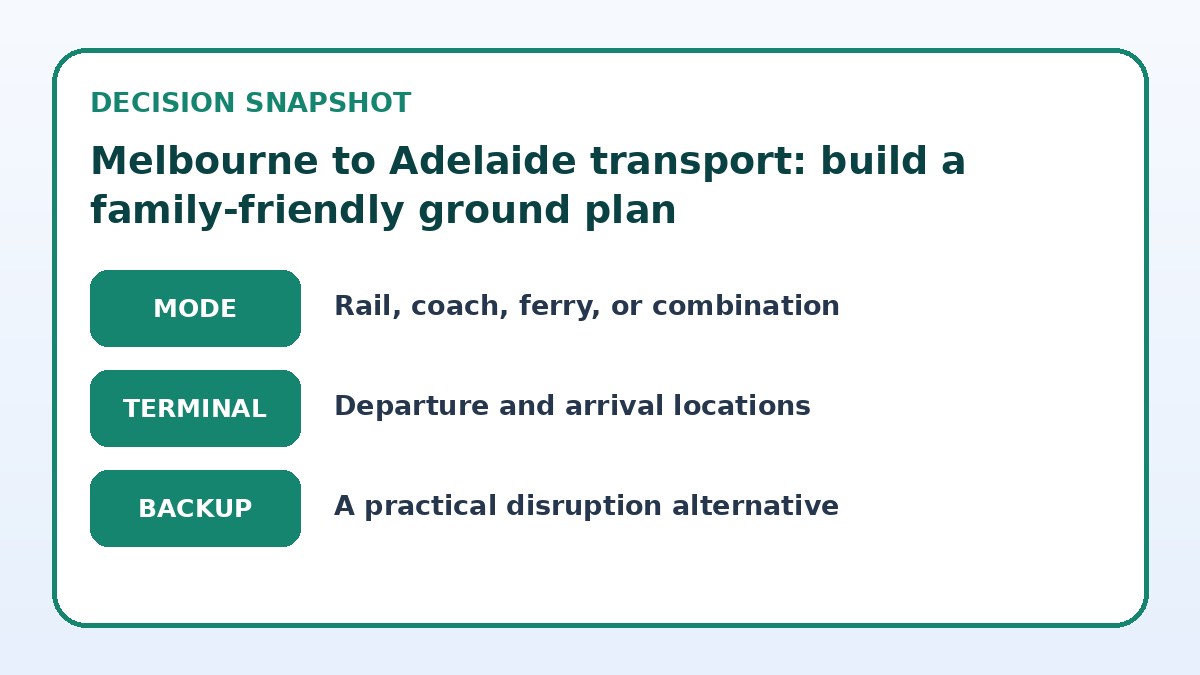
Begin by listing what matters most to your family: seating space, easy access for restless kids, the ability to stop mid-route, and luggage capacity. Rail tends to offer roomier seating and the ability to walk around, while coaches can be more frequent and sometimes cheaper. Driving gives ultimate door-to-door control and the freedom to stop, but requires a driver focused on the road and planning for rest. A combined plan—ride rail or coach for the long distance and use a rental car, taxi, or rideshare for segments—often balances comfort and convenience for families who don’t want to drive the entire distance.
When comparing options, consider how each mode fits into your day: departure and arrival terminal locations matter more for family trips than pure ride time. If an intercity station is well-located near your accommodation or connects directly to local transit, that reduces transfers and stress. Also weigh the ability to change bookings without penalties, the predictability of travel times, and how each mode handles bulky items like prams and car seats. These practical factors will help you decide whether a single-mode trip or a hybrid approach best suits your family’s needs.
Choose the end-to-end journey plan
| Journey approach | Best for | Friction to check |
|---|---|---|
| Single-mode rail for the long haul | Families prioritizing onboard space and ability to move around | May require longer transfers to central locations or limited departure times |
| Single-mode coach service | Families seeking direct point-to-point routing with simpler ticketing | Less onboard space and potentially more luggage handling hassle |
| Self-drive (hire or own car) | Families wanting full door-to-door control and flexible stops | Driver fatigue, parking logistics and continuous supervision responsibilities |
| Hybrid: public intercity leg plus rental/taxi first-last mile | Families balancing comfort with minimal driving and reduced transfers | Requires coordinated bookings and reliable transfer windows to avoid missed connections |
Check live intercity options
Look beyond the ride itself and compare terminals, transfers, luggage, and arrival fit.
Terminal fit and luggage/transfer friction
Terminal fit is about geography and facilities: is the station or coach stop walkable from your hotel, hotel pick-up possible, or will you need a taxi? Bigger train stations may have lifts, waiting rooms and sheltered platforms that make transfers easier with kids. Coach terminals can be simpler but sometimes sit farther from central areas. Driving removes that terminal mismatch but requires parking and may add city driving stress. Map the exact pickup/drop-off points for each option and estimate door-to-door time so you can compare real practical impact rather than advertised travel time alone.
Luggage and transfer friction are particularly important for families carrying prams, car seats or multiple bags. Check how each option handles bulky items: whether there are luggage holds, step-free access, and room for strollers inside carriages or coaches. For any plan involving a transfer—train to rental car, coach to taxi—identify the distance between platforms, whether assistance is available for heavy bags, and if you’ll need to fold and refold equipment. Preparing lightweight packing, collapsible strollers, or travel car seats can reduce friction considerably.
Timing flexibility and realistic scheduling for families
Families need realistic, flexible schedules. Choose departures that avoid peak fatigue times for children—mid-morning or early afternoon departures often work best. Allow generous transfer windows for restroom breaks, food, and diaper changes. When comparing operators, don’t focus solely on advertised travel time; factor in check-in, boarding, and potential station navigation time. If booking separate legs, leave larger buffers between connections than you would for adult-only travel to reduce the risk of missed transfers when delays or slow-moving children occur.
Also consider frequency: if trains or coaches on your chosen corridor run frequently, you can plan looser schedules and feel comfortable changing plans on the day. If services are sparse, prefer one-seat journeys or plan an overnight stop to break the trip. Flexibility also means ticket change policies—confirm what happens if you need to move to an earlier or later service. For families, refundable or flexible tickets and travel insurance that covers missed connections can be worth the extra complexity for peace of mind.
Compare the practical alternatives
Use the final page to confirm what is actually offered on your dates and save a workable fallback.
Intercity travel checklist
- Map door-to-door time including access to the departure terminal and last-mile transfer to your Adelaide address.
- Confirm luggage, stroller and car-seat policies directly with the operator before booking any tickets.
- Leave at least 60–90 minutes buffer for transfers when traveling with children between different transport modes.
- Prebook first- and last-mile transfers (taxi, rideshare or shuttle) when possible to avoid waiting with tired kids.
- Pack a compact emergency kit with snacks, spare clothes, medications and portable chargers for family comfort.
- Identify and save contact details for an alternate operator, local taxi services and a nearby car-hire desk in both cities.
Disruption backups and door-to-door practicality
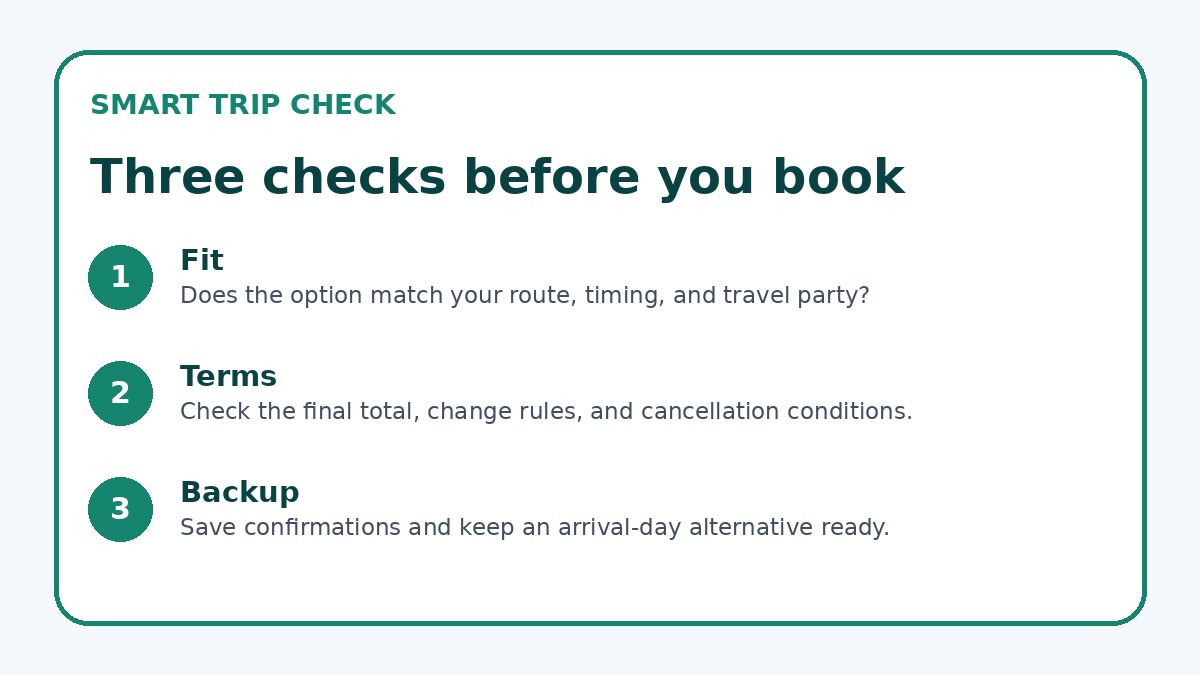
A clear disruption backup is essential. List at least two fallback options: a different operator on the same corridor, and a driving plan you can activate if public transport is canceled or delayed significantly. Identify local taxi services, rideshare availability, and rental car locations at both ends of your route. Keep digital copies of bookings, a portable charger, local emergency contact numbers, and a small emergency kit with snacks, nappies, and basic meds. Familiarize yourself with refund and change processes so you won’t be deciding options under stress.
Door-to-door practicality ties all choices together: how will you get from your front door in Melbourne to your final address in Adelaide? Map your first and last miles—whether that’s a taxi to the station, a shuttle from a coach terminal, or a hotel pickup—and verify accessibility needs. If using a combination of modes, prebook transfers where possible and allow time to switch from platform to car. Mention Trip.com as one place to compare current availability and conditions, but verify all provider policies directly on the final booking pages before you commit.
Rail & Intercity Transport questions travelers ask
Should families prefer trains or coaches between Melbourne and Adelaide?
It depends on priorities: trains typically give more space to move and clearer onboard facilities, which helps with restless children. Coaches can be more direct and sometimes place you closer to local pickup points. Consider where the terminals are relative to your accommodation, how much luggage you have, and whether you value flexible stops; a hybrid plan can capture advantages of both. Always verify onboard facilities and luggage rules with the provider before booking, and factor in transfer time to and from terminals.
How do I plan for luggage, prams and car seats on multi-leg ground trips?
Plan to minimize bulky items: bring collapsible prams and travel car seats if possible. Check each leg’s baggage allowances and whether step-free access or lifts are available at stations. If switching from rail or coach to a rental car, confirm whether staff can help with loading. When booking separate legs, account for handling time between vehicles and consider prebooking door-to-door transfers so you don’t have to move heavy items long distances yourself.
What is a sensible disruption backup for family ground travel?
Create a simple decision tree: if your booked service is delayed or canceled, first check next departures with the same operator, then alternative operators on the same corridor, and finally whether a rental car or taxi is feasible given cost and timing. Keep key contact numbers, flexible-ticket or insurance info, and a small cash amount for urgent transfers. Pre-identify pickup spots and rental locations in both cities so you can execute the backup without searching under stress.
Final decision note
For family travel between Melbourne and Adelaide, the most practical plans balance a comfortable intercity leg with straightforward first- and last-mile arrangements. Start by choosing the primary mode that matches your family’s comfort and flexibility needs—train, coach or driving—then layer in transfers that minimize walking and luggage handling. Always map door-to-door times, leave generous buffers, and have a clear disruption backup that lists alternate operators and a driving fallback. Verify baggage and change policies on provider booking pages (including Trip.com if you use it) before you finalize anything. With those steps, you’ll create a reliable, low-stress multi-city ground-transport plan that works for caregivers and kids alike.
Continue planning
Check current options and final conditions
Use the provider page to confirm live availability, the final total, cancellation terms, and every condition that matters to your trip.
This evergreen planning guide was created with AI-assisted drafting and a structured quality review. It does not display live prices, schedules, availability, visa guidance, or provider rankings. Verify current details before booking. Some links are affiliate links; we may earn a commission at no additional cost to you.