If you’re bringing bulky sports gear, extra suitcases, or more-than-usual baggage to Jeju, start by comparing what any package actually includes versus separately booked components. The practical answer: evaluate inclusions (checked baggage, transfers, and accommodations), flexibility for date or passenger changes, the specific value you gain given your luggage needs, and final contract terms before deciding whether a bundle is worth it. Bundles can simplify logistics but often hide restrictive baggage allowances, tight change policies, or nonrefundable components. Separate bookings let you tailor baggage allowances and transfers but require you to coordinate times and accept some risk if a flight delay breaks your ground reservation. Below I’ll walk you through the exact things to compare, the tradeoffs for four common booking approaches, a checklist to verify before you click “book,” and answers to frequent questions travelers with extra luggage ask about Jeju travel deals.

Test package value fairly
| Booking approach | Best for | Tradeoff to check |
|---|---|---|
| Full package (flight + hotel + transfers) | Travelers who want one point of contact and predictable door-to-door logistics with limited planning time. | May have restrictive baggage allowances or rigid transfer windows—verify baggage inclusions and change terms before booking. |
| Flight plus hotel booked separately | Those who want to choose airline baggage options and hotel policies independently to match luggage needs. | Requires coordinating arrival times and transfers; if flights change, you must manage separate refund/change processes. |
| Flight plus private transfer and hotel | Travelers with oversized or specialist gear who need a guaranteed vehicle that handles large items. | Higher up-front cost and responsibility to confirm vehicle size and luggage handling; check cancellation and delay policies. |
| Self-assembled trip with local transport and day tours booked on arrival | Flexible travelers willing to adapt plans and optimize costs by choosing services that accommodate extra luggage as needed. | Less predictability—may face sold-out transfers or limited luggage capacity during peak times; requires more on-the-ground coordination. |
Check current package and separate options
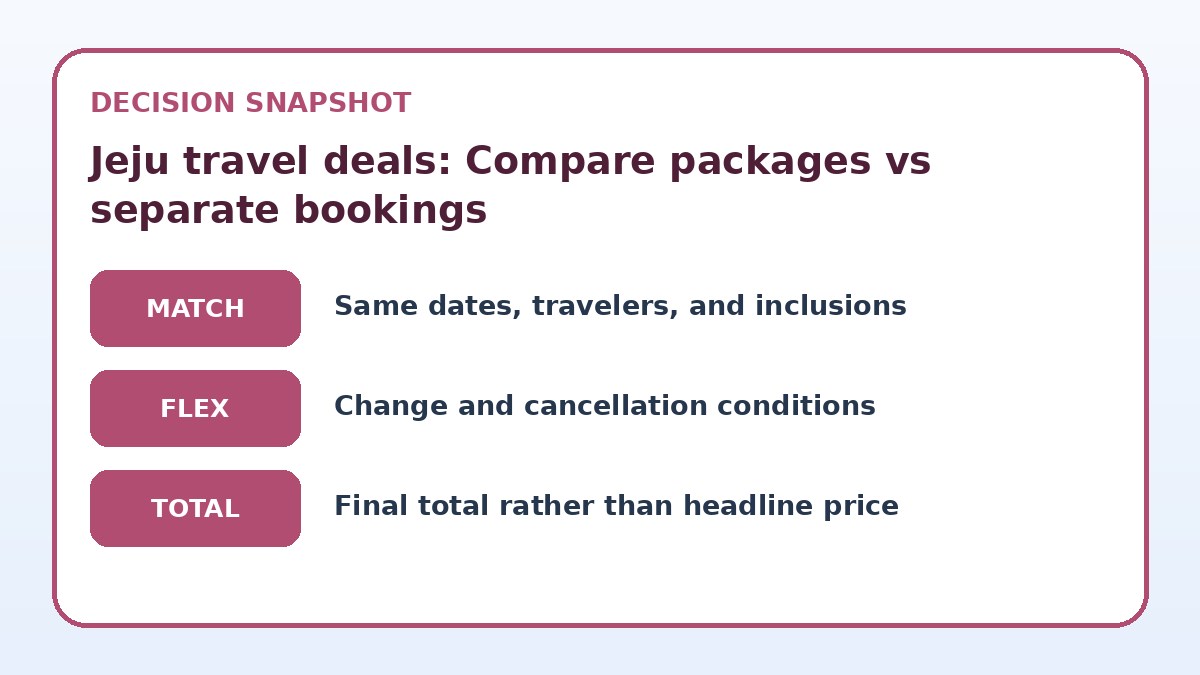
Use identical dates, travelers, room needs, baggage, and flexibility so the comparison stays meaningful.
What to check in package inclusions
When evaluating a bundled Jeju travel deal, list every inclusion and match it against your baggage profile. Items to verify include the quoted number and size of checked bags per passenger, whether transfers state a luggage capacity or charge for oversized pieces, whether hotels advertise free luggage storage or move-in assistance, and if any day tours limit equipment. Don’t assume 'baggage included' means the same as the airline’s standard allowance; providers sometimes give a lower included amount or require you to upgrade for sports equipment or extra suitcases.
Next, check whether the package price covers ancillary essentials you’ll actually use: airport transfers timed to the flight arrival, seat selection if you need extra legroom to handle carry-on items, and refundable versus nonrefundable components. If the package bundles a low-cost carrier flight with a hotel, confirm the airline’s baggage policy separately. Build a short checklist to compare the package inclusions directly with the same items booked separately so you can spot real differences in coverage and convenience.
Flexibility and traveler-specific value
Flexibility matters more for travelers carrying extra or special luggage because changes are costly. Examine change and cancellation rules for each part of the package: flights, hotels, ferries, and transfers. A package that locks you into nonrefundable flights but provides a flexible hotel credit often isn’t valuable if you must change dates due to missed connections or luggage handling delays. For groups or families with varied baggage needs, check whether the package allows adding paid baggage to only those travelers who need it, or whether upgrades must be applied across the whole booking.
Think through scenarios that would force a change—flight delays, oversized baggage requiring a different vehicle, or last-minute itinerary shifts—and decide how much risk you can absorb. Packages that include flexible transfer windows or the option to add a larger vehicle for a fee can provide real value. Conversely, if your luggage profile is steady and you prefer one price and single contact for problems, a well-documented package with clear baggage limits can reduce stress even if it costs a little more.
Look past the headline total
Compare inclusions and change conditions before deciding whether a package is genuinely useful for this trip.
Deal comparison checklist
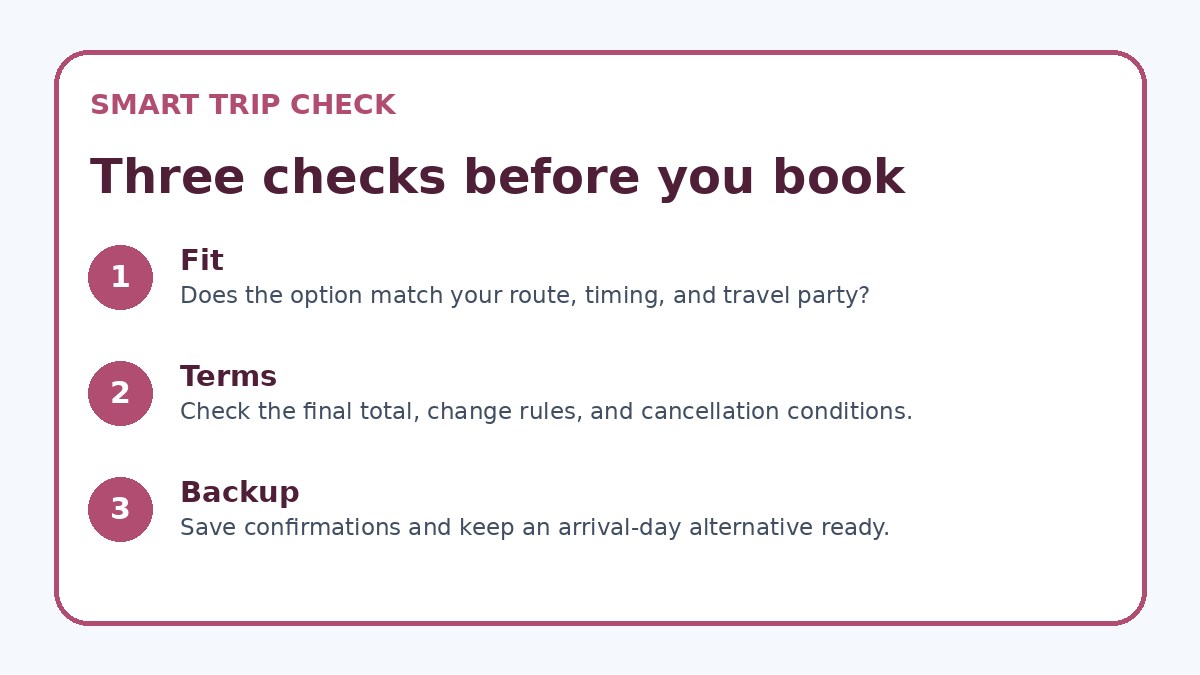
- Match the package and separate booking quotes for the exact same travel dates, traveler count, and itinerary components before comparing total costs.
- Confirm the number, size, and weight limits for checked baggage on the airline segment and any surcharges for oversized or additional pieces.
- Verify transfer descriptions for vehicle type, luggage capacity, pickup windows, and whether providers allow private or oversized-gear vehicles.
- Check change and cancellation policies for each included component and note any nonrefundable elements that could impact rebooking with extra baggage.
- Ask the hotel or transfer provider in writing about luggage storage, early check-in options, and assistance with heavy or oversized items.
- Retain screenshots or PDFs of baggage rules and transfer confirmations from the final booking page; use them if a dispute arises at check-in.
Practical comparison: timing, transfers, and coordination
For Jeju trips, timing and transfer logistics are crucial when you have extra luggage. Compare scheduled transfer pick-up times against realistic arrival times for your flights or ferries; narrow transfer windows can leave you waiting for a different public option if your flight is delayed. If you book components separately, you can choose transfer providers that advertise larger vehicles or private transfers that explicitly accept oversized gear—however, that means coordinating arrival times and accepting responsibility if one leg is late.
If multiple travelers arrive on different flights but share a single room and luggage allocation, confirm how the package handles staggered arrivals. Does the provider consolidate luggage on arrival, or must each traveler present their reservation? When booking separately, ensure your hotel or transfer company is willing to hold extra luggage before check-in. In all cases, verify on the booking pages whether transfers state luggage limits, whether airport meet-and-greet is included, and whether change fees apply for shifting pickup times.
Final terms and what to verify before you book
Before committing to any Jeju travel deal, open the provider’s final booking page and read the baggage rules, change and cancellation conditions, and transfer/arrival instructions. Look for explicit statements about the number of free checked items, size and weight limits, charges for oversized or extra baggage, and any exceptions for sporting equipment. Also confirm whether ground transfers are scheduled by fixed time windows or on-demand, and whether hotels will store luggage if you arrive early or depart late.
If anything is unclear, contact the provider and ask for written confirmation of baggage allowances and transfer limits attached to the reservation. When comparing package versus separate bookings, ensure you compare the same dates, number of travelers, and all inclusions—airfare, baggage, transfers, accommodation, and tour elements—so you are judging like-for-like. Trip.com can be a place to compare current availability and provider terms, but always verify baggage and change details on the provider’s final booking page before you finalize payment.
Travel Deals & Booking Strategy questions travelers ask
Are package deals likely to include enough baggage allowance for sports gear or oversized items?
Package inclusions vary widely; some include only the carrier’s base checked-bag allowance while others explicitly exclude oversized items. Always read the final booking page for the airline and package terms to see whether sports equipment or oversized baggage is included, requires an upgrade, or must be booked separately. If the package language is unclear, contact the provider and request written confirmation of coverage for your specific items and the fee structure for anything beyond the included allowance.
If I book a package and my flight is delayed, who is responsible for missed transfers to my Jeju hotel?
Responsibility depends on the provider’s terms. Some packages include flexible transfer windows or hold transfers for late flights; others expect travelers to use next available scheduled pickups and may not refund missed legs. Before booking, check the transfer policy on the final booking page for wording about missed connections and rebooking. If you need guaranteed coordination, consider a private transfer or separate bookings where you can arrange a later pickup for a fee and control the timing directly.
How can I avoid paying duplicate baggage fees when mixing separate flight and hotel bookings?
Avoid duplicate fees by buying the right airline baggage allowance at booking time that covers all your pieces, then choosing hotel or transfer providers that don’t charge for luggage handling beyond standard assistance. If a package includes a low baggage allowance, compare the total cost after upgrading the package versus booking flight and hotel separately with the correct baggage option. Keep documentation of the paid baggage allowance when you travel to show ground providers if questions arise.
Final decision note
For Jeju travelers carrying extra luggage, the practical route is to compare like-for-like: same dates, same traveler count, and the exact baggage and transfer needs. Bundles can save time and simplify logistics, but only when the inclusions match your luggage profile and the change policies offer the flexibility you need. Booking components separately gives more control over airline baggage choices and transfer vehicle sizing, yet requires more coordination and risk management if plans shift. Use the checklist to verify baggage rules and transfer details on final booking pages, ask providers for written confirmations when necessary, and pick the approach that balances convenience, predictable baggage coverage, and tolerance for change fees.
Continue planning
Check current options and final conditions
Use the provider page to confirm live availability, the final total, cancellation terms, and every condition that matters to your trip.
This evergreen planning guide was created with AI-assisted drafting and a structured quality review. It does not display live prices, schedules, availability, visa guidance, or provider rankings. Verify current details before booking. Some links are affiliate links; we may earn a commission at no additional cost to you.