If you’re visiting Dubai for the first time, a car can make a big difference — but only if pickup and return terms fit your plans. In plain terms: driving helps if you plan day trips outside the city, have flexible schedules, or need access to attractions that public transit doesn’t reach. It costs more in paperwork and requires careful attention to insurance, fuel policies, mileage limits, and return procedures. This guide walks you through the pickup and return friction points you’ll face, how insurers word coverages, what to compare before confirming a booking, and a realistic non-driving fallback. Read this before you click confirm so you know which fees and conditions to verify on the rental provider’s final booking page and can decide whether driving actually improves your Dubai itinerary.
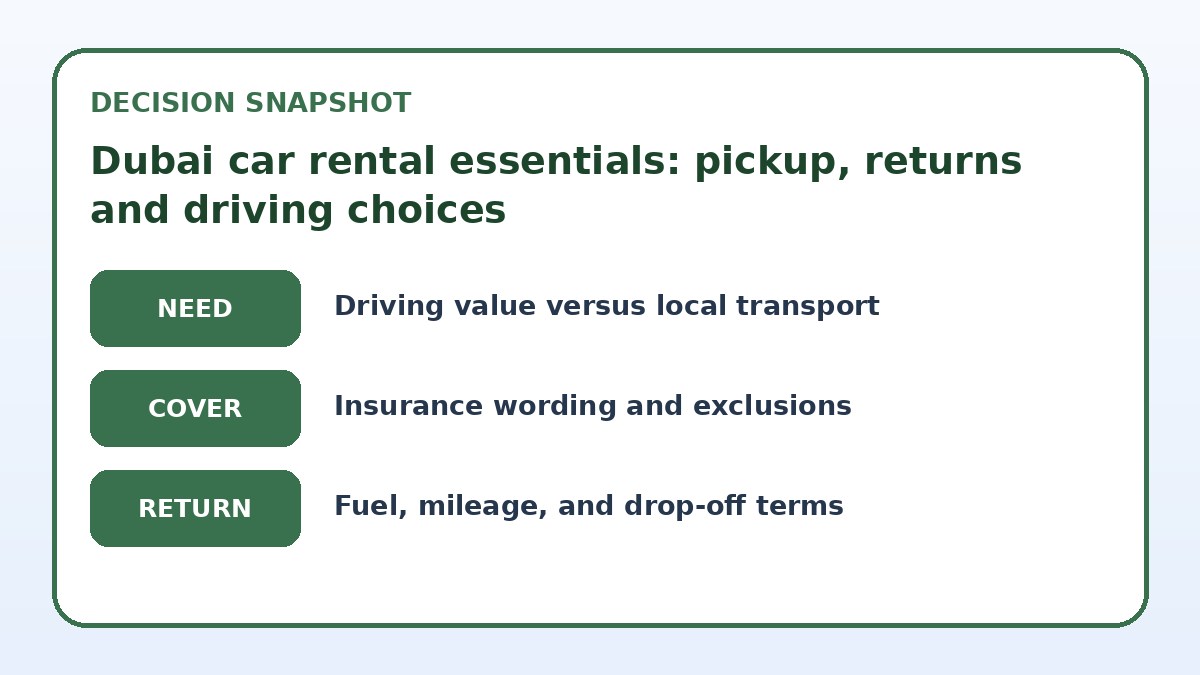
Does driving genuinely improve your Dubai itinerary?
Think about route value first: Dubai’s main attractions are clustered along Sheikh Zayed Road, the Marina, and downtown areas that are well served by metro, tram, and plentiful taxis. Driving adds real value when your plans extend beyond these clusters — for example, a morning drive to the Hajar Mountains, an afternoon at the Al Qudra cycling area, or multi-emirate sightseeing. Consider travel time, congestion at peak hours, and where you’ll realistically park. If most of your days are urban and you want to relax without navigating busy junctions, the convenience advantage of a rental may shrink quickly.
Also weigh schedule flexibility: a rental helps if you need remote sunrise or sunset access, or if your flight or cruise schedule demands early departures or late arrivals. Conversely, if you prefer to avoid learning local traffic norms and paying for parking and tolls, public transport and point-to-point services are strong alternatives. Ask yourself whether the freedom to stop and explore spontaneously outweighs the administrative friction of pickups, returns, and insurance caveats.
Decide whether driving earns its place
| Mobility strategy | Best for | Cost or friction to check |
|---|---|---|
| Self-drive rental | Travelers seeking full schedule control and multi-stop day trips across emirates. | Requires document checks, security holds, insurance decisions, parking costs, and potential inspection disputes at return. |
| Guided day tours/private transfers | Visitors who want organized out-of-city excursions without dealing with pickup/return paperwork. | Less flexibility on timing and stops; may be pricier for small groups compared with self-driving. |
| Public transit + taxis | Urban-focused itineraries centered on Dubai’s downtown and tourist districts. | Limited convenience for early/late travel and remote attractions; costs can add up with frequent taxi use. |
| Hybrid approach | Travelers who combine rental for one or two days with public transit and tours for city days. | Requires careful scheduling to avoid extra pickup/return fees and managing multiple bookings. |
Check live rental choices only after the route test
Use the exact driver, dates, pickup point, and return plan to compare current conditions.
Insurance wording and what to verify at booking
Insurance is often written in dense, insurer-forward language. Key items to verify on the booking or provider’s final page: the deductible or excess amount, whether Collision Damage Waiver (CDW) and Theft Protection are included or optional, which events (windshield damage, tires, undercarriage) are excluded, and whether third-party liability meets local minimums. Also confirm whether extra cover options like zero-excess or supplemental liability can be bought, whether they are refundable, and precisely how claims are processed and reported in the UAE.
Pay attention to driver eligibility wording: minimum and maximum ages, license origin and validity, how many years of driving history are required, and whether an International Driving Permit is recommended or mandatory. Note restrictions on cross-border travel to other emirates or neighboring countries. When provider-specific facts could change, write down the exact lines from the final booking page and save screenshots or PDFs; those are what agents will reference at pickup if there’s a dispute.
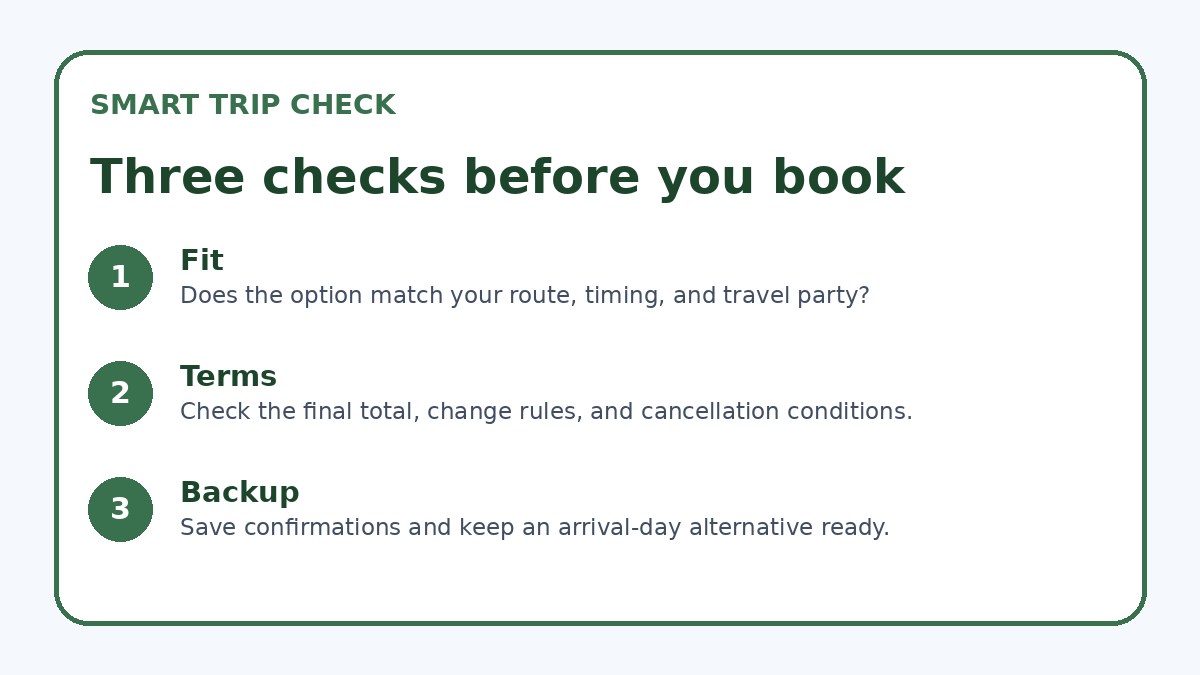
Compare the full rental conditions
Confirm insurance wording, exclusions, deposit, fuel, mileage, and return terms on the final page.
Pickup and return friction: what typically causes delays
Pickup delays often come from mismatches between the reservation and the documents you bring. Agents commonly check the credit card used for the booking, the primary driver’s passport and visa page, and a physical or digital driving license. Expect a security hold or pre-authorization on your card that reduces available credit until return and final settlement. Time-of-day matters; airport counters can be busy and may require longer queues, while off-airport locations sometimes offer faster handovers but limited hours.
Return friction usually centers on fuel policy disagreements, damage inspections, and toll or fine reconciliation. Verify whether the rental expects a full tank on return or offers pre-paid fuel options, and how they document existing damage at pickup. Some outlets will photograph the vehicle and timestamp return; others rely on manual checklists. Confirm the provider’s policy for late returns and whether there’s a grace period. Always request and save the final inspection receipt or email confirmation showing the vehicle’s condition and mileage at drop-off.
Car rental terms to verify
- Confirm on the final booking page the exact insurance excess amount and which damage types are excluded from basic coverage.
- Verify accepted documents at pickup: which passports, visa pages, driving licenses, and the card used for the security hold.
- Note the fuel policy and decide if pre-paid fuel, full-to-full, or refueling before drop-off reduces your risk of dispute.
- Record allowed mileage or any per-kilometer charges to avoid unexpected fees during multi-emirate drives.
- Ask how the provider documents existing damage at pickup and obtain time-stamped photos or a signed condition report.
- Save the final return inspection receipt or an emailed confirmation showing vehicle condition, mileage, and any charges.
Non-driving fallback: how to plan if you skip a rental
If you decide not to drive, build an itinerary that relies on Dubai’s layered mobility network. Use the metro and tram for downtown sightlines and many tourist hubs, and reserve taxis or ride-hailing for late-night transfers or routes poorly served by rail. For day trips outside the city, consider guided tours or private transfers that include pickup and drop-off; they reduce coordination stress and include local drivers who understand regional rules and routes, albeit with less scheduling flexibility than your own car.
Blend options to keep costs and hassle manageable: use public transit for city days, schedule a private transfer for one or two major out-of-city excursions, and rely on taxis for shorter, unpredictable needs. If you’re visiting multiple emirates, compare single-day tour options versus paying higher one-way rental fees. Whichever approach you choose, note the pickup and return terms of any alternative transport you book — especially cancellation policy, included stops, and whether fuel, parking, or tolls are part of the price.
Car Rental & Road Trip questions travelers ask
Do I need an International Driving Permit to rent a car in Dubai?
Many providers accept a valid driving license from your home country, but acceptance varies. Check the rental’s final booking page for exact license requirements and whether an International Driving Permit (IDP) is advised or mandatory. Also confirm minimum years of driving history and any age-related surcharges. Bring a clear photocopy or digital image of your license and passport to speed up the pickup process; rental counters will state which documents they require and whether translations are necessary.
What should I expect for the credit card hold or security deposit at pickup?
Expect a pre-authorization or hold placed on the credit card used at booking; the amount depends on the provider and the selected coverage level. The hold reduces your available credit until the vehicle is returned and the rental finalizes charges. Verify on the booking page whether debit cards are accepted, what currency holds are processed in, and estimated hold duration. If you need the hold released faster, ask the agent about their settlement timeline and whether a printed receipt will show the release date.
How do I handle tolls, fines, and damages after I return the car?
Toll and fine handling varies: some providers deduct tolls automatically and notify you, others pass on fines with administrative fees. For damage claims, the provider will use the pickup inspection record; if you documented pre-existing scratches with timestamps, dispute risk drops. On the final booking page, look for the process and timing for post-return charges, how you will be notified, and any dispute windows. Keep all rental paperwork and photos for the period the provider states they can apply additional charges.
Final decision note
Deciding whether to rent a car in Dubai comes down to route value, convenience tolerance, and paperwork comfort. Driving pays off for flexible multi-emirate days, remote outlets, or tight schedules that public transport cannot meet; but it brings extra steps at pickup and return, plus insurance choices that deserve close reading. If you prefer minimal logistics, use metro, trams, taxis, and organized tours as a practical fallback. Before you finalize any rental, inspect the provider’s final booking page for exact insurance wording, allowed documentation, fuel and mileage policies, and the return inspection process. Those final lines determine whether renting will make your Dubai trip smoother or simply more complicated.
Continue planning
Check current options and final conditions
Use the provider page to confirm live availability, the final total, cancellation terms, and every condition that matters to your trip.
This evergreen planning guide was created with AI-assisted drafting and a structured quality review. It does not display live prices, schedules, availability, visa guidance, or provider rankings. Verify current details before booking. Some links are affiliate links; we may earn a commission at no additional cost to you.