If you and your partner need to travel from London to Paris, the most useful question is: what matters most—speed, cost, comfort, scenery, or door-to-door simplicity? For most couples the main choices are high-speed rail, long-distance coach, a ferry plus driving or train, and private car or rideshare. Each approach changes where you start and finish, how much luggage and transfers feel like a hassle, and how easily you can adapt if plans change. This article gives a practical decision path: which mode to pick for a relaxed romantic break, a tight schedule, or a flexible scenic trip. It also lays out terminal fit, luggage and transfer friction, timing flexibility, and a realistic disruption backup for each choice. Use this to compare real schedules and final costs on the operators’ booking pages—Trip.com can be one place to check current availability but verify seat types, luggage rules, and final route details before booking.
Terminal fit: where your trip really starts and ends
Don’t treat the ride alone as the trip. For rail, check whether stations are centrally located relative to your hotel plans; central arrival usually saves a busy transfer. Coaches often arrive at different terminals or coach hubs just outside city-centre train stations—confirm the exact drop-off and plan one simple transit leg rather than assuming interchange convenience. Ferry options shift the start and finish further toward ports, so factor in the drive or local transit from port terminals to central Paris. For car-based travel, your door-to-door route depends on parking and where you want to spend time in the city, not only highway exits.
For couples, terminal fit affects romantic time together and logistics: a late arrival at a peripheral coach terminal can add stress, while a central train station arrival typically lets you walk straight to dinner. If you value an uninterrupted first evening, prioritize modes with minimal final transfers. Always map your hotel’s address against station or port locations and estimate transfer time with luggage; check the provider’s arrival terminal on the booking page so you can plan a single taxi or transit leg instead of multiple hops.
Choose the end-to-end journey plan
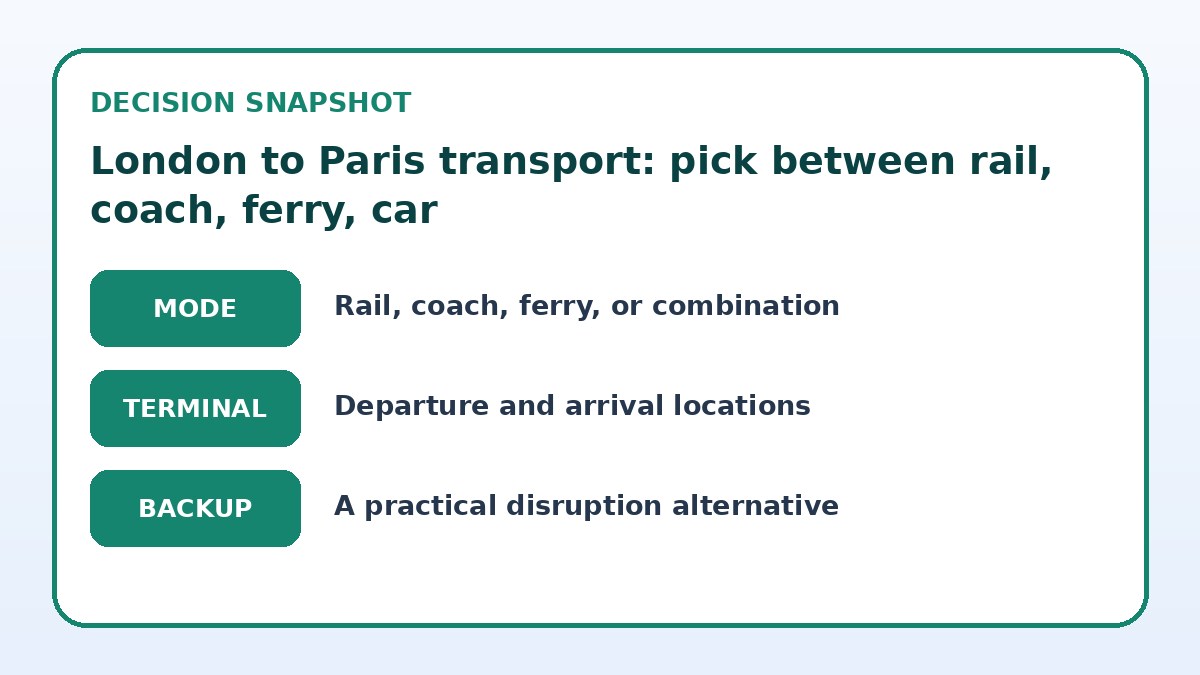
| Journey approach | Best for | Friction to check |
|---|---|---|
| High-speed rail (city-centre to city-centre) | Couples prioritizing speed, fewer transfers, and central arrival. | Less flexibility for driving or sightseeing en route; verify seat and luggage rules on booking. |
| Long-distance coach (budget-focused travel) | Couples wanting to lower transport spend and accept longer journey time. | Longer door-to-door time and possible peripheral drop-offs; check baggage limits before booking. |
| Ferry plus car or train (relaxed sea leg) | Couples who enjoy a maritime break or must travel with a private vehicle. | Extra terminal transfers and fixed sailings add planning; confirm port arrival details on the operator page. |
| Private car or rideshare (door-to-door control) | Couples needing flexible stops, lots of luggage, or off-route sightseeing. | Higher planning for parking, tolls and potential delays; check cross-border rules and parking options. |
Check live intercity options
Look beyond the ride itself and compare terminals, transfers, luggage, and arrival fit.
Luggage and transfer friction: what’s awkward vs easy
Luggage rules and how transfers are handled change the experience for couples traveling together. Trains generally allow you to keep bags with you—fewer tight overheads and no strict checked-bag timelines—making romance and convenience easier. Coaches can impose stricter luggage limits and require loading into undercarriage bays, which adds a small coordination chore at stops. Ferry travel often combines a relaxed sea leg with vehicle loading rules if you have a car, and foot passengers must manage luggage across terminals and onto the ship. Driving removes luggage rules but introduces parking and security screening considerations at ports.
Think about who carries what and how many times you’ll move bags between modes. If one partner prefers not to handle heavy suitcases, choose an option with minimal transfers or book door-to-door transfers. On provider pages, verify exact baggage allowances, whether help is available at stations or terminals, and where luggage must be stored during the journey. These details decide whether travel feels intimate and easy or repetitive and tiring.
Timing flexibility: schedules, frequency, and on-the-day changes
How flexible are your travel windows? High-speed trains typically run frequently by day and allow easy swaps between later services in a pinch, which helps couples who prefer to keep plans loose. Coaches may have fewer departures and longer single-leg durations, so missing one can mean significant delay. Ferries operate to fixed timetables and crossings may not suit late-evening travel; they’re better for planned, leisurely itineraries. Driving offers the most flexibility for departure time but is vulnerable to traffic and border delays—factors to allow extra buffer for when timing is critical, such as evening dinners or scheduled activities.
On the booking page verify change and cancellation policies before choosing a schedule—look for flexible fares or options that explicitly allow same-day changes if your plans might shift. For trains and coaches, check how many services run each day at your preferred times. For ferry or car travel, estimate additional time for boarding, vehicle checks, or customs processes. Choose an option that gives you the buffer you need to arrive relaxed for your first Paris activity.
Compare the practical alternatives
Use the final page to confirm what is actually offered on your dates and save a workable fallback.
Intercity travel checklist
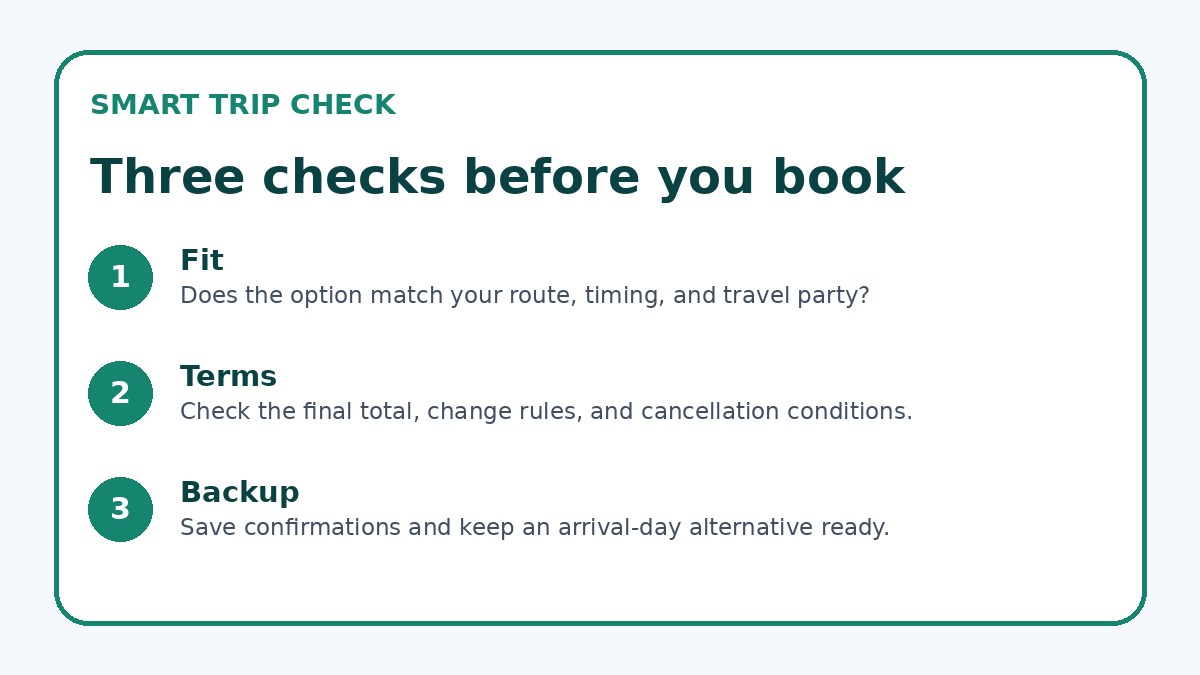
- Map your hotel against each arrival terminal and estimate a single transit leg to avoid multiple transfers.
- Compare baggage allowances and assistance options on the provider’s final booking page before you purchase tickets.
- Plan a timing buffer for your preferred arrival time, allowing for one missed departure without disrupting plans.
- Identify at least one alternate departure (train, coach, or ferry) and a nearby hotel in case of major delay.
- Decide who manages on-the-day changes and keep a payment method ready for taxis or last-minute transfers.
- Verify change, cancellation and assistance policies on the operator’s checkout page and consider travel insurance.
Disruption backup: practical contingencies for couples
Disruptions happen: strikes, severe weather, or congestion can complicate any cross-channel plan. Cultivate a simple backup: identify the next two departures on other modes, a nearby hotel you could reach quickly if late arrival occurs, and a repeatable transfer (taxi rank, reliable shuttle) to minimize stress. For trains, know the next service and the station staff contact point; for coaches, confirm the operator’s customer service and nearby transit links. With ferry trips, check the port’s shelter and alternative crossings. For car trips, keep a list of safe parking and emergency contacts for breakdowns.
For couples, agree ahead on who manages changes and money for unexpected transfers so stress doesn’t spoil the trip. When booking, confirm the refund, change, and assistance policies on the provider’s final checkout page, and consider travel insurance if you want coverage for cancellations or major delays. Build a low-effort plan—whether that’s a later train ticket, a pre-identified taxi app, or a standby hotel—to keep your first night in Paris enjoyable even if travel goes off script.
Rail & Intercity Transport questions travelers ask
Should couples choose train or coach for the most romantic arrival in Paris?
For a romantic, hassle-minimised arrival, city-centre train stations usually win because you often step off and into central Paris with minimal transfers—this preserves your first evening together. Coaches can be cheaper but commonly arrive at outer hubs and require extra transit, which may eat into shared time. Regardless of mode, book tickets that match your ideal arrival window and confirm station or terminal locations so you can plan a seamless walk, short taxi, or tram ride straight to your planned restaurant or hotel.
If we plan to sightsee along the way, which option gives the best flexibility?
Driving or a private rideshare gives the most flexibility for unscheduled stops and detours, useful if you want to visit towns or viewpoints en route. Ferry combinations can include leisurely sea time but are constrained by port locations and fixed sailings. Trains and coaches follow timetables and fixed routes, so while scenic in parts they limit impromptu stops. If flexibility matters, plan driving legs with realistic time allowances and backup overnight options to keep the pace enjoyable rather than rushed.
How should couples prepare for luggage handling when switching modes?
Plan by counting bags and who will carry them; choose modes that minimise transfers if one partner prefers less lifting. For trains, you usually keep luggage with you; for coaches you may need to store items in undercarriage compartments. Ferries and car travel offer different loading rules—confirm vehicle boarding or foot-passenger luggage policies on the provider’s page. Pack a small day bag with essentials for any unexpected wait, and book pick-up or hotel transfers if heavy luggage would spoil your first evening in Paris.
Final decision note
Choosing London to Paris transport as a couple comes down to prioritising what you value most: speed and city-centre arrival, lowest door-to-door cost, a relaxed sea leg with a car, or full route control. Compare where each option drops you relative to your accommodation, how many times you’ll move luggage, and how much timing flexibility you need. Prepare a short disruption plan—alternate departures, a nearby hotel, and a reliable taxi option—to protect your first night together. Finally, verify baggage rules, terminal addresses, and change policies on the provider’s final booking page before committing; Trip.com is one place to check live availability, but always confirm the provider’s terms at checkout.
Continue planning
Check current options and final conditions
Use the provider page to confirm live availability, the final total, cancellation terms, and every condition that matters to your trip.
This evergreen planning guide was created with AI-assisted drafting and a structured quality review. It does not display live prices, schedules, availability, visa guidance, or provider rankings. Verify current details before booking. Some links are affiliate links; we may earn a commission at no additional cost to you.